Hair Porosity and Lipid Loss: Mechanisms, Impact, and Restorative Care
9 min read ·
Hair Porosity and Lipid Loss explains how stripped protective fatty acids increase cuticular voids, leaving hair prone to chronic dryness and mechanical breakage.
Quick answer: Hair Porosity and Lipid Loss describes the degradation of natural fatty acids on the hair shaft, creating voids in the cuticle that cause moisture to enter and leave too rapidly. When protective surface lipids like 18-methyl eicosanoic acid (18-MEA) are stripped by chemical processing, heat, or weathering, porosity increases dramatically. While topical conditioning agents can mimic these natural barriers, cosmetic products cannot biologically regenerate lost internal lipids; maintenance requires regular replenishment using targeted lipid-rich emollients and gentle washing routines.
Key takeaways
- Natural surface lipids, primarily 18-MEA, provide a hydrophobic seal that keeps the hair cuticle flat and water-repellent.
- Hair Porosity and Lipid Loss are directly linked because lipid depletion exposes hydrophilic protein layers, driving porosity from low or medium to high.
- High-porosity hair absorbs water rapidly but cannot retain it, leading to chronic dryness, hygral fatigue, and mechanical snapping.
- Chemical bleaching, permanent dyes, alkaline relaxers, and heat tools above 180 degrees Celsius are the primary causes of structural lipid depletion.
- Lipids cannot grow back along the hair shaft; management relies on synthetic and plant-based lipid substitutes that coat and temporarily seal the cuticular margins.
Hair Porosity and Lipid Loss: what the evidence shows
Research in cosmetic dermatology reveals that virgin hair is naturally hydrophobic (water-repelling), largely due to an ultra-thin lipid layer bound to the outer cuticle known as the epicuticle. The dominant component of this layer is 18-methyl eicosanoic acid (18-MEA), a branched-chain fatty acid covalently bonded to keratin proteins via thioester linkages. Beneath this outer shield lies the cell membrane complex (CMC), which contains free fatty acids, ceramides, and cholesterol that cement the cuticle layers together.
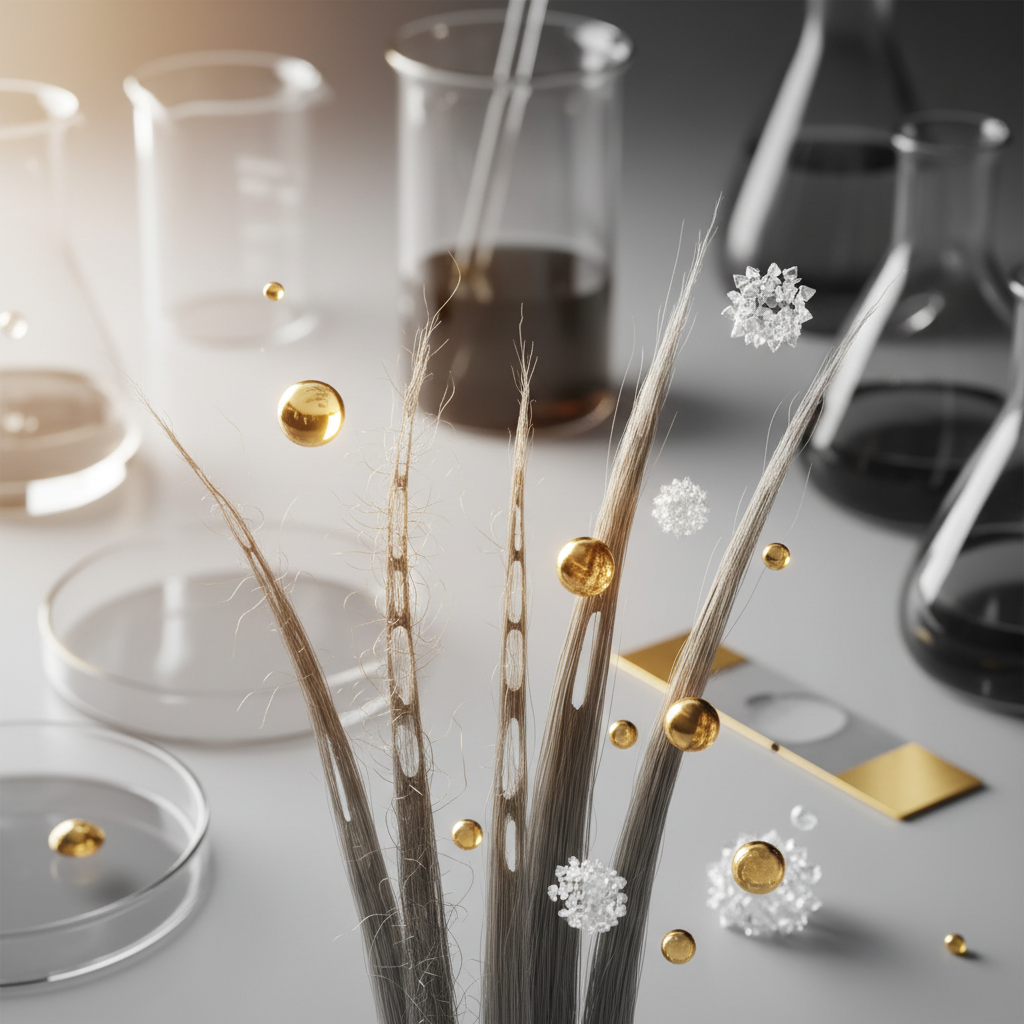
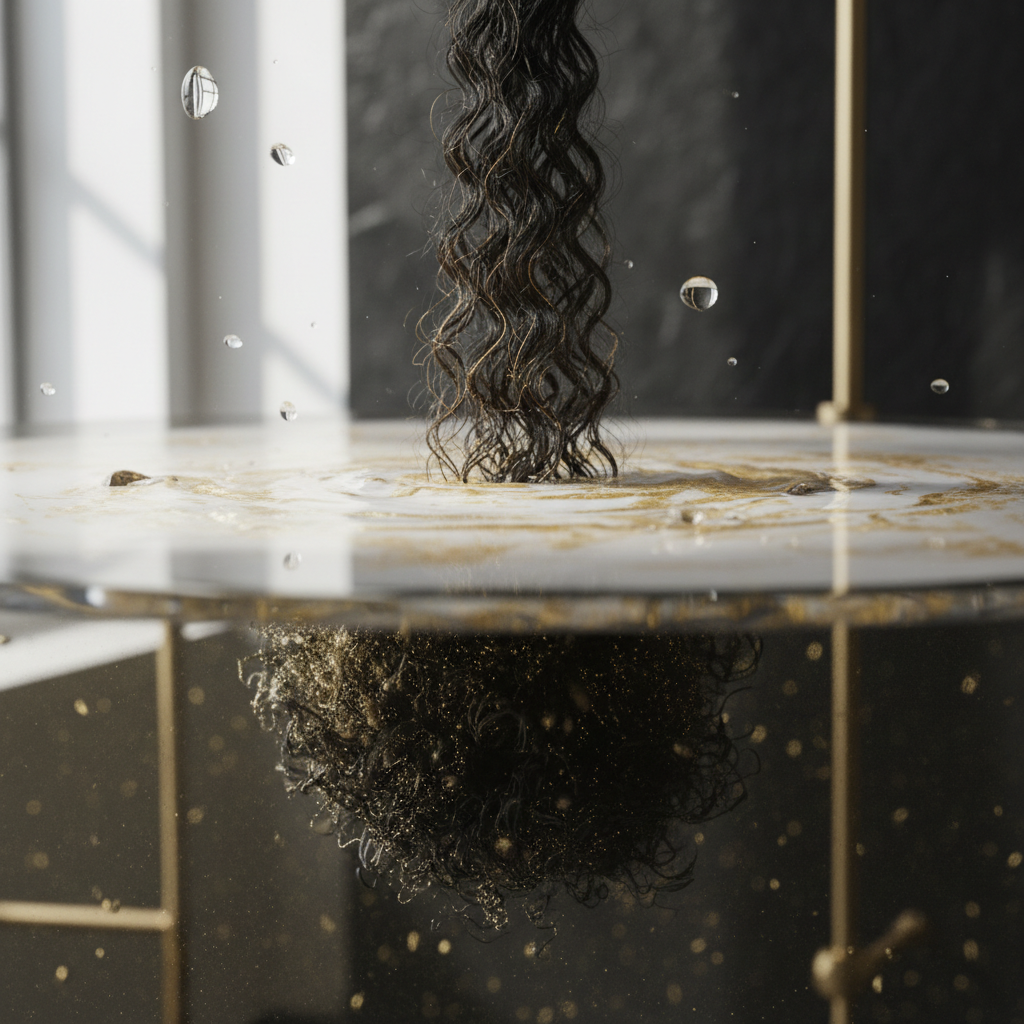
When these fatty acids are stripped, the hair fibre undergoes a physical transition from hydrophobic to hydrophilic (water-attracting). Studies using contact angle measurements show that untreated hair repels water droplets effectively, whereas chemically bleached or heat-damaged hair absorbs water almost instantaneously. This shift marks the onset of elevated porosity. Without a lipid barrier, water moves freely into the cortex, causing the fibre to swell excessively when wet and contract violently when dry. Over time, this repeated swelling and contracting leads to cuticle lifting, chipping, and significant mechanical weakness.
The biological mechanism: how lipid depletion alters porosity
To understand how Hair Porosity and Lipid Loss interact, you have to look at the three distinct lipid pools within human hair:
- The surface lipids (the epicuticle): This monomolecular layer consists of 18-MEA. It shields the hair from environmental moisture, UV degradation, and friction. Because it is chemically bound to the surface, alkaline solutions (such as bleach, permanent colour, and relaxers with a pH above 9.0) break the covalent bonds and strip the 18-MEA layer permanently.
- The internal lipids (the cell membrane complex): The beta-layer of the CMC contains structural ceramides, free fatty acids, and sterols. These lipids act as mortar between cuticle scales and between cortical cells. High temperatures and repeated surfactant exposure dissolve these unbound lipids, creating microscopic voids within the hair shaft.
- The cortical lipids: Deep within the cortex, small pockets of neutral lipids help maintain elasticity. When severe chemical trauma penetrates to this level, core structural integrity collapses.
When both surface and internal lipids are depleted, the cuticle scales can no longer lie flush against the cortex. Gaps open up along the length of the fibre. This structural breakdown defines high porosity: the hair has an open, porous architecture that lets external humidity flood the cortex, causing frizz, while simultaneously failing to trap conditioning oils, leaving the hair brittle and rough to the touch.
What the evidence does not show
There are several persistent myths regarding Hair Porosity and Lipid Loss that experimental data does not support:
- Hair cannot permanently "heal" or rebuild its lipids: Hair is non-living tissue. Once the covalent bond holding 18-MEA to the protein matrix is cleaved, the body cannot regenerate it. Any replacement delivered via shampoos, conditioners, or serums is temporary and washes out over time.
- Oil alone cannot resolve high porosity: Slathering raw plant oils on high-porosity hair does not reconstruct the complex lipid barrier. While certain oils penetrate the cortex (such as coconut oil), others simply sit on the exterior without re-establishing the delicate balance of fatty acids and ceramides required for cuticular cohesion.
- Porosity is not purely genetic: While curl pattern and natural fibre diameter influence baseline porosity, chemical, thermal, and UV-induced lipid loss remain the primary drivers of extreme high porosity.
| Feature | Low-Porosity Hair (Lipid-Intact) | High-Porosity Hair (Lipid-Depleted) |
|---|---|---|
| Surface status | Intact 18-MEA layer; hydrophobic | Stripped 18-MEA layer; hydrophilic |
| Water absorption | Slow (water beads on surface) | Instantaneous (absorbs water quickly) |
| Drying time | Prolonged (traps internal moisture) | Rapid air-drying, yet feels parched |
| Cuticle alignment | Flat, smooth, highly reflective | Raised, chipped, and frayed |
| Tensile resilience | High wet elasticity | Prone to wet snapping and breakage |
| Primary need | Lightweight hydration; low build-up | Biomimetic lipids, ceramides, sealants |
Signs of lipid-depleted, high-porosity hair
Recognising the signs of lipid loss helps you intervene before permanent breakage occurs. Look for these hallmark characteristics:
- Flash drying and rapid soaking: When you step into the shower, your hair becomes saturated within seconds. Yet, once you step out, it dries unusually fast, feeling rough, straw-like, and dehydrated within minutes.
- Persistent dullness: Intact lipids provide a smooth surface that reflects light. When lipids disappear, the raised cuticle scatters light, making the hair look matte and lacklustre regardless of how much oil you apply.
- Chronic tangling and friction: Without lubricating surface lipids, cuticle scales snag on neighbouring fibres. This creates stubborn wet tangles and micro-knots that snap during brushing.
- Loss of curl definition: In wavy, curly, or coily hair types, lipid loss weakens the inter-cuticular bond, leading to erratic curl patterns, fuzzy edges, and structural limpness.
What you can do: replacing lost lipids cosmetically
Because the hair fibre cannot self-repair, your maintenance strategy must focus on mimicking natural lipids and protecting remaining structures:
- Incorporate bio-identical lipids: Look for formulations containing ceramides (such as Ceramide NP), cholesterol, and stearic or palmitic acid. These mimic the ratio of the natural cell membrane complex and help patch microscopic voids.
- Use quaternised conditioning agents: Ingredients like behentrimonium methosulfate or polyquaterniums adhere electrostatically to the negatively charged, damaged protein sites where 18-MEA was lost, temporarily restoring a hydrophobic surface.
- Control your wash pH: Use shampoos and conditioners buffered to an acidic pH between 4.5 and 5.5. An acidic environment prevents the cuticle from swelling further, preserving internal lipids.
- Reduce thermal styling: Keep heat tools below 170 degrees Celsius and always use thermal protectants that create a sacrificial silicone or polymer film over the lipid-depleted cuticle.
- Seal with occlusives: Layer lightweight humectants underneath heavier plant butters or lipid-rich esters to physically trap moisture within the cortex.
When the cause may be something else
It is vital to distinguish between hair fibre damage and genuine scalp or follicle conditions. Hair Porosity and Lipid Loss represent mechanical and chemical shaft degradation that causes fibre snapping (breakage).
If you notice hairs falling out with a white bulb intact at the root, or if you see thinning across your parting or scalp, you are experiencing hair shedding or hair loss (such as telogen effluvium or androgenetic alopecia), not shaft porosity issues. Porosity problems occur strictly along the length of the fibre and do not directly influence the follicle.
Professional support and salon treatments
When lipid depletion leads to severe weathering, home treatments may not be enough. In-salon acid-pH laminations, concentrated ceramide shots, and professional bond-building treatments can deposit substantive polymers that reinforce cuticular cohesion.
If breakage continues despite restorative care, a qualified trichologist or stylist can use polarised light microscopy to assess the degree of cuticular erosion and recommend a targeted recovery plan.
Gentle daily support from Watermans
To support fragile, lipid-depleted hair without stripping remaining fatty acids, Watermans offers gentle, revitalising formulations designed to cleanse without harshness. Watermans GrowMe Shampoo is formulated without aggressive sulfates, helping to preserve the delicate outer layer of the hair shaft while thoroughly cleansing the scalp. Pairing this with a deeply conditioning, nutrient-dense routine ensures that high-porosity strands receive the moisture and protective emollients they need to resist daily mechanical friction and breakage.
Frequently asked questions about Hair Porosity and Lipid Loss
Can you reverse Hair Porosity and Lipid Loss permanently?
No, you cannot permanently reverse Hair Porosity and Lipid Loss. Hair fibres are biologically non-living and cannot synthesise new lipids once the original fatty acids are broken down. You can, however, manage high porosity effectively by regularly using products containing ceramides, biomimetic fatty acids, and sealants that temporarily restore the hair's water-repelling barrier.
Does washing hair with hot water cause lipid loss?
Hot water does not completely strip 18-MEA on its own, but water temperatures above 40 degrees Celsius soften the internal lipids of the cell membrane complex. Combined with harsh surfactants, hot water accelerates the wash-out of unbound fatty acids, leading to raised cuticles and increased hair porosity over time.
Which ingredients best mimic lost hair lipids?
Formulations containing plant-derived ceramides, cholesterol, behenic acid, and squalane provide the closest functional match to natural hair lipids. Quaternised conditioning polymers also help by depositing a protective, hydrophobic layer over the areas where 18-MEA has been chemically stripped.
How does bleach directly cause lipid loss?
Bleaching involves strong alkaline agents and high concentrations of hydrogen peroxide (pH 9.0 to 11.0). This oxidative environment cleaves the thioester bonds connecting 18-MEA to the epicuticle, removing the majority of the hair's natural surface lipids in a single chemical service and driving porosity to extreme levels.
Is high-porosity hair always damaged hair?
While some hair is naturally slightly more porous due to genetic curl patterns and elliptical fibre shapes, pronounced high porosity is almost always the result of lipid loss from chemical processing, excessive heat, physical friction, or sun-induced weathering.
Maintaining balance after lipid depletion
Managing the challenges of Hair Porosity and Lipid Loss requires shifting your routine from aggressive cleansing to protective barrier maintenance. By understanding that your hair has lost its natural water-repelling coat, you can replace that defence using bio-identical ceramides, acidic rinses, and protective conditioning agents. Treat lipid-depleted hair with care, minimise oxidative and thermal stress, and focus on replenishing the lipid barrier with every wash.
Sources and references
- Journal of Cosmetic Science: "The chemical structure of the surface of human hair and its change by chemical treatment" (2007)
- International Journal of Trichology: "Hair Cosmetics: An Overview" (2015)
- Society of Cosmetic Chemists: "Role of 18-MEA on the surface properties of human hair" (2004)
- Skin Pharmacology and Physiology: "Lipids of the human hair fibre: distribution and function" (2011)
- International Journal of Cosmetic Science: "The effect of chemical and physical treatments on the hair surface lipids" (2018)