Hair Porosity and Its Impact
4 min read ·
Hair porosity refers to the hair's ability to absorb and retain moisture, influencing how products perform and how the hair responds to styling and chemical treatments.
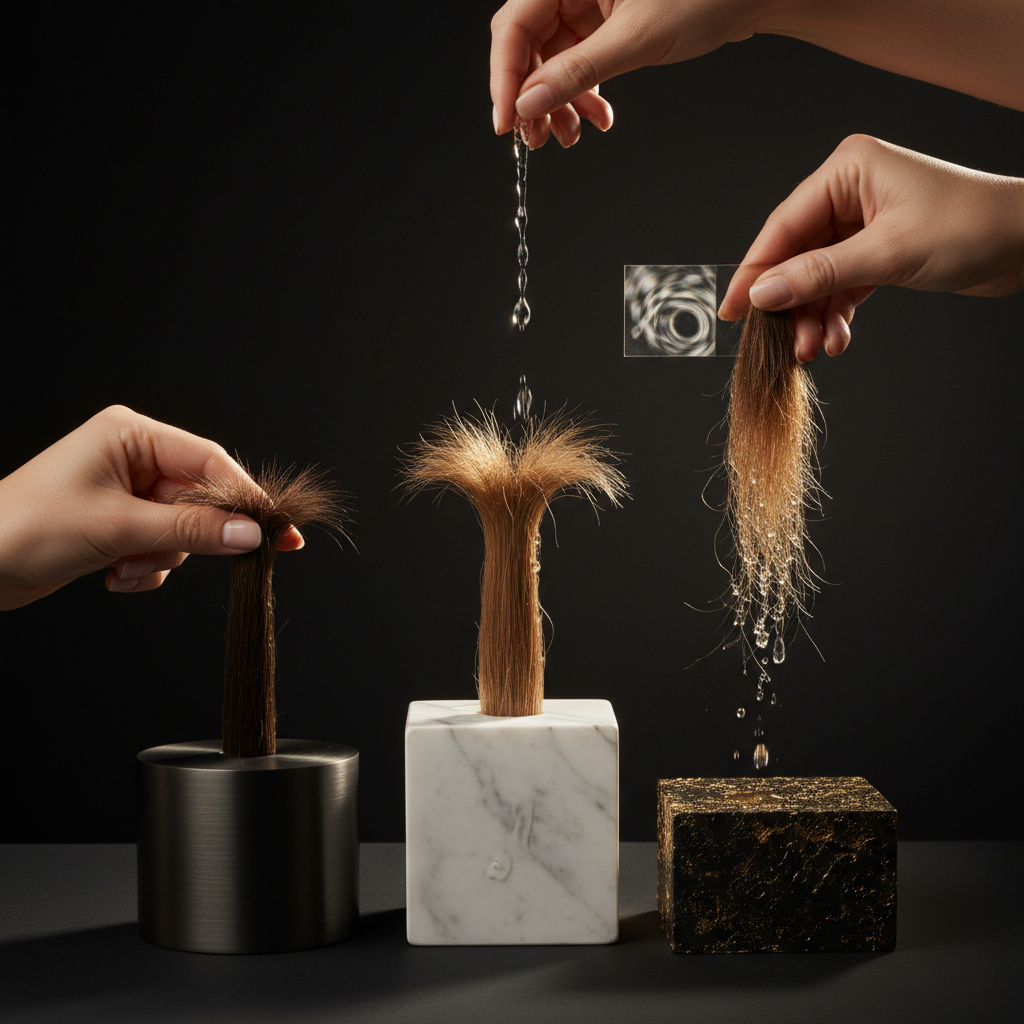
Understanding Hair Porosity
Hair porosity describes your hair's ability to absorb and hold moisture. This characteristic is determined by the condition of the outermost layer of the hair shaft, known as the cuticle. The cuticle is comprised of overlapping, scale-like cells that protect the inner cortex of the hair. The tighter or looser these scales are, the lower or higher the hair's porosity, respectively.
Porosity is largely genetic, but it can also be affected by external factors like heat styling, chemical processes (colouring, perms, relaxers), and environmental exposure. Understanding your hair's porosity is crucial for selecting appropriate products and care routines, as it directly impacts how your hair responds to hydration, conditioning, and chemical treatments.
Types of Hair Porosity
Hair porosity is generally categorized into three main types: low, normal, and high.
Low Porosity
Low porosity hair has a tightly closed cuticle layer. This means that moisture struggles to penetrate the hair shaft. Once moisture is inside, however, it is retained well. This type of hair often appears shiny and can be resistant to chemical treatments like colouring or perms.
-
Characteristics:
-
Products tend to sit on top of the hair rather than absorbing.
-
Takes a long time to get wet when washed.
-
Takes a long time to air dry.
-
Resistant to chemical processing.
-
Can experience product buildup easily.
-
Care Recommendations:
-
Use lightweight products that don't cause buildup.
-
Apply gentle heat (e.g., a steamer or warm towel) after applying deep conditioners to help open the cuticle.
-
Opt for humectant-rich products to draw moisture into the hair.
-
Clarify regularly to remove product buildup.
Normal Porosity
Normal porosity hair has a cuticle layer that is slightly raised, allowing moisture to penetrate easily and retain it effectively. This type of hair is generally considered the healthiest, requiring less maintenance and responding well to most products and treatments.
-
Characteristics:
-
Easily absorbs and retains moisture.
-
Responds well to most styling and chemical processes.
-
Maintains a good balance of moisture and protein.
-
Looks healthy and shiny.
-
Care Recommendations:
-
Maintain a balanced hair care routine.
-
Regular conditioning and occasional deep conditioning.
-
Protect hair from excessive heat and chemical damage to maintain its optimal state.
High Porosity
High porosity hair has a highly raised or damaged cuticle layer, with gaps and holes that allow moisture to enter and escape rapidly. This can be genetic or a result of chemical processing, heat damage, or environmental factors. High porosity hair often feels dry, rough, and is prone to frizz and breakage.
-
Characteristics:
-
Absorbs moisture quickly but loses it just as fast.
-
Prone to frizz, dryness, and tangling.
-
Can feel rough or coarse to the touch.
-
Takes colour and chemical treatments easily but results may not last.
-
Dries quickly after washing.
-
Care Recommendations:
-
Use leave-in conditioners, heavy creams, and oils to seal the cuticle and lock in moisture.
-
Incorporate protein treatments regularly to help fill in gaps in the cuticle, strengthening the hair.
-
Limit heat styling and chemical treatments.
-
Rinse with cool water to help close the cuticle.
-
Use products with a slightly acidic pH to help flatten the cuticle.
How to Determine Your Hair Porosity
While a professional stylist can accurately assess your hair porosity, you can perform a simple at-home test:
- Float Test: Take a few strands of clean, product-free hair and drop them into a glass of room-temperature water.
- If the hair floats at the top, you likely have low porosity.
- If it sinks slowly to the middle, you likely have normal porosity.
- If it sinks quickly to the bottom, you likely have high porosity.
This test is a general indicator and should be combined with observations of your hair's behaviour in daily care.
Porosity and Product Performance
Understanding porosity is critical for product selection. Products formulated for one porosity type may not be effective for another, or may even exacerbate issues. For example, heavy butters and oils on low porosity hair can lead to buildup, while lightweight products on high porosity hair may not provide sufficient moisture retention.
| Porosity Type | Preferred Product Characteristics | Ingredients to Look For |
|---|---|---|
| Low | Lightweight, liquid-based, humectant-rich | Glycerin, honey, aloe vera, lightweight oils (e.g., grapeseed) |
| Normal | Balanced, moisturising, medium weight | Balanced proteins and emollients, natural oils (e.g., argan) |
| High | Heavy, creamy, protein-rich, sealing | Shea butter, heavier oils (e.g., castor, olive), hydrolyzed proteins |
Environmental and Treatment Impact
Even with genetic predisposition, porosity can change over time due to external factors. Chemical processes such as permanent colouring, relaxing, or perming can raise the cuticle and increase porosity. Repeated heat styling, especially without heat protection, can also damage the cuticle, leading to higher porosity.
Conversely, proper care, including regular conditioning and minimizing damage, can help maintain or improve hair porosity. For highly porous hair, treatment with protein-rich conditioners and diligent use of leave-in moisturisers can help to temporarily fill gaps in the cuticle and reduce moisture loss, creating a smoother, more resilient hair shaft.
In essence, hair porosity is not just a scientific characteristic; it's a roadmap for effective hair care. Tailoring your routine to your specific porosity type ensures your hair receives the optimal balance of moisture, protein, and protection, leading to healthier, more manageable results.
Find these ingredients in Watermans products
- Aloe Vera, you will find this ingredient in our Curly Hair Conditioner.