Hair Follicle Stem Cells and Regeneration: Biology, Niches, and Realities
10 min read ·
Hair Follicle Stem Cells and Regeneration drive continuous hair renewal. Explore how bulge stem cells function, why they stall, and the limits of topical haircare.
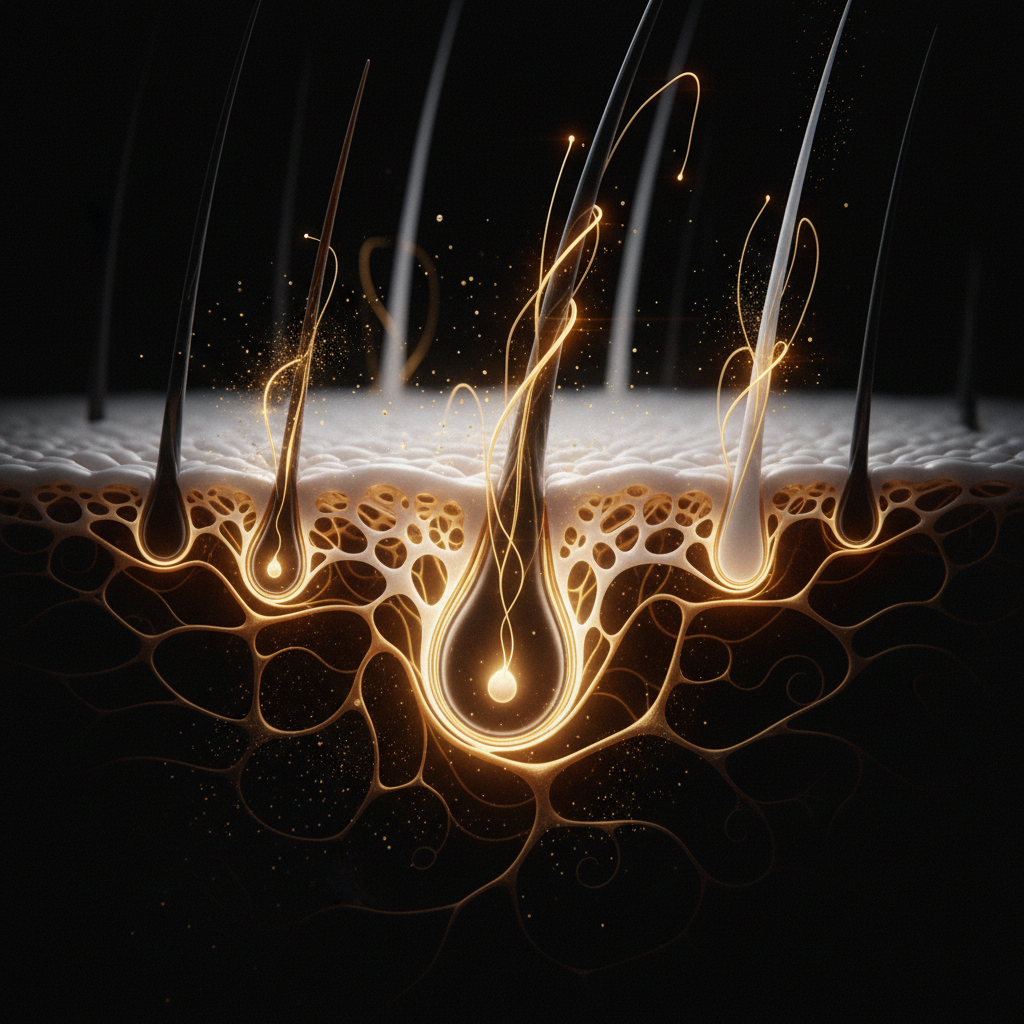
Quick answer: Hair Follicle Stem Cells and Regeneration represent the biological core of cyclic hair renewal. Located primarily in the follicular bulge and secondary hair germ, these quiescent cells activate during each growth phase to generate a new lower follicle and hair shaft. However, Hair Follicle Stem Cells and Regeneration cannot reverse terminal scarring (cicatricial) alopecia where stem cell niches are destroyed, nor can non-prescription cosmetic topical products replace or multiply these specialised cells.
Key takeaways
- Hair follicle stem cells (HFSCs) reside primarily in the bulge area near the arrector pili muscle attachment.
- Hair regeneration relies on continuous molecular cross-talk between epithelial stem cells and mesenchymal cells in the dermal papilla.
- In androgenetic alopecia, HFSCs largely remain present in the bulge, but fail to convert into active progenitor cells.
- In primary cicatricial (scarring) alopecias, the bulge niche is permanently destroyed by inflammatory infiltrates, preventing natural regeneration.
- Current lab therapies explore tissue engineering and cell-cloning, but retail topicals act merely as supportive environmental optimisers, not regenerative cellular implants.
Hair Follicle Stem Cells and Regeneration: what the evidence shows
Research over the past three decades has established that the hair follicle is one of the few mammalian mini-organs capable of lifelong cyclical regeneration. Hair Follicle Stem Cells and Regeneration depend on precise interactions between two distinct tissue compartments: epithelial stem cells residing in the outer root sheath bulge, and mesenchymal cells located in the dermal papilla at the base of the follicle.
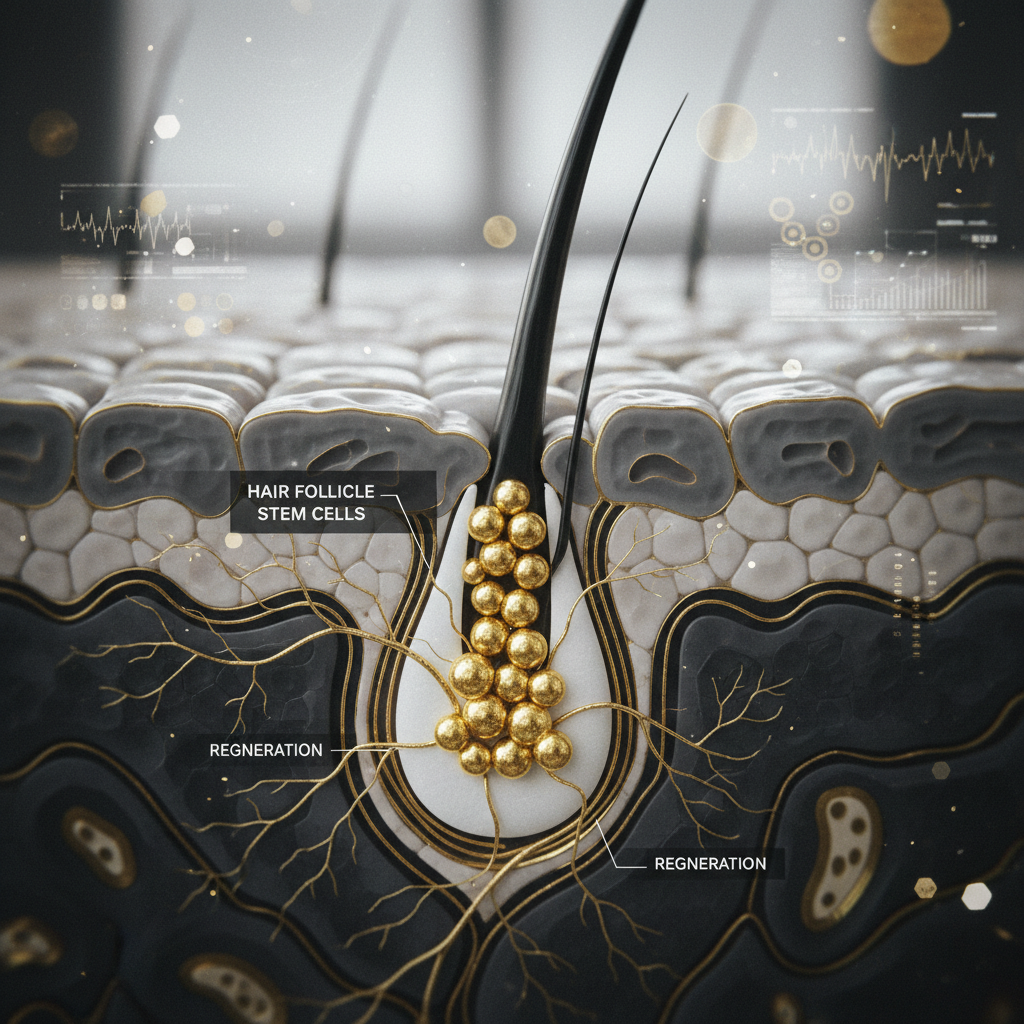
Under homeostatic conditions, these bulge stem cells remain in a quiescent, low-metabolic state during telogen (the resting phase). Initiation of anagen (the growth phase) occurs when inhibitory signals drop and activating signals rise. The dermal papilla sends reciprocal biochemical cues, specifically activating the Wnt/beta-catenin pathway while suppressing Bone Morphogenetic Protein (BMP) signalling.
Once stimulated, cells in the secondary hair germ (a cluster derived from the bulge that sits adjacent to the dermal papilla) rapidly proliferate. They form the transit-amplifying cell population of the hair matrix. These matrix cells divide furiously, differentiate, and ultimately assemble into the inner root sheath and the pigmented hair fibre. As the anagen phase draws to a close, the lower two-thirds of the follicle undergoes apoptosis (programmed cell death) during catagen. The dermal papilla retracts upwards, resting once more beneath the bulge, ready for the next round of generation.
 [ Resting Phase: Telogen ]
Bulge Stem Cells (Quiescent) + Secondary Hair Germ
 │
 ▼ (Wnt activation, BMP inhibition)
 [ Growth Initiation: Early Anagen ]
Matrix Progenitor Cells Proliferate via Dermal Papilla Cues
 │
 ▼
 [ Mature Anagen: Active Fibre Production ]
Inner Root Sheath and Keratinised Hair Shaft Form
 │
 ▼ (FGF5 and TGF-beta signalling)
 [ Regression: Catagen ]
Lower Follicle Apoptosis; Dermal Papilla Ascends to Bulge
What the evidence does not show
Despite significant advances in stem cell biology, several common assumptions fail to hold up under scrutiny:
- Cosmetics cannot supply live stem cells to human follicles. Plant stem cell extracts (such as those derived from Swiss apples or alpine roses) frequently appear in luxury haircare. While these extracts may offer antioxidant protection, plant cells cannot integrate into, signal to, or replace human epithelial tissue.
- Topical formulas do not create brand-new follicles from smooth skin. De novo folliculogenesis (growing an entirely new follicle where none existed before) requires embryonic-like conditions or complex surgical tissue reconstruction. Over-the-counter products cannot conjure new follicular units on bare scalp.
- Stem cell exhaustion is not the primary mechanism of pattern baldness. Biopsies published in peer-reviewed dermatology literature demonstrate that individuals with androgenetic alopecia retain equivalent numbers of CD200-positive and K15-positive bulge stem cells compared to non-balding scalps. The issue is a failure of activation and conversion into transit-amplifying progeny, driven by dihydrotestosterone (DHT) and micro-inflammation, not an absence of the stem cells themselves.
Mechanisms: signals that control regeneration
The cyclical activation of follicular stem cells is governed by a delicate balance of biochemical pathways. Disruptions to any of these signalling networks can truncate anagen or trap the follicle in extended telogen.
The Wnt/beta-catenin pathway
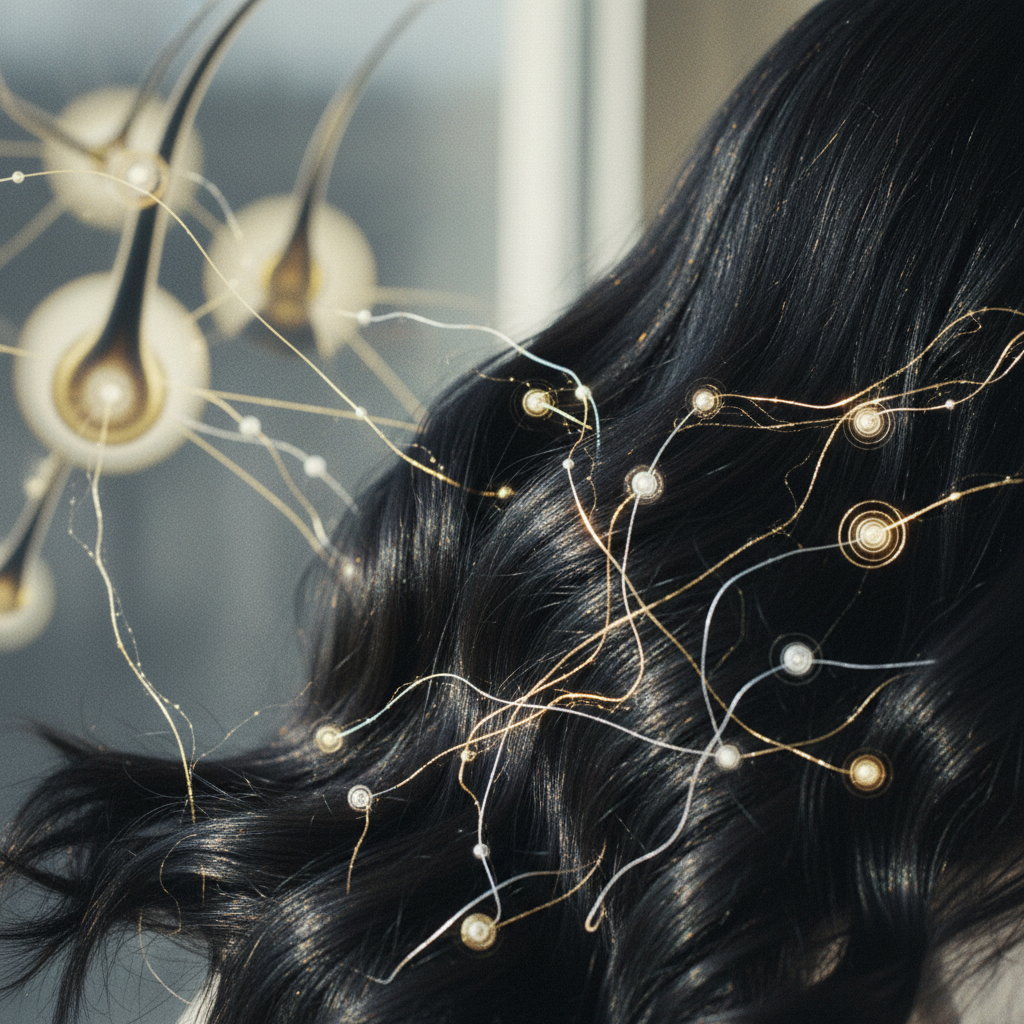
Wnt signalling is the central master switch for hair follicle regeneration. When Wnt ligands bind to Frizzled receptors and LRP co-receptors on stem cells, beta-catenin stabilises and migrates into the nucleus. This transcriptional shift commands the secondary hair germ to exit quiescence and begin matrix proliferation. If Wnt signalling is experimentally knocked out in laboratory models, hair growth halts entirely.
BMP and FGF signalling
Bone Morphogenetic Proteins (specifically BMP2 and BMP4) act as natural brakes. Expressed by subcutaneous fat and interfollicular dermis, high BMP levels maintain stem cell quiescence during early and mid-telogen. Only when BMP antagonists, such as Noggin (secreted by the dermal papilla), overpower these inhibitory signals can anagen commence. Fibroblast Growth Factor 7 (FGF7) and FGF10 further encourage follicular proliferation, whereas FGF5 acts as an intrinsic trigger for catagen regression.
The niche microenvironment
Stem cells do not function in a vacuum. Their regenerative competence depends heavily on the vascular supply, perineural networks, intradermal adipocytes, and immune cells (notably regulatory T cells, or Tregs) that populate the follicular niche. Hypoxia, chronic perifollicular fibrosis, and elevated reactive oxygen species (ROS) impair the microenvironment, dampening regenerative response.
Stem cell dynamics in different scalp conditions
Understanding the status of hair follicle stem cells across various conditions clarifies why some presentations are reversible while others are permanent.
| Scalp condition | Bulge stem cell status | Dermal papilla viability | Reversibility potential | Primary clinical driver |
|---|---|---|---|---|
| Androgenetic alopecia | Intact, but quiescent | Shrunken (miniaturised) | Moderate (reversible miniaturisation) | DHT binding, TGF-beta2 elevation |
| Telogen effluvium | Fully intact | Intact and healthy | High (self-resolving) | Premature anagen termination via shock/stress |
| Alopecia areata | Intact | Intact (surrounded by immune cells) | High (follicles preserved) | Autoimmune attack on matrix (loss of immune privilege) |
| Lichen planopilaris | Destroyed | Fibrosed or lost | None (permanent scarring) | T-cell mediated attack directly on the bulge niche |
| Frontal fibrosing alopecia | Destroyed | Fibrosed or lost | None (permanent scarring) | Autoimmune inflammatory destruction of the upper follicle |
Signs of impaired regeneration
When stem cell recruitment falters or the niche experiences distress, the hair fibre and scalp exhibit recognisable patterns:
- Progressive miniaturisation: Terminal hairs gradually transform into fine, unpigmented vellus-like hairs, indicating that transit-amplifying cells are dividing fewer times per cycle.
- Prolonged lag phase (kenogen): The interval between the shedding of a telogen club hair and the emergence of a new anagen fibre widens from weeks to many months, leading to a visible drop in scalp density.
- Loss of follicular ostia: On dermatoscopic examination, the complete absence of visible pore openings (replaced by ivory-white or pale fibrotic patches) indicates that the follicular unit and its stem cell reservoir have been obliterated.
- Perifollicular erythema and scaling: Redness, crusting, or slight hyperkeratosis specifically hugging the base of the hair shaft often signals active infundibular inflammation, which threatens the nearby bulge.
What you can do to support the scalp environment
While you cannot manually insert new stem cells at home, maintaining an optimal niche environment encourages natural cyclic signalling:
- Manage physical scalp tension and perifollicular stress: Regular scalp massage promotes microcirculation, which helps sustain the oxygen and nutrient delivery essential for metabolically demanding matrix cells.
- Support epidermal barrier integrity: Keep the scalp microbiome balanced and the stratum corneum hydrated with gentle, pH-balanced (pH 4.5 to 5.5) cleansers. Chronic low-grade scalp dermatitis generates pro-inflammatory cytokines that impede normal Wnt activation.
- Mitigate oxidative damage: Environmental pollutants, excess UV radiation, and accumulated sebum oxidation stress follicular keratinocytes. Topical antioxidants, such as niacinamide, caffeine, and botanical polyphenols, neutralise free radicals across the infundibulum.
- Correct systemic biological inhibitors: Severe nutritional deficits (such as ferritin below 30 to 50 ug/L or low serum vitamin D3) alter regulatory signalling networks, nudging follicles toward prolonged resting states.
Supporting hair density with Watermans
When formulating cosmetic solutions to support hair density, the focus must remain on the scalp environment. Watermans GrowMe Shampoo and ConditionMe Conditioner are engineered to clean away pore-clogging debris, balance scalp surface flora, and deliver targeted cosmetic botanicals.
Containing blends of biotin, rosemary, caffeine, niacinamide, and argan oil, these formulas provide external antioxidant defence and strengthen the hair fibre against mechanical breakage. While cosmetic preparations do not regenerate destroyed follicles or reverse scarring diseases, providing a clean, nutrient-rich, invigorated scalp base allows existing viable follicles to express their natural growth capacity without unnecessary environmental resistance.
When the cause may be something else
Thinning hair does not automatically indicate that stem cells have ceased functioning. Differentiate between cellular recruitment failure and other common hair issues:
- Fibre breakage: If hairs snap along the mid-shaft due to bleaching, heat styling, or mechanical friction, the follicle beneath remains entirely functional. Breakage produces uneven, frayed lengths without an increase in telogen root bulbs.
- Acute telogen effluvium: Sudden, diffuse shedding triggered by illness, high fever, rapid weight loss, or childbirth represents a synchronised exit into the resting phase. The stem cells remain completely undamaged and typically re-enter anagen within three to six months once the trigger resolves.
- Endocrine disruption: Thyroid disorders (both hypo- and hyperthyroidism) disrupt cellular metabolism across the entire body, altering follicular cycling without destroying the stem cell machinery.
When to seek professional advice
Consult a dermatologist, trichologist, or registered medical professional promptly if you notice:
- Smooth, shiny, or porcelain-white patches on the scalp devoid of follicular pores.
- Scalp pain, intense burning, itching, or tenderness coupled with rapid hair thinning.
- Sudden patchy shedding leaving discrete, round, completely bare circles (classic alopecia areata).
- Rapidly receding frontal or temporal hairlines accompanied by eyebrow thinning, which may indicate a scarring condition like frontal fibrosing alopecia.
Frequently asked questions about Hair Follicle Stem Cells and Regeneration
Can hair follicle stem cells be revived after years of baldness?
If baldness is caused by long-standing androgenetic alopecia, hair follicle stem cells remain present in the bulge, but the dermal papilla often undergoes severe miniaturisation. While dormant cells can theoretically be stimulated, reviving follicles that have been miniaturised for decades is clinically challenging, as the surrounding vascular and tissue architecture gradually regresses over extended periods.
What is the role of Hair Follicle Stem Cells and Regeneration in pattern hair loss?
In pattern hair loss, Hair Follicle Stem Cells and Regeneration do not fail due to cell depletion. Research confirms that balding scalps retain a normal reservoir of quiescent bulge stem cells. The breakdown occurs during downstream differentiation: high local DHT levels and inhibitory signals prevent these stem cells from successfully converting into rapidly dividing progenitor matrix cells.
Can plant stem cells in shampoos regenerate human hair follicles?
No. Plant stem cells cannot communicate with human cellular pathways, nor can they integrate into mammalian follicular tissue. While botanical extracts may act as valuable cosmetic antioxidants, hydrating agents, or anti-inflammatory compounds, they do not trigger human cellular regeneration or generate new hair follicles.
How does microneedling interact with follicular stem cells?
Controlled mechanical micro-injury activates the skin's natural wound-healing cascade. Platelets release growth factors (such as PDGF, EGF, and VEGF) that upregulate Wnt/beta-catenin signalling in the surrounding tissue. This transient molecular activation can prompt quiescent hair follicle stem cells in the secondary hair germ to initiate a new anagen growth phase.
What is the difference between bulge stem cells and dermal papilla cells?
Bulge stem cells are epithelial cells that generate the physical structure of the hair fibre and its surrounding sheaths. Dermal papilla cells are mesenchymal in origin and act as the instructive command centre, sending chemical messages that tell the epithelial stem cells precisely when to rest, divide, or differentiate.
The outlook for follicular regeneration
Hair Follicle Stem Cells and Regeneration highlight the body's remarkable capacity for self-renewal, governed by a delicate interplay of Wnt, BMP, and dermal papilla signalling. While cosmetic products and everyday care cannot replace destroyed stem cell pools or resurrect fibrosed tissue, cultivating a balanced, clean, and nourished scalp environment supports the biological machinery that drives daily hair growth. As regenerative medicine advances from the lab bench toward clinical cell therapies, preserving the health of the existing follicular niche remains your most practical foundation for sustained hair density.
Sources and references
- Cotsarelis, G., Sun, T. T., & Lavker, R. M. (1990). Label-retaining cells reside in the bulge area of pilosebaceous unit: implications for follicular stem cells, hair cycle, and skin carcinogenesis. Cell, 61(7), 1329-1337.
- Garza, L. A., Yang, C. C., Zhao, T., et al. (2011). Bald scalp in men with androgenetic alopecia retains hair follicle stem cells but lacks CD200-rich and CD34-positive hair follicle progenitor cells. The Journal of Clinical Investigation, 121(2), 613-622.
- Hsu, Y. C., Pasolli, H. A., & Fuchs, E. (2011). Dynamics between stem cells, niche, and progeny in the hair follicle. Cell, 144(1), 92-105.
- British Association of Dermatologists (2021). Guidelines for the management of alopecia areata and primary cicatricial alopecias. British Journal of Dermatology.
- Plikus, M. V., et al. (2008). Cyclic hair regeneration informed by topological and environmental cues. Nature, 455(7212), 520-524.
Find these ingredients in Watermans products
- Vitamin D: you will find this ingredient in our Hair Vitamins.
- Niacinamide: you will find this ingredient in our Hair Mask.