Hair Cuticle Structure and Function: The Definitive Scientific Guide
10 min read ·
Discover how hair cuticle structure and function shields your strands from damage. Learn the cellular anatomy, signs of weathering, and how to maintain smooth hair.
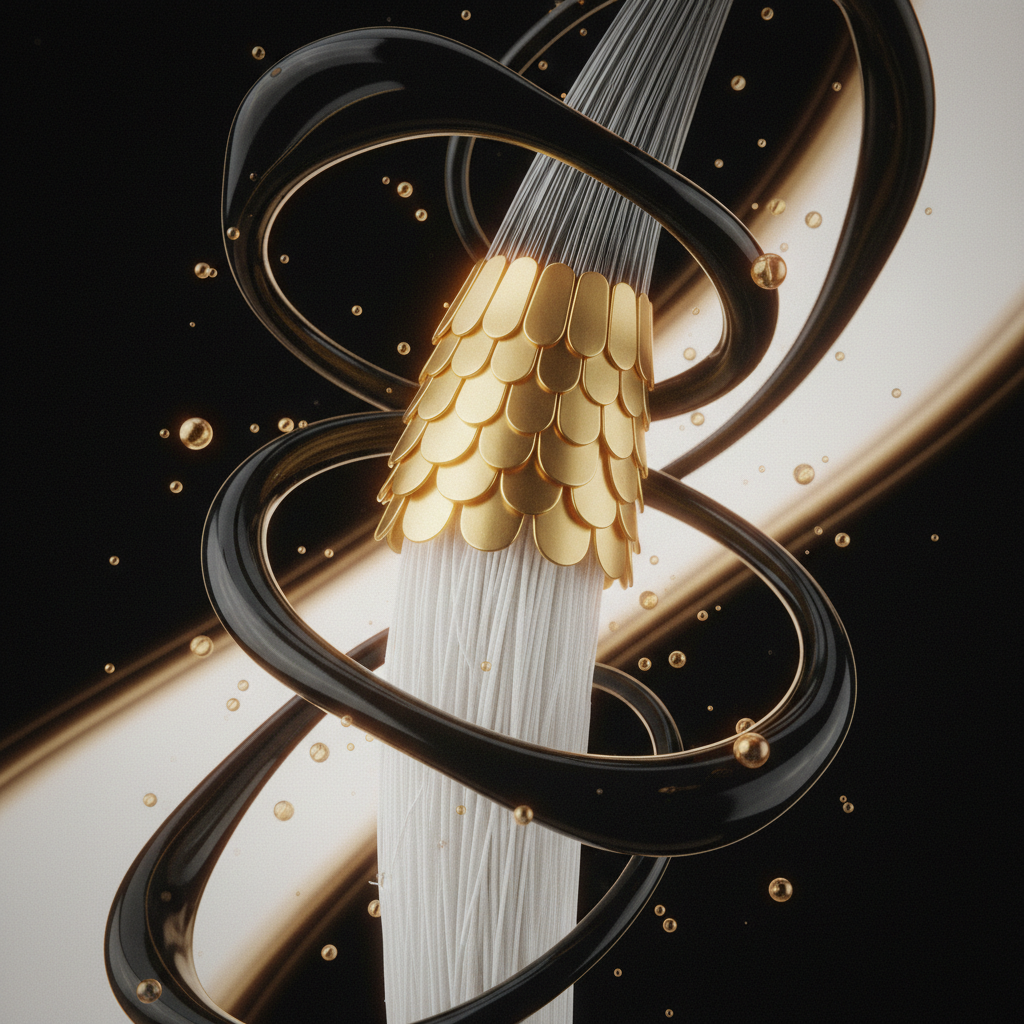
Quick answer: Understanding Hair Cuticle Structure and Function reveals how hair protects its delicate inner cortex from chemical, thermal, and mechanical trauma. The cuticle consists of 5 to 10 overlapping layers of flat, keratinised cells anchored by a lipid-rich cell membrane complex. While its primary function is shielding the core and regulating moisture, the cuticle cannot biological heal itself once stripped. Understanding this cellular boundary helps you reduce breakage, preserve shine, and maintain long-term fibre integrity.
Key takeaways
- The hair cuticle forms the outermost protective shield of the hair fibre, made of 5 to 10 overlapping scales pointing toward the tip.
- Each cuticle cell is divided into distinct sub-layers: the epicuticle, A-layer, exocuticle, and endocuticle, bound by an essential 18-methyleicosanoic acid (18-MEA) lipid layer.
- Cuticle scales lie flat in healthy hair, reflecting light for maximum shine while resisting friction and environmental damage.
- Elevated pH (above 5.5), bleach, peroxide, and high heat lift or erode the cuticle scales, exposing the inner cortex to moisture loss and fibre breakage.
- Damaged cuticles cannot biologically self-repair because hair is non-living tissue, but targeted conditioning agents can temporarily seal and lubricate the fibre surface.
Hair Cuticle Structure and Function: what the evidence shows
Research published in dermatology and cosmetic science journals establishes that Hair Cuticle Structure and Function controls both the cosmetic appearance and mechanical resilience of your hair. The cuticle accounts for approximately 10 to 15 percent of total hair fibre mass, yet it dictates surface friction, porosity, optical reflectance (shine), and water uptake.
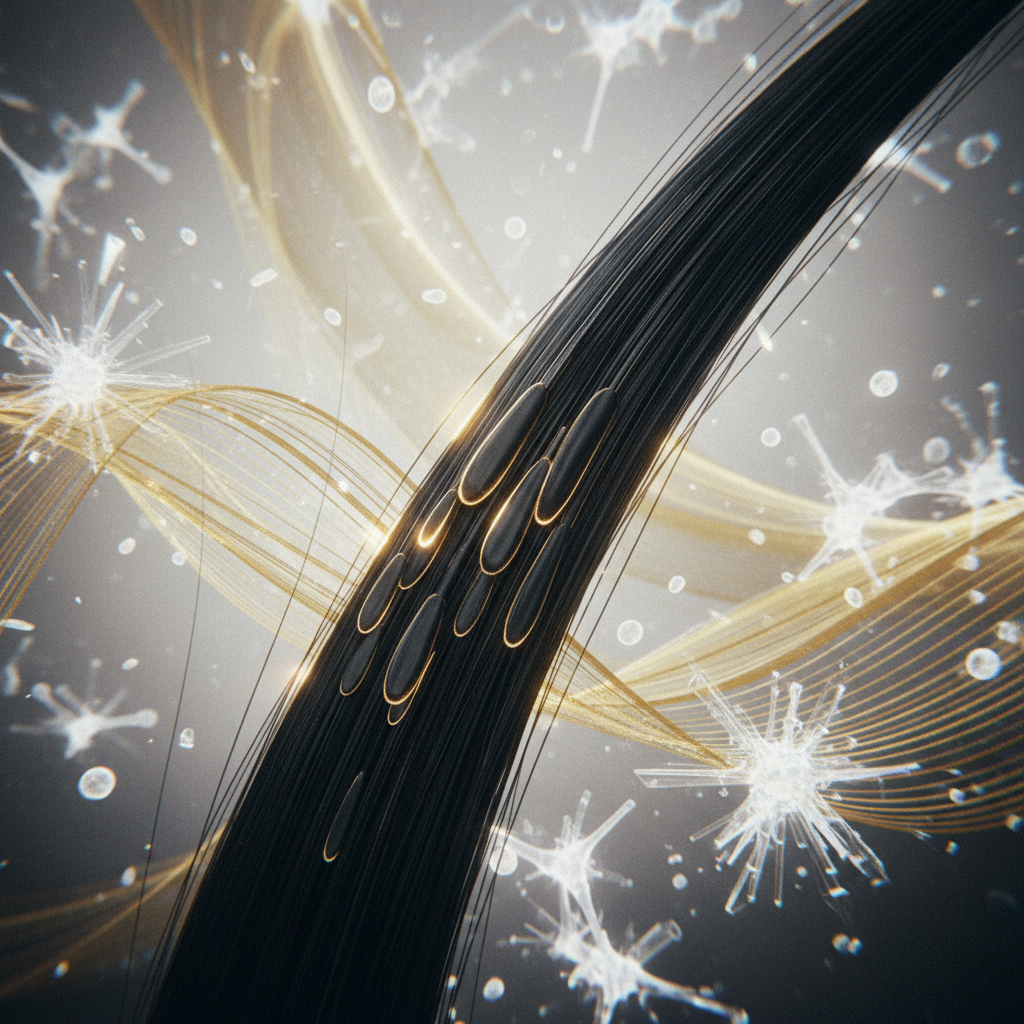
Microscopic studies show that a healthy human hair cuticle consists of overlapping shingle-like cells, each about 0.3 to 0.5 micrometres thick and roughly 35 to 45 micrometres long. In unweathered hair near the scalp, these scales lie tightly packed. As hair grows and travels outward, friction from brushing, ultraviolet radiation, washing, and chemical treatments gradually strips the outermost scales away. While the root may boast 8 to 10 intact cuticle layers, the tip of long hair often carries only 1 or 2 layers, or none at all.
The anatomical sub-layers of a cuticle cell
Each individual cuticle scale is far from a uniform sheet of keratin. Under transmission electron microscopy, researchers have mapped four distinct sub-layers within every cell:
- The Epicuticle: The outermost boundary of the scale, representing a protein membrane roughly 5 to 7 nanometres thick, covered by a covalently bound lipid monolayer called 18-methyleicosanoic acid (18-MEA). This fatty acid layer gives virgin hair its natural hydrophobicity (water-repelling nature).
- The A-Layer: A rigid, high-cystine protein layer (over 30 percent cystine content) roughly 50 to 110 nanometres thick. Its high density of disulphide cross-links makes it chemically and physically tough, resisting enzymes and mechanical wear.
- The Exocuticle: Sitting beneath the A-layer, this region also contains a high concentration of cystine (around 15 percent). It represents roughly 55 percent of the cell's total thickness and provides firm structural support.
- The Endocuticle: The innermost layer of the scale, bordering the cell membrane complex. It contains very low levels of cystine (below 3 percent) and consists primarily of loose, non-keratinous proteins. Because it lacks dense disulphide bonding, the endocuticle swells readily in water and is vulnerable to enzyme digestion.
Between adjacent cuticle cells lies the Cell Membrane Complex (CMC). The CMC serves as the inter-cellular adhesive, composed of lipid bilayers sandwiching a proteinaceous central band known as the delta-layer. When the CMC breaks down, cuticle cells flake away, creating split ends and cuticle chipping.
| Layer / Component | Cystine Content | Primary Function | Vulnerability |
|---|---|---|---|
| 18-MEA Lipid Layer | Negligible (lipids) | Provides hydrophobicity, reduces surface friction | Stripped by a single chemical bleaching or alkaline treatment |
| Epicuticle | Moderate | Outer semi-permeable membrane | Physical abrasion and aggressive detergents |
| A-Layer | High (>30%) | High mechanical and chemical resistance | Prolonged oxidative breakdown |
| Exocuticle | High (~15%) | Rigidity, barrier defence against UV and heat | Thermal degradation above 180°C |
| Endocuticle | Very low (<3%) | Cushioning flexibility between scales | Highly prone to water swelling and alkaline erosion |
| Cell Membrane Complex | Low to moderate | Cements cuticle scales together | Delamination caused by repeated wetting and drying cycles |
What the evidence does not show
Cosmetic formulations frequently advertise products that "repair damaged cuticles permanently" or "resurface broken hair fibres". The peer-reviewed evidence does not support these claims. Hair is biologically dead tissue; it contains no living cells, nerves, or vascular networks above the scalp surface. Once cuticle scales break off or suffer oxidative cleavage from bleach, they cannot regenerate.
Furthermore, evidence does not show that natural oils can fully replace the primary lipid layer (18-MEA). While plant-derived triglycerides lubricate the fibre surface and reduce friction, they do not covalently bond to the cuticle proteins the way native 18-MEA does. Claims that a single product can restore chemically damaged hair to virgin status are marketing exaggerations.
The mechanism: how cuticles lift, weather, and break
The behaviour of your hair cuticle depends heavily on pH and water exposure. The natural isoelectric point of human hair sits at approximately pH 3.67. At this mildly acidic value, the net electrical charge of the hair surface is neutral, and the cuticle scales remain flat and compact.
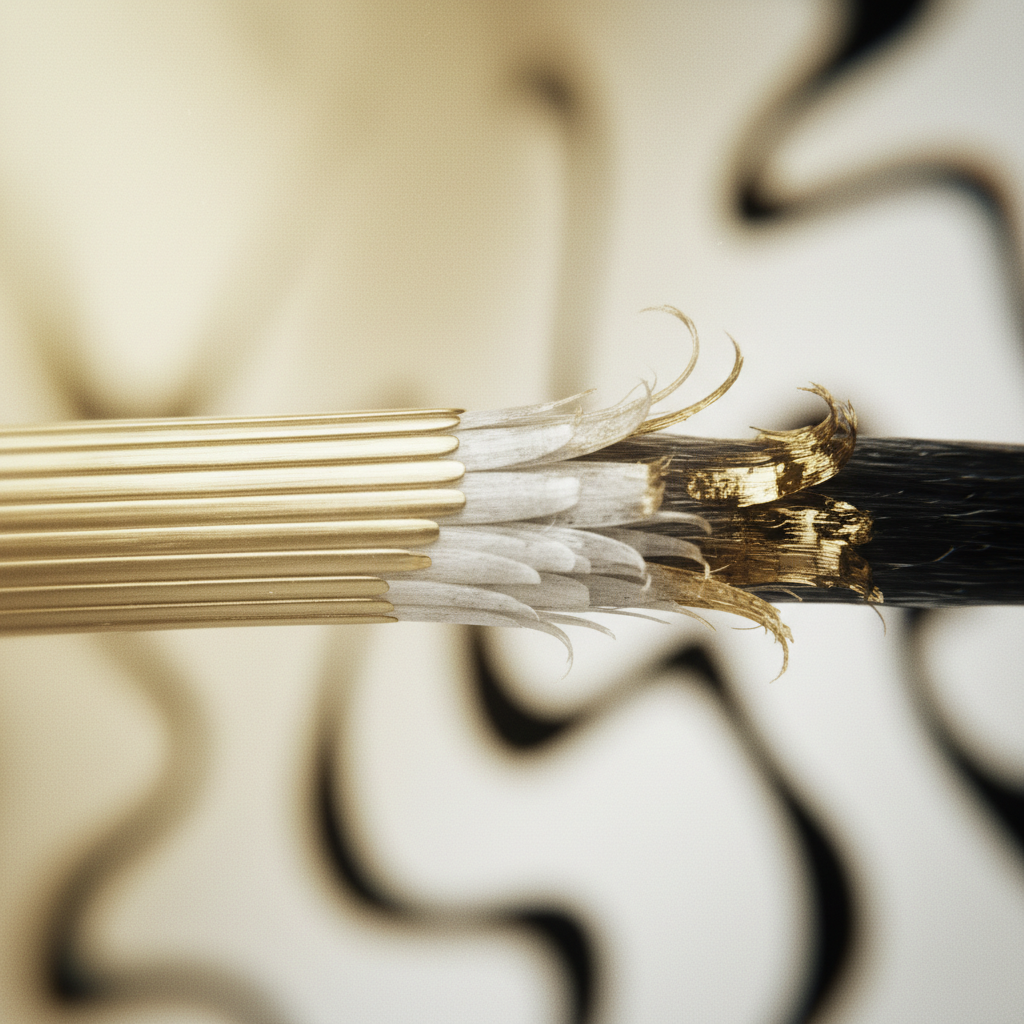
When hair comes into contact with tap water (typically pH 6.5 to 8.0) or alkaline formulations (such as permanent hair colour or lightening powders at pH 9.0 to 11.0), the negative surface charge increases. This causes electrostatic repulsion between protein groups. The cuticle swells, lifting outward from the hair shaft at an angle.
While lifting is necessary during chemical colour processing to allow dye precursors into the cortex, failing to re-acidify the hair leaves the cuticle open. Open cuticles produce:
- Increased inter-fibre friction (hair feels rough, tangles easily, and snags).
- Optical scattering (dullness, as light reflects irregularly instead of like a smooth mirror).
- Cortical moisture volatility (hair absorbs environmental humidity rapidly, leading to frizz, yet loses internal moisture quickly in dry environments).
Repeated cycles of excessive swelling followed by rapid heat drying trigger a phenomenon known as hygral fatigue. The endocuticle swells significantly more than the rigid exocuticle and A-layer, generating shear stress at the cell interfaces. Over time, this mechanical fatigue fractures the cell membrane complex, causing entire cuticle tiles to peel away from the fibre.
Signs of cuticle damage vs follicular issues
Stylists and consumers frequently confuse cuticle degradation with follicular hair shedding. It is vital to separate hair loss (follicular dysfunction or alopecia), hair shedding (fibres naturally exiting the scalp via telogen effluvium), and hair breakage (the fibre snapping along the shaft due to cuticle failure).
Signs that your hair cuticle is compromised include:
- High porosity: Hair absorbs water instantly in the shower and takes an unusually long time to dry.
- Rough texture: Running your fingers upwards from the tip to the root creates friction or a rasping sensation.
- Lack of shine: Hair appears matte or chalky under direct light due to uneven scale alignment.
- Tangling and knots: Raised scales catch against adjacent strands, creating persistent fairy knots (trichonodosis).
- White dots and split ends: Trichoptilosis (split ends) occurs when the cuticle is completely lost, leaving the delicate cortical fibres exposed to unravel.
If hair is shedding from the scalp with a small white bulb intact at the root, the issue is follicular shedding, not cuticle weathering.
What you can do to protect cuticle integrity
Preserving the hair cuticle requires a preventive strategy designed to minimise chemical, thermal, and friction damage.
- Maintain an acidic surface pH: Use shampoos and conditioners formulated within the pH range of 4.5 to 5.5. Mild acidity prevents cuticle swelling and helps keep the scales tightly compacted against the cortex.
- Restore surface lubricity: Conditioners containing cationic surfactants (such as behentrimonium chloride) and hydrolysed proteins adhere electrostatically to negatively charged damaged spots. They deposit a protective film that mimics missing 18-MEA, dramatically reducing wet and dry combing friction.
- Lower thermal tools below 180°C: The alpha-keratin in hair begins to denature and degrade structurally between 155°C and 200°C. Applying thermal protectant silicones or polymers creates a heat-dispersing buffer, preventing the cuticle from blistering.
- Minimise mechanical abrasion: Detangle starting from the ends and moving upward using a wide-tooth comb or flexible-bristle brush on damp, conditioned hair. Switch to silk or satin pillowcases to reduce nocturnal friction.
- Protect against oxidative stressors: Ultraviolet radiation degrades the cystine bonds in the exocuticle and oxidises surface lipids. Wearing hats or applying leave-in products with UV filters preserves the cuticle structure over summer months.
When to get professional guidance
If your hair displays severe weathering, snapping, or unravelling cortical fibres, consulting a qualified stylist or trichologist is essential. A stylist can trim irreparable split ends before the fissure travels further up the shaft. They can also administer professional bond-building treatments that temporarily cross-link damaged internal proteins.
If you observe diffuse hair thinning across the scalp, widening part lines, or sudden shedding of more than 100 hairs daily from the root, visit a trichologist or dermatologist. These symptoms point toward hormonal, nutritional, or autoimmune scalp conditions rather than superficial cuticle damage.
Supporting cuticle resilience with Watermans
While cosmetic products cannot regrow severed cuticle layers, maintaining an optimal scalp environment and feeding hair fibres with protective botanicals supports overall hair quality. Watermans focuses on evidence-based cosmetic care designed to nurture the scalp and fortify the hair shaft against external wear.
Watermans GrowMe Shampoo delivers a balanced, fibre-friendly wash enriched with hydrolysed lupin protein, biotin, rosemary extract, and niacinamide. Its carefully calibrated pH cleanses without violently blowing open the cuticle scales. Pairing it with Watermans ConditionMe Conditioner coats vulnerable strands with nourishing cholesterol, caffeine, and softening emollients. This helps seal the cuticle surface, lock in moisture, reduce comb drag, and protect your lengths against everyday styling stress.
Frequently asked questions about Hair Cuticle Structure and Function
How does Hair Cuticle Structure and Function influence natural shine?
Cuticle structure directly dictates optical shine. When the 5 to 10 overlapping scales lie flat, aligned, and sealed with surface lipids, they form a uniform, mirror-like plane that reflects light evenly. When cuticles lift, crack, or peel due to chemical or heat damage, the surface turns irregular. Light scatters unpredictably in multiple directions, making the hair look dull and frizzy.
What is 18-MEA, and why is it vital to the cuticle?
The 18-methyleicosanoic acid (18-MEA) is a branched fatty acid covalently linked to the epicuticle. It creates a hydrophobic lipid shield that repels water, prevents environmental swelling, and lowers mechanical friction. A single chemical process, such as bleach or permanent relaxer, can strip this protective lipid layer, leaving hair permanently hydrophilic and prone to tangling.
Can a damaged hair cuticle ever repair itself naturally?
No, the hair cuticle cannot regenerate or biologically heal. Hair shafts are non-living biological structures composed of dead keratin proteins. Once the scales are chipped, burned, or dissolved by alkaline chemicals, the underlying cortex remains exposed. While conditioning polymers and cosmetic oils can coat the fibre and mimic healthy cuticle smoothness, they wash away over time and require ongoing reapplication.
Why do alkaline shampoos damage the hair cuticle?
Alkaline formulations with a pH higher than 6.0 disturb the hair's natural isoelectric point (around pH 3.67). The negative electrical charge swells the hair fibre and forces the cuticle scales to flare open. When open, the endocuticle becomes soft and vulnerable to mechanical erosion. Regular use of high-pH shampoos leads to cuticle chipping, knotting, and eventual fibre breakage.
The vital role of cuticle integrity
Recognising the delicate nature of Hair Cuticle Structure and Function transforms the way you approach daily haircare. The cuticle serves as your hair's only armour, preserving inner cortical strength, moisture balance, and vibrant gloss. Because this protective layer cannot biological regrow once eroded, protecting it with pH-balanced cleansers, heat defences, and careful mechanical handling is the single most effective way to keep your hair strong, smooth, and resilient.
Sources and references
- Robbins, C. R. (2012). Chemical and Physical Behavior of Human Hair. 5th ed. Springer-Verlag.
- Dawber, R. (1996). Hair: Its structure and response to cosmetic preparations. Clinics in Dermatology, 14(1), 105-112.
- Swift, J. A. (1999). The mechanics of human hair: the cuticle. International Journal of Cosmetic Science, 21(4), 227-239.
- Gavazzoni Dias, M. F. (2015). Hair cosmetics: An overview. International Journal of Trichology, 7(1), 2-15.
- Cruz, C. F., et al. (2016). Human hair characteristics and methods to evaluate hair physical and mechanical properties. Cosmetics, 3(3), 26.
Find these ingredients in Watermans products
- Niacinamide: you will find this ingredient in our Hair Mask.