The Hair Cuticle Layer: Structure, Damage, and Proven Care
8 min read ·
The Hair Cuticle Layer is your hair's protective outer shield. Learn how overlapping keratin scales govern shine, moisture balance, and resistance to breakage.
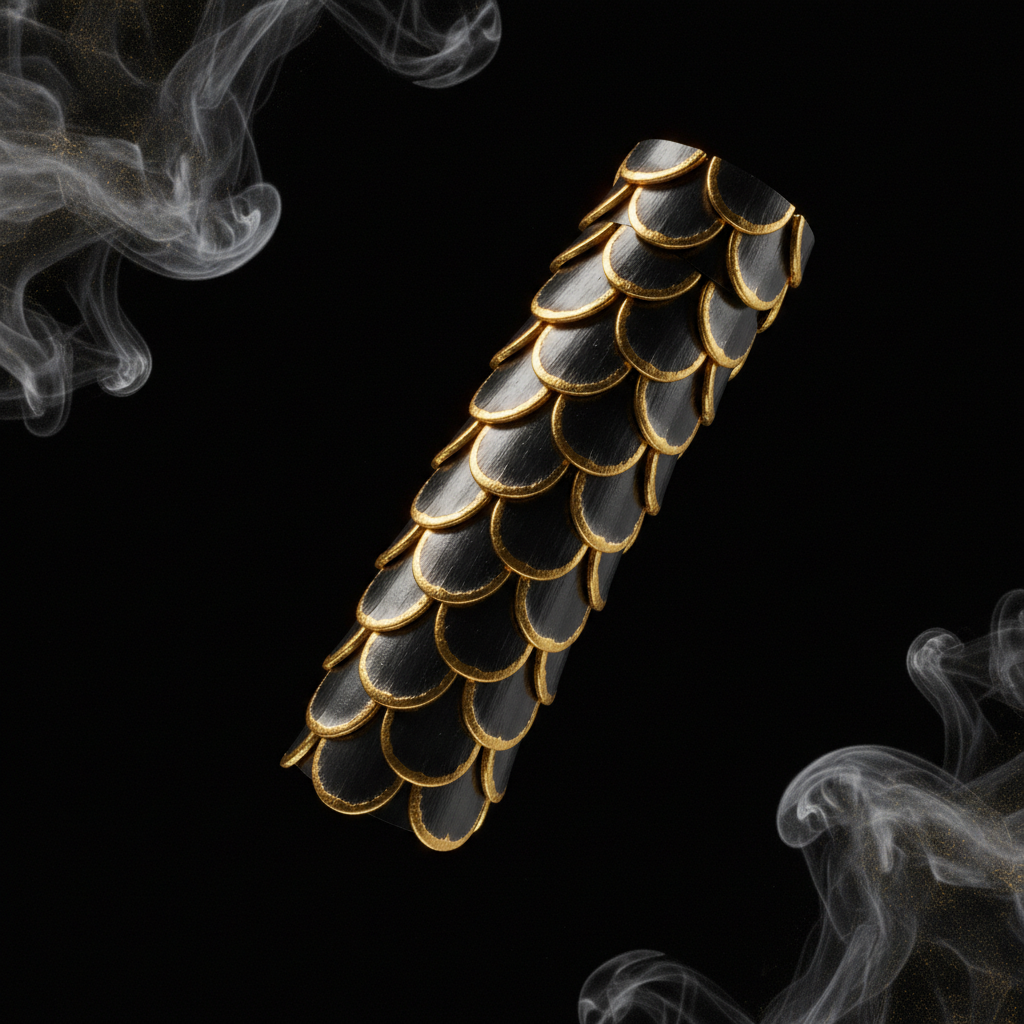
Quick answer: The Hair Cuticle Layer is the protective, outermost envelope of the hair shaft, composed of 5 to 10 overlapping, flattened keratinised cells that resemble shingles on a roof. Its primary biological role is shielding the fragile internal cortex from mechanical, chemical, and environmental degradation while regulating moisture exchange. Because cuticle cells are non-living tissue, once they chip, lift, or strip away entirely, biological self-repair is impossible, meaning management relies strictly on cosmetic smoothing and preventative care.
Key takeaways
- The cuticle consists of 5 to 10 overlapping cell layers anchored by a thin, lipid-rich protective coating called the 18-methyleicosanoic acid (18-MEA) layer.
- An intact cuticle gives hair its natural shine and hydrophobicity, causing water droplets to roll off rather than penetrate immediately.
- Alkaline chemical treatments (such as bleaching and ammonia-based permanent dyes with pH values above 9.0) force cuticle scales to swell and lift, depleting essential structural lipids.
- Mechanical friction from rough towel-drying, aggressive brushing, and heat styling without protection can erode or fracture scale margins.
- Cuticle cells are dead tissue; cosmetic conditioners, low-pH rinses, and smoothing products can temporarily patch and flatten lifted scales, but they cannot biologically regenerate lost cells.
The Hair Cuticle Layer: what the evidence shows
The Hair Cuticle Layer forms the barrier between your hair's delicate core and the outside world. Research published in the International Journal of Cosmetic Science and cosmetic chemistry texts demonstrates that healthy human scalp hair features between 5 and 10 layers of overlapping scales pointing towards the fibre tip. Each individual cuticle cell is roughly 0.3 to 0.5 micrometres thick and about 35 to 45 micrometres long.
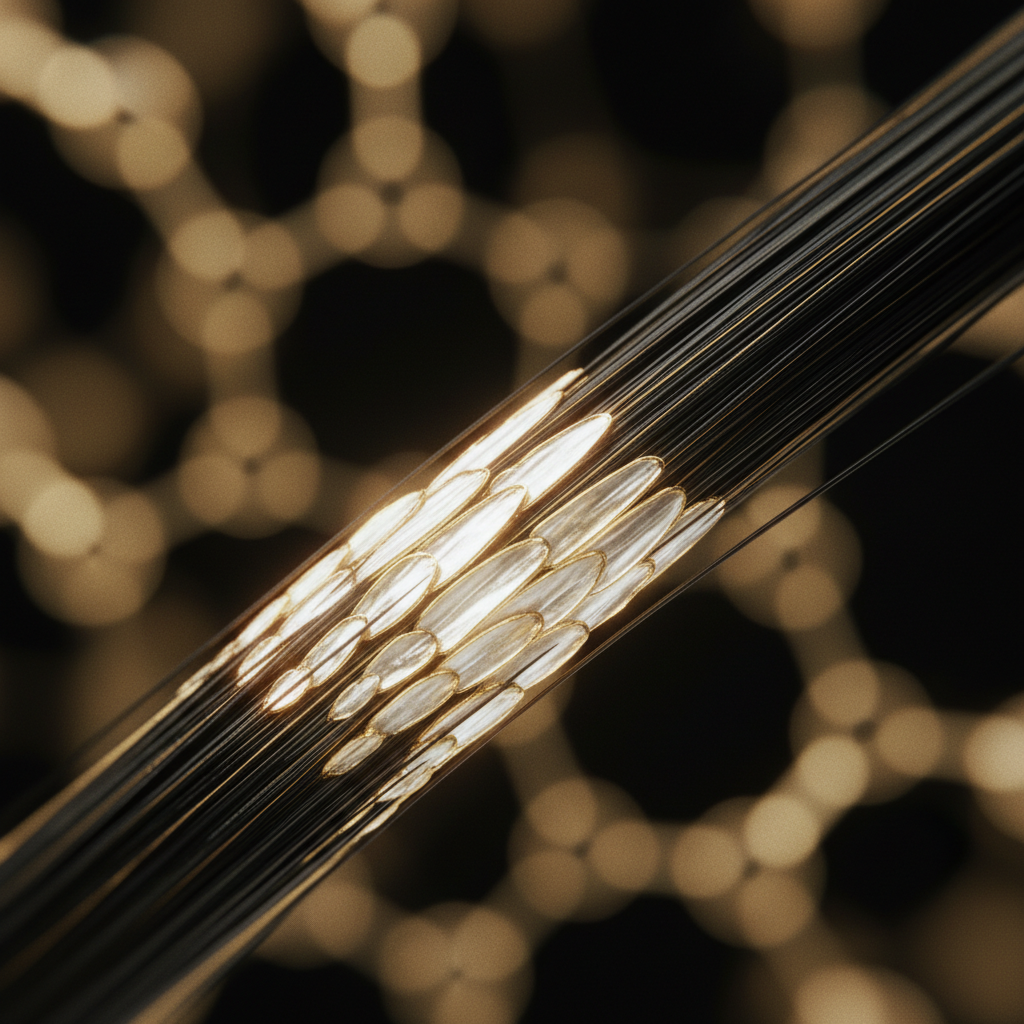
Beneath the microscope, these scales are not uniform plates. Each scale contains distinct sub-layers with varying concentrations of cystine (a sulphur-rich amino acid):
- The Epicatricle: A fragile external membrane that carries the F-layer (18-MEA), imparting a hydrophobic, water-repelling barrier.
- The A-layer: A dense, highly cross-linked zone containing over 30% cystine, which provides structural rigidity and resistance to chemical assault.
- The Exocuticle: Another cystine-dense layer (roughly 15% cystine) contributing to mechanical resilience.
- The Endocuticle: A soft, low-cystine interior (roughly 3% cystine) with higher swellability when exposed to water or alkaline solutions.
- The Cell Membrane Complex (CMC): An intercellular adhesive composed of proteins and lipids that binds adjacent cuticle scales together.
When the hair is at its natural isoelectric point (around pH 3.67) and physiological surface pH (around 4.5 to 5.5), these scales lie tightly packed. This alignment produces a smooth, reflective surface that reads visually as shine, reduces inter-fibre friction, and prevents the cortex from unravelling.
Mechanism: how cuticle damage happens
Damage to the outer protective shell follows a predictable biological and physical sequence. Because hair fibre is non-living once it emerges from the follicular canal, damage is cumulative from root to tip.
Chemical erosion and pH disruption
Pure water has a neutral pH of 7.0, whereas healthy hair exists at a mildly acidic surface pH. Exposure to alkaline substances (including high-pH tap water, clarifying cleansers, bleaching agents, or permanent wave solutions) forces the endocuticle to absorb water and swell. This swelling pushes the outer cuticle margins upward. Repeated lifting loosens the intercellular cement of the cell membrane complex and hydrolyses the delicate 18-MEA lipid layer, leaving the fibre hydrophilic (water-absorbing) rather than water-repellent.
Mechanical attrition
Friction wears down the scale margins over time. Brushing dry hair with damaged bristles or combing wet hair (when the fibre is stretched and the cuticle is softer) chips the edges of individual scales. In severe mechanical weathering, entire cuticle cells detach, exposing the underlying cortex. Once the cortex is laid bare, split ends (trichoptilosis) and mid-shaft snapping follow rapidly.
Thermal degradation
Heat tools operating above 180°C physically degrade the keratin matrix. If hair contains moisture when exposed to rapid heat, water trapped beneath the cuticle scales vaporises instantly, leading to structural blistering and cracked cuticle margins.
Comparing healthy vs damaged hair cuticles
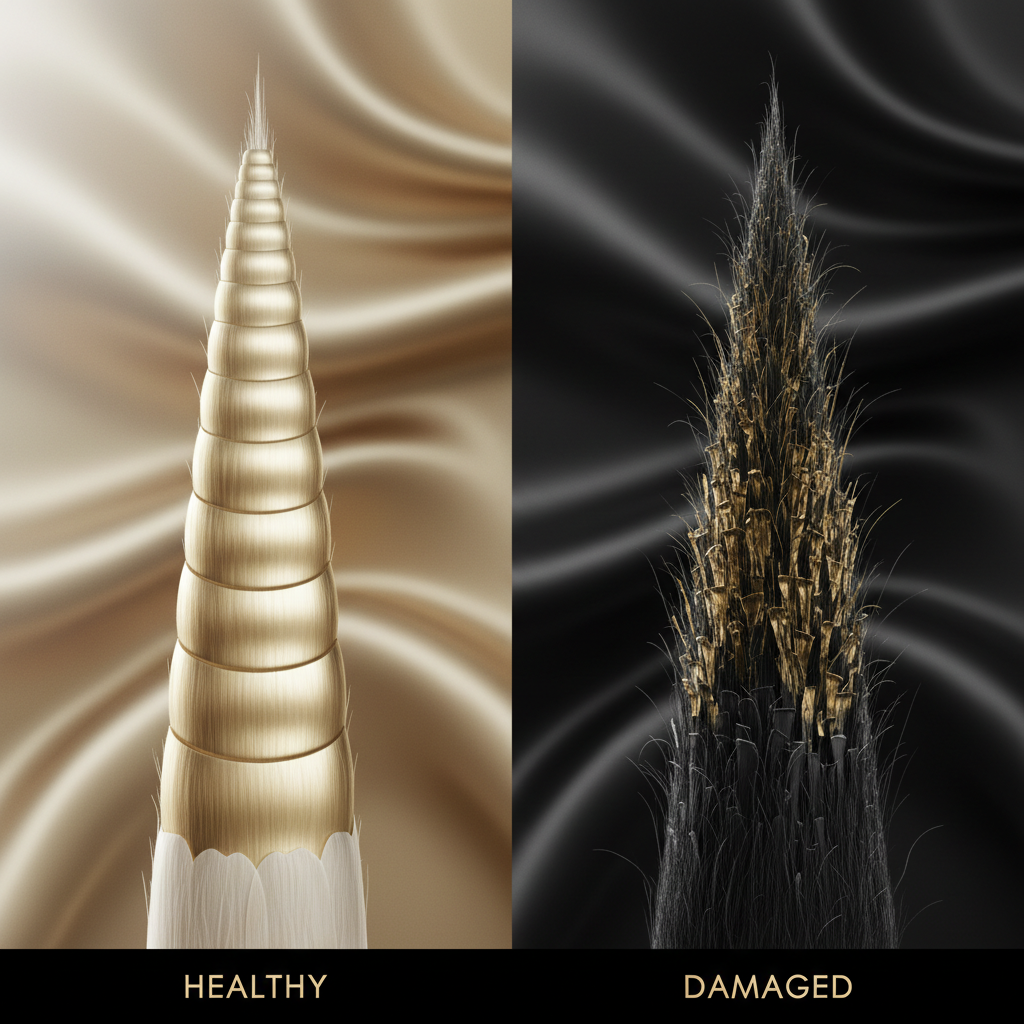
| Structural feature | Healthy cuticle layer | Damaged or stripped cuticle layer |
|---|---|---|
| Microscopic alignment | Scales lie flat, tight, and uniform | Scales are lifted, chipped, curled, or absent |
| Surface lipid coating (18-MEA) | Intact, fully hydrophobic | Depleted, highly hydrophilic |
| Surface friction | Low; fibres glide past each other | High; fibres catch, knot, and tangle readily |
| Light reflection | High specular reflection (gloss/shine) | Diffuse scattering of light (dullness, frizz) |
| Porosity | Low to moderate; absorbs water steadily | High; absorbs and loses water rapidly |
| Tensile resilience | Cortex is sealed; low risk of breakage | Cortex exposed; prone to snapping and splits |
Signs of cuticle deterioration
Recognising cuticle degradation early helps you alter physical routines before the internal cortex breaks down:
- Loss of natural shine: Light hits rough, lifted scales and scatters in multiple directions, making hair look flat or matte.
- Persistent tangling and fairy knots: When scales lift, the raised margins of adjacent hair strands catch on one another like interlocking Velcro hooks.
- Rapid wetting and drying: Highly porous hair with compromised cuticles absorbs water instantly upon contact, yet dries rapidly and feels straw-like once moisture evaporates.
- Frizz in humid environments: High atmospheric humidity slips easily under raised scales into the cortex, breaking temporary hydrogen bonds and reshaping the hair into an unruly pattern.
- Rough tactile feedback: Running your fingers from the ends up toward the roots creates noticeable resistance, squeaking, or scratchiness.
What you can do to protect the cuticle
While lost cuticle scales cannot biologically regenerate, targeted physical and cosmetic habits can flatten raised scales and shield remaining layers from further erosion.
Minimise chemical trauma
Limit high-lift bleaching, ammonia-heavy dyes, and chemical straighteners. If you colour your hair, opt for lower-volume developers and maintain adequate intervals between appointments to allow the lipid balance to recover.
Use pH-balanced cleansing
Choose shampoos and conditioners formulated near the scalp and hair's natural physiological pH (between 4.5 and 5.5). Mildly acidic formulations contract cuticle cells, encouraging them to lie flat against the shaft and preventing excessive swelling in the shower.
Support with conditioning agents
Cationic surfactants (such as behentrimonium chloride) and hydrolysed proteins bind electrostatically to the negatively charged, damaged spots along lifted scales. This temporary smoothing lowers surface friction and replicates the protective slickness of the depleted 18-MEA layer.
Reduce mechanical strain
Avoid vigorous towel-drying. Instead, squeeze excess water out with a smooth microfibre cloth or cotton towel. Always detangle starting from the ends and moving upward toward the roots, preferably with a wide-tooth comb or flexible-bristle brush on damp hair treated with a slip-enhancing leave-in conditioner.
Apply thermal protection
Heat-protectant sprays contain silicones and cross-linked polymers that distribute thermal energy evenly and form a defensive buffer over the cuticle, preventing instantaneous water boiling within the endocuticle.
When the cause may be something else
If your hair is shedding excessively from the root or thinning in patches, the issue lies beneath the surface within the hair follicle, not in the cuticle layer. Cuticle weathering causes fibre breakage along the shaft, rough texture, and split ends. It does not cause telogen effluvium, androgenetic alopecia, or inflammatory scalp conditions.
If you notice short, broken hairs with frayed tips on your clothing or pillow, your primary issue is cuticle erosion and fibre breakage. If you notice full-length hairs with tiny white bulbs attached at the base, you are experiencing follicular shedding, which warrants an evaluation of systemic health, diet, stress levels, or hormones.
Frequently asked questions about The Hair Cuticle Layer
Can a damaged cuticle layer repair itself?
No, the cuticle layer cannot biologically heal or regenerate. The visible hair fibre consists of dead, keratinised cells without active cellular metabolism or blood supply. While cosmetic products containing silicones, cationic polymers, and plant oils can temporarily fill gaps, glue down lifted edges, and restore smooth slip, they do not replace permanently lost cuticle tissue.
What is the primary role of The Hair Cuticle Layer?
The Hair Cuticle Layer functions primarily as an external physical and chemical shield for the hair's inner core, the cortex. By presenting a tightly bound, lipid-coated barrier of overlapping scales, it protects structural keratin chains from oxidative stress, mechanical friction, and environmental radiation while regulating the entry and exit of environmental moisture.
Does hot water damage the cuticle?
Hot water does not melt hair keratin, but it accelerates cuticular swelling. Warm-to-hot water softens the intercellular lipids and swells the endocuticle, making scales lift higher than they would in lukewarm water. This temporary swelling leaves the fibre significantly more vulnerable to mechanical friction and abrasive chipping during in-shower washing and towel-drying.
How does hair porosity relate to the cuticle?
Hair porosity directly reflects the physical state of your cuticle layer. Low-porosity hair features tightly packed, flat scales that resist moisture absorption. High-porosity hair features widely raised, cracked, or missing cuticle scales, allowing water, chemicals, and styling products to rush into the cortex rapidly and escape just as quickly, resulting in chronic dryness.
What is the 18-MEA layer on the cuticle?
The 18-methyleicosanoic acid (18-MEA) layer is a primary lipid membrane covalently bound to the outermost surface of the epicuticle. It creates a hydrophobic barrier that repels water, prevents static, and lowers mechanical friction between strands. A single chemical bleaching or alkaline treatment can strip significant amounts of this essential lipid coating.
Protecting your hair's protective barrier
Understanding how the outer shell behaves changes how you approach daily washing, styling, and chemical maintenance. The Hair Cuticle Layer is the fundamental guardian of your hair's strength, flexibility, and natural shine. Once its protective shingles are weathered or stripped away, the inner cortex remains exposed to unmitigated breakdown and breakage. By focusing on gentle detangling, pH-conscious washing, and consistent protection against heat and chemical processing, you keep these vital scales intact for as long as possible.
Sources and references
- International Journal of Cosmetic Science, "The physical and chemical nature of human hair cuticle", 2008.
- Robbins, C. R., Chemical and Physical Behavior of Human Hair, 5th Edition, Springer-Verlag, 2012.
- Journal of Cosmetic Dermatology, "Hair surface hydrophobicity and the role of 18-MEA in hair health", 2015.
- Society of Cosmetic Chemists, "Morphology and properties of the cell membrane complex in human hair", 2010.