Hair Cortex Strength: The Biophysics of Elasticity and Breakage
10 min read ·
Discover what Hair Cortex Strength is, how disulphide bonds govern tensile resilience, and the proven ways to prevent hair breakage and structural damage.
Quick answer: Hair Cortex Strength refers to the mechanical resilience, elasticity, and load-bearing capacity of the hair fibre's central core, which makes up roughly 75% to 85% of its total mass. This structural strength stems from organised alpha-keratin intermediate filaments bound together by high-sulphur proteins and covalent disulphide bonds. The main limitation is that cortex keratin cannot biologically regenerate once damaged. While cosmetic treatments can patch surface fissures or temporarily reinforce broken bonds, permanent structural restoration of weakened cortex tissue is physically impossible.
Key takeaways
- The cortex forms 75% to 85% of the hair shaft and provides almost all of its tensile strength, elasticity, and torsional resistance.
- Parallel alpha-keratin protofibrils embedded in an amorphous matrix of cystine-rich proteins govern overall cortex resilience.
- Chemical bleaching, high heat above 185°C, and oxidative hair dye permanently deplete disulphide bonds, reducing tensile load tolerance.
- Cosmetic bond builders, protein treatments, and conditioning agents provide functional reinforcement against snapping, but they cannot biologically regrow or permanently rebuild broken cortical keratin.
- Hair snapping along the shaft indicates a mechanical cortex issue (breakage), which is distinct from root shedding or follicular hair loss.
Hair Cortex Strength: what the evidence shows
Scientific evaluation of Hair Cortex Strength centres on tensile testing: measuring the force required to stretch and snap a single strand of hair. Decades of cosmetic chemistry and biophysical research show that healthy hair fibres can typically withstand an elongation of roughly 30% when dry and up to 50% when fully saturated with water before fracturing. When dry, a healthy individual hair strand can support a load of approximately 50 to 100 grams.
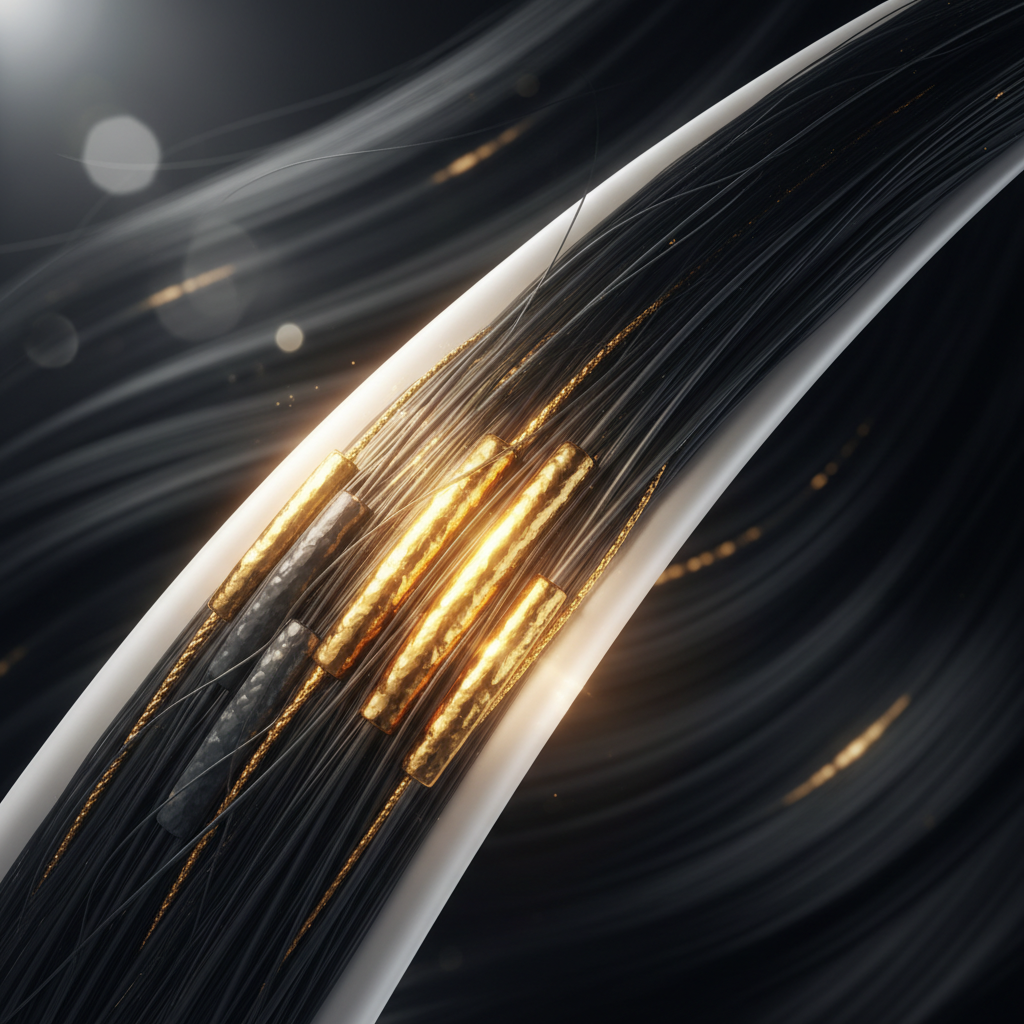
The primary structural driver of Hair Cortex Strength is the disulphide bond. These covalent links connect pairs of cysteine residues, forming bridges between adjacent keratin polypeptide chains. In an untreated hair fibre, cystine accounts for roughly 16% to 18% of the total amino acid profile. When these chemical bridges remain intact, the cortex easily snaps back from mechanical deformation, resisting everyday brushing, friction, and styling stress.
Furthermore, hydration balance plays a crucial role in cortical elasticity. Water molecules penetrate the porous cortical matrix, temporarily disrupting weaker hydrogen bonds and allowing the alpha-keratin helices to uncoil into beta-pleated sheets under tension. However, prolonged excessive swelling (hygral fatigue) strains the surrounding cell membrane complex, which can degrade the overall mechanical stability of the cortex over repeated wash cycles.
Biological mechanism of the hair cortex
The hair fibre consists of three anatomical layers: the external cuticle, the internal cortex, and the central medulla (which is often discontinuous or absent in fine hair). The cortex is composed of elongated cortical cells packed with microfibrils, known as intermediate filaments.
Hair Fibre Cross-Section:
[ Cuticle (Outer Shingle Scales) ]
 │
[ Cell Membrane Complex (CMC) ]
 │
[ Cortex (75%, 85% Mass: Keratin Filaments & Disulphide Bonds) ]
 │
[ Medulla (Porous Core) ]
Each cortical cell houses hundreds of macrofibrils, which in turn consist of bundles of alpha-keratin intermediate filaments. These parallel filaments are embedded in an amorphous protein matrix that contains high concentrations of sulphur. Three distinct bond types hold this internal architecture together:
- Disulphide bonds: Strong covalent links between sulphur atoms. They resist heat and water, breaking only under aggressive chemical reduction, bleaching, or severe thermal degradation.
- Salt bonds (ionic links): Electrostatic attractions between positive and negative amino acid side chains. These depend heavily on pH and weaken significantly when hair moves outside its normal isoelectric zone (pH 3.67 to 5.5).
- Hydrogen bonds: Abundant, weak bonds that break readily in the presence of water or moderate heat, allowing temporary physical reshaping.
Between the cortical cells lies the cell membrane complex (CMC), a lipid-protein adhesive rich in 18-methyleicosanoic acid (18-MEA) and ceramides. If the CMC degrades, cortical cells can split apart longitudinally, resulting in catastrophic fibre weakness known as trichorrhexis nodosa.
What weakens Hair Cortex Strength?
Cortex weakness does not happen spontaneously; it is the direct physical consequence of cumulative chemical, thermal, and mechanical stress.
Chemical processing
Bleaching (alkaline hydrogen peroxide) and permanent hair dyes oxidise melanin granules located inside the cortex. In doing so, they also oxidise cystine into cysteic acid, permanently destroying disulphide bonds. Studies show that aggressive bleaching can reduce hair's tensile load threshold by 30% to 50%. Alkaline relaxers (sodium hydroxide, guanidine hydroxide) convert disulphide bonds into non-elastic lanthionine cross-links, drastically reducing elasticity.
Thermal breakdown
Styling tools heated beyond 185°C cause rapid structural degradation. Excess heat boils trapped water within the cortex (creating bubble hair deformity) and converts alpha-keratin into denatured beta-keratin. Above 215°C to 230°C, the protein matrix permanently melts and chars.
Ultraviolet radiation
Solar UV radiation penetrates the cuticle and induces photo-oxidation within the cortex. UVA and UVB wavelengths generate free radicals that break disulphide bridges and degrade aromatic amino acids like tryptophan and tyrosine, leaving the internal core brittle and porous.
| Stress Factor | Primary Target in Fibre | Structural Consequence | Impact on Tensile Strength |
|---|---|---|---|
| Bleaching / Lightening | Disulphide bonds, melanin | Conversion of cystine to cysteic acid | Severe decrease (30% to 50% loss) |
| Alkaline Relaxers | Disulphide cross-links | Conversion to rigid lanthionine | High decrease; reduced elasticity |
| Heat Styling (>185°C) | Alpha-keratin helices, moisture | Bubble hair, keratin denaturation | Moderate to severe decrease |
| UV Radiation | Matrix proteins, lipids | Free-radical degradation of amino acids | Gradual, cumulative weakening |
| Aggressive Wet Brushing | Hydrogen bonds, CMC | Over-extension past elastic limit (>30%) | High risk of acute fibre snapping |
What the evidence does not show
It is common to encounter products claiming to "permanently repair" or "resurface" broken cortical chains. Current biophysical evidence does not support the idea that dead, keratinised hair tissue can biologically heal itself.
- Cosmetics cannot revive dead cells: Once a hair fibre emerges from the scalp follicle, it is biologically inert. No vitamin, oil, or supplement can mend a snapped disulphide bond from the inside out via biological regeneration.
- Topical nutrients do not rebuild cortex mass: Applying raw eggs, collagen creams, or food-grade proteins cannot replace lost cortex mass. Whole protein molecules are far too large to penetrate the dense cuticle barrier, acting purely as temporary surface-coating films.
- Shampoo cannot treat hormonal hair loss: Thinning caused by androgenetic alopecia occurs at the dermal papilla inside the scalp, not within the hair shaft. Reinforcing the cortex will reduce snapping along the lengths, but it cannot alter follicle miniaturisation or slow genetic balding.
Signs of cortical weakness versus healthy hair
Evaluating fibre strength helps distinguish surface cuticle wear from deep structural cortex compromise.
- Poor wet elasticity: When pulled gently, healthy wet hair stretches slightly and bounces back. Weakened cortical hair stretches like chewing gum and remains deformed, or snaps abruptly with minimal force.
- Frequent mid-shaft snapping: If you see short, jagged pieces of hair on your clothes or counter without a white bulb at the tip, your cortex is failing. Hair shed from the follicle features a rounded white bulb.
- Trichorrhexis nodosa (node formation): Tiny, whitish-grey specks visible along the hair shaft under bright light indicate areas where the cuticle has vanished and cortical fibres have frayed outward like two paintbrushes pressed together.
- Extreme porosity: Hair that absorbs water instantly, takes hours to dry, and feels sponge-like when wet has suffered severe cortical matrix erosion.
Practical steps to reinforce and protect the cortex
While true biological regeneration is impossible, you can protect the structural integrity of your cortex and functionally reinforce compromised fibres.
- Lower styling temperatures: Keep hot tools below 180°C, and always apply a silicone- or polyquaternium-based thermal protectant to distribute heat evenly.
- Incorporate bond-modifying agents: Formulations containing small dicarboxylic acids (like maleic acid) or synthetic cross-linkers can form temporary artificial bridges across broken disulphide sites, reducing breakage during subsequent washes.
- Use hydrolysed micro-proteins: Hydrolysed wheat, soy, or keratin proteins with low molecular weights (under 1,500 Daltons) are small enough to penetrate micro-fissures in the cuticle and settle into cortical voids, temporarily boosting tensile resilience.
- Maintain the lipid balance: Use leave-in conditioners containing fatty alcohols, ceramides, and light natural oils to seal the outer cuticle layer. A sealed cuticle shields the internal cortex from ambient humidity and environmental friction.
- Minimise wet mechanical tension: Never use fine-tooth combs or stiff brushes on dripping-wet hair. Use wide-tooth combs or flexible detangling tools starting at the ends and moving upward.
Supporting hair condition: the Watermans approach
For individuals experiencing brittle, easily broken lengths alongside sluggish scalp vitality, external support should work hand-in-hand with daily care. Watermans focuses on non-invasive, high-performance formulations designed to support the scalp environment while improving the condition and feel of fragile hair strands.
Products like Watermans Grow Me Shampoo and Condition Me Conditioner deliver essential hydrolysed proteins, niacinamide, caffeine, and argan oil directly to the hair shaft and scalp. While no topical cosmetic can reverse genetic alopecia or permanently weld fractured keratin, these nutrient-dense blends help improve surface slip, reduce friction during washing, and coat fragile strands, helping you retain existing length by curbing preventable daily snapping.
When the issue is not breakage: professional advice
It is vital to distinguish between cortex breakage and follicular hair loss. If you notice extensive shedding from the scalp, expanding partings, or smooth circular bald patches, the cortex is not your primary concern.
Consult a GP, dermatologist, or qualified trichologist immediately if:
- You are losing more than 100 to 150 hairs per day with the white root bulb intact.
- Hair loss is sudden, patchy, or accompanied by scalp tenderness, redness, or scaling.
- Your hair texture changes rapidly from coarse to fine and wispy across large areas of the scalp.
A qualified professional can carry out a trichogram, scalp biopsy, or blood panel (evaluating ferritin, zinc, thyroid, and hormone levels) to identify the biological root cause.
Frequently asked questions about Hair Cortex Strength
What is the primary factor determining Hair Cortex Strength?
The primary factor governing Hair Cortex Strength is the abundance and alignment of covalent disulphide bonds linking alpha-keratin intermediate filaments. These bonds, combined with the dense sulphur-rich matrix surrounding the microfibrils, give the hair shaft its tensile load-bearing capacity, elasticity, and resistance to snapping during physical tension.
Can a damaged hair cortex truly heal itself?
No. The hair cortex is made of non-living, fully keratinised cells and cannot biologically heal, divide, or regenerate. While bond-building cosmetics and hydrolysed micro-proteins can temporarily bridge structural gaps and reduce snapping, they are functional cosmetic patches that wash away or degrade over time.
How does wet hair affect cortical elasticity?
When hair is wet, water disrupts the internal hydrogen bonds within the cortex, temporarily loosening the tight alpha-keratin coils. This makes the fibre substantially more elastic, stretching up to 50% of its length. However, it also lowers the hair's overall breaking force threshold, making it far more vulnerable to snapping if brushed roughly.
Does split-end repair restore cortex strength?
No. Split ends occur when the outer cuticle strips away completely, causing cortical cell bundles to fray longitudinally. While split-end serums can temporarily glue the split strands together using silicones or polymers, they do not restore the internal structural strength of the cortex. The only permanent solution for frayed ends is a trim.
How does bleaching destroy cortical integrity?
Bleaching uses strong alkaline agents (such as ammonium hydroxide) to swell the cuticle, allowing hydrogen peroxide to penetrate deep into the cortex. Peroxide oxidises colour pigments, but it also indiscriminately oxidises cystine residues into cysteic acid, permanently severing disulphide bonds and stripping up to 50% of the cortex's natural strength.
Summary
Maintaining resilient hair requires understanding that Hair Cortex Strength is the mechanical foundation of every single strand. Once the internal framework of alpha-keratin filaments and disulphide bonds is compromised by aggressive chemical services or excessive heat, the damage cannot be biologically undone. By treating your hair with gentle detangling practices, moderate heat, and protective conditioning formulas, you can shield the cortex from mechanical failure and maintain strong, resilient lengths.
Sources and references
- Robbins, C. R. (2012). Chemical and Physical Behavior of Human Hair (5th ed.). Springer-Verlag.
- Wolfram, L. J. (2003). Human hair: A unique physicochemical composite. Journal of the American Academy of Dermatology, 48(6), S106, S114.
- Feughelman, M. (1997). Mechanical Properties and Structure of Alpha-Keratin Fibres: Inside the Hair and Wool Matrix. UNSW Press.
- Swift, J. A. (1999). The mechanics of fracture of human hair. International Journal of Cosmetic Science, 21(4), 227 to 239.
- Cruz, C. F., et al. (2016). Human hair characteristics and methods of evaluation: An overview. Journal of Cosmetic Dermatology, 15(4), 431 to 449.
Find these ingredients in Watermans products
- Zinc: you will find this ingredient in our Hair Vitamins.
- Niacinamide: you will find this ingredient in our Hair Mask.