Hair Coloring Explained
4 min read ·
Hair colouring involves a chemical process to change the hair's natural pigment, either by depositing new colour or by removing existing colour to lighten it.
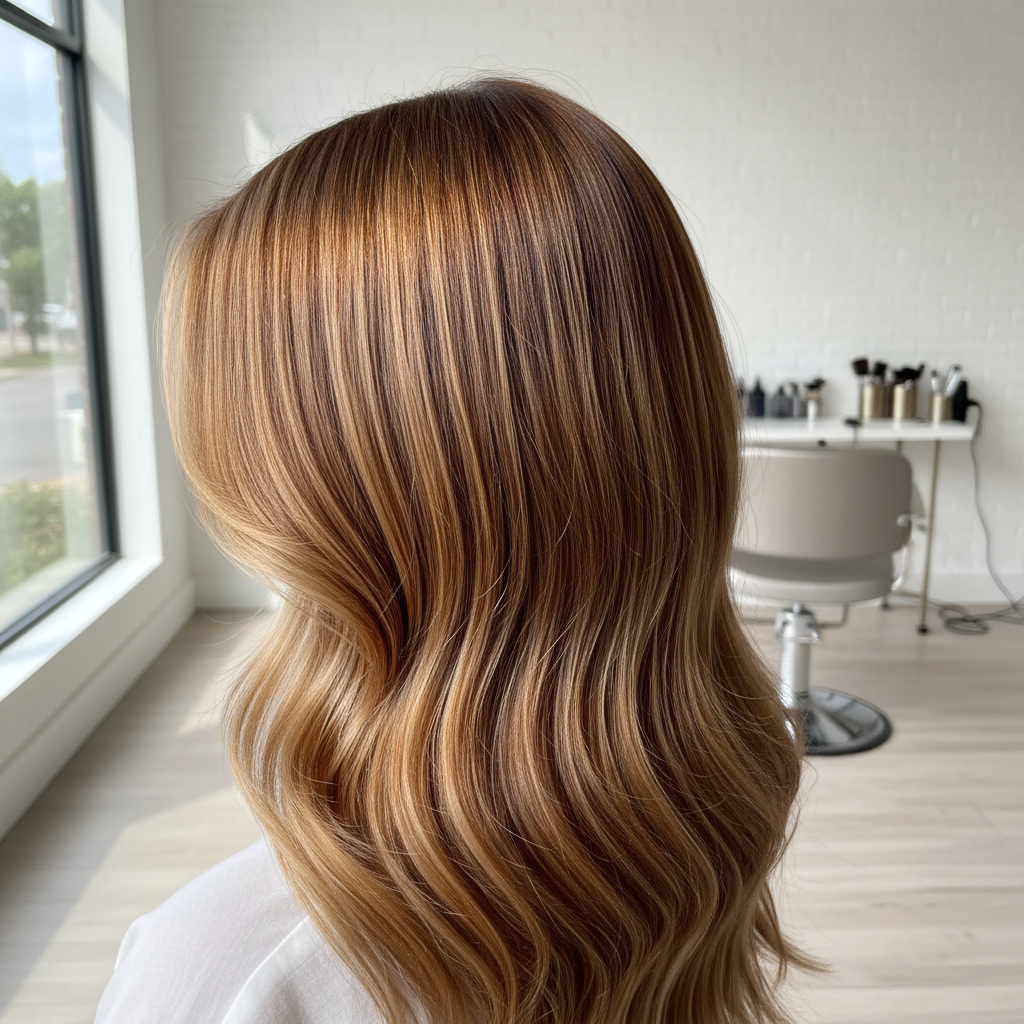
The Science of Hair Coloring
Hair colouring, also known as hair dyeing, is a process that alters the natural colour of human hair. This is achieved through various chemical reactions that take place within the hair shaft, primarily affecting the melanin responsible for hair colour. The hair shaft consists of three main layers: the cuticle, cortex, and medulla. The cuticle is the outermost protective layer, composed of overlapping scales. The cortex is the middle layer, containing the majority of the melanin granules and responsible for the hair's strength and elasticity. The medulla is the innermost core, present in some but not all hair types.
Melanin Types
There are two primary types of melanin that determine natural hair colour:
- Eumelanin: Responsible for black and brown pigments. Higher concentrations result in darker hair.
- Pheomelanin: Responsible for red and yellow pigments, particularly prevalent in red and blonde hair.
The proportion and distribution of these melanins create the vast spectrum of natural hair colours.
How Hair Coloring Works
Most permanent and demi-permanent hair colouring processes involve an alkaline agent (such as ammonia or monoethanolamine) and an oxidizing agent (typically hydrogen peroxide). The alkaline agent serves to swell the hair shaft and raise the cuticular scales, allowing the colouring agents to penetrate the cortex. The oxidizing agent then plays a dual role:
- Bleaching (lightening): It breaks down the natural melanin in the cortex, leading to a lightening effect. This is more pronounced in lighter hair colours and during more intensive lightening processes.
- Colour Development: It catalyzes the chemical reaction between dye precursors within the hair shaft, forming larger colour molecules that become trapped within the cortex. These new molecules are too large to easily exit the cuticle, providing a more permanent colour change.
Types of Hair Colour
Hair colouring products are categorized by their longevity and the depth of colour change they provide.
Temporary Hair Colour
Temporary hair colours deposit colour molecules on the surface of the hair shaft without penetrating the cuticle. They do not involve chemical reactions with the hair's natural pigment. These colours typically wash out within one to two shampoos, depending on the hair's porosity and the product's direct application.
Semi-Permanent Hair Colour
Semi-permanent colours contain smaller dye molecules that can partially penetrate the outer layers of the cuticle but do not involve an oxidizing agent. They stain the hair and generally fade after 6 to 12 shampoos. They do not lighten the hair and are often used to enhance natural colour or add tone. Some semi-permanents may contain conditioning agents.
Demi-Permanent Hair Colour
Demi-permanent colours utilize an alkaline agent with a low-volume developer (hydrogen peroxide). This combination opens the cuticle slightly, allowing colour molecules to penetrate deeper into the cortex than semi-permanents. They last longer, typically 12 to 24 shampoos, and fade gradually. They are excellent for blending grey hair, enhancing natural colour, or refreshing faded permanent colour. Demi-permanents generally do not provide significant lift (lightening) of natural hair colour.
Permanent Hair Colour
Permanent hair colours offer the most significant and long-lasting colour change. They use stronger alkaline agents (such as ammonia) and higher-volume developers. This process fully lifts the cuticle, allowing dye precursors to deeply penetrate the cortex. The oxidizing agent then causes these precursors to polymerize into large, stable colour molecules, which are locked within the hair shaft. Permanent colour effectively covers grey hair and can lighten natural hair colour by several levels. The colour does not wash out but grows out, requiring root touch-ups.
| Type | Mechanism | Longevity | Lift (Lightening) | Gray Coverage |
|---|---|---|---|---|
| Temporary | Surface deposition | 1-2 shampoos | None | None |
| Semi-Permanent | Partial cuticle penetration; no developer | 6-12 shampoos | None | Blending (minimal) |
| Demi-Permanent | Partial cuticle penetration; low-volume developer | 12-24 shampoos | Minimal | Blending (significant) |
| Permanent | Deep cortex penetration; developer & ammonia | Until hair grows out | Yes (up to several levels) | Complete |
Common Ingredients and Their Roles
Alkaline Agents (e.g., Ammonia, Monoethanolamine [MEA])
These ingredients swell the hair shaft and open the cuticle, allowing hair dyes to penetrate the cortex. Ammonia is a strong alkaline agent commonly found in permanent hair colours, known for its effectiveness but also its pungent odour. MEA is a milder alternative, often used in ammonia-free formulations, though it may require higher concentrations or longer processing times.
Oxidizing Agents (e.g., Hydrogen Peroxide)
Hydrogen peroxide, often referred to as "developer," is essential in demi-permanent and permanent hair colour. It serves to break down natural melanin pigments (lightening the hair) and activates the dye molecules to create the new, desired colour within the hair shaft. Developers come in various volumes (e.g., 10, 20, 30, 40), indicating the strength of the peroxide and thus the degree of lightening and colour deposition.
Dye Precursors and Couplers
These are small, colorless molecules that penetrate the cortex. Once inside, they react with the oxidizing agent and each other to form larger, coloured molecules. These larger molecules are then trapped within the hair, providing the lasting colour.
Modifiers and Conditioners
Hair colour formulations often include conditioning agents, humectants, and pH adjusters. These ingredients help to mitigate potential damage, improve the hair
Where Watermans fits
If you want a routine built around the science above, these are the products from the range that apply here: