Hair Cleansing and Scalp pH: The Science of Barrier Health
9 min read ·
An evidence-based guide to hair cleansing and scalp pH, exploring the science of the acid mantle, cuticle health, and how cleanser acidity prevents breakage.
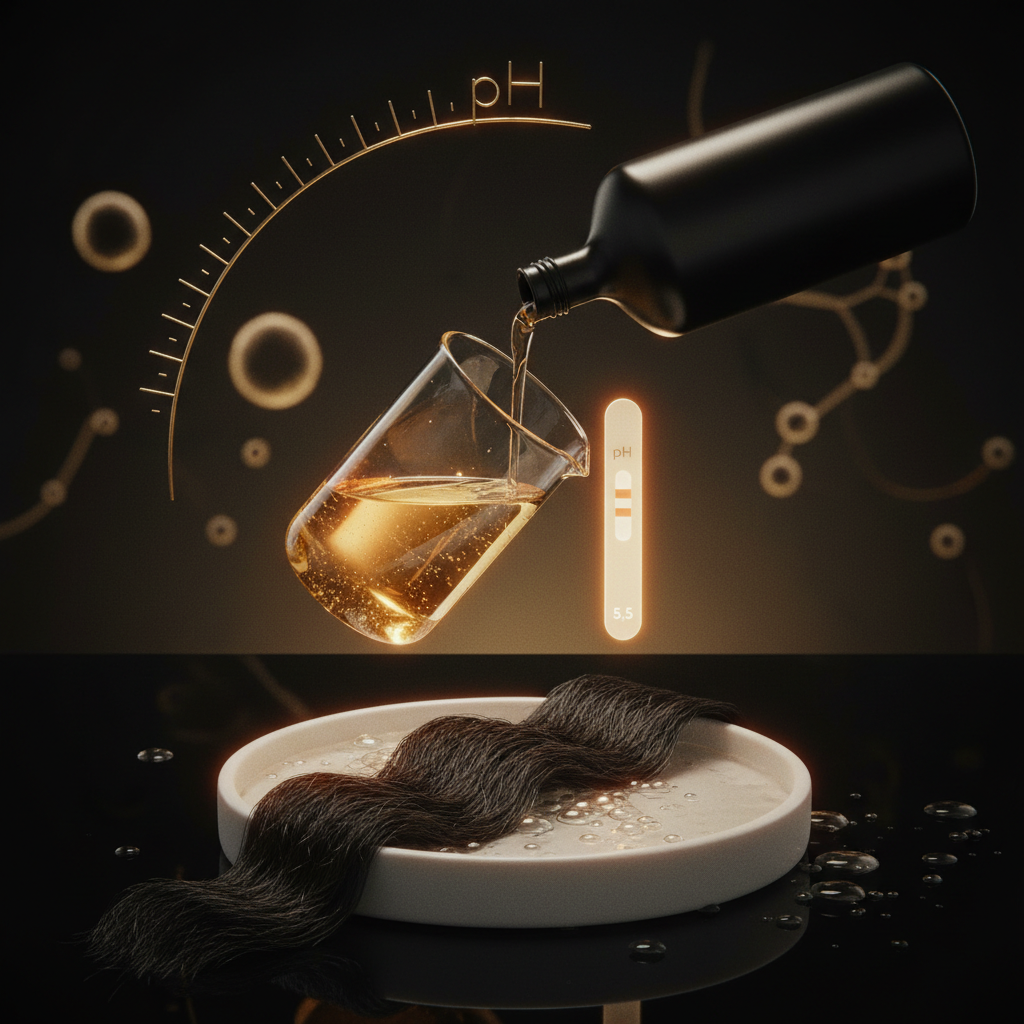
Quick answer: Understanding hair cleansing and scalp pH is essential for maintaining both fibre strength and skin barrier health. The normal, unwashed human scalp has an acidic physiological pH between 4.5 and 5.5, while the hair shaft itself rests around 3.67. Traditional soaps and high-pH alkaline cleansers disrupt the scalp acid mantle and cause the hair cuticle to swell, generating static electricity and friction. However, pH-balanced cleansing alone cannot cure medical scalp conditions such as seborrhoeic dermatitis, nor will it reverse genetic hair loss.
Key takeaways
- The healthy human scalp maintains an acidic micro-environment between pH 4.5 and 5.5, formed by sweat, sebum, and natural flora.
- Hair fibres possess an even lower isoelectric point (around pH 3.67), meaning alkaline cleansers induce negative electrical charges that lead to frizz and cuticle damage.
- Most alkaline shampoos (pH higher than 5.5) swell the outer cuticle scales, leaving the hair shaft prone to moisture loss, porosity, and mechanical breakage.
- Shampoos formulated in the acidic range (pH 4.0 to 5.5) help preserve the cutaneous lipid barrier and discourage the overgrowth of pathogenic microbes.
- Cleanser pH affects cosmetic hair texture and surface barrier resilience, but it cannot cure hormonal alopecia or inflammatory dermatoses.
Hair Cleansing and Scalp pH: what the evidence shows
Research into hair cleansing and scalp pH reveals that the chemical acidity of shampoos directly governs fibre integrity and the skin barrier. A landmark study published in the International Journal of Trichology (Gavazzoni Dias et al., 2014) evaluated 123 commercial shampoos and discovered that only 38 percent had a pH of 5.5 or lower. The remaining 62 percent exhibited alkaline levels, running as high as pH 9.0.
The scalp skin is protected by an "acid mantle," a delicate physiological barrier composed of lactic acid from sweat, free fatty acids from sebum, and amino acids from cornified cells. When you wash your hair, the surfactant mixture contacts both the living epidermis and the dead, keratinised hair shaft. If a cleanser possesses an alkaline pH (above 7.0), it neutralises this protective acid film.
Research confirms that sustained exposure to alkaline washing agents alters the cutaneous microbiome. The skin flora relies on an acidic pH to suppress opportunistic organisms. When the scalp shifts toward neutral or alkaline values, barrier repair enzymes slow down, transepidermal water loss increases, and irritants penetrate the stratum corneum more readily. For the hair fibre, an alkaline wash causes the protective imbricated cuticle cells to flare open, making the strands rough, dull, and vulnerable to friction.
What the evidence does not show
It is vital to separate cosmetic science from medical dermatology. While the relationship between hair cleansing and scalp pH is supported by extensive laboratory data, certain marketing claims overstate what an acidic shampoo can accomplish.
- Alkaline cleansers do not cause genetic hair loss: Using a shampoo with a pH of 7.0 or 8.0 will degrade the cuticle and dry out the scalp, but it does not cause androgenetic alopecia (pattern baldness) or alopecia areata. Follicular miniaturisation occurs deep inside the dermis, governed by genetics and hormones, not surface pH.
- Acidic cleansers cannot cure scalp infections alone: While an acidic pH discourages microbial dysbiosis, switching to a pH 4.5 shampoo will not instantly clear active fungal infections or stubborn seborrhoeic dermatitis. Medical conditions require targeted antifungal or anti-inflammatory actives.
- Low pH cannot restore dead cuticles: Acidic cleansers cause the hair cuticle to lie flat, reducing surface friction. They cannot, however, reattach broken cuticle fragments that have already sheared off through chemical bleaching or excessive heat styling.
Mechanisms: how pH affects the hair fibre and scalp barrier
The mechanical behaviour of your hair fibre is governed by its electrical charge. Hair keratin consists of protein chains rich in acidic and basic amino acids. At its isoelectric point (roughly pH 3.67), the positive and negative electrical charges on the hair fibre balance each other out.
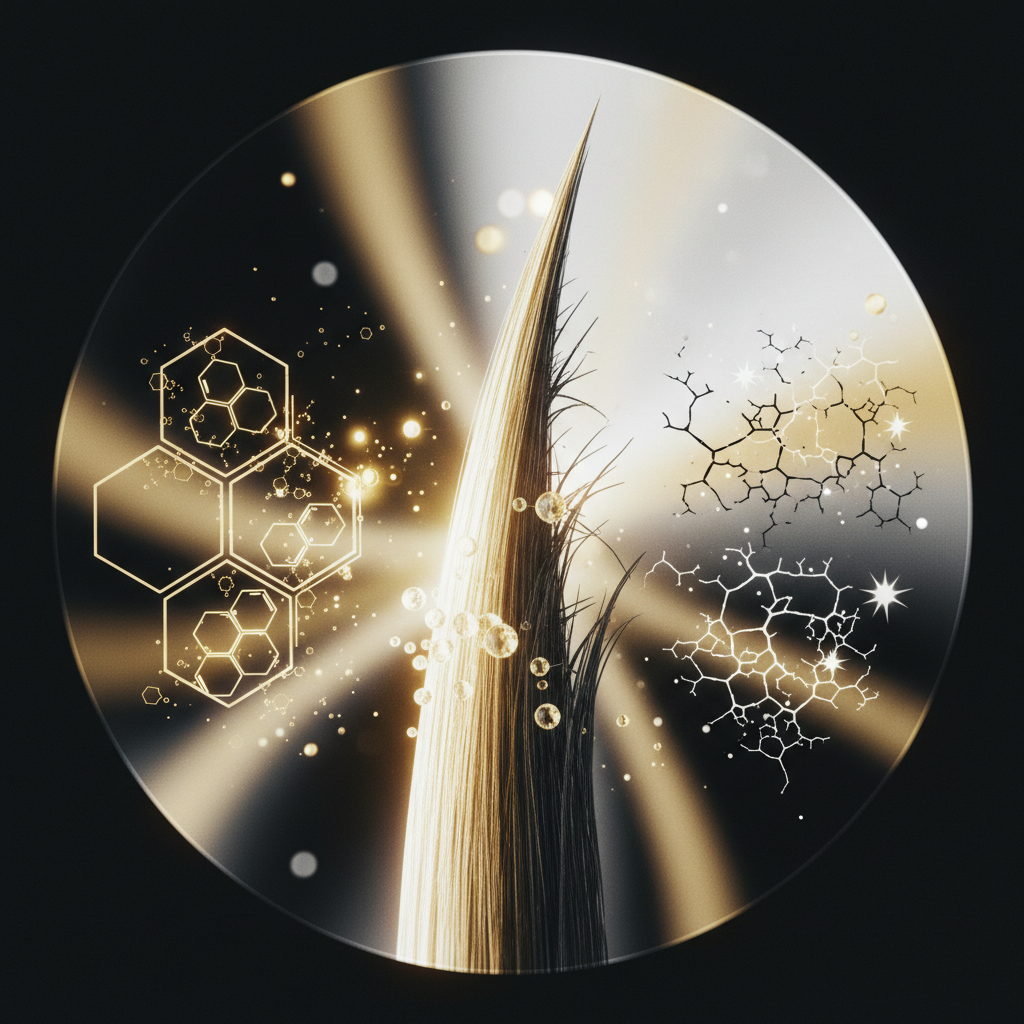
When you wash with water or cleansers above this value, the hair fibre acquires a net negative electrical charge. The higher the pH rises above 5.5:
- Cuticle flaring: Negative charges repel each other within the cuticle layers. This electrostatic repulsion forces the edges of the cuticles to lift outward away from the hair shaft.
- Hydration swelling: Water penetrates the exposed cortex more aggressively. The fibre swells in diameter, weakening the internal hydrogen bonds that give wet hair its elasticity.
- Frictional resistance: Lifted cuticles rub against neighbouring hairs during rinsing, detangling, and styling. This friction degrades the cuticular margins, stripping away the natural protective 18-methyleicosanoic acid (18-MEA) lipid layer.
- Acid mantle degradation: On the scalp surface, alkaline surfactants dissolve the intercellular lipid bilayers (ceramides, cholesterol, and fatty acids). The skin becomes alkaline, activating serine proteases that cause premature shedding of corneocytes, leading to tightness, itching, and scaling.
| Parameter | Acidic Cleanser (pH 4.0 to 5.5) | Alkaline Cleanser (pH 6.5 to 9.0) |
|---|---|---|
| Cuticle Response | Cuticle scales remain compact and flat | Cuticle scales lift and swell via charge repulsion |
| Fibre Surface Friction | Low; smooth glide between adjacent strands | High; increased combing force and knotting |
| Static Electricity | Minimal net negative charge accumulation | Significant negative charge; noticeable flyaways |
| Scalp Acid Mantle | Preserved; supports barrier enzyme function | Disrupted; takes hours to regenerate acidic pH |
| Microbiome Balance | Inhibits overproliferation of pathogens | Can encourage microbial dysbiosis and irritation |
| Primary Cosmetic Outcome | Gloss, smoothness, reduced wet breakage | Dullness, tangling, dryness, mechanical snapping |
Identifying the signs of pH-related scalp and hair stress
When your cleansing routine conflicts with your natural pH requirements, your hair and scalp display visible, tactile warnings.
Scalp symptoms
- Persistent tightness, burning, or mild stinging within 30 minutes of washing.
- Dry, powdery flaking across the crown and hairline that improves when washing frequency is reduced.
- Heightened reactivity to styling products, leave-in serums, or ambient humidity.
- Secondary oiliness, occurring when the skin barrier compensates for barrier dehydration by producing excess sebum.
Hair fibre symptoms
- Excessive tangles and knotting immediately after rinsing out shampoo.
- A rough, straw-like sensation while hair is wet, vanishing only when heavy silicones or conditioners are applied.
- High porosity, where hair absorbs water almost instantaneously but dries into an unmanageable, frizzy state.
- Mechanical breakage (tiny, fragmented hair pieces in the basin) caused by high combing resistance rather than follicular shedding.
Practical steps: optimising your cleansing routine
Maintaining the correct pH balance during hair washing does not require complex lab equipment. Small, evidence-based adjustments protect both the scalp and the fibre:
- Select tested acidic formulations: Choose shampoos that explicitly list an acidic pH (between 4.5 and 5.5) on the packaging or manufacturer documentation.
- Never use traditional bar soaps on the hair: Solid bar soaps are manufactured via the saponification of fats using lye (sodium hydroxide or potassium hydroxide), yielding an intrinsically alkaline pH of 9.0 to 10.0. Syndet bars (synthetic detergent bars) formulated at pH 5.0 are safe alternatives.
- Condition after every cleanse: Hair conditioners are formulated at an acidic pH (typically 3.5 to 4.5) containing cationic surfactants. These positively charged agents neutralise remaining negative electrical charges on the hair shaft, flattening the cuticle and reducing combing friction.
- Rinse thoroughly with lukewarm water: Extremely hot water increases hair fibre swelling and accelerates the removal of protective surface lipids, aggravating the impact of washing.
- Mind your water quality: Hard water contains dissolved calcium and magnesium ions that raise the wash water's pH and leave behind mineral deposits on the cuticle, further increasing roughness.
When the cause lies elsewhere
If you switch to a pH-balanced cleanser and continue to experience chronic itching, redness, or hair loss, pH imbalance is unlikely to be the primary problem.
- Seborrhoeic dermatitis: Driven by an inflammatory reaction to Malassezia yeast metabolites. It presents as greasy, yellowish flakes adhering to red plaques, requiring active antimicrobial ingredients (such as ketoconazole, piroctone olamine, or zinc pyrithione).
- Contact dermatitis: An allergic reaction to fragrances, preservatives (such as methylisothiazolinone), or specific surfactants. This requires patch testing by a dermatologist.
- Scalp psoriasis: An autoimmune condition causing rapid keratinocyte turnover, manifesting as thick, silvery, well-demarcated scales that bleed easily when removed.
- Telogen effluvium or alopecia: Diffuse, high-volume hair shedding (strands with white bulbs at the end) or localized bald patches stem from physiological stress, systemic deficiencies, thyroid disorders, or genetics, not cleansing chemistry.
When to seek professional advice
Consult a GP, dermatologist, or registered trichologist if you encounter any of the following warning signs:
- Scalp tenderness accompanied by pustules, crusting, oozing, or bleeding.
- Hair shedding exceeding typical daily baseline levels (50 to 100 hairs per day) for longer than six to eight weeks.
- Distinct, patchy circular areas of complete hair loss on the scalp.
- Flaking and severe itching that do not respond to over-the-counter anti-dandruff formulations within three to four weeks.
Supporting the scalp barrier with Watermans
When managing hair vitality, selecting balanced formulations preserves the delicate cuticle and stratum corneum. Watermans focuses on non-stripping scalp care, formulating products designed to respect the scalp ecosystem while nourishing the hair follicle. Using gentle, targeted shampoos and revitalising treatments helps safeguard the hair shaft against the daily mechanical friction that accelerates breakage, creating an optimal environment for healthy hair growth.
Frequently asked questions about Hair Cleansing and Scalp pH
What is the ideal pH for a daily shampoo?
The ideal shampoo pH sits between 4.5 and 5.5. This range matches the natural acidity of the scalp, prevents unwanted swelling of the hair shaft, minimises cuticle disturbance, and leaves the cutaneous barrier intact.
How does hair cleansing and scalp pH impact colour-treated hair?
In colour-treated hair, the cuticle is already structurally compromised from chemical processing. Washing with an alkaline shampoo lifts the cuticles further, allowing artificial colour molecules to wash out quickly. Cleansers balanced between pH 4.5 and 5.5 keep the cuticle flat, locking in colour and preventing excessive porosity.
Can water alone disrupt scalp pH?
Yes. Tap water generally has a neutral to slightly alkaline pH between 6.5 and 8.5. Even rinsing hair with plain water causes transient swelling of the hair shaft and a brief shift in scalp surface pH. However, a healthy scalp usually recovers its acidic baseline within several hours.
Can an incorrect pH cause permanent hair loss?
No. An inappropriate cleansing pH does not destroy the hair follicle or trigger permanent alopecia. It can, however, cause severe cuticle fraying that results in hair breakage, which people frequently mistake for true hair loss.
The role of pH in long-term hair health
Mastering hair cleansing and scalp pH represents one of the simplest, most scientifically proven steps in cosmetic hair management. When your cleansers align with the natural acidic biology of the human scalp and hair shaft, you preserve the skin barrier, discourage harmful microbial overgrowth, and reduce static and cuticle friction. Prioritising pH-conscious formulations ensures that every wash protects the structural integrity of your hair from root to tip.
Sources and references
- Gavazzoni Dias, M. F., et al. (2014). The Shampoo pH can Affect the Hair: Myth or Reality? International Journal of Trichology, 6(3), 95 to 99. Doi:10.4103/0974-7753.139078
- Ali, S. M., & Yosipovitch, G. (2013). Skin pH: From Basic Science to Basic Skin Care. Acta Dermato-Venereologica, 93(3), 261 to 267. Doi:10.2340/00015555-1531
- Robbins, C. R. (2012). Chemical and Physical Behavior of Human Hair (5th ed.). Springer-Verlag Berlin Heidelberg.
- Tarun, J., et al. (2014). Evaluation of pH of Bathing Soaps and Shampoos for Skin and Hair Care. Indian Journal of Dermatology, 59(5), 442 to 444. Doi:10.4103/0019-5154.139861
Find these ingredients in Watermans products
- Zinc: you will find this ingredient in our Hair Vitamins.