Understanding Hair Breakage versus Hair Shedding: The Evidence-Based Guide
10 min read ·
Learn the difference between hair breakage and hair shedding. Discover how to identify root bulbs, preserve shaft integrity, and address your hair concerns correctly.
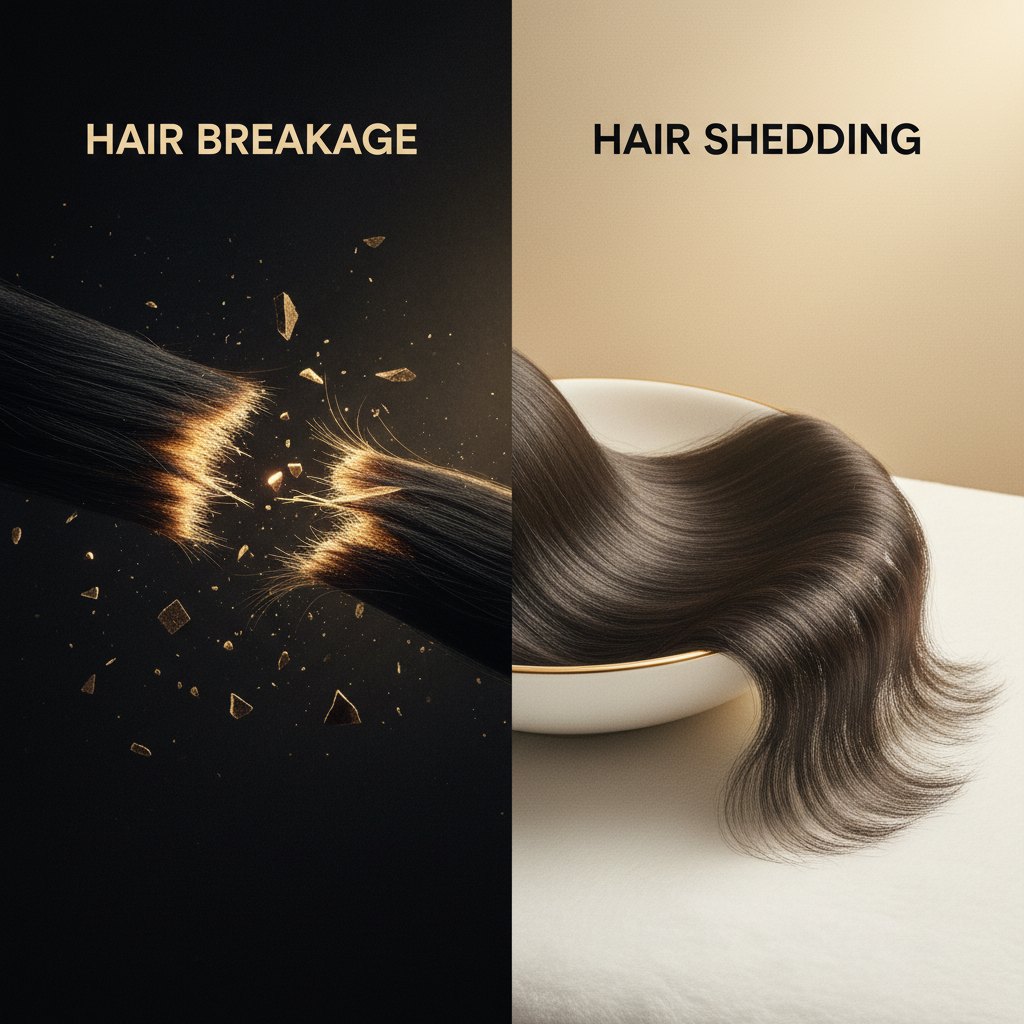
Quick answer: Understanding Hair Breakage versus Hair Shedding is essential for diagnosing hair concerns correctly. Shedding occurs when a hair reaches the end of its biological growth cycle and releases naturally from the follicle, complete with a tiny white bulb. Breakage happens when mechanical, chemical, or thermal stress fractures the hair shaft, leaving shorter, jagged strands without a bulb. While shedding is a normal internal process, breakage is external physical damage, though overlapping factors like nutritional deficiencies can exacerbate both conditions simultaneously.
Key takeaways
- Shed strands are full length and display a small, keratinised white bulb at the root end.
- Broken hairs are typically shorter than your current hair length, have frayed ends, and lack a root bulb.
- Normal physiological shedding accounts for roughly 50 to 100 telogen hairs per day across the scalp.
- Breakage results from structural failure in the cortex, often triggered by bleaching, heat tools, tight styling, or friction.
- Treatments diverge completely: excessive shedding requires evaluating systemic health and follicle cycling, whereas breakage requires improving fibre elasticity and mechanical handling.
Understanding Hair Breakage versus Hair Shedding: what the evidence shows
Understanding Hair Breakage versus Hair Shedding begins with recognising the anatomical difference between the follicle deep within the scalp and the dead keratin shaft extending outward.
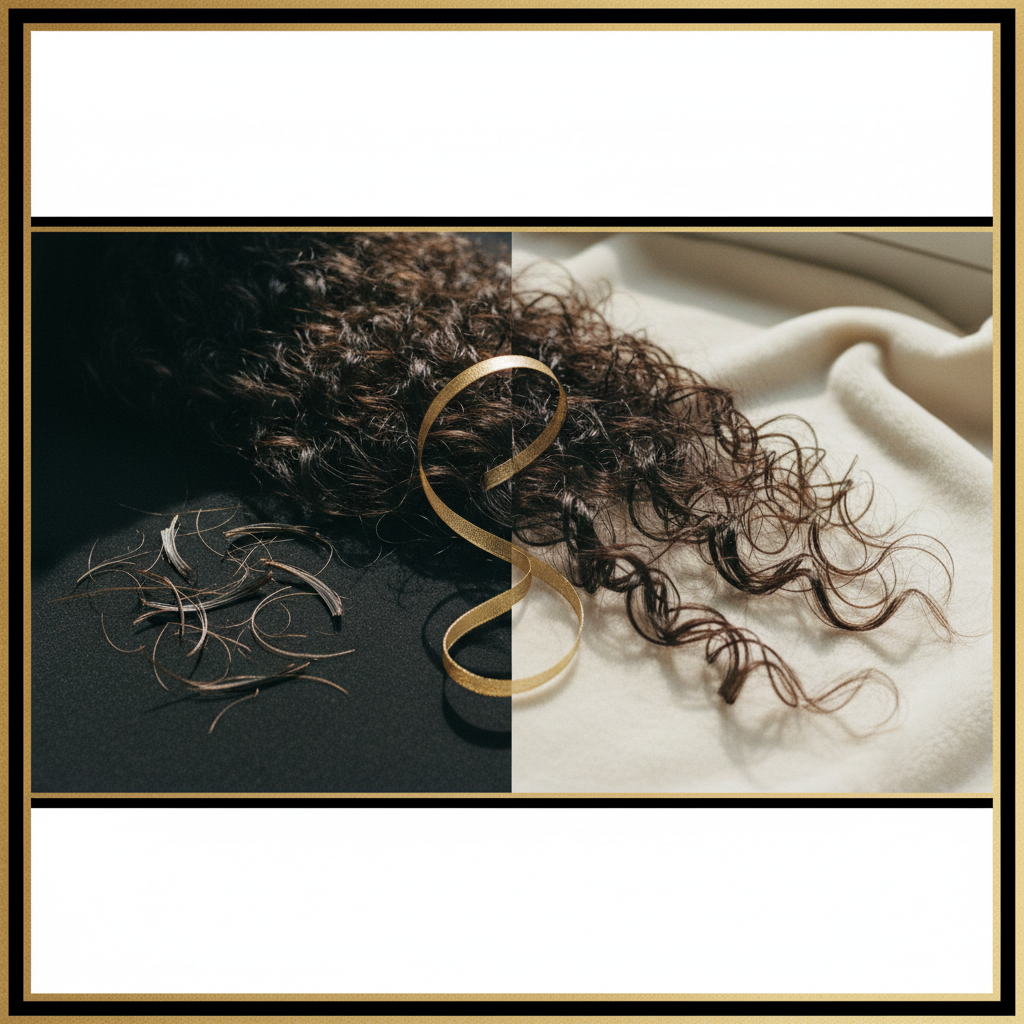
Clinical research demonstrates that the human scalp houses roughly 100,000 hair follicles, each operating on an independent cycle. The cycle comprises anagen (active growth lasting 2 to 7 years), catagen (a regression phase of 2 to 3 weeks), and telogen (a resting phase lasting around 2 to 4 months). At the end of telogen, during the exogen phase, the anchor relaxes and the fibre falls out. According to clinical dermatological standards, shedding 50 to 100 telogen hairs daily is normal physiology. When a physiological shock, such as high fever, severe psychological distress, childbirth, or rapid weight loss pushes an abnormally high percentage of follicles prematurely into telogen, diffuse shedding spikes two to three months later. This clinical condition is known as telogen effluvium.
Hair breakage, by contrast, is a mechanical failure of the hair fibre that does not involve the follicle. The hair shaft consists of an outer protective cuticle made of overlapping scales and an inner cortex composed of parallel keratin protofibrils bonded by disulphide, salt, and hydrogen bonds. When hair is exposed to alkaline chemical treatments like bleaching or relaxers (which raise the cuticle and oxidise disulphide bonds), temperatures above 180 degrees Celsius (which melt cortical keratin), or harsh brushing, the structural integrity drops. Once tensile strain exceeds the fibre's elastic limit, the shaft snaps. Breakage can occur at any point along the hair fibre, from right against the scalp to the ends.
| Feature | Hair Shedding (Telogen Exogen) | Hair Breakage (Shaft Fracture) |
|---|---|---|
| Origin | Follicle inside the scalp | Anywhere along the external hair shaft |
| Appearance | Full-length strand with a tiny white bulb at the root | Shorter fragments of uneven length, no bulb, split ends |
| Primary cause | Internal cycling, hormonal shifts, systemic stress, illness | Chemical processing, thermal tools, mechanical stress, UV |
| Scalp density effect | Overall diffuse thinning or widening part lines | Uneven volume, wispy halo hairs, frizzy mid-lengths |
| Typical daily baseline | 50 to 100 fibres daily | Close to zero with gentle handling |
| Primary solution | Address underlying health, hormones, or nutritional triggers | Conditioning, protein-moisture balance, reducing heat and tension |
The mechanisms: why fibres snap and why follicles shed
To prevent misdiagnosis, you must understand the biophysical forces at play.
Hair shedding is driven by biological signalling. Fibroblast growth factors, neuroendocrine pathways, and hormonal changes dictate when a follicle transitions from anagen to catagen and telogen. Once telogen completes, the fibre sheds naturally. The hair bulb visible at the end is unpigmented and club-shaped, made of keratinised cells that secured the hair before release. The follicle remains intact under the scalp, ready to initiate a new anagen hair provided no scarring or miniaturisation has taken place.
Hair breakage is purely biophysical. Healthy dry hair can stretch by 20 to 30 percent of its original length before fracturing, and wet hair can stretch up to 50 percent. However, wet hair has weaker hydrogen bonds, making it particularly vulnerable to over-stretching and snap fractures if subjected to aggressive brushing. Chemical processing permanently depletes the shaft of 18-methyleicosanoic acid (18-MEA), the primary lipid monolayer that makes the cuticle hydrophobic. Without this protective layer, hair absorbs excess water, swells, lifts its cuticles, and suffers high friction, directly causing cortical micro-fractures that culminate in transverse fractures (trichorrhexis nodosa).
Signs to look for: how to self-diagnose your hair
A quick visual inspection reveals whether you are dealing with breakage, shedding, or a combination of both.
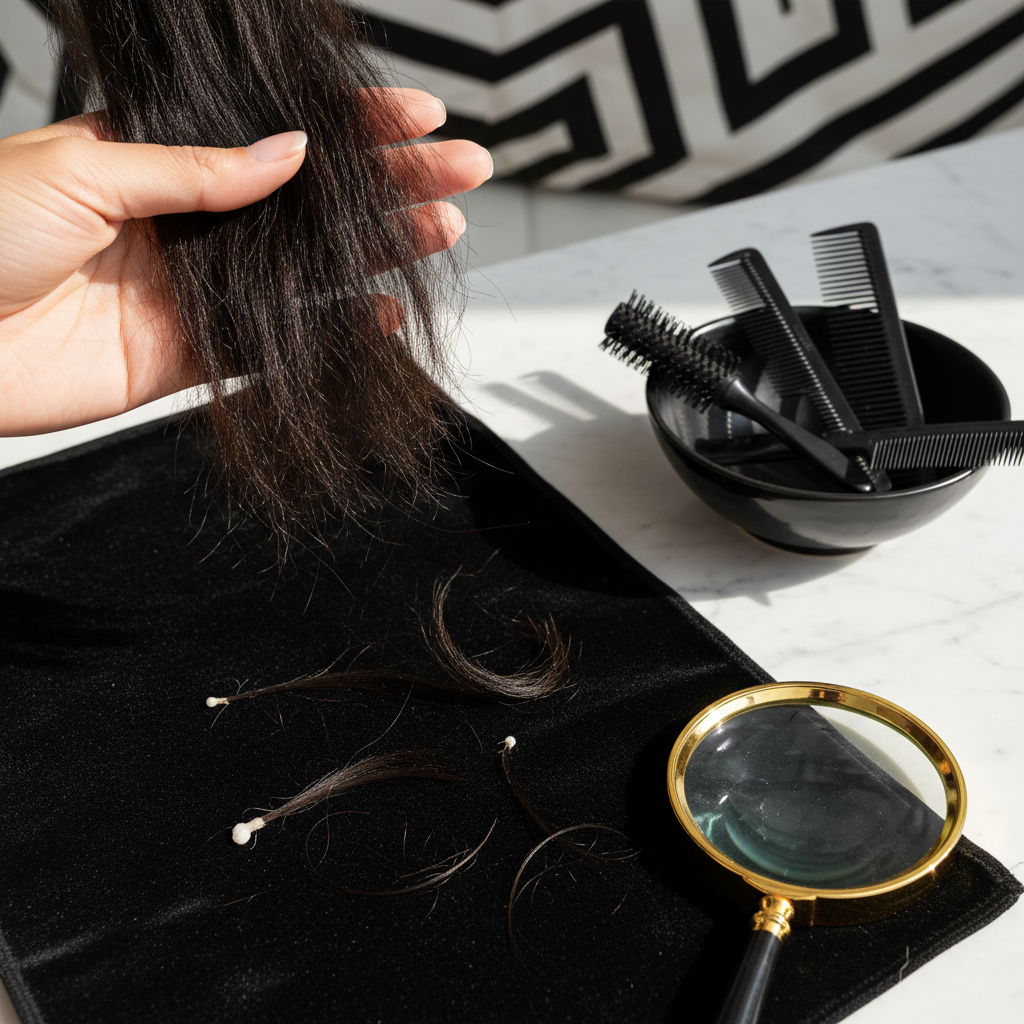
The White Bulb Test
Collect several strands from your brush, shower drain, or pillowcase. Examine the ends under bright light or against a dark piece of paper. If you see a tiny, firm, whitish nodule at one tip, that strand was shed from the root. If both ends are blunt, tapered, or split with no bulb, the strand snapped along the shaft.
Length Discrepancy
Hold the collected strands against your head. If the fallen hairs match the full length of your haircut, shedding is the primary cause. If you notice a collection of short, brittle fragments of 2 to 10 centimetres, you are experiencing shaft breakage.
Texture and Halo Inspection
Examine your scalp line and crown in a mirror. Breakage often appears as a sudden cloud of flyaway hairs of irregular lengths standing upright along your parting, accompanied by rough, velcro-like ends that tangle easily. Normal regrowth also produces shorter hairs, but regrowth hairs feature fine, naturally tapered tips, whereas broken strands end in blunt, white-dotted, or frayed fractures.
What you can do to address each condition
Because shedding and breakage stem from fundamentally different issues, applying a breakage remedy to a shedding problem will yield frustrating results.
Managing excessive shedding
- Rule out nutritional deficiencies: Ask a GP for blood work covering serum ferritin (aiming for clinical sufficiency rather than borderline ranges), vitamin D3, vitamin B12, and full thyroid panels (TSH, free T3, free T4).
- Review physiological stressors: Chart your timeline. Telogen effluvium typically presents 6 to 12 weeks after the triggering event, such as an infection, surgery, or intense emotional shock.
- Optimise scalp hygiene: Keep the scalp microbiome balanced by washing regularly with a gentle, sulphate-free shampoo to prevent sebum accumulation, oxidative stress, and inflammatory conditions like seborrhoeic dermatitis.
Managing hair breakage
- Reduce mechanical stress: Never brush wet hair with a standard stiff brush; use a wide-tooth comb or a flexible detangling tool, starting at the tips and working up to the roots.
- Lower thermal exposure: Cap heated styling tools at 150 to 180 degrees Celsius and always apply a heat protectant containing silicones, polyquaterniums, or hydrolysed proteins that buffer heat transfer.
- Balance protein and moisture: Incorporate conditioning masks containing hydrolysed wheat or soy proteins to patch micro-fissures in the cortex, followed by emollients (such as cetyl alcohol, argan oil, or shea butter) to lubricate the cuticle layer.
- Protective styling: Swap rough cotton pillowcases for silk or satin alternatives to eliminate friction during sleep, and avoid tight ponytails that induce traction breakage along the hairline.
When the cause may be something else
Sometimes excessive hair fall is neither simple telogen effluvium nor mechanical breakage.
Female or male pattern hair loss (androgenetic alopecia) involves the progressive miniaturisation of hair follicles mediated by dihydrotestosterone (DHT). The hair cycle shortens, producing finer, shorter fibres over time rather than a sudden shower of fallen hair. Autoimmune conditions such as alopecia areata trigger lymphocytes to target anagen hair bulbs, producing smooth, circular bald patches. Furthermore, an underlying shaft defect, such as trichorrhexis invaginata (bamboo hair) or loose anagen syndrome, can mimic routine breakage or shedding while requiring specialist genetic or dermatological management.
When to get professional advice
Consult a dermatologist, trichologist, or your GP if you experience any of the following symptoms:
- Sudden, patchy hair loss creating distinct bare circles.
- Burning, itching, redness, or tenderness across the scalp.
- Shedding exceeding 150 hairs daily that continues for longer than three months without slowing.
- Widespread breakage close to the scalp that does not respond to stopping heat or chemical services.
- Systemic symptoms alongside hair shedding, such as unexplained fatigue, temperature sensitivity, or irregular menstruation.
Supporting hair density with Watermans
When managing hair maintenance routines, maintaining follicle support and fibre strength work side by side. Watermans GrowMe Shampoo and ConditionMe Conditioner are formulated to support the scalp environment while reinforcing the external fibre. Utilizing natural ingredients including biotin, rosemary extract, caffeine, and hydrolysed lupin protein, these formulations refresh the scalp and help soften and condition brittle hair shafts to reduce friction-induced breakage during washing and detangling.
Frequently asked questions about Understanding Hair Breakage versus Hair Shedding
How can you tell if short hairs around the hairline are new growth or breakage?
Look closely at the tip of the hair shaft. Regrowth hair emerges with a soft, naturally tapered, needle-like end that has never been cut or snapped. In contrast, broken hair ends with a blunt edge, a split point, or a tiny white stress fracture. Regrowth generally shows consistent length within a localized area, while breakage creates irregular, jagged lengths.
Can hair breakage cause permanent hair thinning?
No, hair breakage cannot cause permanent thinning because it leaves the follicle undamaged beneath the scalp surface. However, severe and persistent breakage can make hair look thin, sparse, and unkempt, creating the optical illusion of hair loss. The only exception is severe traction, where chronic physical pulling damages the follicle structure, leading to traction alopecia over years.
Why is Understanding Hair Breakage versus Hair Shedding important for salon visits?
Understanding Hair Breakage versus Hair Shedding ensures you receive the correct salon treatment. If your hair is breaking, your colourist should lower developer volumes, avoid overlapping bleach, and suggest structural protein treatments. If you are shedding from the root, salon treatments cannot alter your internal follicular cycle, and aggressive head massages or heavy in-salon treatments could loosen additional resting telogen hairs.
Can using hot water cause hair shedding or breakage?
Very hot water does not cause true telogen shedding, as it cannot alter the hormonal signals of hair follicles. However, washing in extremely hot water strips natural surface lipids from the hair shaft and scalp, swelling the cuticle. This leaves strands dry, porous, and prone to friction-induced breakage during styling. Lukewarm water is ideal for cleansing hair without compromising fibre integrity.
Does brushing 100 strokes a day reduce shedding?
No, brushing 100 strokes a day does not reduce shedding and will significantly increase mechanical breakage. The old advice to brush hair vigorously merely dislodges loose telogen hairs all at once while subjecting the cuticle to excessive friction and stress. Gentle brushing only when necessary to detangle or style is the safest approach for preserving hair integrity.
Conclusion
Mastering the principles of Understanding Hair Breakage versus Hair Shedding transforms how you care for your hair. Shedding reflects internal biological cycles, signalling systemic changes, hormonal shifts, or normal physiological renewal that occurs at the root level. Breakage is structural failure along the fibre, pointing directly to styling stress, heat exposure, and chemical wear. By examining fallen strands for the presence of a white bulb, you can accurately identify the root cause of your hair concerns, stop wasting money on ineffective products, and implement targeted care that preserves both your scalp health and strand resilience.
Sources and references
- British Association of Dermatologists. (2021). Telogen Effluvium: An Information Leaflet for Patients.
- Robbins, C. R. (2012). Chemical and Physical Behavior of Human Hair (5th ed.). Springer-Verlag.
- Sinclair, R. (2015). Healthy hair: what is it? Journal of Investigative Dermatology Symposium Proceedings, 17(2), 26-28.
- Trüeb, R. M. (2015). The Difficult Hair Loss Patient: Guide to Successful Management of Alopecia and Related Conditions. Springer.
- Dawber, R. (1996). Hair: its structure and response to cosmetic preparations. Clinics in Dermatology, 14(1), 105-112.
Find these ingredients in Watermans products
- Vitamin D: you will find this ingredient in our Hair Vitamins.
- Shea Butter: you will find this ingredient in our Curly Hair Conditioner.