Daily Hair Shedding Baselines: The Complete Scientific Guide
10 min read ·
Understand realistic Daily Hair Shedding Baselines, the science behind normal hair cycles, and how to tell healthy turnover apart from excessive hair loss.

Quick answer: Establishing realistic Daily Hair Shedding Baselines means understanding that losing between 50 and 100 hairs per day is standard physiological behaviour for most people. Hair follicles operate in asynchronous cycles, with roughly 9 percent resting in the telogen phase before releasing their fibres. The primary limitation of this benchmark is individual variation: your baseline depends heavily on overall hair density, washing frequency, styling habits, and seasonal shifts, meaning a sudden percentage increase matters more than a raw strand count.
Key takeaways
- Normal physiological shedding typically ranges from 50 to 100 hairs daily across an average scalp of 100,000 follicles.
- Shedding (telogen release) is completely distinct from breakage (fibre snapping) and miniaturisation (follicular thinning).
- Infrequent washing causes accumulated shed hairs to release all at once, creating the false illusion of severe hair loss.
- A shedding baseline is personal; tracking your normal rate over several weeks provides a more reliable metric than comparing counts with others.
- Shedding consistently exceeding 150 to 200 hairs daily for more than six to eight weeks warrants medical investigation for telogen effluvium or nutritional deficiencies.
Daily Hair Shedding Baselines: what the evidence shows
Dermatological literature broadly agrees that standard Daily Hair Shedding Baselines sit between 50 and 100 hairs per day. This figure is rooted in scalp biology. The human scalp contains approximately 100,000 to 150,000 follicles. Each follicle operates independently through a continuous life cycle consisting of anagen (active growth, lasting two to seven years), catagen (transition, lasting two to three weeks), and telogen (rest, lasting two to three months).
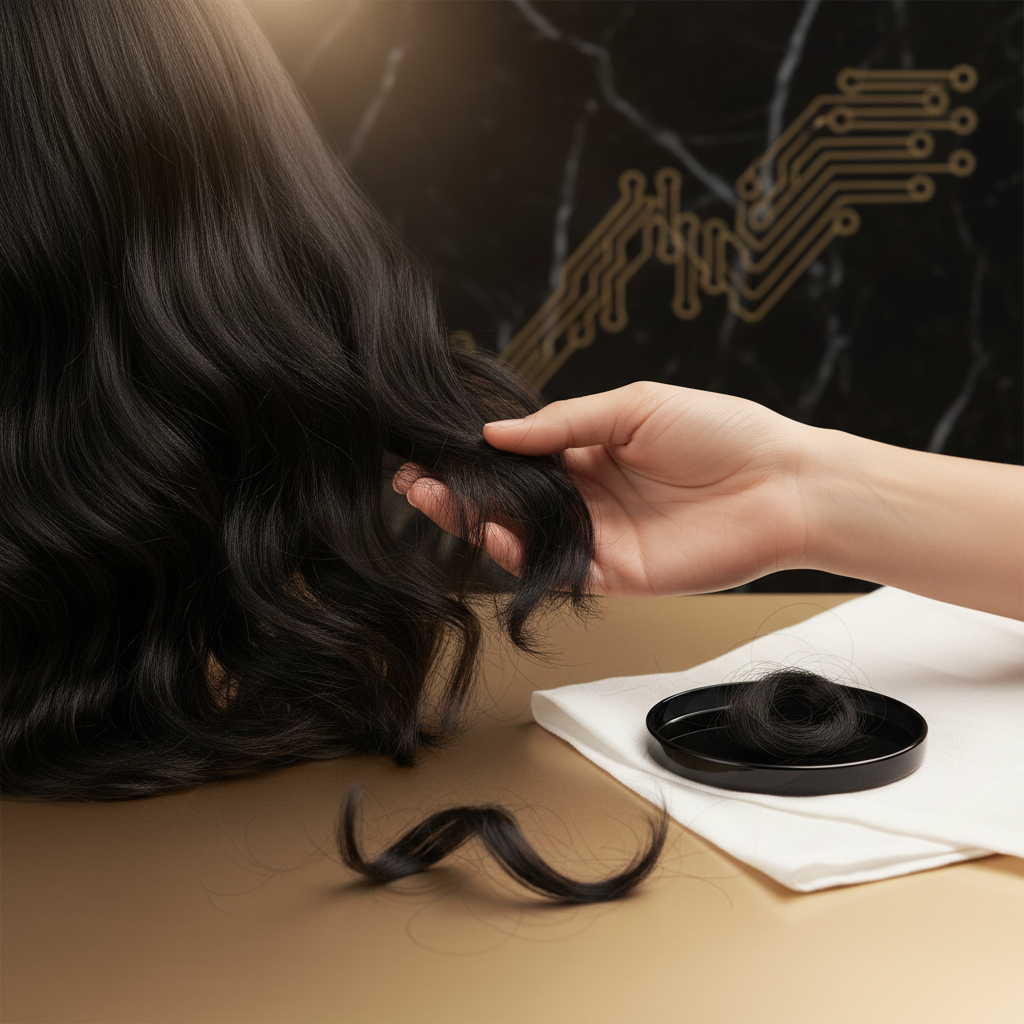
At any given moment, about 85 to 90 percent of your follicles reside in the anagen phase, while approximately 9 to 10 percent occupy the telogen phase. Toward the end of the telogen phase (sometimes categorised as the exogen phase), the old club hair detaches from the dermal papilla and sheds to make way for a newly emerging fibre. Because 10,000 follicles are resting at any time, shedding between 50 and 100 hairs every 24 hours simply reflects normal follicular turnover.
Clinical studies evaluating the 60-second hair count test (a standardised method where individuals comb forward over a pillow for one minute before washing) demonstrate that normal daily dislodgement yields an average of 10 to 30 hairs during active brushing. The rest fall out invisibly throughout the day during sleep, movement, and clothing friction.
| Metric / Parameter | Physiological Baseline | Elevated Shedding (Telogen Effluvium) | Mechanical Breakage |
|---|---|---|---|
| Daily Count | 50 to 100 hairs | 150 to 400+ hairs | Variable (small fragments) |
| Bulb Present | Yes (white, rounded keratin bulb) | Yes (white, rounded keratin bulb) | No (blunt, split, or tapered edge) |
| Length of Fibre | Full length from scalp | Full length from scalp | Short, uneven snapped pieces |
| Primary Driver | Natural exogen cycle | Systemic trigger (stress, illness, hormones) | Heat, friction, bleach, chemical trauma |
| Scalp Appearance | Normal density, no bare patches | Diffuse thinning across entire scalp | Irregular halo of shorter, fuzzy strands |
What the evidence does not show
The evidence does not support the idea that daily hair shedding baselines are uniform across all humans. A person with 80,000 follicles naturally sheds fewer strands daily than someone with 140,000 follicles, even if both maintain an identical 9 percent telogen ratio.
Furthermore, empirical research does not show that shedding more than 100 hairs on wash day automatically signals pathology. If you wash your hair every four days, fibres that naturally dislodged on days one, two, and three often remain trapped within your hair canopy, especially if you have textured, wavy, or curly hair. When you finally shampoo and condition, 200 to 300 hairs may wash down the drain simultaneously. This represents accumulated baseline shedding rather than acute loss.
Finally, counting shed hairs does not measure permanent follicular loss. Shedding an exogen club hair does not mean the follicle has died; in a healthy scalp, a new anagen hair is already developing beneath it.
The biological mechanism of hair shedding
The transition from growth to shedding is governed by cellular signalling in the hair follicle dermal papilla. As anagen concludes, mitotic activity in the hair matrix ceases. The lower portion of the follicle undergoes apoptosis (programmed cell death) and regresses upward during catagen.
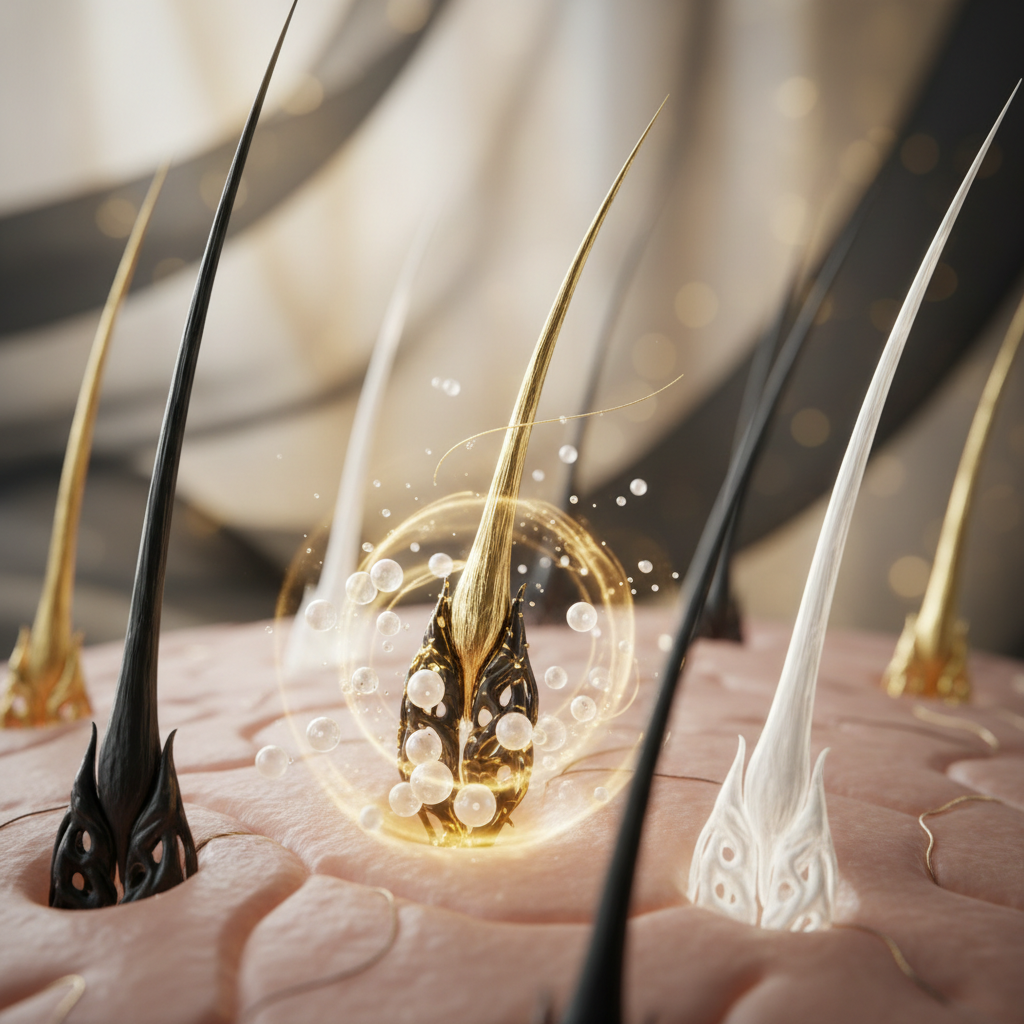
Once the follicle enters telogen, it forms a rounded, hard keratin structure known as a club hair. The shaft remains tethered in the follicular canal by desmosomal junctions between the outer root sheath and the hair fibre.
Exogen is the active phase of shedding. Proteolytic enzymes gradually dissolve the desmosomes anchoring the club hair. When physical tension is applied (such as running fingers through your hair, brushing, or shampooing), or when an emerging anagen hair pushes upward from below, the anchor gives way. The shed hair falls out with its characteristic small white bulb intact. This white tip is not your hair root; it is merely the keratinised club base. The living follicular factory remains safely embedded beneath your dermis.
Signs that indicate your shedding is outside normal limits
To determine whether your hair fall surpasses regular Daily Hair Shedding Baselines, look for specific physical indicators rather than trying to count every individual strand:
- The white bulb check: Examine fallen strands. If they display a tiny white, bulbous point at one end, they have released from the follicle. If they lack this bulb and show jagged ends, you are experiencing mechanical breakage along the shaft rather than true shedding.
- The hair pull test: Gently grasp roughly 50 to 60 hairs between your thumb and forefinger near the scalp and pull firmly but gently outward. In a normal baseline state, no more than two to three hairs should dislodge. Releasing six or more hairs across multiple scalp zones indicates an active telogen shift.
- Widening parting and thinning ponytails: Normal daily shedding maintains steady hair volume because new growth replaces lost fibres. If your ponytail diameter decreases noticeably or your central parting widens diffusely, your shedding rate is outstripping your replacement rate.
- Pillow and shower drain accumulation: Waking up to dozens of loose hairs on your pillowcase or clearing substantial clumps from the drain after every wash indicates a departure from your typical baseline.
What you can do to support healthy shedding cycles
You cannot, and should not, attempt to stop normal shedding completely. It is a necessary biological process that allows your follicles to renew their fibres. However, you can prevent excessive telogen shifts and keep shedding within healthy boundaries:
- Maintain consistent scalp hygiene: Wash your scalp regularly with gentle, sulphate-free cleansers. Allowing sebum, dead skin cells, and microflora like Malassezia to accumulate creates localized inflammation, which can prematurely push vulnerable follicles from anagen into catagen.
- Handle wet hair with care: Wet hair fibres swell and can stretch up to 30 percent beyond their dry state, making them prone to snapping. Use a wide-tooth comb or detangling brush starting from the ends and working upward toward the roots.
- Address nutritional foundations: Hair matrix cells are among the most metabolically active in the human body. Deficiencies in ferritin (stored iron), vitamin D, zinc, and dietary protein disrupt follicle cycling, prompting diffuse shedding.
- Minimise traction: Tight ponytails, braids, and extensions apply chronic mechanical tension to the follicle. While this can lead to traction alopecia over time, it also physically yanks club hairs out of their canals before their natural exogen release.
When the cause may be something else
If your daily shedding rises abruptly to 200, 300, or more strands per day, you may be experiencing telogen effluvium. This condition occurs when a physiological or emotional shock jolts a large percentage of anagen follicles (sometimes 30 to 50 percent) into telogen prematurely. Because the telogen phase lasts approximately two to three months, the excessive shedding typically begins 8 to 12 weeks after the triggering event. Common triggers include high fevers, childbirth, rapid weight loss, surgery, severe psychological distress, or starting or stopping certain medications.
Conversely, if shedding appears normal or only slightly elevated, but you notice gradual thinning at the temples, crown, or central part, the underlying driver is more likely androgenetic alopecia (pattern hair loss). In this condition, dihydrotestosterone (DHT) binds to susceptible follicles, progressively miniaturising them. The hairs become finer, shorter, and less pigmented with each cycle until the follicle ceases producing visible fibres altogether, even if daily shedding counts never seem alarming.
When to seek professional advice
Consult a GP, dermatologist, or qualified trichologist if you experience:
- Sudden, heavy shedding lasting longer than six to eight weeks without deceleration.
- Patchy, circular bald spots, which may indicate alopecia areata or fungal infections.
- Accompanying scalp symptoms such as persistent itching, burning, redness, pain, or scaling.
- Noticeable diffuse thinning that reduces your scalp coverage.
A medical professional can conduct blood panels (evaluating full blood count, ferritin, thyroid stimulating hormone, and vitamin levels) and perform dermoscopy to examine your follicular openings and hair diameter diversity.
Supporting your hair routine with Watermans
When managing hair density and everyday shedding, keeping the scalp environment balanced is vital. Watermans offers targeted, cosmetic scalp care designed to nurture hair from root to tip. Watermans GrowMe Shampoo delivers a blend of biotin, caffeine, rosemary, argan oil, and lupin protein directly to the scalp during cleansing.
While cosmetic products do not treat systemic medical conditions like telogen effluvium or androgenetic alopecia, maintaining optimal scalp microcirculation and keeping the follicular ostia clean supports an ideal foundation for healthy hair turnover. Incorporating a revitalising cleanser alongside Watermans ConditionMe Conditioner helps fortify the hair shaft, reducing surface friction and comb-induced breakage so that you only lose the strands your natural cycle is ready to release.
Frequently asked questions about Daily Hair Shedding Baselines
What are normal Daily Hair Shedding Baselines for healthy adults?
Normal Daily Hair Shedding Baselines range between 50 and 100 hairs per day. This variance is natural because roughly 10 percent of your scalp's 100,000 follicles sit in the resting (telogen) phase at any time. When these hairs reach the end of their cycle, they shed to allow new growth to emerge.
Does washing your hair daily increase your shedding baseline?
No, washing your hair does not increase follicular shedding. The mechanical action of washing simply dislodges hairs that have already detached from their dermal papilla and were sitting loosely in the follicle. If you wash less frequently, you will notice larger clumps on wash days because several days' worth of shed strands release simultaneously.
Why do I seem to shed more hair during autumn and spring?
Seasonal shedding is a documented physiological phenomenon. Observational studies demonstrate that human hair follicles often exhibit an increased proportion of telogen hairs in late summer, which release roughly two to three months later in autumn. While noticeable, these temporary shifts remain within normal cyclical boundaries and generally stabilise on their own.
How do I tell if a fallen strand is shedding or breakage?
Look closely at the ends of the hair fibre. If one end features a tiny, firm, white keratin bulb, it has shed naturally from the follicle as part of its normal cycle. If both ends are blunt, frayed, or split, the strand has broken along the shaft due to mechanical or chemical stress.
Can severe stress alter my shedding baseline permanently?
Severe physical or emotional stress can trigger telogen effluvium, temporarily shifting your baseline from 100 hairs to 300 or more hairs daily. However, this alteration is rarely permanent. Once the triggering stressor resolves and nutritional stores recover, hair follicles typically reset their natural anagen-telogen balance over six to nine months.
Summary
Understanding your personal Daily Hair Shedding Baselines removes the anxiety that often accompanies finding loose strands in your brush or shower drain. Losing 50 to 100 hairs daily is not a sign of imminent baldness; it is the natural consequence of asynchronous follicular turnover. Keep track of your typical shedding rhythms, account for your washing frequency, protect your hair fibres from physical breakage, and seek qualified clinical advice whenever sudden, sustained increases disrupt your personal baseline.
Sources and references
- British Association of Dermatologists (BAD): Telogen Effluvium Guidelines and Patient Information (2021).
- Journal of the American Academy of Dermatology: "The 60-second hair count: a new method for evaluating hair shedding." (2007).
- International Journal of Trichology: "Standardizing the evaluation of hair shedding: Visual and clinical metrics." (2013).
- Dermatology Practical & Conceptual: "The Hair Cycle: Overview and Clinical Significance." (2017).
- NHS: "Hair loss (alopecia) causes, diagnosis and management." (2023).
Find these ingredients in Watermans products
- Zinc: you will find this ingredient in our Hair Vitamins.