Hair Biology: Understanding the Structure, Growth, and Health of Your Hair
12 min read ·
Hair Biology delves into the intricate structure, cyclical growth, and overall health of your hair, providing essential knowledge for effective haircare.
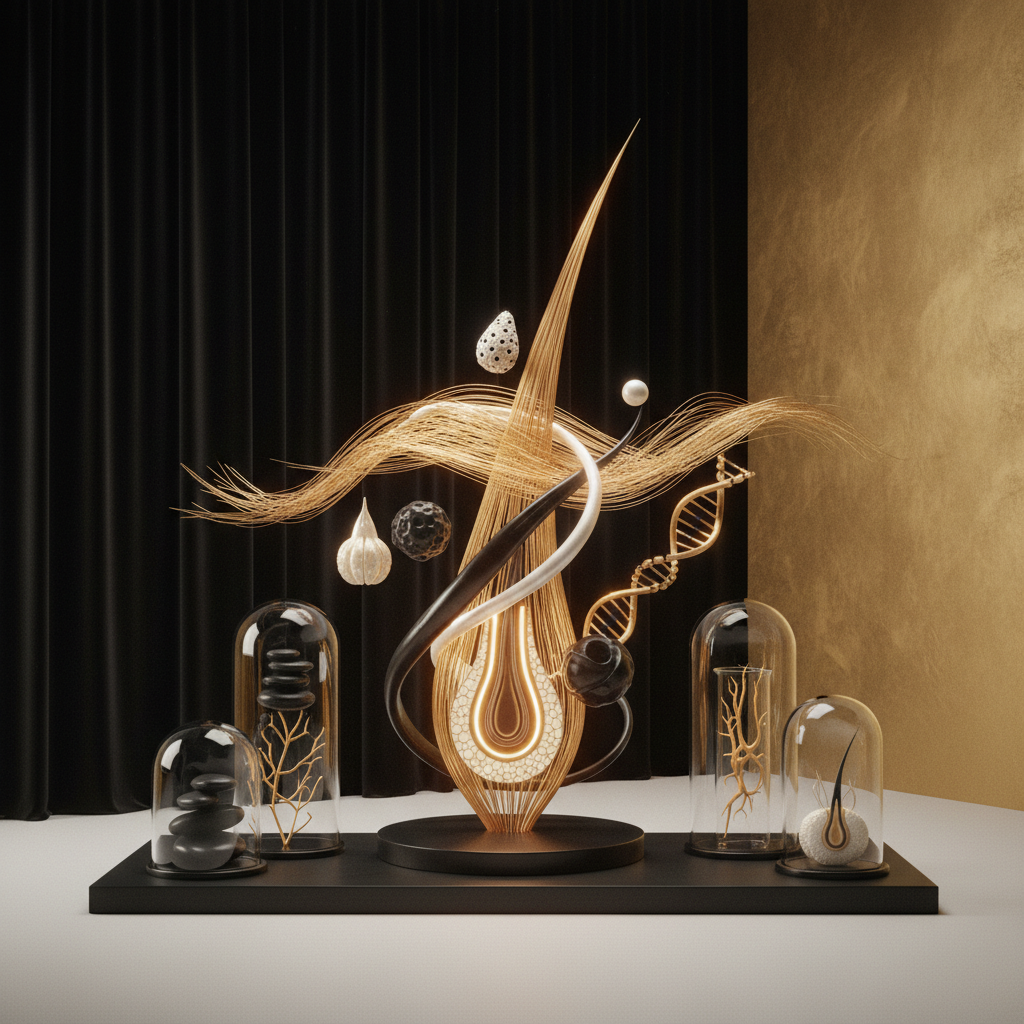
Quick answer: Hair Biology is the study of your hair's complex structure, its growth cycle, and how these biological processes influence its appearance and health. Understanding Hair Biology helps demystify why hair behaves the way it does, from its strength and texture to its response to environmental factors and products. However, much remains to be fully understood about the precise mechanisms governing certain hair conditions and individual variations in hair biology.
Key takeaways
- Hair is primarily composed of keratin protein, forming a visible shaft and a living root within the follicle.
- The hair shaft has three main layers: the cuticle (outer protection), cortex (strength, colour), and medulla (innermost core).
- Hair growth is a continuous cycle with three phases: anagen (growth), catagen (transition), and telogen (resting/shedding).
- Hair characteristics like texture, density, porosity, and elasticity are determined by genetics and influence haircare needs.
- Damage to the hair's structure, particularly the cuticle, can lead to breakage, dullness, and frizz.
- Understanding your hair's unique biology is key to selecting appropriate products and maintaining its health.
Hair Biology: What the Evidence Shows
Hair, a unique keratinous filament, is far more than just an aesthetic feature. Its biology is a complex interplay of genetic programming, cellular activity, and environmental influences. Each strand has a distinct structure and follows a precise growth cycle, both crucial for its function and appearance. Understanding this fundamental Hair Biology empowers us to care for our hair effectively and address common concerns.
The Hair Strand: Structure and Function
Every hair strand emerges from a hair follicle, a tiny organ nestled in the skin. It consists of two main parts: the hair shaft, which is the visible portion, and the hair root, embedded beneath the scalp's surface.
The Hair Shaft: A Protective and Resilient Fibre
The hair shaft is essentially a non-living structure, meaning it lacks metabolic activity, nerves, or blood vessels. Its remarkable strength and flexibility come from its intricate composition of keratin proteins. It is organised into three distinct layers:
- Cuticle: This is the outermost layer, comprising several layers of flat, overlapping cells that resemble roof tiles. When healthy, these cells lie flat, providing a smooth surface that reflects light (contributing to shine) and acts as a protective barrier against physical and chemical stressors. Damage from styling, chemical treatments, or environmental exposure can cause these scales to lift, leading to a rough texture, increased friction, frizz, and vulnerability to breakage. You can learn more about how damage affects hair in the Hair Damage: Causes, Signs, and Solutions article.
- Cortex: The thickest layer, located beneath the cuticle, forms the hair's primary bulk. It consists of elongated, tightly packed keratin protein cells. The cortex is responsible for hair's mechanical properties, such as its strength and elasticity, and contains melanin granules, which determine your natural hair colour. Its structural integrity is vital for preventing hair breakage.
- Medulla: The innermost core, present in some hair types but not all. Its exact function is not fully understood, but it may contribute to the hair's overall thickness, insulation properties, and mechanical strength, particularly in coarse hair types.
The Hair Root: The Engine of Hair Growth
The hair root is the living part of the hair, where growth and regeneration occur. It is housed within the hair follicle and includes several key components:
- Hair Bulb: The base of the hair root, which encases the dermal papilla.
- Dermal Papilla: A small, cone-shaped structure at the base of the hair bulb. It is rich in blood vessels, which supply essential nutrients and oxygen for hair growth, and nerves that regulate hair follicle activity. The health of the dermal papilla is crucial for sustaining the hair growth cycle.
- Hair Matrix: Located around the dermal papilla, the hair matrix contains rapidly dividing cells. These cells continually produce new hair cells that push upwards, eventually keratinising (hardening and dying) to form the hair shaft.
- Arrector Pili Muscle: A tiny muscle attached to the hair follicle. Its contraction causes the hair to stand upright, creating "goosebumps", often in response to cold or fear.
- Sebaceous Gland: These glands produce sebum, a natural oil that lubricates the hair shaft and scalp, contributing to moisture and protection. For more information on how sebum affects hair, refer to Sebum Regulation: Understanding and Managing Scalp Oiliness.
The Hair Growth Cycle: A Continuous Renewal Process
Hair growth isn't continuous but rather a cyclical process, with each hair follicle operating independently. This cycle ensures a constant renewal of hair. There are three main phases:
- Anagen (Growth Phase): This is the active growing period, where cells in the hair matrix rapidly divide, and the hair shaft lengthens. The duration of the anagen phase varies significantly among individuals and can last from 2 to 7 years. This phase determines the maximum length your hair can achieve. At any given time, approximately 85% to 90% of your scalp hairs are in the anagen phase.
- Catagen (Transition Phase): A brief, transitional phase lasting about 2 to 3 weeks. During catagen, hair growth ceases, the hair follicle shrinks, and the dermal papilla detaches from the hair bulb. Only about 1% of hairs are typically in this phase.
- Telogen (Resting Phase): This is a resting phase lasting around 2 to 4 months. The hair is completely at rest, and a new hair often begins to form beneath it. At the end of this phase, the old hair is shed (exogen), making way for the new hair to emerge from the follicle. Roughly 10% to 15% of your scalp hairs are in the telogen phase. It's considered normal to shed 50 to 100 hairs daily as part of this natural cycle.
Following the telogen phase, the follicle typically re-enters the anagen phase, and the cycle repeats. Disruptions to this cycle can lead to conditions like telogen effluvium (increased hair shedding).
Hair Characteristics: Understanding Your Unique Hair Biology
Individual hair characteristics are influenced by genetics, ethnicity, hormones, and environmental factors. Understanding these properties helps you choose appropriate care and styling methods.
Hair Texture
Hair texture refers to the diameter or thickness of individual hair strands, rather than how the hair feels.
- Fine Hair: Strands have a small diameter, making them delicate and prone to breakage. Fine hair can appear thin even if density is high. See Fine Hair: A Complete Guide to Understanding and Care for more.
- Medium Hair: The most common type, offering a good balance of strength and flexibility.
- Coarse Hair: Strands have a large diameter, making them strong and often more resilient to styling and chemical processes.
Hair Density
Hair density refers to the number of hair strands per square inch of the scalp. It is independent of individual strand texture.
- Low Density: Fewer hairs per square inch, meaning the scalp may be more visible.
- Medium Density: An average number of hairs across the scalp.
- High Density: Many hairs per square inch, creating a fuller appearance.
Hair Porosity
Porosity describes your hair's ability to absorb and retain moisture. It is primarily determined by the condition of the cuticle layer. You can find more detail in Understanding Hair Porosity: How Your Hair Absorbs and Retains Moisture.
| Porosity Level | Cuticle Condition | Moisture Absorption/Retention |
|---|---|---|
| Low Porosity | Tightly closed, flat-lying scales | Resists moisture absorption initially, but retains it well once inside. Products may sit on the surface. |
| Normal Porosity | Slightly raised, balanced scales | Absorbs and retains moisture effectively. Often indicative of healthy hair. |
| High Porosity | Gaps or raised, damaged, or unevenly spaced scales | Rapidly absorbs moisture due to structural breaches, but struggles to retain it, leading to dryness and frizz. |
Hair Elasticity
Elasticity is the hair's capacity to stretch and return to its original length without breaking. Healthy hair exhibits good elasticity due to strong internal keratin bonds and adequate moisture. Hair with poor elasticity is often brittle and prone to snapping, indicating internal damage or an imbalance in protein and moisture levels.
Hair Breakage vs. Hair Shedding vs. Hair Loss
It's crucial to distinguish between these terms, as they represent different aspects of hair health based on Hair Biology:
- Hair Breakage: This occurs when the hair fibre snaps along its shaft. It's a sign of structural damage to the hair, often due to physical stress, chemical treatments, heat styling, or environmental factors. Breakage reduces hair length and can make hair appear thinner or frizzy. It is not true hair loss, as the follicle is still intact and producing hair.
- Hair Shedding (Telogen Effluvium): This is the natural detachment of whole hairs from the scalp during the telogen phase of the hair growth cycle. It's normal to shed 50 to 100 hairs daily. Increased shedding (telogen effluvium) is often a temporary response to stress, illness, hormonal changes, or nutritional deficiencies, causing a higher proportion of hairs to enter the resting phase prematurely.
- Hair Loss (Alopecia): This refers to conditions where hair follicles stop producing hair or produce significantly miniaturised hairs. It can be due to genetic factors (e.g., androgenetic alopecia), autoimmune diseases (e.g., alopecia areata), or scarring of the scalp. Hair loss means fewer hair strands are growing, leading to thinning or bald patches. Unlike shedding, where the follicle is still capable of producing healthy hair, in many forms of alopecia, the follicle itself is compromised.
What You Can Do to Support Your Hair Biology
Understanding your hair's unique biology guides you towards practices that maintain its health and minimise damage. Here are some general recommendations:
- Gentle Cleansing and Conditioning: Choose shampoos and conditioners suited to your hair type and concerns. Over-cleansing or using harsh surfactants can strip natural oils, while insufficient conditioning can lead to dryness and cuticle damage. Consider sulfate-free options for gentler cleansing, as discussed in Sulfate-Free Shampoo Benefits.
- Moisture and Hydration: Hair needs moisture to maintain elasticity and prevent breakage. Use leave-in conditioners, hair masks, or natural oils, particularly for curly or afro-textured hair which tends to be drier. See Moisturizing Afro-Textured Hair and How to Moisturise Afro Hair for specific guidance.
- Minimise Heat and Chemical Damage: Excessive heat styling and chemical treatments (colouring, perming, relaxing) can severely damage the cuticle and cortex, leading to breakage. Use heat protectants, lower heat settings, and space out chemical services. Refer to Heat Styling Safety Best Practices and Chemical Hair Treatments: What They Are and How They Affect Hair.
- Protective Styling: Styles that minimise manipulation and exposure to environmental stressors can reduce breakage, especially for fragile hair types. Protective Styling: A Comprehensive Guide offers various options.
- Balanced Diet and Lifestyle: A diet rich in vitamins, minerals (like iron, zinc, biotin), and proteins supports healthy hair growth from within. Stress management and adequate sleep also play a role in overall hair health and the maintenance of a regular hair growth cycle.
When to Seek Professional Advice
While routine hair shedding is normal, persistent or sudden changes in your hair's condition warrant attention. Consult a medical professional, such as a dermatologist or trichologist, if you experience:
- Significant, unexplained increase in hair shedding.
- Noticeable thinning, patches of hair loss, or a receding hairline.
- Scalp pain, itching, redness, or unusual scaling.
- Sudden changes in hair texture or quality that don't resolve with improved care.
These symptoms could indicate an underlying health issue, a nutritional deficiency, or a specific type of alopecia that requires medical diagnosis and treatment. Medical professionals can perform tests, such as blood work or scalp biopsies, to determine the cause and recommend appropriate interventions.
Frequently asked questions about Hair Biology
How does diet affect Hair Biology and growth?
Your diet plays a crucial role in supporting healthy Hair Biology. Hair follicles are highly metabolically active and require a steady supply of nutrients, including proteins (hair is primarily protein), vitamins (especially A, C, D, E, and B vitamins like biotin), and minerals (iron, zinc, selenium). Deficiencies in these essential nutrients can disrupt the hair growth cycle, leading to increased shedding, slower growth, or weaker hair strands. A balanced diet helps ensure the building blocks for strong, healthy hair are available.
Can stress impact my hair's health?
Yes, stress can significantly impact your hair's health and Hair Biology. Chronic or severe emotional and physical stress can push a large number of hair follicles prematurely into the telogen (resting) phase, leading to a condition called telogen effluvium, characterised by increased hair shedding weeks or months after the stressful event. Managing stress through exercise, mindfulness, or adequate sleep can help mitigate these effects and maintain a healthy hair growth cycle.
What role does genetics play in hair characteristics?
Genetics are fundamental to your hair's characteristics, influencing its colour, texture (straight, wavy, curly), density, and porosity. Genetic factors determine the shape of your hair follicles, which in turn dictates the curl pattern, and the type and amount of melanin produced, which controls your hair colour. Genetic predispositions also play a significant role in conditions like androgenetic alopecia (pattern hair loss), demonstrating the deep influence of inherited traits on your Hair Biology.
How does hair damage occur at a biological level?
Hair damage primarily occurs when the protective cuticle layer is compromised. This can be caused by excessive heat, harsh chemicals, aggressive brushing, or UV exposure. When cuticle scales lift or break, the inner cortex becomes exposed and vulnerable. This leads to moisture loss, protein degradation, and weakened structural integrity, making the hair brittle, dull, and prone to breakage. Understanding this biological mechanism is key to preventing further damage.
Watermans and Your Hair Biology
Watermans products are formulated with ingredients selected to complement healthy Hair Biology and support the hair growth cycle. Our range aims to provide nourishment to the scalp and hair, helping to maintain optimal conditions for growth and reduce the appearance of breakage. For example, Watermans Grow Me Shampoo is designed to cleanse and invigorate the scalp, creating a healthier environment for hair follicles. Watermans Masque Me Hair Mask provides deep conditioning, helping to smooth the cuticle and improve hair's overall feel and appearance. These products work with your hair's natural biology to support its strength and vitality.
Sources and references
- American Academy of Dermatology Association. (n.d.). Hair loss: Causes. Retrieved from aad.org
- National Institute of Arthritis and Musculoskeletal and Skin Diseases (NIAMS). (2022). Alopecia Areata: Questions and Answers. Retrieved from nih.gov
- Sinclair, R. (2004). Male and female pattern hair loss: a clinical perspective. Australasian Journal of Dermatology, 45(1), 1-18. PubMed: 14764121
- Dawber, R. P. R., & de Berker, D. A. (1997). Hair structure and disorders. Clinics in Dermatology, 15(1), 1-17. PubMed: 9062311
- Trueb, R. M. (2016). Molecular mechanisms of hair growth control. Dermatology, 232(6), 666-670. PubMed: 27720 to 975
- Journal of Cosmetic Science. (Ongoing). Various articles on hair structure, properties, and care.
- British Association of Dermatologists. (n.d.). Hair Loss information leaflets. Retrieved from bad.org.uk
Find these ingredients in Watermans products
- Biotin: you will find this ingredient in our Hair Growth Shampoo.
- Zinc: you will find this ingredient in our Hair Vitamins.