Folliculitis Scalp Guide: Evidence, Signs, and Scalp Care
9 min read ·
Discover what causes scalp folliculitis, how to identify symptoms, and evidence-based ways to restore scalp comfort with our comprehensive Folliculitis Scalp Guide.
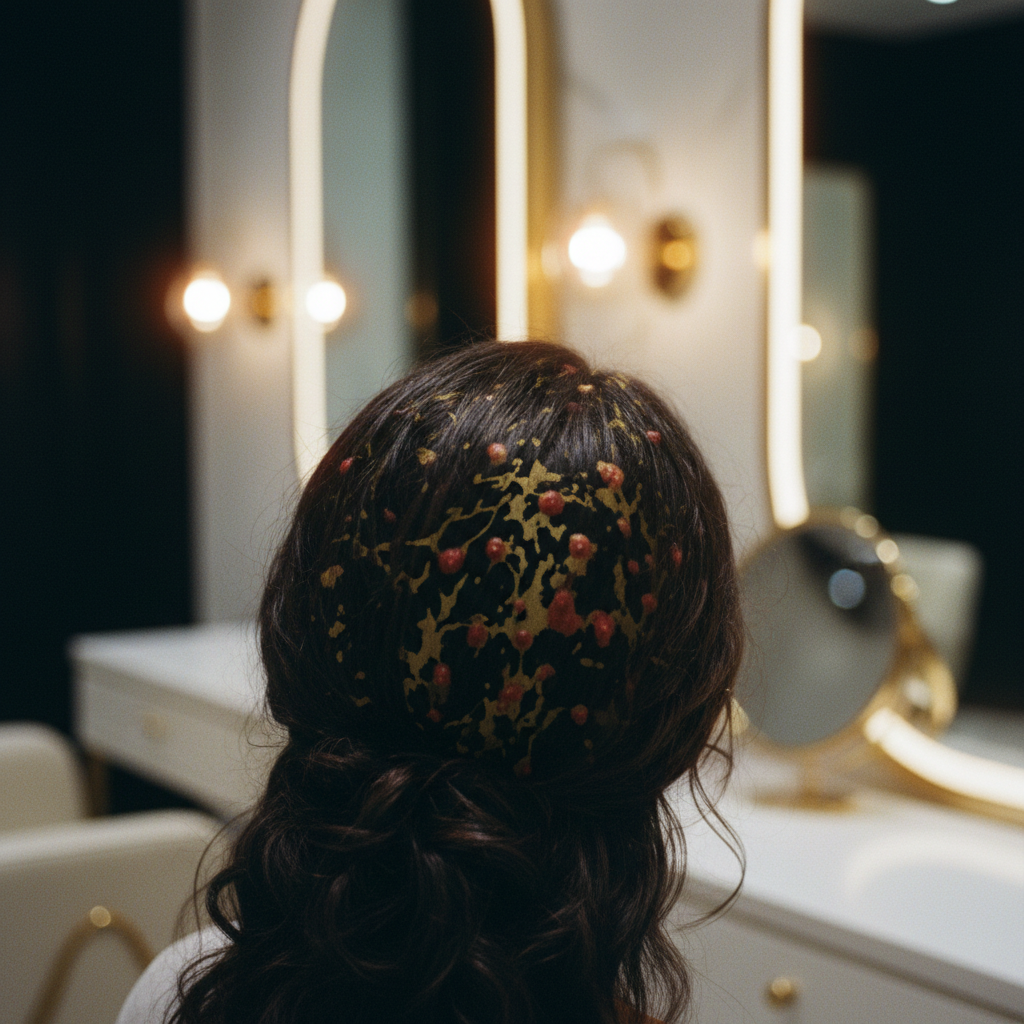
Quick answer: Scalp folliculitis is an inflammatory condition affecting the hair follicles, typically triggered by bacterial or fungal overgrowth, physical friction, or occlusion from heavy hair products. This Folliculitis Scalp Guide explains that while superficial cases present as small, itchy pustules that clear with targeted hygiene and topical antimicrobials, deeper or persistent variants risk secondary scarring. Cosmetic shampoos cannot treat established medical infections, so chronic or painful flare-ups require clinical diagnosis and prescription therapy from a GP or dermatologist.
Key takeaways
- Scalp folliculitis involves inflammation or infection of the hair follicle opening, most frequently caused by Staphylococcus aureus or Malassezia yeasts.
- Symptoms range from tender, pinpoint pustules and itchiness to crusting, flaking, and focal soreness.
- Overuse of heavy oils, infrequent cleansing, mechanical friction, and helmet use frequently trigger or worsen flare-ups.
- Cosmetic haircare supports scalp hygiene and barrier balance, but it cannot cure bacterial or fungal infections.
- Severe or deep forms, such as folliculitis decalvans, can destroy follicles permanently, demanding prompt dermatological intervention.
Folliculitis Scalp Guide: what the evidence shows
Scalp folliculitis occurs when follicular ostia become compromised by micro-trauma, sweat, or occlusive cosmetic products, allowing normal skin flora to proliferate unnaturally. Medical literature identifies bacteria, primarily Staphylococcus aureus, as the most common infectious trigger. Fungal organisms, notably Malassezia species (causing pityrosporum folliculitis), represent another frequent cause, particularly in warm, humid environments or after prolonged oral antibiotic therapy.
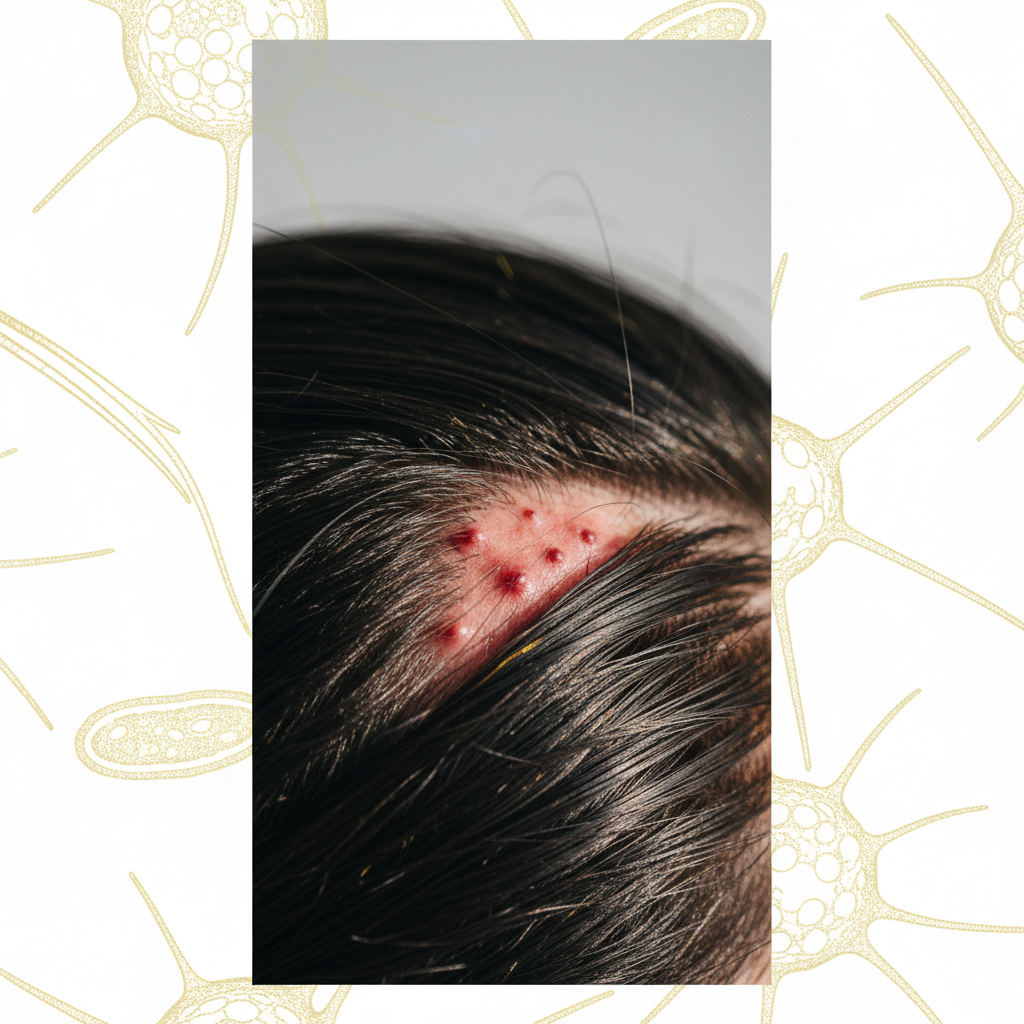
Clinical studies demonstrate that healthy scalps maintain an acidic surface pH between 4.5 and 5.5. When this acid mantle is disrupted, microbial defences weaken. Follicular openings become clogged with sebum, dead keratinocytes, and styling residue. This trapped micro-environment fosters inflammation, drawing neutrophils to the follicle neck and creating visible pustules or erythematous papules.
Research also distinguishes between non-infectious mechanical folliculitis and true infectious variants. Mechanical irritation arises from tight headwear, rough hair brushing, or pulling styles like tight braids. In these cases, inflammation develops without an initial pathogen, though secondary bacterial infection frequently follows if the compromised skin barrier is scratched.
What the evidence does not show
Scientific evidence does not show that poor general hygiene is the sole or even primary cause of scalp folliculitis. Many individuals who wash their hair daily develop the condition due to over-stripping their scalp barrier, which leads to compensatory sebum production and micro-fissuring.
Furthermore, evidence does not show that natural oils like coconut oil or castor oil treat active scalp folliculitis. While certain plant oils demonstrate mild in vitro antimicrobial properties, their heavy lipid structures are highly occlusive. In practice, applying raw oils to an inflamed scalp feeds lipid-dependent organisms like Malassezia and suffocates follicles, frequently aggravating the outbreak rather than calming it.
Finally, cosmetic shampoos and clarifying treatments do not cure deep bacterial infections. Cosmetic formulations are engineered to clean the skin surface and cosmetic fibre; they do not penetrate the lower dermis where deep follicular pathogens reside.
The biological mechanisms behind scalp flare-ups
To manage scalp health effectively, you need to understand what happens inside the pore during an outbreak. The process moves through distinct biological stages:
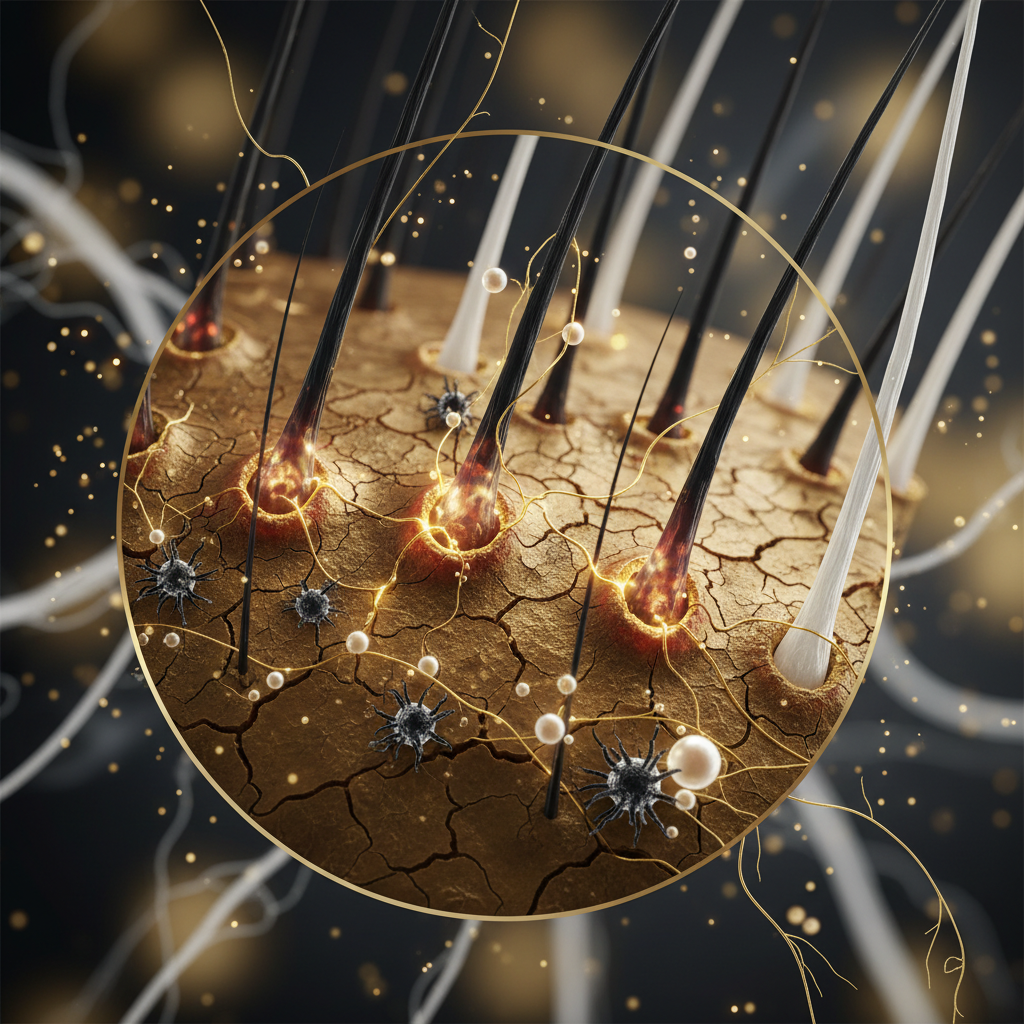
- Follicular occlusion and micro-trauma: Keratin plugs, hardened sebum, or cosmetic residue block the upper infundibulum of the hair follicle. Alternatively, physical friction from clippers or tight hats abrades the follicular collar.
- Microbial dysbiosis: Trapped beneath the blockage, opportunistic microbes multiply. Staphylococcus aureus releases exotoxins, or Malassezia yeasts metabolise sebum into irritating free fatty acids.
- Immune response: The body recognises foreign microbial antigens and cellular damage. Surrounding capillaries dilate, producing redness (erythema). Neutrophils and white blood cells migrate into the follicle lumen to fight the microbes, creating a pocket of pus (pustule).
- Resolution or chronic inflammation: In superficial cases, the pustule ruptures, crusts, and heals without scarring within 7 to 10 days. If inflammation extends deep into the follicular bulb, the stem cell niche can be damaged, leading to permanent hair loss.
Signs to look for: identifying the condition
Scalp folliculitis presents with a recognisable pattern of clinical signs, though severity varies widely between individuals:
- Erythematous papules: Small, raised red bumps clustered around individual hair shafts, commonly along the hairline, crown, or nape of the neck.
- Superficial pustules: Tiny, yellow-white pimples pierced by a central hair fibre.
- Pruritus and tenderness: Persistent itching, burning sensations, or sharp pain when brushing or resting the head against a pillow.
- Crusting and scaling: Dried exudate forming yellowish or brownish crusts around the hair base as pustules drain.
- Perifollicular collarettes: Rings of peeling skin circling the follicle mouth during the healing phase.
Comparing scalp conditions: diagnosis guide
Scalp folliculitis is frequently mistaken for other inflammatory conditions. The table below outlines key differences to help identify what is happening on your scalp.
| Condition | Primary Cause | Visual Presentation | Sensation | Typical Location |
|---|---|---|---|---|
| Bacterial Folliculitis | Staph. Aureus overgrowth | Pinpoint pustules pierced by hair | Tender, sore, mildly itchy | Hairline, crown, nape |
| Fungal Folliculitis | Malassezia proliferation | Uniform, itchy, red papules; rare pus | Intensely itchy, burning | Crown, temples, upper back |
| Seborrhoeic Dermatitis | Yeast plus sebum dysregulation | Greasy, yellowish flakes with diffuse redness | Moderate itch, crawling feel | Entire scalp, eyebrows, ears |
| Scalp Acne | Sebaceous gland blockage | Comedones, deeper cysts, papules | Painful pressure, throbbing | Hairline, forehead border |
| Folliculitis Decalvans | Neutrophilic cicatricial disease | Tufted hairs, expanding bald patches | Severe pain, crusting, bleeding | Crown, vertex |
Practical steps: managing your scalp routine
When dealing with mild, superficial scalp folliculitis, simple modifications to daily hygiene and haircare habits can prevent recurrent flare-ups:
- Cleanse frequently and thoroughly: Wash your scalp regularly with a balanced, gentle cleanser. If you sweat heavily during exercise, wash or rinse your scalp promptly rather than allowing dried sweat and salts to sit on the pores.
- Avoid heavy occlusive products: Eliminate heavy pomades, raw vegetable butters, silicones, and waxes near the scalp. Keep styling products focused strictly on the mid-lengths and ends of the hair fibre.
- Maintain tool hygiene: Wash hairbrushes, combs, and clippers weekly in warm water and antibacterial soap. Never share headwear, pillowcases, or grooming tools.
- Change pillowcases often: Switch pillowcases every two to three days. Opt for breathable fabrics like cotton or silk washed at 60 degrees Celsius to clear residual bacteria.
- Resist scratching and popping: Squeezing pustules drives bacteria deeper into the dermis and spreads the infection across surrounding follicles, drastically increasing the risk of scarring.
Supporting scalp balance with Watermans
For individuals prone to routine product build-up and scalp congestion, maintaining an optimal external environment is essential. Watermans formulas are designed to support a clean, invigorated scalp environment without relying on harsh, barrier-stripping detergents.
Watermans GrowMe Shampoo delivers targeted cleansing that removes accumulated sebum, sweat, and environmental residue from the follicle mouth. Formulated with revitalising botanical ingredients such as rosemary, caffeine, and biotin, it helps refresh and soothe the feel of the scalp skin. While it is a cosmetic wash and not a medical cure for underlying bacterial or fungal conditions, using a clarifying, pH-balanced shampoo helps maintain the clean conditions necessary to prevent everyday follicular congestion.
When the cause may be something else
If pustules do not clear within a fortnight of strict scalp hygiene, you may be experiencing a condition that mimics folliculitis. Scalp acne occurs within sebaceous follicles rather than hair follicles, often presenting with larger, non-follicular cysts. Seborrhoeic dermatitis causes broad, scaling plaques rather than distinct pustules.
More seriously, primary scarring alopecias like lichen planopilaris or folliculitis decalvans manifest with perifollicular redness and scale that mimic simple folliculitis initially. These conditions permanently destroy hair follicles if left unchecked, reinforcing why stubborn symptoms must never be ignored.
When to seek medical advice
You should consult a GP or dermatologist immediately if you experience any of the following symptoms:
- Pustules that become increasingly swollen, hot to the touch, or spread rapidly across the scalp.
- Development of large, painful nodules, boils (furuncles), or carbuncles.
- Clusters of hairs emerging from a single dilated pore (tufting).
- Hair shedding or visible patchiness surrounding the inflamed areas.
- Systemic signs such as fever, swollen lymph nodes in the neck, or malaise.
Clinical treatment options include topical prescription antibiotics (such as clindamycin), topical antifungals (such as ketoconazole), or short courses of oral antibiotics or antifungals for widespread infections.
Frequently asked questions about Folliculitis Scalp Guide
Can hair grow back after scalp folliculitis?
Yes, in the vast majority of superficial cases. Superficial folliculitis only affects the upper section of the follicle, meaning the hair bulb and dermal papilla remain undamaged. Once the infection clears and inflammation settles, normal growth cycles resume. However, chronic or deep untreated inflammation can damage the stem cell region, creating fibrous scar tissue that causes permanent hair loss.
How often should I wash my hair if I have folliculitis?
Most dermatologists recommend washing daily or every other day during an active outbreak using a gentle, clarifying cleanser. Regular cleansing removes excess sebum, dead skin cells, and microbial build-up that feed infection. Avoid scalding water, which damages the skin barrier; use lukewarm water and massage gently with the pads of your fingers, never your nails.
Is scalp folliculitis contagious to other people?
Superficial bacterial folliculitis has low contagiousness, but the underlying bacteria (Staphylococcus aureus) or fungi can spread through shared items. You should never share combs, brushes, hats, towels, or pillowcases while experiencing active pustules. Washing shared bedding and tools in hot water eliminates cross-contamination risks within households.
Can natural oils like tea tree cure my scalp folliculitis?
While tea tree oil exhibits laboratory-proven antimicrobial properties, it is not a guaranteed cure and can cause allergic contact dermatitis if used improperly. Applying undiluted essential oils or suspending them in heavy carrier oils can further occlude hair follicles, worsening inflammation. Rely on medically evaluated treatments rather than home remedies.
What is the purpose of this Folliculitis Scalp Guide?
This Folliculitis Scalp Guide provides an evidence-based roadmap to help you recognise symptoms, understand biological mechanisms, adjust daily haircare routines, and know when to seek medical intervention. It empowers you to separate superficial, manageable scalp irritation from deeper clinical conditions that require prescription care.
Scalp health and follicle care
Managing scalp folliculitis requires an accurate understanding of the delicate balance between the scalp skin barrier and its resident microbiome. By using this Folliculitis Scalp Guide to identify triggers, cease occlusive styling habits, and prioritise gentle, consistent hygiene, you can keep your scalp clean and comfortable. Remember that while cosmetic routines support day-to-day comfort, persistent or painful outbreaks always belong in the hands of a qualified healthcare professional.
Sources and references
- NHS, "Folliculitis", Health A-Z, 2022.
- British Association of Dermatologists, "Folliculitis", Patient Information Leaflet, 2021.
- American Academy of Dermatology, "Folliculitis: Overview, Causes, and Management", AAD Clinical Guidelines, 2023.
- Chovatiya, R., "Diagnostic and Therapeutic Approach to Scalp Folliculitis", American Journal of Clinical Dermatology, 2020.
- Lousada, M. B. Et al., "Scalp Microbiome and its Relationship to Follicular Disorders", Journal of Investigative Dermatology, 2021.
Find these ingredients in Watermans products
- Castor Oil: you will find this ingredient in our Camellia & Black Castor Hair & Body Oil.