Follicular Unit Miniaturisation: The Science of Follicle Shrinkage
9 min read ·
Follicular Unit Miniaturisation is the progressive shrinking of hair follicles in androgenetic alopecia. Learn the biological mechanisms, early signs, and management options.
Quick answer: Follicular Unit Miniaturisation is the progressive biological process where individual hair follicles shrink in diameter and depth across successive growth cycles. Driven primarily by genetics and dihydrotestosterone (DHT) in androgenetic alopecia, this shrinkage transforms robust terminal hairs into fine, wispy vellus hairs. The main limitation is that once a follicle miniaturises fully and enters secondary fibrosis (scarring or complete atrophy), the structural loss becomes permanent and cannot be reversed by topical or medical therapies.
Key takeaways
- Follicular Unit Miniaturisation involves shrinking of the dermal papilla and hair bulb, shortening the anagen (growth) phase.
- It is the central biological hallmark of androgenetic alopecia (pattern hair loss) in both men and women.
- Early intervention is critical because intermediate miniaturised hairs can often be maintained, whereas fully fibrosed follicles cannot regrow.
- The process differs fundamentally from temporary shedding (telogen effluvium), where follicle diameter remains structurally intact.
- Diagnosis relies on dermoscopy (trichoscopy), which looks for hair diameter diversity exceeding 20 percent within follicular groups.
Follicular Unit Miniaturisation: what the evidence shows
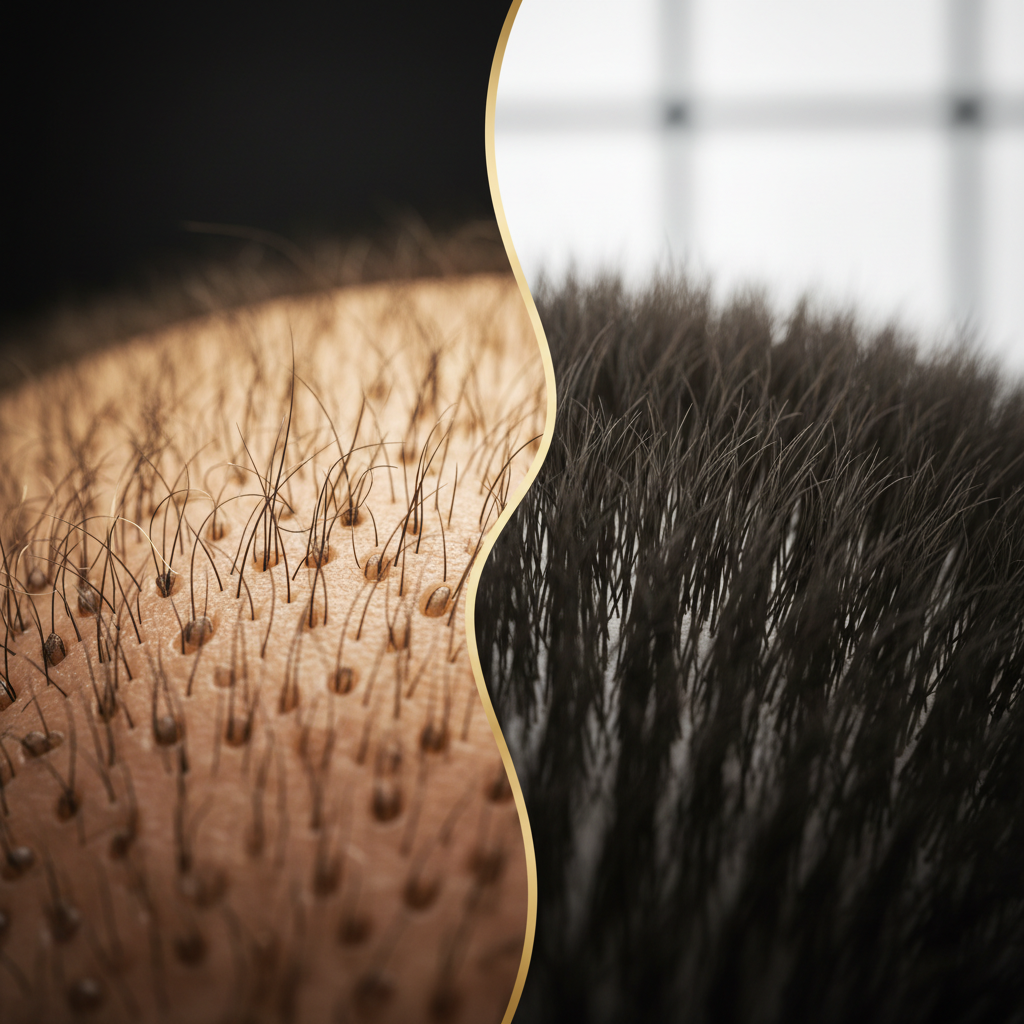
Follicular Unit Miniaturisation describes the steady reduction of hair follicle size, dermal papilla volume, and hair fibre calibre within a follicular unit. A healthy adult scalp naturally clusters hairs in units of one to four terminal fibres sharing a common exit pore. In areas affected by androgenetic alopecia, these units gradually degrade. Instead of producing three thick terminal hairs measuring 60 to 80 micrometres in diameter, the unit begins producing fewer hairs, thinner fibres, or delicate vellus hairs measuring under 30 micrometres.
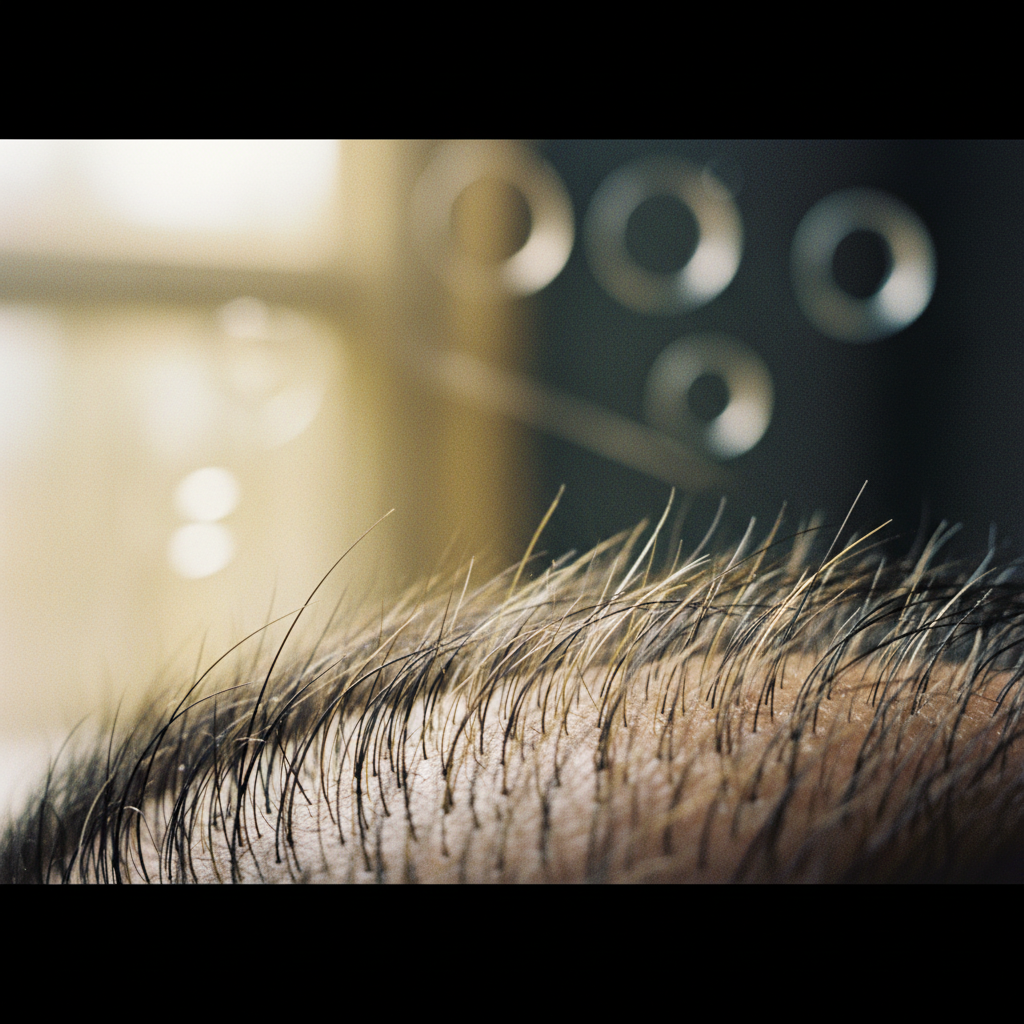
Histological and trichoscopic studies show that miniaturisation is not an immediate, overnight event. It occurs gradually across multiple hair growth cycles. During each shortened anagen phase, the dermal papilla cells decrease in number. Because the dermal papilla dictates the size of the hair matrix and the thickness of the emerging fibre, the resulting hair shaft grows progressively narrower, shorter, and less pigmented.
Dermatologists classify a scalp as actively undergoing miniaturisation when more than 20 percent of the hairs in a specific follicular zone display diameter variation (anisotrichosis). In severe or long-standing cases, the follicular unit eventually produces only a single, barely visible hair before the follicle closes entirely and is replaced by a microscopic fibrous tract.
The biological mechanism: why follicles shrink
The primary driver behind this process in genetically predisposed individuals is the androgen hormone dihydrotestosterone (DHT). Circulating testosterone converts into DHT via the enzyme 5-alpha reductase, specifically the type II isoenzyme located around hair follicles.
When DHT binds to androgen receptors inside the dermal papilla cells of susceptible follicles, it triggers a cascade of inhibitory signalling pathways:
- Alteration of growth factors: DHT upregulates transforming growth factor beta (TGF-beta) and dickkopf-related protein 1 (DKK-1), which act as biological brakes on follicle proliferation.
- Shortened anagen phase: The normal growth phase (anagen), which typically lasts between two and seven years, shrinks down to mere months or weeks.
- Lengthened kenogen phase: The rest period between the shedding of an old hair and the emergence of a new one (kenogen) expands, leaving follicles empty for longer stretches.
- Reduction in extracellular matrix: The connective tissue sheath and capillary blood supply around the follicle diminish, starving the dermal papilla of the structural foundation it needs to rebuild during the next cycle.
Over multiple cycles, the hair shaft becomes so thin and shallow that it fails to pierce the epidermis with meaningful visual density, creating the appearance of diffuse thinning or receding patches.
Follicular Unit Miniaturisation vs other hair conditions
Understanding the difference between structural miniaturisation and other hair complaints prevents incorrect treatments. Hair loss (alopecia), hair shedding, and hair breakage are distinct issues with different biological origins.
| Feature | Follicular Unit Miniaturisation | Telogen Effluvium | Hair Breakage |
|---|---|---|---|
| Primary site | Dermal papilla and hair bulb | Follicular cycle signalling | Hair shaft / fibre cortex |
| Fibre diameter | Highly variable (anisotrichosis >20%) | Uniform calibre | Uniform calibre until fracture point |
| Hair bulb present on fallen hair? | Yes, but often tiny/atrophied | Yes, distinct white keratin bulb | No, blunt or frayed ends |
| Reversibility | Partially reversible if caught early; irreversible at fibrosis | Highly reversible once trigger resolves | Completely reversible with hair trims and care |
| Primary causes | Genetics, DHT, androgen sensitivity | Systemic illness, stress, nutritional deficiency | Mechanical stress, heat damage, chemical processing |
What the evidence does not show
There are persistent myths surrounding the causes and management of miniaturised follicles. The scientific literature does not support the following beliefs:
- It is not caused by poor scalp blood flow alone. While blood supply decreases as the follicle shrinks, reduced microcirculation is a secondary consequence of follicle atrophy, not the primary cause. Massaging the scalp cannot overcome genetic androgen sensitivity by itself.
- It is not caused by clogged pores or sebum. Sebum build-up can encourage yeast overgrowth and inflammatory conditions like seborrhoeic dermatitis, but sebum itself does not choke a follicle into miniaturisation.
- Cosmetics cannot cure genetic miniaturisation. No cosmetic shampoo, oil, or conditioner can alter androgen receptor expression or regenerate a completely fibrosed dermal papilla. Cosmetic products can support scalp barrier hygiene and strengthen existing hair fibres to prevent concurrent breakage, but they do not reverse genetic alopecia.
Clinical signs: how to identify miniaturisation
Identifying the process in its early stages provides the best opportunity for clinical management. A qualified trichologist or dermatologist uses a handheld dermatoscope to look for specific visual markers:
- Hair diameter diversity (anisotrichosis): The single most definitive visual sign. Under magnification, you will see a mix of thick, medium, and ultra-fine hairs growing right next to each other within the same scalp zone.
- Peripilar signs (brown peripilar halos): A faint brown or dark halo around the follicular opening often indicates mild perifollicular inflammation, frequently observed in early-stage androgenetic alopecia.
- Yellow dots: Follicular infundibula that are empty or contain only tiny, atrophied vellus hairs, filled instead with sebum and keratin debris.
- Single-hair follicular units: A healthy scalp predominantly features units containing two to four hairs. As miniaturisation advances, multi-hair units break down into solitary strands.
If you are inspecting your hair at home, early warning signs include a widening parting, a receding hairline at the temples, reduced ponytail thickness, and shedding short, thin, translucent hairs rather than full-length strands.
Management pathways and clinical options
Halting or partially reversing Follicular Unit Miniaturisation requires addressing the underlying biological drivers before follicles transition into scar tissue.
Evidence-based clinical interventions
NICE guidance and international dermatological consensus recognise several medical therapies for androgenetic alopecia:
- Oral 5-alpha reductase inhibitors: Medications such as finasteride or dutasteride lower systemic and scalp DHT levels, reducing the primary biochemical signal that triggers follicle shrinkage.
- Topical and oral minoxidil: Minoxidil acts as a potassium channel opener, extending the anagen phase and increasing local microcirculation, which encourages miniaturised follicles to produce slightly thicker hair shafts.
- Low-level laser therapy (LLLT): Devices operating at specific red light wavelengths (around 650 nanometres) have demonstrated modest clinical efficacy in stimulating cellular metabolism in intermediate follicles.
- Platelet-rich plasma (PRP): Some peer-reviewed trials demonstrate that injecting autologous growth factors directly into the dermis can support intermediate hair calibre, though treatment protocols vary widely across clinics.
Cosmetic care and scalp environment
While medical treatments target hormonal and cellular drivers, maintaining a clean, balanced scalp environment supports healthy hair production. Chronic superficial inflammation from excess sebum, product build-up, or microbes can aggravate follicle stress.
Watermans focuses on gentle, non-irritating scalp formulations designed to keep the follicular environment clean, balanced, and invigorated. Quality cosmetic shampoos containing botanical extracts like rosemary, caffeine, and biotin do not alter genetics or cure alopecia, but they help maintain an optimal surface environment, enhance hair fibre resilience, and give thinning hair a visibly fuller, thicker appearance.
When to seek professional advice
If you notice rapid, diffuse shedding across your entire head, patchy circular bald spots, or scalp redness accompanied by burning and pain, book a consultation with a GP or dermatologist immediately.
These symptoms may indicate conditions other than typical androgenetic alopecia, such as alopecia areata, telogen effluvium, nutritional deficiencies (such as ferritin or vitamin D deficiency), thyroid dysfunction, or scarring (cicatricial) alopecias. Scarring alopecias destroy stem cell niches rapidly and require urgent anti-inflammatory intervention to prevent permanent baldness.
Frequently asked questions about Follicular Unit Miniaturisation
Can a completely miniaturised hair follicle be brought back to life?
No. Once a follicle undergoes terminal miniaturisation and secondary fibrosis, the dermal papilla disappears and the follicle is replaced by connective scar tissue. At this stage, no pharmaceutical, cosmetic, or biological therapy can restore hair production. Follicular unit transplantation (hair transplant surgery) is typically the only way to restore visible density to completely fibrosed areas.
How quickly does Follicular Unit Miniaturisation happen?
The timeline varies widely between individuals. In aggressive cases with strong genetic susceptibility, significant thinning can occur over two to three years. In most people, however, Follicular Unit Miniaturisation progresses slowly over decades, with each hair growth cycle (lasting two to seven years) producing a slightly thinner shaft than the cycle before it.
Does washing your hair too often cause follicles to miniaturise?
No. Washing your hair does not cause Follicular Unit Miniaturisation. Washing merely dislodges hairs that have already detached from the follicular base during the telogen (resting) phase. The shrinkage of the follicle takes place deep within the dermis under hormonal and genetic control, which cannot be initiated by topical shampooing.
Can women experience Follicular Unit Miniaturisation?
Yes. Female pattern hair loss (FPHL) is characterised by the exact same process of follicular unit shrinkage. In women, the thinning typically manifests as diffuse reduction across the central crown and widening of the part line, rather than the complete bitemporal recession and vertex balding commonly seen in men.
Conclusion
Understanding Follicular Unit Miniaturisation helps demystify the progression of pattern hair loss. Because this process stems from genetic sensitivity and hormonal cascades within the dermal papilla, successful management relies entirely on early recognition and proven interventions. By distinguishing true follicle shrinkage from everyday shedding and fibre breakage, you can choose the right medical treatments and supportive cosmetic care to preserve your hair density for as long as possible.
Sources and references
- British Association of Dermatologists. Guidelines for the management of alopecia areata and androgenetic alopecia. British Journal of Dermatology, 2018.
- National Institute for Health and Care Excellence (NICE). Alopecia androgenetica: clinical knowledge summary, 2021.
- Sinclair, R. Male androgenetic alopecia. The Journal of Men's Health & Gender, 2004.
- Whiting, D. A. Diagnostic and predictive value of horizontal sections of scalp biopsy specimens in male pattern androgenetic alopecia. Journal of the American Academy of Dermatology, 1993.
- Rudnicka, L., Olszewska, M., Rakowska, A., & Slowinska, M. Trichoscopy in hair and scalp diseases. Dermatologic Clinics, 2018.
Find these ingredients in Watermans products
- Vitamin D: you will find this ingredient in our Hair Vitamins.