Fine Hair Care Strategies: An Evidence-Based Guide to Delicate Strands
9 min read ·
Learn evidence-based Fine Hair Care Strategies to protect delicate strands from breakage, manage rapid oil buildup, and achieve weightless volume and lift.
Quick answer: Effective Fine Hair Care Strategies focus on preserving the delicate structural integrity of small-diameter hair strands while preventing oil buildup that weighs them down. Fine hair has a narrower cortex and often lacks a medulla, making it naturally prone to limpness, mechanical breakage, and rapid sebum coating. Successful routines combine gentle scalp cleansing, featherweight conditioning applied strictly from mid-lengths to ends, and heat-protective styling habits. However, topical strategies cannot permanently thicken the biological diameter of the hair follicle itself.
Key takeaways
- Fine hair refers to the physical diameter of individual hair fibres, not the overall density or number of hairs on your head.
- Because fine hair has a narrower cortex, it possesses less cross-sectional structural protein, making it break more easily under tension and heat.
- Sebum travels down fine strands rapidly, meaning fine hair looks greasy and flat faster than coarse hair textures.
- Heavy cosmetic ingredients, such as mineral oils, silicones like dimethicone, and rich plant butters, easily overburden fine hair.
- Distinguishing between natural fine hair texture, diffuse shedding, and follicular miniaturisation is essential for choosing the right care approach.
Fine Hair Care Strategies: what the evidence shows
Research into hair biophysics shows that individual hair diameter varies widely across populations, generally measuring between 40 and 120 micrometres. Hair classified as fine typically measures below 60 micrometres in diameter. At this dimension, the cross-sectional area of the cortex is significantly smaller than that of medium or coarse hair.
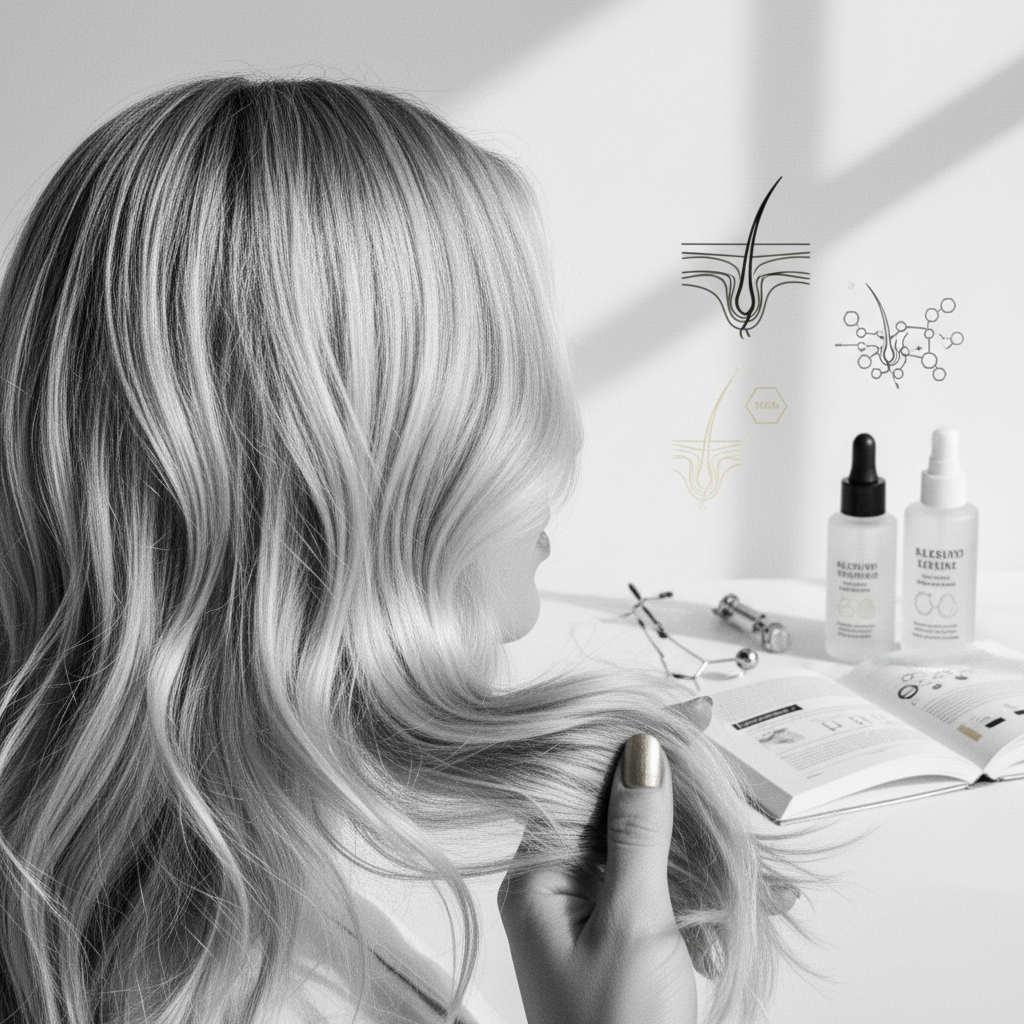
The cortex supplies almost all of the hair fibre's tensile strength, elasticity, and torsional rigidity. Because fine hair has fewer keratin bundles inside the cortex and frequently lacks a central medulla, it bends under its own weight far more easily. Mechanical friction from rough towel drying, taut hair ties, and high-temperature thermal tools inflicts structural fractures much sooner on fine hair than on thicker hair fibres.
Textile and cosmetic science confirms that fine hair has a relatively high surface-area-to-mass ratio. Consequently, a baseline amount of scalp sebum coats fine fibres quickly. This makes roots look separated and limp within 24 to 48 hours of washing. The most successful Fine Hair Care Strategies therefore balance regular, gentle cleansing with lightweight conditioning agents that improve slip without creating occlusive surface residues.
What the evidence does not show
Cosmetic science does not support claims that topical shampoos, oils, or botanical serums can permanently alter the genetic diameter of the hair follicle. While certain styling polymers and hydrolysed proteins temporarily swell or coat the cuticular surface to give the illusion of greater body, they wash out with water.
Furthermore, fine hair is not inherently unhealthy or damaged. It is simply a biological hair diameter type. Confusing naturally fine hair with hair thinning can lead people to use harsh, unnecessary treatments. No reputable evidence shows that washing fine hair daily causes it to fall out, provided you use a mild, pH-balanced cleanser that respects the acid mantle of your scalp (around pH 4.5 to 5.5).
Understanding the biological mechanism of fine hair
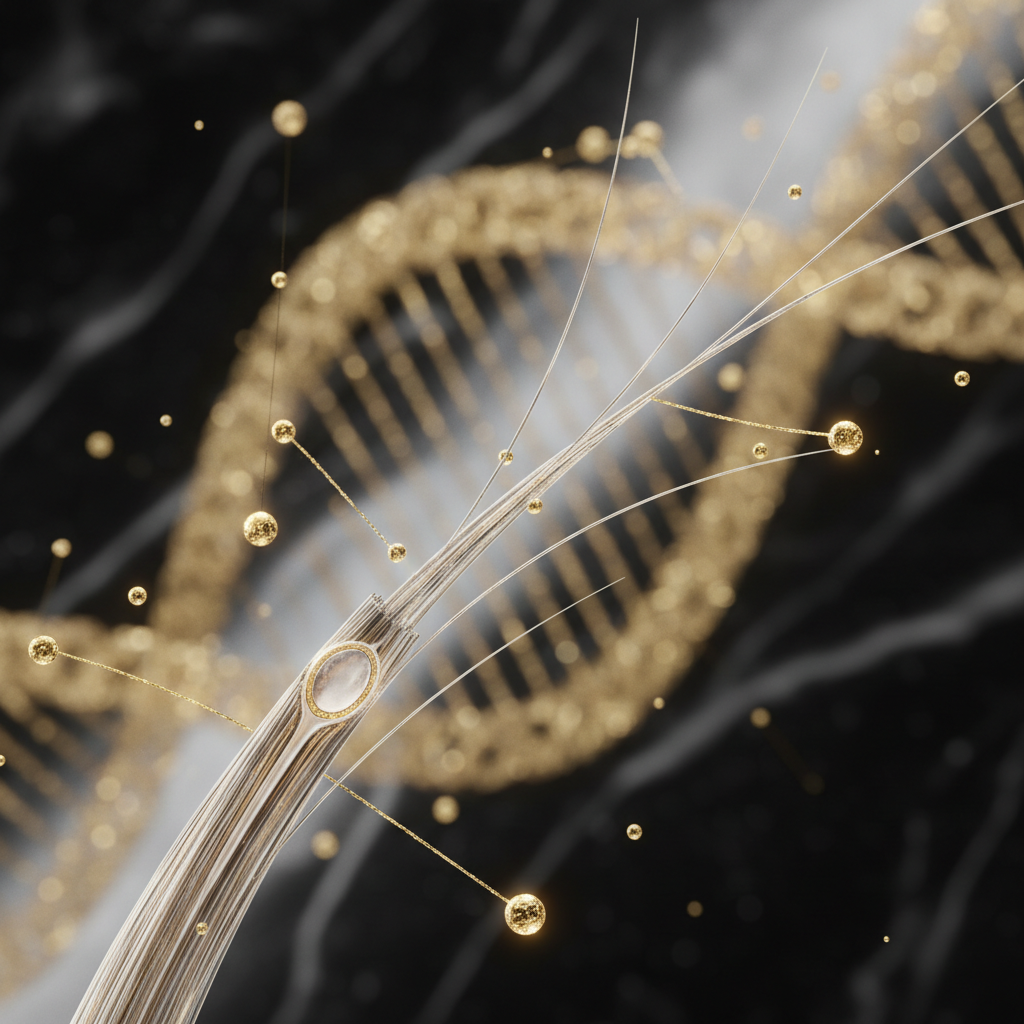
Every human hair fibre consists of an outer protective cuticle, a structural cortex, and sometimes a porous central core known as the medulla. Fine hair's physical traits stem from how these layers develop inside the hair follicle.
+--------------------------------------------------------+
| FINE HAIR FIBRE |
| |
| [ Cuticle: 4 to 8 scale layers ] |
| [ Cortex: Narrow diameter, fewer keratin chains ] |
| [ Medulla: Often completely absent ] |
+--------------------------------------------------------+
Because the medulla is frequently missing, the fibre acts like a hollow or semi-solid filament rather than a reinforced rod. This structure provides high flexibility but low structural stiffness. It also means fine hair absorbs and loses atmospheric moisture rapidly, making it exceptionally sensitive to both humidity and dry indoor heating.
Fine hair vs thin hair: how to tell the difference
People often use "fine" and "thin" interchangeably, but they describe two entirely different characteristics of your hair.
| Characteristic | Fine Hair | Thin Hair (Low Density) |
|---|---|---|
| Definition | Small diameter of individual strands (< 60 micrometres) | Low number of hair follicles per square centimetre of scalp |
| Density | Can be low, medium, or exceptionally high | Specifically denotes sparse follicular count across the scalp |
| Visual Appearance | Strands are translucent; hair lies flat and bends easily | Scalp is easily visible through the hair, regardless of strand thickness |
| Feel | Like silk thread or spun sugar; individual hair is barely felt between fingers | Can feel coarse, wiry, or soft depending on the strand calibre |
| Primary Risk | Mechanical snapping, product buildup, and limpness | Sunburn on exposed scalp, visible scalp patches, progressive loss |
You can have thick density with very fine strands (meaning you have thousands of tiny hairs per square inch), or low density with coarse strands. Adjusting your routine requires knowing which trait you are managing.
Signs that your current routine is failing fine hair
If your hair care routine does not match your strand diameter, the signs show up quickly in daily styling:
- Rapid flattening: Your style loses shape within an hour or two of washing and styling.
- Mid-shaft snapping: You notice short, blunt-ended hair fragments in your sink or on your shoulders after brushing, signalling breakage rather than root shedding.
- Persistent product buildup: Your hair feels sticky, waxy, or coated even straight after drying.
- Static and flyaways: Fine cuticles readily collect static charges during brushing or low-humidity weather.
- Stringy separation: Instead of moving as a cohesive canopy, strands clump into stringy segments that expose the scalp.
Practical strategies for washing, conditioning, and styling
Refining your daily techniques makes a massive difference to how fine hair looks, feels, and holds up against wear and tear.
1. Master scalp-focused cleansing
Wash your scalp thoroughly with lukewarm water. Use your fingertips, not your fingernails, to massage a mild, sulphate-conscious shampoo into the roots. Let the rinsing lather clean the delicate mid-lengths and ends rather than scrubbing them directly.
2. Apply conditioner selectively
Never apply conditioner to your roots if you have fine hair. Squeeze out excess water first, then apply a dime-sized amount of lightweight conditioner strictly from the ears downward. Look for formulas with hydrolysed wheat, pea, or rice proteins, which deposit sheer strength without greasy lipids.
3. Handle wet hair like fine silk
Wet keratin stretches and breaks much more easily than dry hair. Avoid rubbing your head with heavy terrycloth towels. Instead, gently press hair dry with a soft microfibre towel or smooth cotton cloth. Detangle only with a wide-tooth comb or flexible wet brush, starting at the bottom and working upwards.
4. Use heat protection and sensible styling tools
Keep blow dryers on medium heat settings and keep the nozzle moving at least six inches away from your hair. If you use curling wands or flat irons, keep temperatures below 180 degrees Celsius. Ceramic plates with even heat distribution prevent sudden hot spots that snap fragile fibres.
5. Rotate low-tension hairstyles
Fine hair snaps under continuous pressure. Avoid tight ponytails, abrasive rubber bands, and metal hair clips. Choose silk or satin scrunchies, and alternate where your ponytail sits to prevent repetitive friction along the same band of hair.
When fine hair is caused by something else
Sometimes, hair that was previously thick or coarse begins to feel noticeably fine. This change is not normal structural fine hair; it is follicular miniaturisation or diffuse hair thinning.
Miniaturisation occurs when androgenic hormones (specifically dihydrotestosterone, or DHT) shorten the growth phase (anagen) of genetically susceptible hair follicles. Over successive growth cycles, the follicle shrinks and produces shorter, progressively finer strands before eventually stopping production altogether.
Diffuse shedding (telogen effluvium) can also leave your overall hair mass feeling suddenly smaller and lighter, even though the remaining individual strands have not changed diameter. Factors like severe nutritional deficits (ferritin, zinc, vitamin D), thyroid conditions, systemic illness, or intense physiological stress can trigger acute shedding phases.
If your hair texture changes rapidly, or if you notice your parting widening and your scalp becoming more visible over a short period, consult a GP or trichologist for an accurate diagnosis.
Supporting fine hair with Watermans
When selecting products for fine hair, the goal is to nourish the scalp environment and support strand resilience without heavy residues. Watermans offers formulations developed specifically to keep roots clean, active, and buoyant while protecting fragile lengths.
Watermans GrowMe Shampoo delivers a clarifying yet non-stripping cleanse that removes sebum and residue, which helps fine roots maintain natural lift. Its blend includes biotin, rosemary extract, caffeine, and hydrolysed lupin protein to support a balanced scalp biome. Pairing it with Watermans ConditionMe Conditioner provides weightless hydration, using targeted conditioning agents that smooth fine cuticles and reduce friction-induced breakage without flattening your hair.
Frequently asked questions about Fine Hair Care Strategies
How often should fine hair be washed?
Most people with fine hair benefit from washing every one to two days. Fine strands have a small surface area that quickly becomes coated in scalp sebum, leading to a greasy appearance and collapsed volume. Using a mild, pH-balanced shampoo ensures the scalp stays clean without stripping protective natural lipids or causing rebound oiliness.
Can Fine Hair Care Strategies make my hair permanently thicker?
No topical strategy or cosmetic product can change your genetically determined hair follicle size. However, effective Fine Hair Care Strategies can prevent mechanical breakage, preserve existing cuticle scales, and use hydrolysed proteins to temporarily add volume and body to each strand, making the hair look and feel visibly fuller.
Should I avoid oils completely if I have fine hair?
Heavy plant oils like castor oil, coconut oil, and unrefined shea butter should generally be avoided, as their large molecular sizes coat and weigh down fine hair fibres. However, extremely light oils like squalane or argan oil can be used sparingly, applied exclusively to dry ends to lock in hydration and prevent split ends.
Does fine hair break more easily than coarse hair?
Yes, fine hair breaks under much lower mechanical tension than coarse hair. Because it has a narrower cortex, it contains fewer internal keratin protein chains to withstand pulling, friction, and heat. Using gentle detangling techniques and moderating styling temperatures is essential to maintain length and reduce fibre breakage.
What ingredients should I look for in volumising products?
Look for lightweight film-forming proteins, such as hydrolysed rice, wheat, or silk proteins, as well as panthenol (provitamin B5). These ingredients bind lightly to the cuticle layer, drawing in subtle moisture and increasing strand separation without leaving behind sticky, heavy films that attract dust and scalp oil.
Closing thoughts on Fine Hair Care Strategies
Managing fine hair successfully comes down to understanding its biological architecture. Because fine strands have a naturally narrow cortex and delicate cuticle structure, they need purposeful, lightweight care that prevents mechanical breakage and avoids heavy product buildup. Implementing tailored Fine Hair Care Strategies that focus on gentle cleansing, targeted mid-length conditioning, and sensible heat handling will help you achieve lasting lift, resilience, and natural movement.
Sources and references
- British Association of Dermatologists. "Hair Loss and Hair Thinning Overview", 2021.
- Robbins, C. R. Chemical and Physical Behavior of Human Hair. 5th ed., Springer-Verlag, 2012.
- Dawber, R. "Hair: Its Structure and Response to Physical and Chemical Treatments." Clinics in Dermatology, vol. 14, no. 1, 1996, pp. 105-112.
- Gavazzoni Dias, M. F. "Hair Cosmetics: An Overview." International Journal of Trichology, vol. 7, no. 1, 2015, pp. 2-15.
- Sinclair, R. D. "Healthy Hair: What Is It?" Journal of Investigative Dermatology Symposium Proceedings, vol. 12, no. 2, 2007, pp. 2-5.
Find these ingredients in Watermans products
- Zinc: you will find this ingredient in our Hair Vitamins.
- Castor Oil: you will find this ingredient in our Camellia & Black Castor Hair & Body Oil.
- Panthenol (Provitamin B5): you will find this ingredient in our Heat Protection Spray.
- Shea Butter: you will find this ingredient in our Curly Hair Conditioner.