Essential Oils in Haircare
5 min read ·
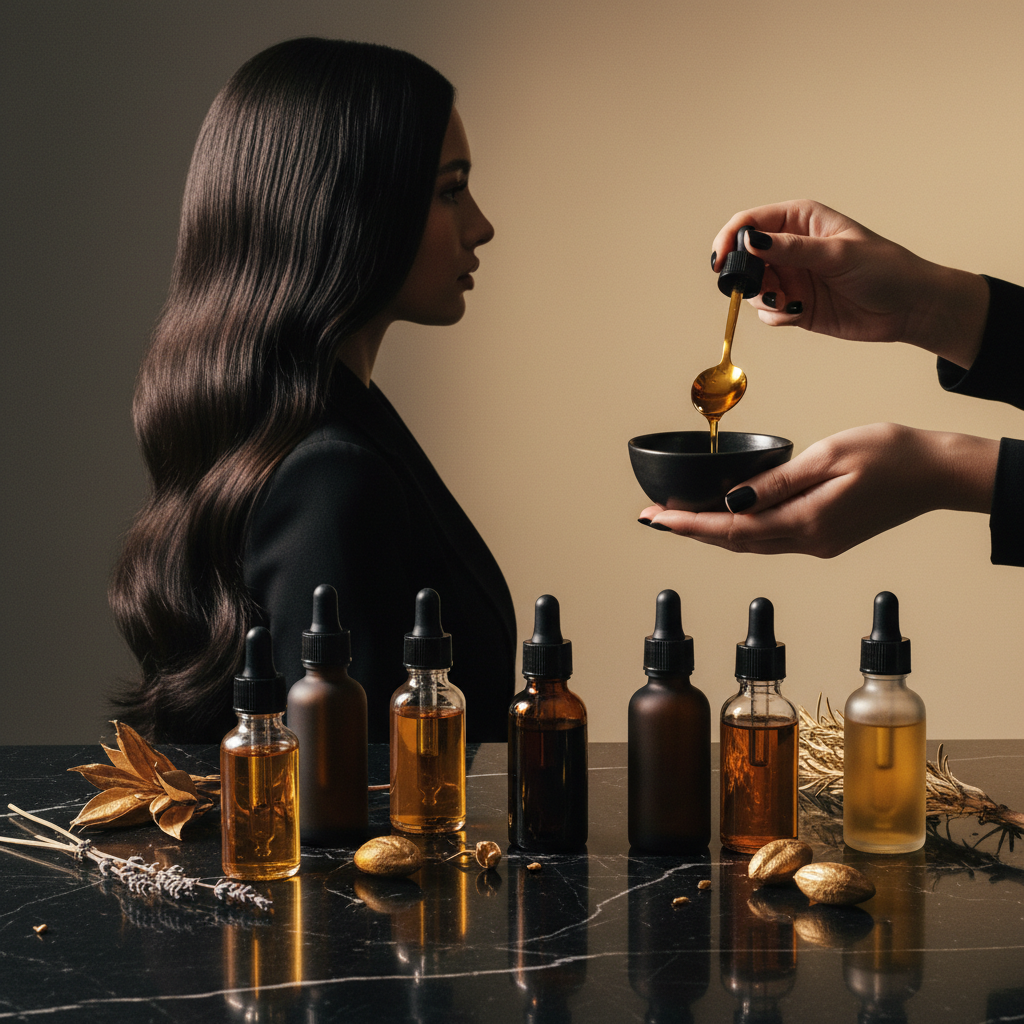
Essential oils are concentrated plant extracts with aromatic compounds, offering various benefits for hair and scalp health due to their natural chemical compositions.
Introduction
Essential oils are highly concentrated plant extracts that capture the plant's scent and flavor, known as its 'essence.' Obtained through distillation (steam or water) or mechanical methods like cold pressing, these oils contain potent aromatic compounds that contribute to their characteristic fragrances and therapeutic properties. In haircare, essential oils are valued for their ability to interact with the scalp and hair at a molecular level, offering a range of benefits from stimulating growth to soothing irritation.
It is crucial to understand that essential oils are powerful and should never be applied directly to the skin or scalp in their undiluted form. Always dilute essential oils with a carrier oil, such as jojoba oil, argan oil, or coconut oil, before application. The typical dilution ratio ranges from 1% to 5%, meaning 1 to 5 drops of essential oil per teaspoon of carrier oil.
How Essential Oils Interact with Hair and Scalp
The efficacy of essential oils in haircare stems from their complex chemical compositions. These natural compounds can exhibit properties such as anti-inflammatory, antimicrobial, antiseptic, and stimulating effects. When applied, these molecules can penetrate the skin barrier of the scalp and interact with hair follicles, blood vessels, and sebaceous glands.
For example, some essential oils can increase blood circulation to the scalp, which in turn can deliver more nutrients and oxygen to hair follicles, promoting healthier growth. Others possess antimicrobial properties that can help combat scalp conditions caused by bacteria or fungi, such as dandruff or folliculitis. The soothing properties of certain essential oils can alleviate itching and inflammation.
Common Essential Oils and Their Haircare Benefits
Many essential oils are utilized in haircare, each with unique properties.
Rosemary Essential Oil
- Mechanism: Rosemary essential oil ( Rosmarinus officinalis ) is frequently cited for its potential to stimulate hair growth. It is believed to improve blood circulation to the scalp, thereby increasing nutrient delivery to hair follicles. Some studies suggest it may also inhibit dihydrotestosterone (DHT), a hormone linked to hair loss.
- Benefits: Promotes hair growth, strengthens hair, improves scalp circulation.
Peppermint Essential Oil
- Mechanism: Peppermint essential oil ( Mentha piperita ) creates a tingling sensation on the scalp, which is indicative of increased blood flow. This enhanced circulation can invigorate hair follicles. The menthol content provides a cooling and refreshing effect.
- Benefits: Stimulates hair growth, improves scalp circulation, provides a refreshing sensation.
Lavender Essential Oil
- Mechanism: Lavender essential oil ( Lavandula angustifolia ) is known for its calming and anti-inflammatory properties. It can help soothe an irritated scalp and may also contribute to a healthy hair cycle. Its antimicrobial properties can aid in maintaining a clean scalp environment.
- Benefits: Soothes scalp, promotes relaxation, has antimicrobial properties.
Tea Tree Essential Oil
- Mechanism: Tea Tree essential oil ( Melaleuca alternifolia ) is a powerful antimicrobial and antifungal agent. It is particularly effective in addressing scalp conditions caused by microorganisms, such as dandruff and sebaceous cysts. It can also help to unclog hair follicles.
- Benefits: Antifungal, antimicrobial, helps with dandruff, unclogs follicles.
Cedarwood Essential Oil
- Mechanism: Cedarwood essential oil ( Cedrus atlantica ) is thought to promote hair growth by balancing oil production on the scalp. Its antiseptic properties can also help alleviate scalp issues.
- Benefits: Balances scalp oil, antiseptic, potentially promotes growth.
Ylang Ylang Essential Oil
- Mechanism: Ylang Ylang essential oil ( Cananga odorata ) is beneficial for dry scalps as it can stimulate sebaceous glands, increasing the production of natural oils. This can help to condition and add shine to hair, preventing dryness and brittleness.
- Benefits: Balances oil production, conditions hair, adds shine.
Application Methods in Haircare
Essential oils can be incorporated into haircare routines in several ways:
- Scalp Massages: Dilute essential oils in a carrier oil and gently massage into the scalp. This method maximizes penetration and stimulates blood flow.
- Shampoo and Conditioner Additives: A few drops of essential oil can be added to a dollop of shampoo or conditioner just before use. This provides a mild exposure to the essential oil's benefits.
- Hair Masks: Essential oils can be blended into homemade hair masks using ingredients like yogurt, avocado, or honey, along with a carrier oil, for an intensive treatment.
- Leave-in Treatments: A very diluted solution of essential oil and carrier oil can be applied sparingly to the ends of the hair as a leave-in conditioner or to tame frizz.
Safety and Precautions
While natural, essential oils are potent and require careful handling. Adhere to these precautions:
- Patch Test: Always perform a patch test on a small area of skin (e.g., inner forearm) 24 hours before widespread use to check for allergic reactions or sensitivities.
- Dilution: Never apply essential oils directly to the skin or scalp without proper dilution in a carrier oil.
- Internal Use: Essential oils are not intended for internal consumption in haircare contexts.
- Pregnancy and Medical Conditions: Individuals who are pregnant, nursing, or have underlying medical conditions should consult a healthcare professional before using essential oils.
- Eye Contact: Avoid contact with eyes. If contact occurs, rinse thoroughly with a carrier oil, not water.
- Quality: Use high-quality, pure essential oils from reputable sources to ensure efficacy and safety.
Conclusion
Essential oils offer a natural and effective approach to maintaining and improving hair and scalp health. By understanding their individual properties, proper dilution techniques, and safety precautions, individuals can use these concentrated plant extracts to address a variety of haircare concerns, from stimulating growth to soothing irritation and balancing oil production.
Find these ingredients in Watermans products
- Rosemary Extract, you will find this ingredient in our Hair Growth Shampoo.