The Real Difference Between Breakage and Shedding: An Expert Diagnostic Guide
10 min read ·
Understand the difference between breakage and shedding, how to identify root bulbs versus snapped fibres, and the right steps to restore hair health.

Quick answer: The fundamental Difference Between Breakage and Shedding comes down to anatomy: shedding occurs when an entire hair fibre releases naturally from the follicle with its white bulb intact, whereas breakage is mechanical or chemical structural failure along the hair shaft. Losing 50 to 100 shed hairs daily is biologically normal, but breakage results from damage to the cuticle and cortex. The main limitation of visual self-assessment is that severely fragmented shed hairs can mimic breakage, requiring close examination of the strand ends.
Finding stray strands on your pillow, in your hairbrush, or circling the shower drain can be alarming. However, distinguishing between normal follicular cycling and structural fibre damage is the first step in addressing your concerns. Understanding the exact difference between breakage and shedding prevents panic, guides proper hair care, and ensures you do not waste time or money on the wrong solutions.
Key takeaways
- Shedding originates inside the follicle at the scalp level; breakage is structural snapping anywhere along the length of the hair strand.
- Shed hairs almost always feature a tiny, keratinised white bulb at the root end and match your full strand length.
- Broken hairs are typically shorter, fragmented, lack a root bulb, and often show split, frayed, or blunt ends.
- Shedding between 50 and 100 telogen hairs each day is a normal biological process of the hair growth cycle.
- Breakage is caused by external stressors like heat tools, chemical bleaching, tight styling, or physical friction, not follicular cycling.
Difference Between Breakage and Shedding: what the evidence shows
Dermatological research shows that the human scalp houses roughly 100,000 hair follicles, with approximately 85% to 90% actively growing in the anagen phase at any given moment. The remaining 10% to 15% sit in the telogen (resting) phase. At the conclusion of this resting stage, the follicle naturally releases the hair fibre to make room for a new anagen strand. This release is called shedding, or exogen. Peer-reviewed dermatological studies consistently confirm that shedding 50 to 100 hairs daily is entirely normal and necessary for healthy hair turnover.
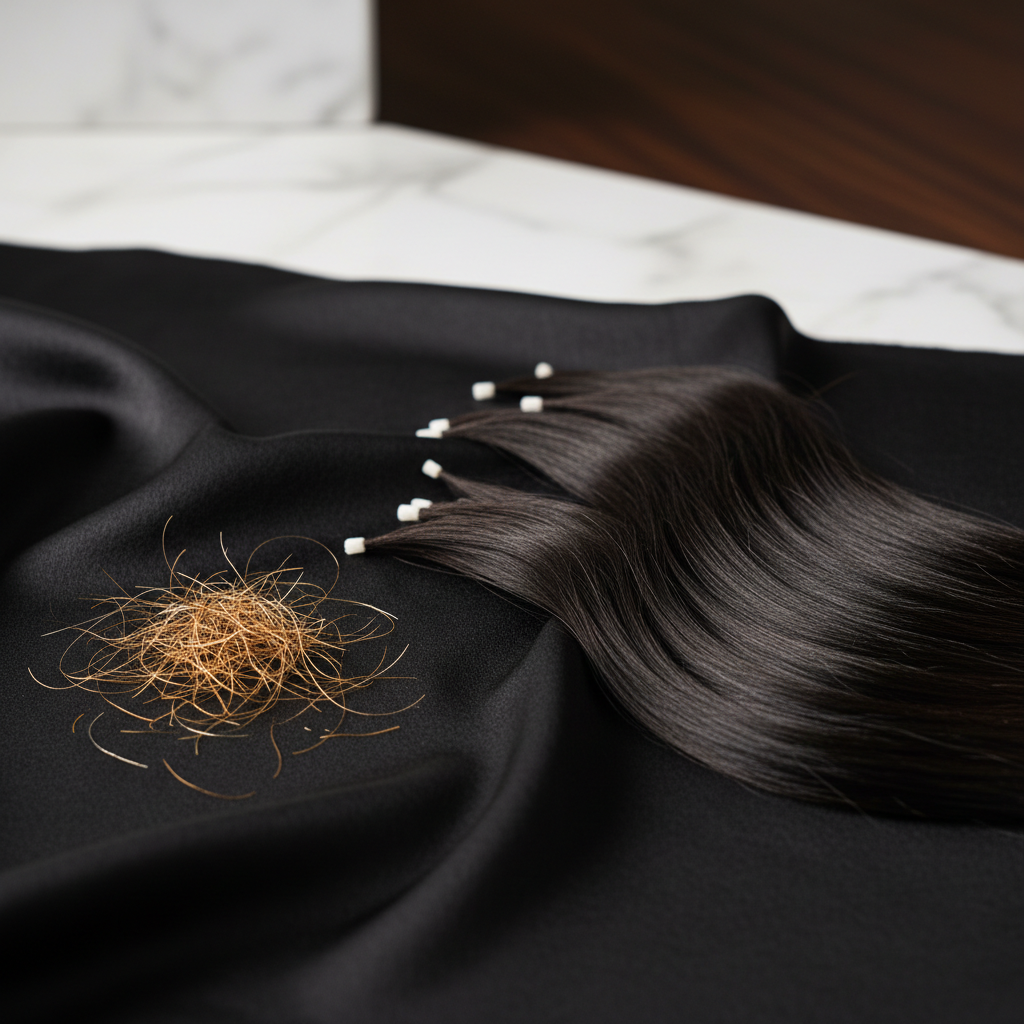
In contrast, hair breakage is a material failure of the hair fibre itself. Human hair is composed primarily of alpha-keratin (around 85% to 90%), water, lipids, and trace minerals. The outer protective layer, known as the cuticle, consists of overlapping scales that protect the inner cortex. Breakage occurs when the protective cuticle is eroded or stripped away, exposing the cortex to tensile strain. When external physical stress exceeds the structural tensile strength of the cortex, the fibre snaps. Breakage can happen at any point along the hair shaft, from millimeters away from the scalp to the very tips.
| Diagnostic Feature | Hair Shedding (Exogen) | Hair Breakage (Tensile Failure) |
|---|---|---|
| Point of Origin | Scalp follicle | Along the hair shaft |
| Presence of Bulb | Yes (small, firm white or translucent bulb) | No bulb present |
| Strand Length | Full length of your hair | Shorter, uneven fragments |
| Daily Expected Volume | 50 to 100 hairs per day | Zero is ideal; varies with mechanical stress |
| Primary Cause | Natural biological cycle, hormonal shifts, systemic stress | Heat styling, bleach, friction, mechanical tension |
| Visual Appearance on Scalp | Overall diffused thinning if excessive | Frizzy halo, uneven lengths, split ends |
| Direct Solution | Address internal health, stress, or wait out telogen cycle | Cuticle protection, conditioning, trimming, reducing heat |
The biological and structural mechanisms
To understand why these two issues behave differently, you must examine their underlying mechanisms.
The shedding mechanism
Hair shedding is regulated by cellular signals within the dermal papilla. Once an anagen phase ends, the follicle undergoes catagen (regression) and transitions into telogen. The base of the hair fibre forms a compact, keratinised structure known as a club hair. During exogen, enzymatic degradation loosens the cellular attachments holding the club hair in the follicle base. Friction from washing, brushing, or gravity then dislodges it. Because the entire strand is released, the shed hair measures your full hair length and retains the club bulb.
The breakage mechanism
Hair breakage represents a loss of structural integrity. When hair is subjected to chemical processing (such as oxidation during bleaching) or thermal styling above 185°C, cystine disulphide bonds within the cortex break down. Similarly, repeated mechanical grooming lifts and chips the cuticle scales. Once the cuticle is compromised, the cortex loses moisture, porosity spikes, and the fibre becomes brittle. Under ordinary combing tension, the damaged cortex cannot stretch elastically and fractures across the cross-section of the hair.
Signs to look for: how to self-diagnose
You can easily determine which process is occurring with a quick, three-step physical check:
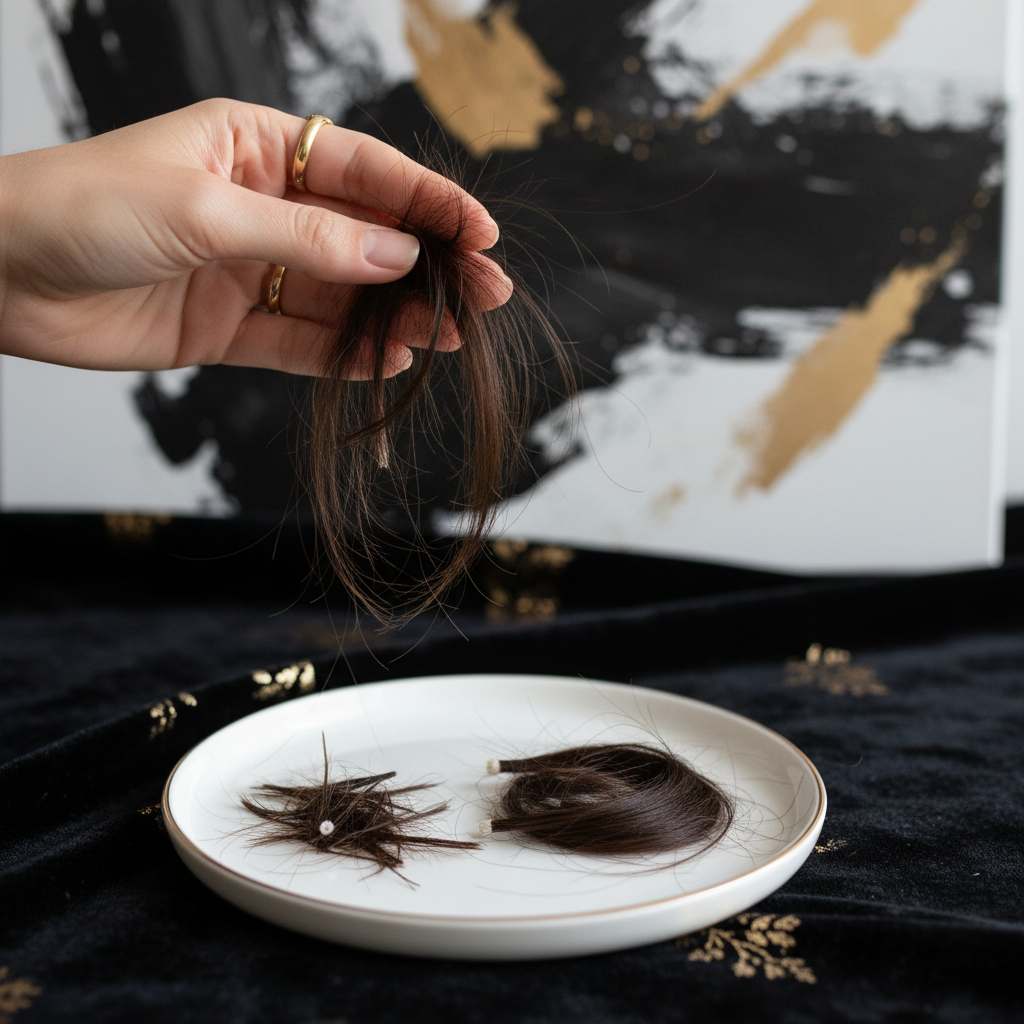
- Examine the ends of the loose hair: Pick up a fallen strand and inspect both tips under bright light. If one end features a small, hard, white or translucent bead, that is the follicular bulb. It is a shed hair. If both ends are blunt, frayed, split, or step-fractured with no bulb, it is a broken hair.
- Measure the length: Compare the fallen strand against the length of your actual hair. If it matches the length from your roots to your ends, shedding is the primary culprit. If you notice a sink or floor littered with tiny, irregular specks and short segments (1 to 5 cm), you are dealing with fibre breakage.
- Assess the scalp and silhouette: Part your hair and look closely at the crown and hairline. Diffuse, all-over thinning without broken edges usually suggests shedding (such as telogen effluvium). If your scalp hair density looks normal but you notice a frizzy halo of short, flyaway hairs sticking straight up, or your perimeter edges appear chewed and uneven, you are seeing active breakage.
What the evidence does not show
There are several persistent myths regarding hair loss and damage that clinical data does not support:
- Frequent shampooing does not cause shedding: Washing your hair dislodges fibres that have already separated from the follicle days earlier during the exogen phase. Skipping washes merely causes these loose hairs to accumulate, leading to a seemingly massive shed on your next wash day.
- Topical oils cannot repair broken fibres: Once a hair shaft fractures or splits, the structural damage is permanent. Hair is non-living tissue (keratinised protein). Conditioners and cosmetic oils can temporarily smooth the cuticle and lubricate the shaft to prevent future breakage, but they cannot stitch a fractured fibre back together.
- Breakage does not stunt follicular growth: Breakage occurs outside the skin. Your follicles continue to produce hair at their normal rate (roughly 1 to 1.25 cm per month), but if hair is breaking at the ends at the same speed it grows from the scalp, you experience an apparent retention plateau.
What you can do to address each issue
Because the mechanisms differ completely, your corrective approach must target the actual root cause.
Managing hair breakage
- Minimise heat exposure: Keep thermal tools below 185°C and always apply a thermal protectant that coats the cuticle and reduces heat transfer rates.
- Support fibre elasticity: Use conditioning treatments rich in fatty alcohols, humectants, and hydrolysed proteins that temporarily reinforce weakened sections of the cortex.
- Reduce friction: Switch to silk or satin pillowcases, use microfibre towels instead of rough terry cloth, and avoid vigorous towel-drying.
- Prune damaged ends: Get regular trims to remove split ends before the split travels upward along the shaft.
Managing excessive shedding
- Evaluate physical and emotional stressors: Telogen effluvium typically occurs two to three months after a triggering event such as high fever, surgery, crash dieting, or severe emotional shock.
- Check your micronutrient levels: Have a GP check your serum ferritin, vitamin D, zinc, and thyroid function (TSH). Iron deficiency is a well-established cause of increased shedding.
- Maintain a healthy scalp environment: Keep the scalp clean and free from excess sebum, oxidised lipids, and fungal overgrowth (Malassezia), which can irritate the follicle.
Caring for your hair with Watermans
If you are looking to support your hair routine, cosmetic products can help maintain a strong, healthy-looking scalp and minimise mechanical breakage.
Watermans Grow Me Shampoo and Conditioner are formulated with ingredients such as biotin, rosemary, caffeine, and hydrolysed lupin protein. While cosmetic products do not treat medical hair loss disorders like alopecia areata or male-pattern baldness, using an invigorating, scalp-focused routine creates an optimal environment for growing hair. Additionally, the moisturising agents and strengthening proteins in Watermans formulas smooth the external cuticle, improving slip, reducing tangling, and visibly cutting down on daily fibre breakage caused by everyday brushing and styling.
When to seek professional advice
While normal shedding and minor styling breakage are manageable at home, certain symptoms warrant a visit to a GP, dermatologist, or qualified trichologist:
- Shedding that exceeds 100 to 150 hairs daily for more than six to eight consecutive weeks.
- Sudden, patchy, circular bald spots (which may indicate alopecia areata).
- Visible widening of your central parting or gradual thinning focused specifically at the crown or temples.
- Scalp symptoms including intense itching, burning, pain, redness, flaking, or scabs.
- Extensive breakage occurring right at the scalp level across large sections of your head.
Frequently asked questions about Difference Between Breakage and Shedding
How can I tell the Difference Between Breakage and Shedding quickly?
Look at the fallen strand under a bright light. If the hair features a small, white or translucent bulb at one end and matches the full length of your hair, it is a shed hair. If the strand is short, uneven, and has blunt or frayed ends without a root bulb, it is a broken hair.
Can hair breakage lead to permanent hair loss?
No, typical hair breakage does not cause permanent follicular hair loss because the follicle inside the scalp remains unharmed. The hair continues to grow from the root. However, severe and prolonged traction breakage (such as from extremely tight weaves or braids) can eventually cause traction alopecia, potentially scarring the follicle over time.
Does brushing wet hair cause breakage or shedding?
Brushing wet hair causes breakage. When hair absorbs water, hydrogen bonds temporarily break, swelling the fibre and leaving the cortex in an elastic, fragile state. Combing wet hair stretches the strands beyond their elastic limit, leading to widespread snapping. Wet brushing can also pull prematurely loose telogen hairs, but the primary risk is cuticle fracture.
How much shedding is considered normal per day?
Dermatological consensus holds that shedding 50 to 100 hairs per day is standard for an adult scalp. This accounts for the normal turnover of follicles completing their resting (telogen) phase. People with thicker or longer hair may feel they shed significantly more simply because the sheer volume and length of loose hair is more visible.
Can split ends turn into hair shedding?
No, split ends cannot turn into hair shedding. Split ends occur at the distal tips of the hair fibre due to external wear and tear. If left untrimmed, a split end will travel up the hair shaft and cause severe breakage, but it has no biological connection to the follicle's internal shedding cycle.
Managing your hair health
Distinguishing the exact Difference Between Breakage and Shedding gives you complete control over your hair care strategy. Rather than panicking at the sight of loose hair, take a moment to inspect the strand, verify whether a bulb is present, and check its length. Addressing breakage requires gentler mechanical habits, protective styling, and cuticle-reinforcing treatments. Addressing excessive shedding requires looking inward at stress, systemic health, and scalp wellness. By treating the true issue with precision, you can maintain both the strength of your lengths and the health of your scalp.
Sources and references
- British Association of Dermatologists. "Telogen Effluvium: A Patient Guide." 2021.
- Robbins, Clarence R. Chemical and Physical Behavior of Human Hair. 5th ed., Springer-Verlag, 2012.
- Sinclair, Rodney. "Healthy hair: what is it?" Journal of Investigative Dermatology Symposium Proceedings, 2007.
- Dawber, Rodney. "Hair: Its Structure and Response to Physical and Chemical Treatments." Clinics in Dermatology, 1996.
- Trüeb, Ralph M. "Shampooing and Hair Care: Dermatological and Cosmetic Aspects." Current Problems in Dermatology, 2011.
Find these ingredients in Watermans products
- Zinc: you will find this ingredient in our Hair Vitamins.