DHT and Hair Loss Mechanisms: The Science of Follicle Miniaturisation
8 min read ·
Learn how DHT and hair loss mechanisms cause follicular miniaturisation, why genetics dictate sensitivity, and evidence-based ways to protect thinning hair.
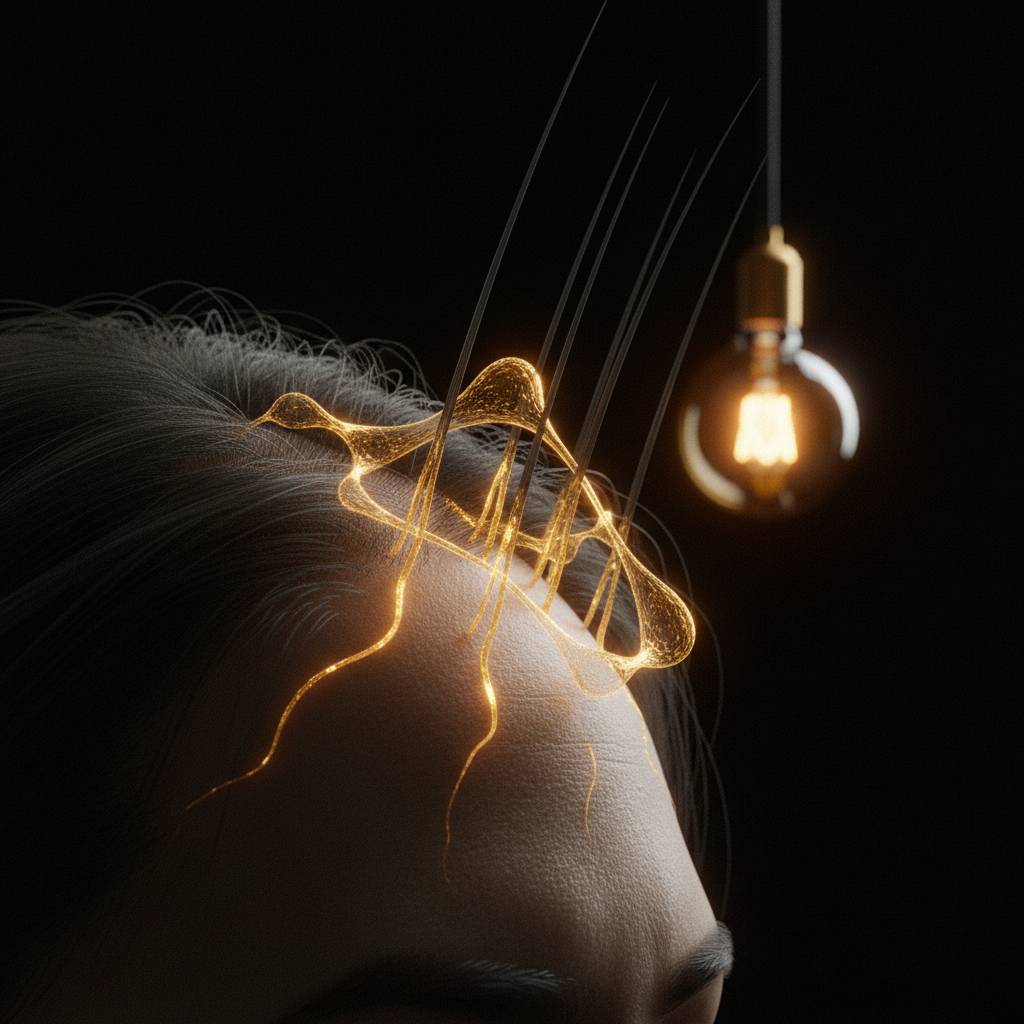
Quick answer: Understanding DHT and hair loss mechanisms is essential for identifying androgenetic alopecia, the most common form of progressive hair thinning. Dihydrotestosterone (DHT) binds to androgen receptors in genetically susceptible hair follicles, shortening the anagen growth phase and causing progressive follicular miniaturisation. However, a major limitation is that DHT does not cause hair loss universally across the entire scalp, nor does it affect everyone with high hormone levels. Sensitivity depends entirely on local receptor density and genetics.
Key takeaways
- Dihydrotestosterone (DHT) is a potent androgen derived from circulating testosterone via the intracellular enzyme 5-alpha reductase.
- Follicular miniaturisation occurs when DHT shortens the hair's active growth phase (anagen) and lengthens the resting phase (telogen).
- Genetics dictate hair follicle sensitivity to DHT, determined by androgen receptor gene variations, not simply the total amount of DHT in your bloodstream.
- Occipital follicles (at the back of your head) naturally lack high sensitivity to DHT, explaining why hair remains thick there during typical pattern hair loss.
- Addressing the mechanism early yields the best results because completely dormant, fibrotic follicles cannot produce mature terminal hairs again.
DHT and hair loss mechanisms: what the evidence shows
Research into DHT and hair loss mechanisms confirms that androgenetic alopecia stems from an interplay between circulating androgens and tissue-level genetic vulnerability. In genetically predisposed scalp tissue, the enzyme 5-alpha reductase (primarily the type 2 isoenzyme located in the dermal papilla) converts free testosterone into dihydrotestosterone. DHT binds to androgen receptors with roughly five times greater affinity than testosterone itself.
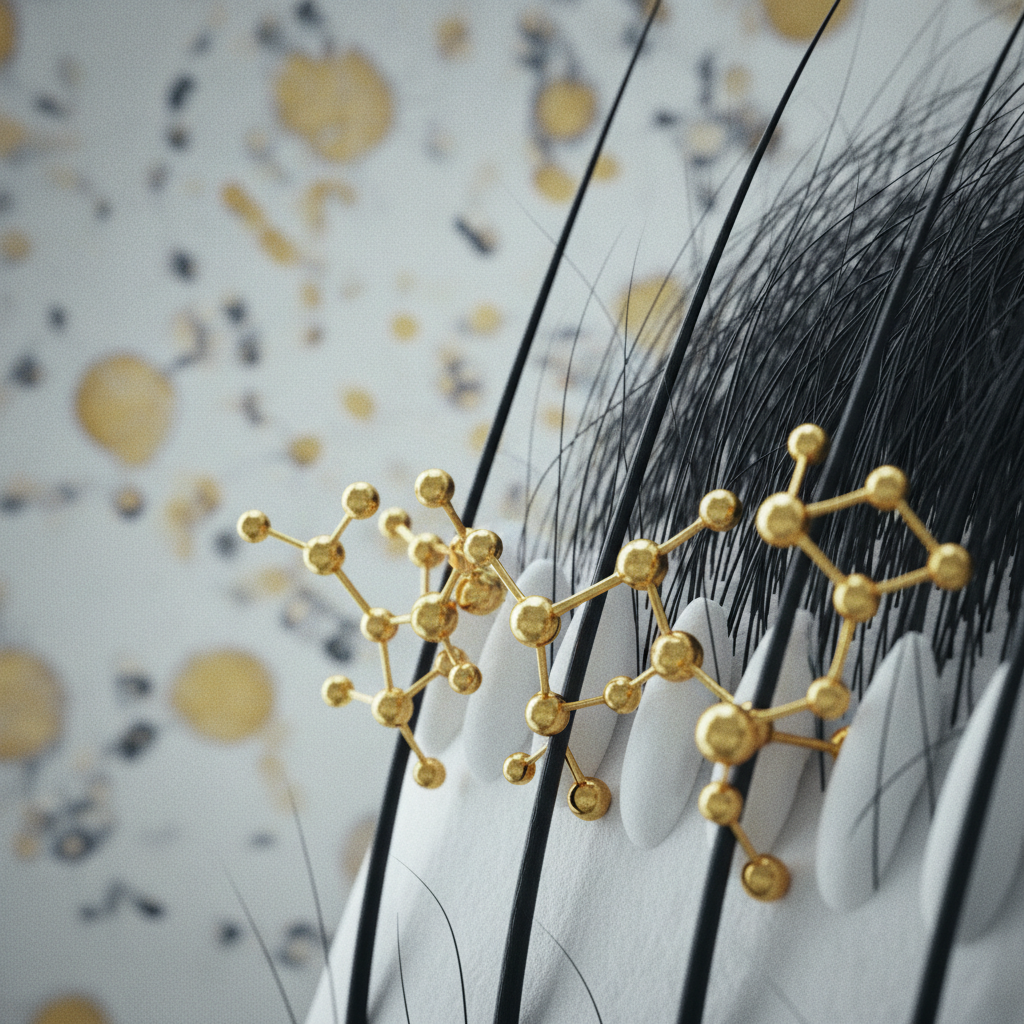
Once bound, the hormone-receptor complex migrates to the cell nucleus, altering gene transcription. It signals the dermal papilla to downregulate essential growth factors (like IGF-1 and VEGF) while upregulating inhibitory signalling pathways, notably transforming growth factor-beta (TGF-beta). Over repeated hair cycles, this molecular cascade causes the follicle to shrink physically. The thick, pigmented terminal hair transforms progressively into a fine, short, barely visible vellus-like hair.
Importantly, DHT does not cause immediate shedding or sudden hair fall. Instead, it systematically curtails the duration of anagen. While a healthy hair follicle remains in anagen for 2 to 7 years, an androgen-sensitive follicle exposed to DHT may only remain in anagen for several months. Concurrently, the latency period (kenogen) between shedding an old hair and initiating a new growth phase grows longer.
What the evidence does not show
There are persistent myths surrounding DHT that controlled clinical research has debunked:
- DHT is not a toxic waste product: It is an essential steroid hormone vital for male development, prostate function, and secondary sexual characteristics.
- High serum DHT does not guarantee hair loss: Men and women with normal or even low circulating DHT levels can experience severe pattern hair loss if their scalp follicles possess high receptor density or heightened sensitivity.
- DHT does not cause sudden, diffuse shedding: Widespread, acute hair shed across the entire head is typically telogen effluvium, triggered by illness, nutritional deficiencies, or severe stress, rather than androgenic miniaturisation.
- Shampoo cannot single-handedly eradicate DHT at the follicular core: While topical cleansers remove surface sebum and environmental debris, systemic 5-alpha reductase activity happens deep within the dermal papilla, requiring targeted physiological interventions.
The biological stages of follicular miniaturisation
Miniaturisation follows a predictable structural pathway under the influence of DHT:
- Enzymatic conversion: Free testosterone enters the dermal papilla cells, encountering the enzyme 5-alpha reductase.
- Receptor activation: The resulting DHT binds tightly to intracellular androgen receptors.
- Paracrine signalling: Follicular cells release inhibitory cytokines like TGF-beta2 and Dickkopf-related protein 1 (DKK-1), suppressing cellular proliferation in the hair matrix.
- Microvascular constriction: The microcapillaries feeding the base of the hair bulb reduce in diameter, gradually restricting nutrient and oxygen delivery.
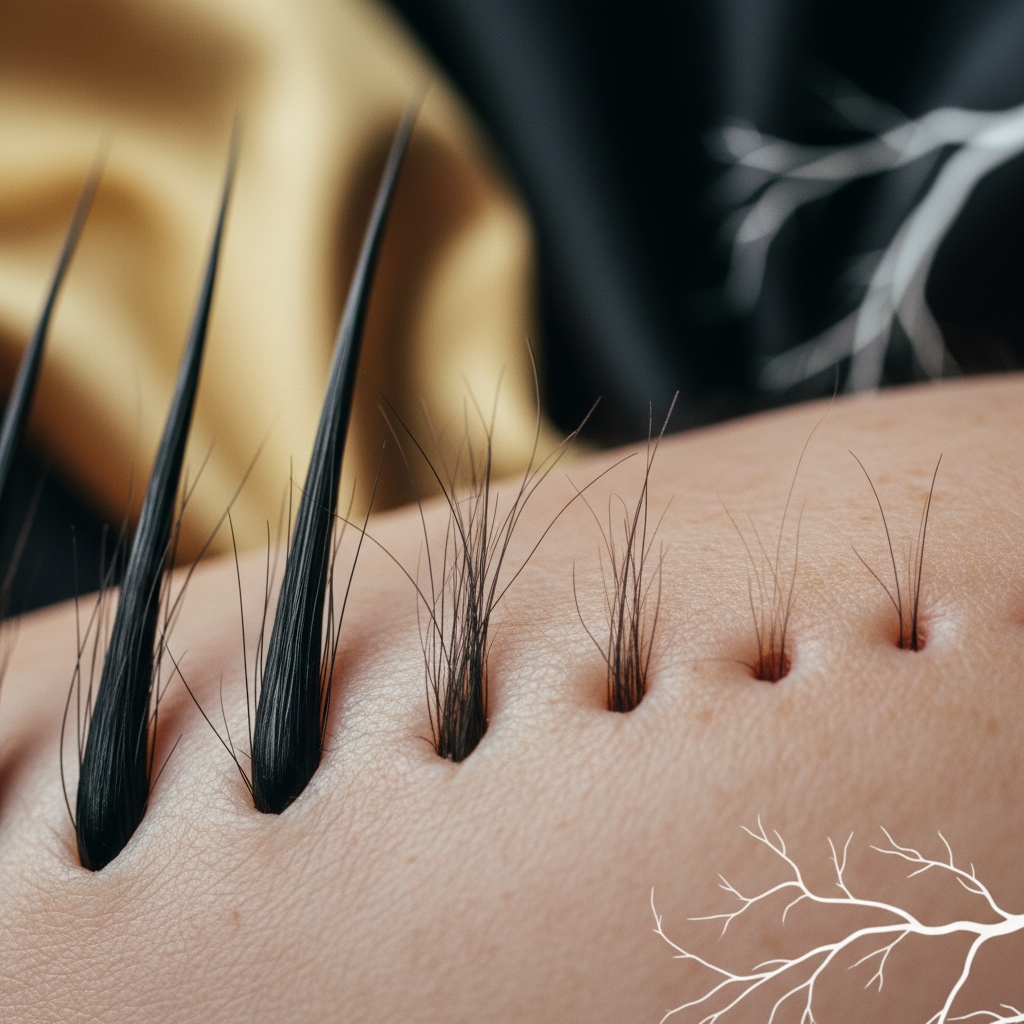
- Morphological regression: With every subsequent hair cycle, the hair bulb forms higher up in the dermis, producing a thinner hair shaft with reduced structural integrity.
| Parameter | Healthy Anagen Follicle | Miniaturised Follicle (DHT-Affected) |
|---|---|---|
| Growth Phase (Anagen) | 2 to 7 years | A few months to 1 year |
| Hair Shaft Diameter | 60 to 100 microns | Less than 30 microns |
| Fibre Type | Thick, pigmented terminal hair | Thin, light, vellus-like hair |
| Receptor Sensitivity | Low or average expression | Elevated androgen receptor sensitivity |
| Dermal Papilla Size | Large, highly vascularised | Shrunken, reduced cellular volume |
| Reversibility | Maintenance state | Reversible early; permanent once fibrotic |
Recognising the physical signs of DHT-mediated thinning
Because DHT acts progressively, recognising early structural alterations gives you the best window for action. Look for these hallmark signs:
- Receding hairline and temples: In men, the frontal hairline and temporal peaks recede into an "M" shape (Norwood scale progression).
- Crown thinning: The hair at the vertex thins and creates a visible spiral before widening.
- Widening central part: In women, miniaturisation often presents as diffuse thinning along the midline with preservation of the frontal hairline (Ludwig scale pattern).
- Variable hair shaft thickness: Running your hands through your hair reveals a mix of coarse, normal fibres and unusually soft, fine, colourless hairs in the affected zones.
- Persistent scalp sebum: DHT stimulates sebaceous gland activity, meaning DHT-sensitive scalps frequently present with excess oil production or mild inflammation.
What you can do: medical and topical support
Addressing hair thinning requires a multi-pronged approach that tackles follicular sensitivity, improves the micro-environment, and preserves existing fibres.
Systemic medical treatments, such as oral 5-alpha reductase inhibitors, work by significantly reducing the conversion of testosterone to DHT throughout the body. While highly effective, they require a clinical consultation to weigh potential side effects.
On the cosmetic and topical care front, supporting the scalp surface and hair shaft helps you maintain optimal density and manage breakage:
- Optimise the scalp microbiome: Keep the follicular openings clear of oxidised sebum, dead cells, and product residue using targeted, pH-balanced cleansing (ideally between pH 5.0 and 5.5).
- Topical botanical support: Ingredients like caffeine, rosemary extract, and niacinamide have shown promise in laboratory and cosmetic studies for stimulating surface microcirculation and supporting a healthy follicular environment.
- Strengthen existing fibres: Miniaturising hairs are physically fragile. Using fortifying proteins and humectants prevents hair breakage, ensuring you preserve every millimetre of hair you grow.
The role of Watermans in your routine
For those looking to maintain a balanced, healthy scalp environment, Watermans offers cosmetic formulas designed to revitalise the look and feel of thinning hair. Watermans GrowMe shampoo blends natural ingredients including biotin, caffeine, rosemary extract, niacinamide, and argan oil.
While cosmetic products do not treat medical conditions or eliminate genetic alopecia, this invigorating blend supports the appearance of fuller, denser hair, keeps the scalp clear of excess sebum, and strengthens brittle strands against daily physical breakage.
When the cause may be something else
Not all hair loss stems from DHT. If you observe abrupt clumps of hair falling out in the shower or patches appearing overnight, DHT is unlikely to be the primary cause:
- Telogen effluvium: Caused by high fever, childbirth, extreme calorie deficits, or sudden psychological stress. Hair sheds evenly from all parts of the scalp 2 to 3 months after the trigger.
- Alopecia areata: An autoimmune reaction where your immune system attacks healthy follicles, creating smooth, circular bald patches.
- Traction alopecia: Mechanical tension from tight ponytails, braids, or extensions that physically pulls follicles from the dermal layer.
- Thyroid dysregulation: Both hypo- and hyperthyroidism disrupt the metabolic rate of hair matrix cells, creating diffuse, dry, brittle thinning.
When to seek professional advice
Consult a GP or a registered trichologist if your hair loss is sudden, accompanied by scalp pain, burning, severe itching, or scabbing, or if you lose hair in distinct coin-sized patches. Dermatologists can perform a trichoscopy, examine your scalp under high magnification, and order blood panels to evaluate ferritin, thyroid hormones, and vitamin D before confirming whether androgenetic miniaturisation is the driving factor.
Frequently asked questions about DHT and Hair Loss Mechanisms
Does washing your hair too often increase DHT levels?
No. Washing your hair has zero impact on systemic or cellular DHT synthesis. Washing merely dislodges hairs that have already detached from the follicle base and are resting in the telogen phase. Regular cleansing is actually beneficial, as it removes oxidised sebum that contains trace concentrations of scalp surface DHT.
Can women experience hair loss due to DHT?
Yes. Although women produce significantly less testosterone than men, hormonal transitions (such as perimenopause, menopause, or conditions like polycystic ovary syndrome) can shift the androgen-to-oestrogen ratio. When relative androgen levels rise, genetically susceptible hair follicles respond via identical DHT and hair loss mechanisms, resulting in female pattern hair thinning.
Does high testosterone automatically cause balding?
No. Testosterone alone is not the sole determinant of pattern baldness. Balding requires two specific factors: the enzymatic conversion of testosterone into DHT via 5-alpha reductase, and genetic sensitivity determined by your follicles' androgen receptors. Someone with exceptionally high testosterone may retain a full head of hair if their follicles lack genetic DHT sensitivity.
Can a miniaturised hair follicle return to normal?
A follicle in the early stages of miniaturisation can often produce thicker, healthier-looking hair again when addressed promptly with targeted interventions. However, once a follicle remains dormant for several years and undergoes complete perifollicular fibrosis, the root tissue closes permanently, meaning it can no longer generate a terminal hair fibre.
Summary on DHT and hair loss
Navigating DHT and hair loss mechanisms requires understanding that follicular miniaturisation is a biological process driven by genetics and local enzymatic activity, not sudden shedding or surface damage. By distinguishing between follicular miniaturisation, shedding, and mechanical breakage, you can choose targeted strategies that protect your existing hair density, maintain a clean and invigorated scalp, and address progressive thinning before follicles become permanently inactive.
Sources and references
- British Association of Dermatologists. Androgenetic Alopecia Guidelines. 2021.
- National Institute for Health and Care Excellence (NICE). Alopecia, androgenetic - Clinical Knowledge Summaries. 2023.
- Journal of Investigative Dermatology. Androgens and hair growth. 2008. DOI: 10.1038/jid.2008.62.
- Dermatology and Therapy. Male Androgenetic Alopecia: An Overview of Pathophysiology and Management. 2020.
- International Journal of Molecular Sciences. The Role of 5-Alpha Reductase and Androgens in Hair Follicle Biology. 2022.
Find these ingredients in Watermans products
- Vitamin D: you will find this ingredient in our Hair Vitamins.
- Niacinamide: you will find this ingredient in our Hair Mask.