Dealing with Split Ends: The Science of Hair Fibre Breakdown
8 min read ·
Learn the science of dealing with split ends, including the mechanics of trichoptilosis, limits of cosmetic mending, and proven methods to protect hair fibre.
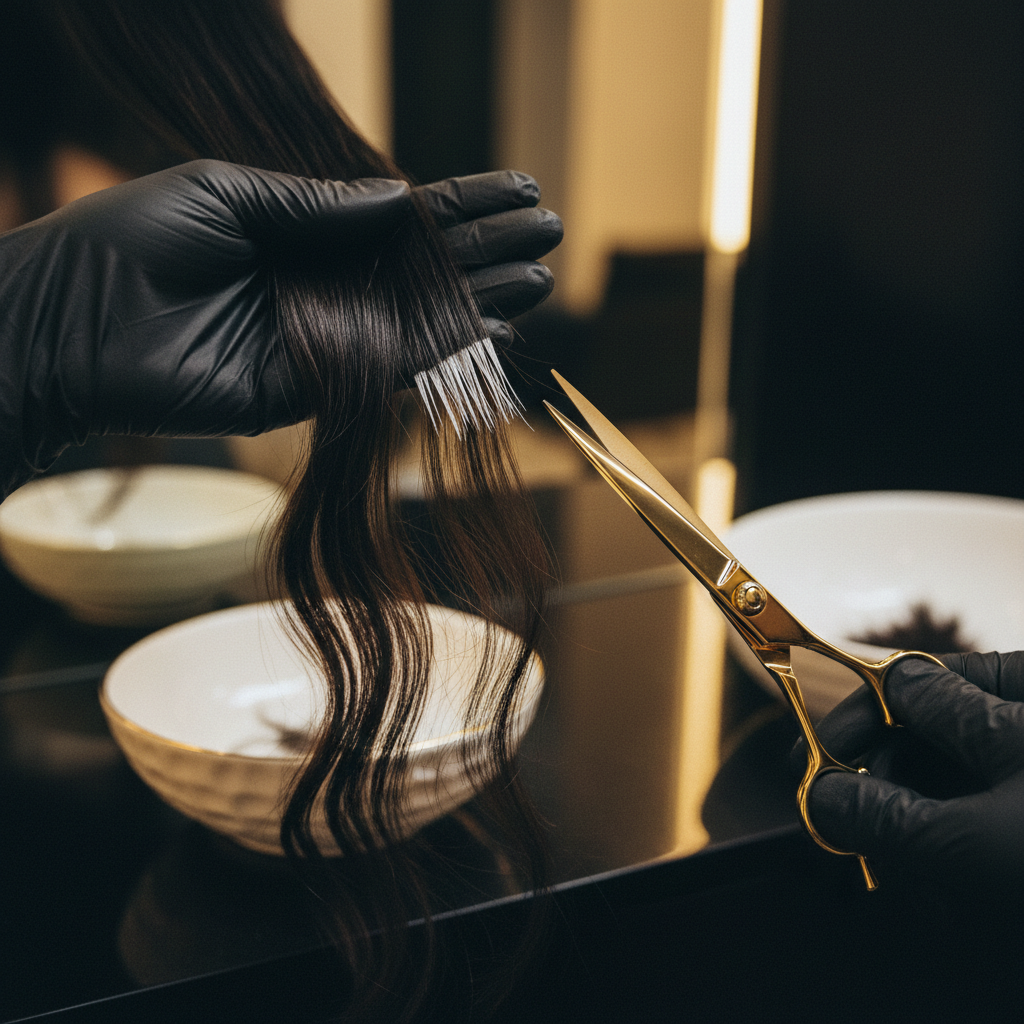
Quick answer: Successfully dealing with split ends requires understanding a fundamental biological reality: once a hair fibre fractures longitudinally, it cannot be permanently re-fused. Cosmetic serums, leave-in conditioners, and protein treatments can temporarily seal and smooth separated cuticle scales to reduce friction and improve appearance, but trimming away the split remains the only definitive cure. Long-term management focuses on preventative care, reducing mechanical friction, moderating heat styling, and maintaining the structural lipid balance of the cuticle.
Key takeaways
- Permanent repair is impossible: Hair is non-living keratinised tissue. Split ends cannot be biologically healed or fused back together permanently.
- Physical cutting is the only cure: Shearing off damaged ends with sharp, professional hairdressing scissors stops fractures from travelling higher up the hair shaft.
- Temporary cosmetic bridging works: Formulations containing hydrolysed proteins, silicones, and plant oils can temporarily glue split fibres together until the next wash.
- Mechanical friction is the primary driver: Rough towel drying, vigorous brushing, and chemical over-processing degrade the protective F-layer of the cuticle, causing structural splitting.
- Prevention preserves hair length: Consistent conditioning, sleeping on smooth fabrics, and using thermal protectants preserve fibre integrity and delay tip breakdown.
Dealing with split ends: what the evidence shows
Dealing with split ends begins with understanding the structural failure known scientifically as trichoptilosis. The outermost layer of each hair fibre consists of overlapping cuticle scales held together by the cell membrane complex and coated with a protective lipid layer (18-methyleicosanoic acid, or 18-MEA). When weathering, chemical alkaline treatments (such as bleaching or relaxers), and mechanical stress strip this lipid barrier, the cuticle scales lift, chip, and peel away.
Without the cuticle shield, the inner cortex is exposed. The cortex is composed of parallel bundles of keratin microfibrils. Once unprotected, tensile stress and everyday friction cause these long keratin bundles to tear apart along their vertical axis, splitting the fibre end into two or more distinct strands. Research published in the International Journal of Cosmetic Science demonstrates that repeated grooming cycles generate sufficient shear force to crack weakened tips, creating common bifurcations (classic splits), tree splits, and feather splits.
Cosmetic treatments can temporarily bridge this gap. Cationic conditioning agents, silicones like amodimethicone, and hydrolysed wheat or keratin proteins deposit along the negatively charged damaged cortex. They create a temporary polymer bridge that holds split fibrils together. While this smooths the hair shaft, enhances light reflection, and prevents immediate tangling, it washes out with surfactants. Therefore, dealing with split ends effectively involves a dual strategy: trimming existing splits to protect the shaft, alongside targeted conditioning to prevent new ones.
| Approach | Mechanism | Duration of Effect | Impact on Hair Integrity |
|---|---|---|---|
| Sharp Trimming | Cleanses the split tip, creating a blunt, intact cuticle boundary. | Permanent for that section of fibre. | Halts vertical split progression up the shaft entirely. |
| Cosmetic Sealants (Oils/Silicones) | Coats cuticle; reduces inter-fibre friction and temporarily binds split edges. | Temporary (lasts until next shampoo). | Minimises friction, preventing adjacent healthy fibres from catching. |
| Protein Treatments | Adsorbs hydrolysed peptides into micro-cracks in the cortex. | Semi-temporary (lasts 1 to 4 washes). | Temporarily reinforces structural rigidity and reduces porosity. |
| Dull Shear Trimming | Crushes the hair fibre rather than cleanly severing it. | Fails immediately. | Accelerates rapid new splitting within days of cutting. |
What the evidence does not show
There is no scientific evidence supporting products that claim to "permanently mend" or "re-glue" split ends over time. Because hair fibre is non-living biological material, it possesses no metabolic function, cellular division, or self-repair mechanisms. Once the covalent and hydrogen bonds inside the cortex break apart, topical formulations cannot rebuild the native protein architecture.
Similarly, cutting split ends does not make your hair grow faster at the scalp. Follicular growth occurs beneath the scalp surface, inside the dermal papilla. However, dealing with split ends by trimming gives the visual appearance of faster growth because it prevents the tips from snapping off at the same rate the follicle produces new fibre.
Common forms of fibre breakdown
Split ends do not all look the same. As physical trauma accumulates along the distal end of the hair, fibres separate in several recognisable patterns:
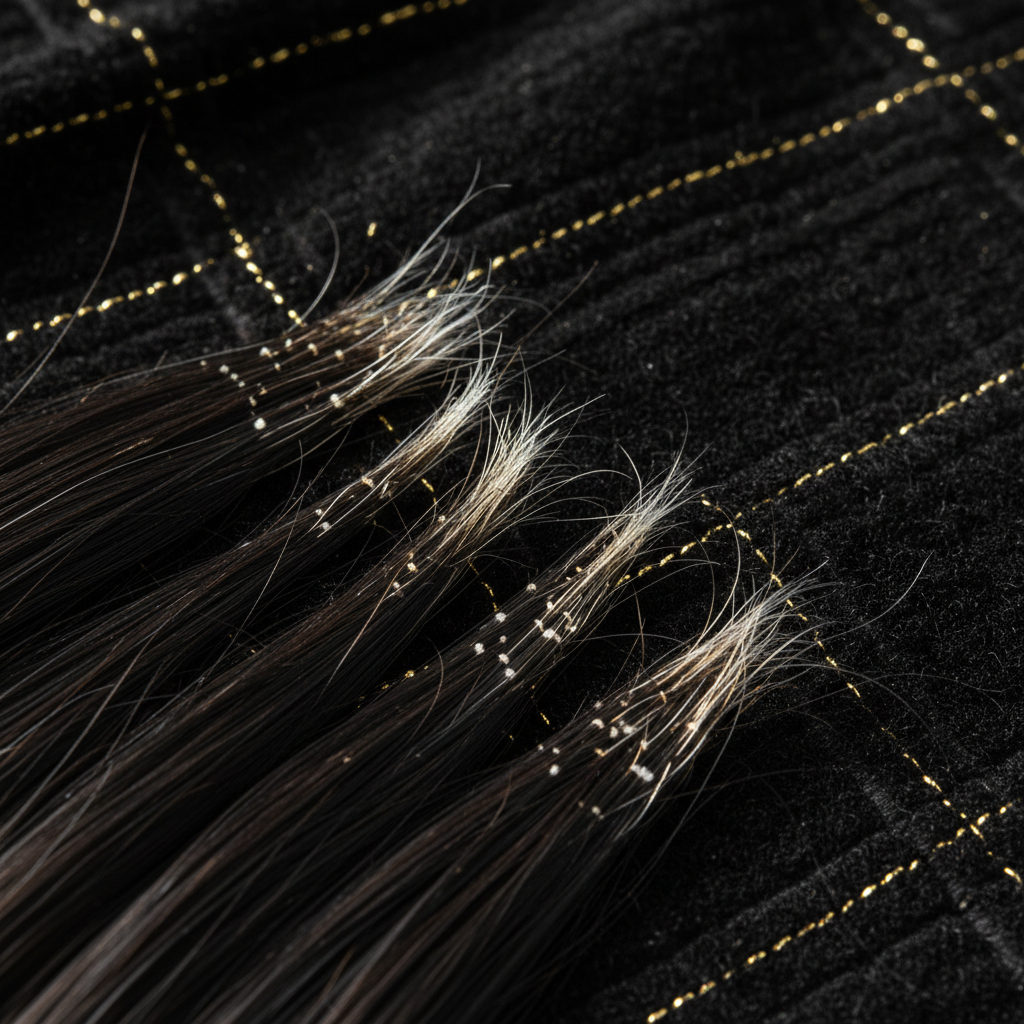
- The Traditional Split: A basic two-pronged bifurcation at the very tip, indicating early cuticle loss and minor cortical splitting.
- The Tree Split: Multiple horizontal and vertical fractures branching out from a single point along the shaft, indicating severe cortical breakdown, usually seen in heavily lightened or heat-abused hair.
- The Feather Split: Multiple fine tears along one side of the shaft, typically caused by aggressive mechanical brushing using brittle plastic bristles.
- The Incomplete Split: A rupture that creates a gap or "eye of a needle" within the shaft while the very tip remains intact, creating an acute structural weak point prone to snapping.
- Trichorrhexis Nodosa: Microscopic node-like swelling where the cortex has frayed outward without a complete snap, feeling like a hard bump along the hair strand.
Practical steps for managing and preventing split ends
Protecting your ends requires a routine designed to minimise friction and preserve the fibre cuticle.
1. Remove damaged ends cleanly
Book regular maintenance trims every 8 to 12 weeks with a professional stylist. If performing self-maintenance using the "search and destroy" method (cutting individual split ends), use only professional-grade Japanese stainless steel hairdressing shears. Standard household or kitchen scissors have blunt edges that crush the cuticle, causing the hair to re-split within 48 hours.
2. Reduce mechanical friction
Wet hair swells and becomes elastic, making it particularly vulnerable to cuticle stripping. Never roughly towel dry your hair with a traditional terry cloth towel; press water out gently using a microfibre wrap or smooth cotton t-shirt. Detangle starting from the tips and work slowly upwards toward the roots using a wide-tooth comb or a brush with flexible bristles.
3. Buffer against thermal degradation
Heat tools operating above 185 degrees Celsius break down structural alpha-keratin into beta-keratin, weakening fibre elasticity. Always apply a film-forming thermal protectant prior to blow-drying or heat styling. Keep heated plates moving smoothly and avoid passing over the distal ends multiple times.
4. Fortify with surface sealants
Use leave-in conditioners containing fatty alcohols (cetyl, stearyl alcohol) and natural plant oils (such as argan, jojoba, or abyssinian oil). These mirror the lost 18-MEA layer, lubricating the hair so strands slide smoothly against one another rather than snagging.
The role of targeted hair hygiene
Maintaining healthy hair ends starts with keeping the hair clean and balanced. The Watermans hair care range offers targeted formulations designed to improve hair condition from root to tip. Utilizing nutrient-rich ingredients, hydrolysed lupin protein, and natural extracts, Watermans products support stronger-feeling hair and help improve fibre manageability, reducing the mechanical snagging that frequently triggers cuticle breakdown. Integrating a restorative conditioning step helps protect vulnerable ends against daily environmental stressors.
When fibre breakage indicates an underlying issue
If you notice widespread splitting and snapping mere weeks after a clean trim, external styling may not be the sole cause. Rapid breakage can occasionally stem from systemic or environmental issues:
- Excessive chemical processing: Overlapping bleach, permanent relaxers, or perms can fundamentally degrade cystine disulphide bonds throughout the entire cortex.
- Severe nutritional gaps: Deficiencies in essential amino acids, iron, or zinc can alter the structural integrity of the keratin matrix produced at the follicle level, producing naturally brittle fibre.
- Mineral buildup from hard water: High concentrations of dissolved calcium and magnesium (over 180 mg/L) can crystallise on the hair shaft, stiffening the fibre and accelerating mechanical splitting.
If your hair appears dry, brittle, and fragile across the entire length despite minimal heat and chemical use, consult a qualified trichologist or dermatologist for an in-depth scalp and fibre assessment.
Frequently asked questions about dealing with split ends
Can split end mending serums replace a haircut?
No. Serums containing polyquaterniums, silicones, and hydrolysed proteins temporarily adhere the separated fibres together through physical adhesion and electrostatic charges. However, these formulas wash off with shampoo, exposing the underlying split once again. Dealing with split ends permanently requires physically trimming away the damaged tip to prevent the fissure from migrating upward.
How often should I trim my hair when dealing with split ends?
For most individuals, trimming every 8 to 12 weeks removes weathered ends before they split deeply into healthy shaft tissue. If your hair is chemically lightened, relaxed, or regularly heat-styled, you may benefit from a conservative micro-trim every 6 to 8 weeks to maintain blunt, intact hair tips.
Does split hair stop the hair from growing?
No. Split ends occur at the distal tip of the dead hair shaft, whereas hair growth occurs biologically at the dermal papilla beneath the scalp. However, dealing with split ends is essential for length retention; if ends split and snap off at the same rate new hair emerges, your overall length will stay the same.
Why do my split ends return quickly after a trim?
If split ends return within days of a cut, your scissors were likely too dull. Dull shears crush the hair shaft instead of cleanly slicing through the cortex and cuticle, creating an immediate fracture point. Environmental factors, such as high heat styling without protectant or vigorous brushing, will also quickly recreate split tips.
Restoring strength to damaged ends
Effectively dealing with split ends demands an honest assessment of hair structure: prevent mechanical abrasion, cushion vulnerable cuticles with protective conditioning formulas, and trim fractures before they travel up the shaft. By reducing friction, treating wet hair with care, and scheduling regular maintenance cuts, you can preserve the structural integrity of your hair and enjoy smoother, stronger lengths.
Sources and references
- International Journal of Cosmetic Science, "Hair breakage in normal and weathered hair", 2009.
- Journal of Cosmetic Dermatology, "Chemical and physical changes in hair caused by thermal styling appliances", 2011.
- British Association of Dermatologists, "Trichoptilosis and hair shaft disorders", clinical guidelines, 2018.
- Dermatology and Therapy, "Cosmetics and Hair Care: Formulations and Clinical Relevance", 2019.
Find these ingredients in Watermans products
- Zinc: you will find this ingredient in our Hair Vitamins.