Contact Dermatitis and Hair Products: Causes, Triggers, and Management
10 min read ·
Learn how contact dermatitis and hair products interact, common ingredient triggers like PPD and preservatives, and how to protect your scalp and hair barrier.
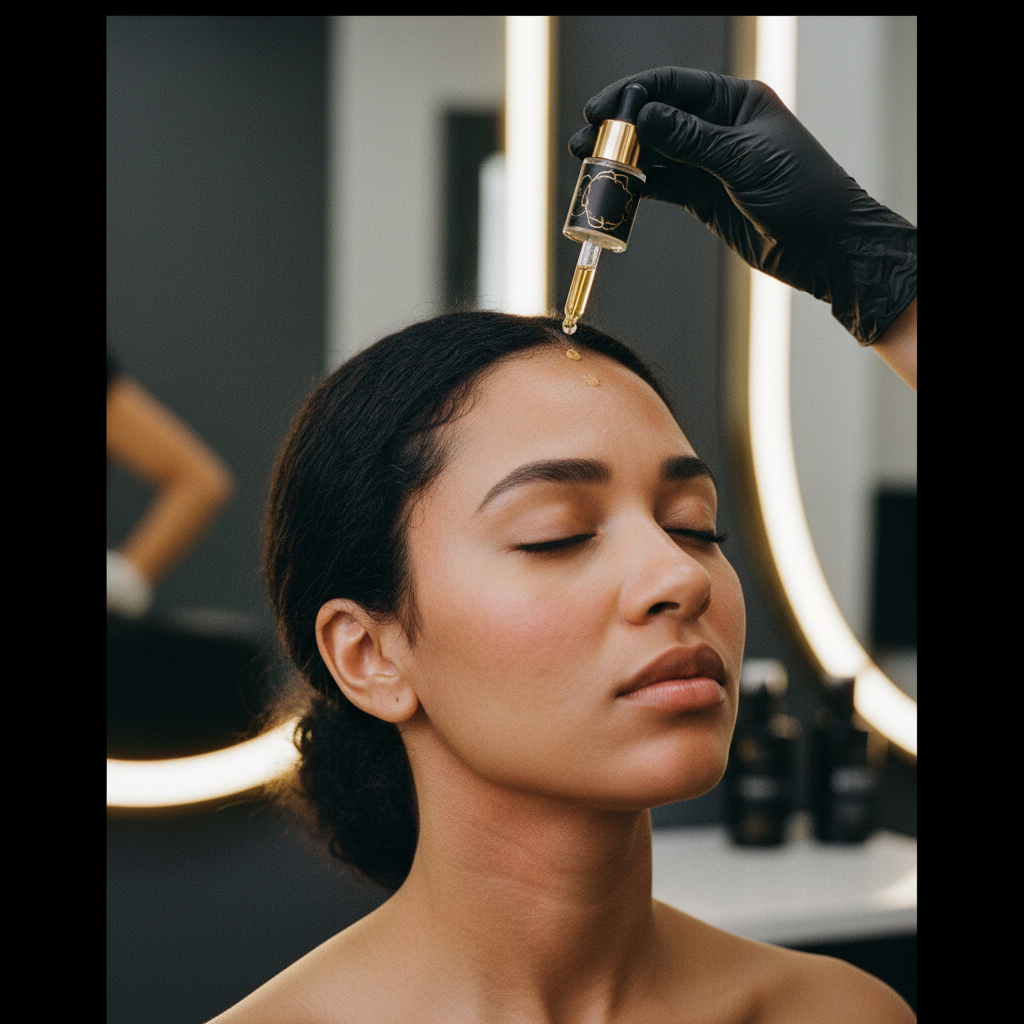
Quick answer: The relationship between Contact Dermatitis and Hair Products involves an adverse skin reaction caused by direct exposure to cosmetics, shampoos, styling agents, or hair dyes. It divides into irritant contact dermatitis, which physically disrupts the epidermal barrier, and allergic contact dermatitis, an immune-mediated Type IV response. While eliminating the offending chemical usually resolves the rash, self-diagnosis is notoriously unreliable because true allergens require patch testing by a dermatologist to pinpoint accurately.
Key takeaways
- Contact dermatitis from hair cosmetics presents in two forms: irritant (non-allergic barrier damage) and allergic (delayed hypersensitivity).
- Hair dyes containing paraphenylenediamine (PPD), preservatives like methylisothiazolinone (MI), and synthetic fragrances are the most common sensitising culprits.
- Reactions rarely stay confined to the scalp; the hairline, eyelids, neck, and ears are often more severely inflamed due to thinner skin barriers.
- Severe inflammation can induce temporary telogen effluvium (diffuse hair shedding), but contact dermatitis does not cause scarring or permanent follicle destruction unless complicated by secondary bacterial infection.
- Formal diagnosis requires diagnostic patch testing through an NHS dermatology clinic or private specialist rather than standard home allergy kits.
Contact Dermatitis and Hair Products: what the evidence shows
Clinical dermatology research shows that hair cosmetics are among the leading triggers of adverse cutaneous reactions on the head and neck. In clinical patch-test studies conducted across Europe and North America, cosmetics account for a significant percentage of allergic contact dermatitis cases, with hair products representing a major sub-category alongside facial skincare and fragrances.
The primary issue when examining Contact Dermatitis and Hair Products is identifying the mechanism of reactivity. Contact reactions fall into two distinct clinical categories:
- Irritant Contact Dermatitis (ICD): This accounts for roughly 80 percent of all contact dermatitis cases. It is a non-immunological reaction caused by direct physical or chemical damage to the stratum corneum. Strong alkaline chemicals (such as sodium hydroxide in chemical relaxers), ammonium persulfate in bleaches, or high concentrations of harsh anionic surfactants (like sodium lauryl sulphate) strip natural epidermal lipids. Anyone will develop ICD if exposed to a high enough concentration for a long enough duration.
- Allergic Contact Dermatitis (ACD): This represents a delayed Type IV (cell-mediated) hypersensitivity reaction. It requires prior sensitisation to an otherwise harmless low-molecular-weight chemical (hapten). Upon re-exposure, sensitised T-lymphocytes migrate to the epidermis, releasing inflammatory cytokines that produce erythema, oedema, and intense pruritus 24 to 72 hours later.
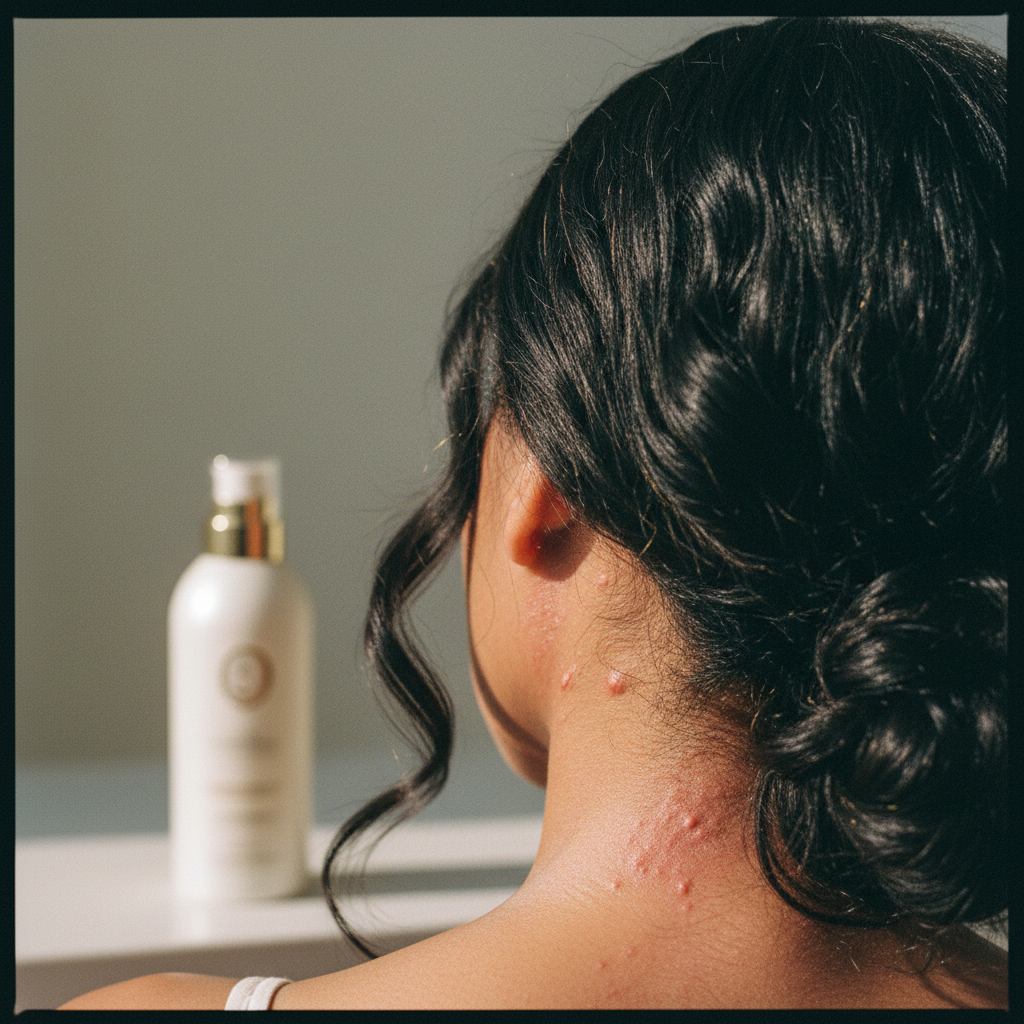
Dermatological literature notes a peculiar pattern with hair products: the scalp itself often shows minimal symptoms, while the surrounding skin reacts violently. The scalp has a thick stratum corneum, high sebaceous gland density, and a robust physical barrier. However, as hair products rinse downward, they contact the eyelids, retroauricular folds (behind the ears), neck, and upper back. These areas possess a significantly thinner stratum corneum and absorb haptens far more rapidly.
Common culprit ingredients in hair formulations
Formulations rely on complex mixtures of surfactants, active conditioning agents, emulsifiers, fragrances, and antimicrobial systems. Peer-reviewed patch test registries (such as the British Society for Cutaneous Allergy and the North American Contact Dermatitis Group) repeatedly identify specific chemical classes as frequent triggers.
Permanent and demi-permanent hair dyes
The most notorious allergen in haircare is paraphenylenediamine (PPD), alongside related aromatic amines such as toluene-2,5-diamine (PTD) and resorcinol. PPD oxidises during the dye application process to penetrate the hair cortex and polymerise. Oxidation intermediates act as potent contact sensitisers. The European Union strictly caps on-head PPD concentrations at 2 percent, yet sensitisation rates remain notable among regular hair-dye users.
Preservatives and biocides
Water-based products (shampoos, conditioners, leave-in serums) require broad-spectrum antimicrobial systems to prevent bacterial and fungal growth. The most common offenders include:
- Isothiazolinones: Methylisothiazolinone (MI) and methylchloroisothiazolinone (MCI). Although the EU banned MI in leave-on cosmetic products in 2017 and restricted MCI/MI blends to 15 parts per million in rinse-off products, sensitisation remains widespread.
- Formaldehyde-releasing agents: DMDM hydantoin, imidazolidinyl urea, and quaternium-15. These break down slowly to release trace formaldehyde, a known sensitiser.
- Phenoxyethanol: Generally considered low-risk, though isolated allergic reactions do occur in susceptible individuals.
Fragrances and botanical extracts
"Parfum" or fragrance mixes represent one of the top causes of cosmetic contact allergy. A fragrance blend may contain dozens of individual aromatic compounds, including cinnamal, eugenol, linalool, and limonene. Oxidised forms of linalool and limonene are particularly prone to triggering delayed hypersensitivity. Botanical oils (essential oils) are not allergen-free alternatives; tea tree oil, lavender oil, and ylang-ylang oil frequently cause contact reactions when oxidised.
Surfactants and emulsifiers
While surfactants are primarily irritants, certain secondary surfactants designed to boost foam and reduce harshness can trigger allergic responses. Cocamidopropyl betaine (CAPB) is an amphoteric surfactant derived from coconut oil. Sensitisation to CAPB is typically caused by impurities left behind during synthesis, namely 3-dimethylaminopropylamine (DMAPA) and amidoamine.
| Product Category | Common Mechanism | Primary Offending Ingredients | Typical Clinical Presentation |
|---|---|---|---|
| Oxidative Dyes | Allergic (Type IV) | Paraphenylenediamine (PPD), Resorcinol, PTD | Severe facial oedema, weeping eczema on neck, ears, and scalp within 24 to 72 hours |
| Bleaches / Lighteners | Irritant / Barrier Disruption | Ammonium persulfate, Hydrogen peroxide (alkaline pH 9 to 11) | Immediate burning, scalp erythema, chemical burns, stinging during application |
| Chemical Relaxers | Irritant / Caustic | Sodium hydroxide, Calcium hydroxide (pH 12 to 14) | Scalp tenderness, epidermal ulceration, crusting, immediate pain |
| Shampoos & Washes | Irritant or Allergic | Sulfates (ICD); Cocamidopropyl betaine, MCI/MI, Fragrance (ACD) | Dry, flaking scalp, persistent itch, red patches along hairline and eyelids |
| Conditioners / Masks | Allergic (Type IV) | Quaternium preservatives, Cetrimonium chloride, Fragrance | Eczematous rash on the upper back, shoulders, neck, and jawline |
What the evidence does not show: hair loss versus breakage
A frequent misconception is that contact dermatitis causes permanent follicular hair loss (cicatricial alopecia). Clinical evidence does not support this claim.
Contact dermatitis is primarily a disease of the epidermis and upper dermis. The hair follicle bulb sits 3 to 4 millimetres deep within the subcutaneous tissue, well below the zone of standard contact inflammation. Unless a severe chemical burn causes deep necrosis and subsequent scarring, hair follicles survive the reaction unharmed.
However, contact dermatitis can interact with hair volume in two indirect ways:
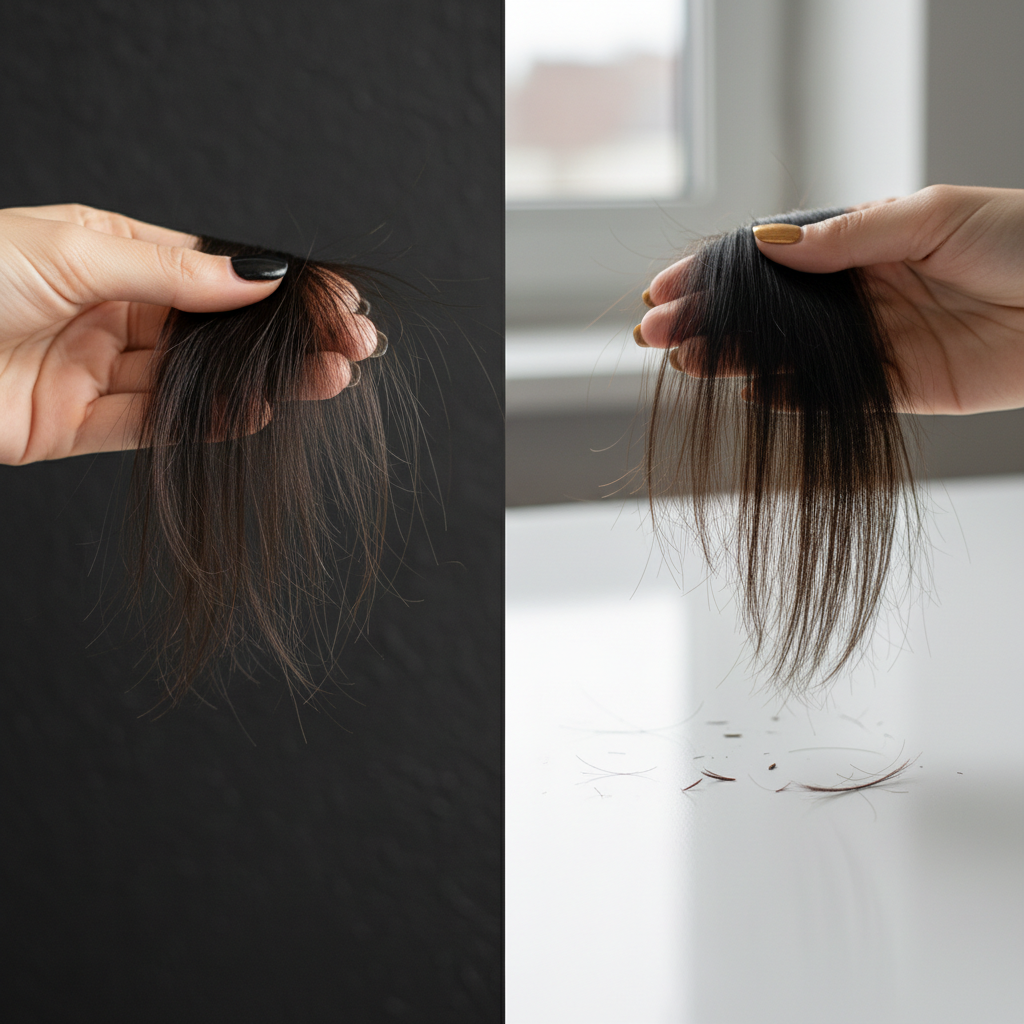
- Telogen Effluvium (Excessive Shedding): Severe, widespread allergic contact dermatitis triggers systemic inflammatory signalling. Pro-inflammatory cytokines can push cycling follicles prematurely from the anagen (growth) phase into the telogen (resting) phase, resulting in diffuse shedding 2 to 3 months later. This is temporary.
- Mechanical Hair Breakage: Intense pruritus (itching) causes vigorous, repeated scratching. Physical scratching abrades the cuticular scale structure of the hair fibre, weakening the tensile strength of the shaft and causing it to snap. This is breakage, not hair loss at the root.
Recognising the signs: clinical presentation
Identifying a reaction requires looking beyond the crown of the head. Because the scalp barrier is robust, signs often manifest in surrounding territories:
- The hairline and forehead: Erythema (redness), scaling, and papules forming a distinct margin.
- The eyelids: Swelling (periorbital oedema), redness, and flaking. The eyelid skin is roughly 0.5 millimetres thick, making it uniquely vulnerable to airborne allergens or cosmetic residue transferred via fingertips or shower water.
- The ears and retroauricular region: Weeping, fissures, or crusting behind the earlobes, common with hair dyes and rinse-off conditioners.
- The posterior neck and upper back: Contact dermatitis in this distribution is known as "rinse-off dermatitis," where shampoo or conditioner runs down the spine during washing.
Symptoms of irritant reactions appear rapidly, often within minutes to hours, producing a burning, stinging, or raw sensation. In contrast, allergic reactions take 24 to 72 hours to develop, characterised by intense, relentless itching, vesicles (tiny blisters), and swelling.
Differential diagnosis: when the cause is something else
Not every itchy, flaking scalp is contact dermatitis. Several common dermatological conditions mimic these symptoms:
- Seborrhoeic Dermatitis: An inflammatory response to an overgrowth of Malassezia yeasts feeding on scalp sebum. It presents with greasy, yellowish flakes on an erythematous base, often affecting the nasolabial folds and eyebrows alongside the scalp. It is not an allergy.
- Scalp Psoriasis: An autoimmune condition causing hyperproliferation of keratinocytes. It features well-demarcated plaques with thick, silvery-white scales, frequently extending beyond the hairline.
- Atopic Eczema: A systemic barrier defect associated with asthma and hay fever. Scalp involvement is common, but usually accompanied by flexural eczema (creases of elbows and knees).
Practical management: what you can do
If you suspect an adverse reaction to a hair product, structured elimination is critical:
- Stop using the suspected product immediately: Cease all applications of recent hair dyes, toners, styling foams, and newly introduced shampoos.
- Strip back to plain, basic formulations: Switch temporarily to an unfragranced, bland, emollient-based wash with minimal ingredients. Avoid botanical extracts and essential oils during acute flare-ups.
- Rinse thoroughly with lukewarm water: High water temperatures disrupt the epidermal barrier further. Always tilt your head backward or wash hair under a sink to prevent surfactants from running over the face, neck, and torso.
- Resist scratching: Use cool compresses to soothe pruritus. Scratching risks secondary bacterial infection (such as Staphylococcus aureus), which requires topical or oral antibiotics.
Supportive care and general scalp hygiene
Once acute inflammation subsides, maintaining a balanced scalp barrier is paramount. While active medical dermatoses require clinical assessment, general scalp maintenance benefits from well-formulated, restorative products.
Watermans focuses on non-invasive scalp care formulations designed to support the appearance of healthy, fuller-looking hair without unnecessary harshness. When integrating any restorative cosmetic routine into a post-reactive regimen, always introduce one formula at a time. This controlled approach allows you to monitor scalp tolerance and ensures you do not overwhelm a recently recovered skin barrier.
When to seek professional advice
Mild irritant reactions frequently resolve within a week of discontinuing the causative product. However, you should consult a GP or dermatologist immediately if you experience:
- Severe facial or eyelid swelling that impedes vision.
- Spreading redness accompanied by fever, pustules, or golden crusting (indicating bacterial infection).
- Severe reactions following hair dye application.
- Chronic, unresolving scalp inflammation lasting longer than four weeks despite product cessation.
A dermatologist can perform standard patch testing (such as the British baseline series), placing standardised dilutions of potential allergens on your back for 48 hours to confirm the exact chemical culprit.
Frequently asked questions about Contact Dermatitis and Hair Products
Can Contact Dermatitis and Hair Products cause permanent baldness?
No, Contact Dermatitis and Hair Products does not destroy hair follicles. The inflammatory response occurs in the upper layers of the skin, whereas hair follicles reside deeper in the dermis. While intense inflammation can trigger temporary shedding (telogen effluvium) or scratching can cause hair breakage, follicles remain intact and resume normal cycling once the skin heals.
How do I tell if my reaction is irritant or allergic?
Irritant reactions usually happen quickly, often within minutes or hours of exposure, and feel like stinging, burning, or tightness. Allergic contact dermatitis is an immune response that typically takes 24 to 72 hours to appear, producing intense itching, redness, swelling, and sometimes small fluid-filled blisters.
Why does my neck itch when the shampoo was used on my head?
Scalp skin is thick and naturally protected by high concentrations of sebum. The skin on the back of your neck, ears, and eyelids is far thinner and more permeable. As shampoo rinses down your body in the shower, residual surfactants and allergens absorb quickly into these delicate areas, triggering inflammation there rather than on the scalp.
Are natural or organic hair products safer for contact dermatitis?
Not necessarily. Natural formulations often rely on plant extracts, essential oils (such as tea tree, citrus, and lavender), and tree-derived resins, which are common contact allergens. Natural essential oils oxidise when exposed to air and light, creating potent sensitising compounds that can trigger allergic contact dermatitis just like synthetic ingredients.
Summary
Navigating Contact Dermatitis and Hair Products requires a clear understanding of the difference between superficial barrier irritation and true allergic hypersensitivity. By watching for symptoms on vulnerable surrounding skin, discontinuing suspected triggers, and seeking professional patch testing when necessary, you can resolve inflammation and protect both scalp comfort and hair fibre integrity.
Sources and references
- British Association of Dermatologists (BAD). Patch Testing and Contact Dermatitis Guidelines.
- British Society for Cutaneous Allergy (BSCA). British Baseline Patch Test Series.
- National Institute for Health and Care Excellence (NICE). Eczema and Contact Dermatitis: Clinical Knowledge Summaries.
- Basketter, D. A., et al. (2011). Paraphenylenediamine: review of its sensitising potency and human risk. Contact Dermatitis, 65(5), 249-258.
- European Commission Scientific Committee on Consumer Safety (SCCS). Opinion on Methylisothiazolinone (MI). SCCS/1557/15.