Clogged Hair Follicles: Causes, Mechanisms, and Proven Solutions
7 min read ·
Clogged Hair Follicles develop from sebum, dead cells, and product residue. Learn the biological mechanisms, common symptoms, safe remedies, and when to see a doctor.
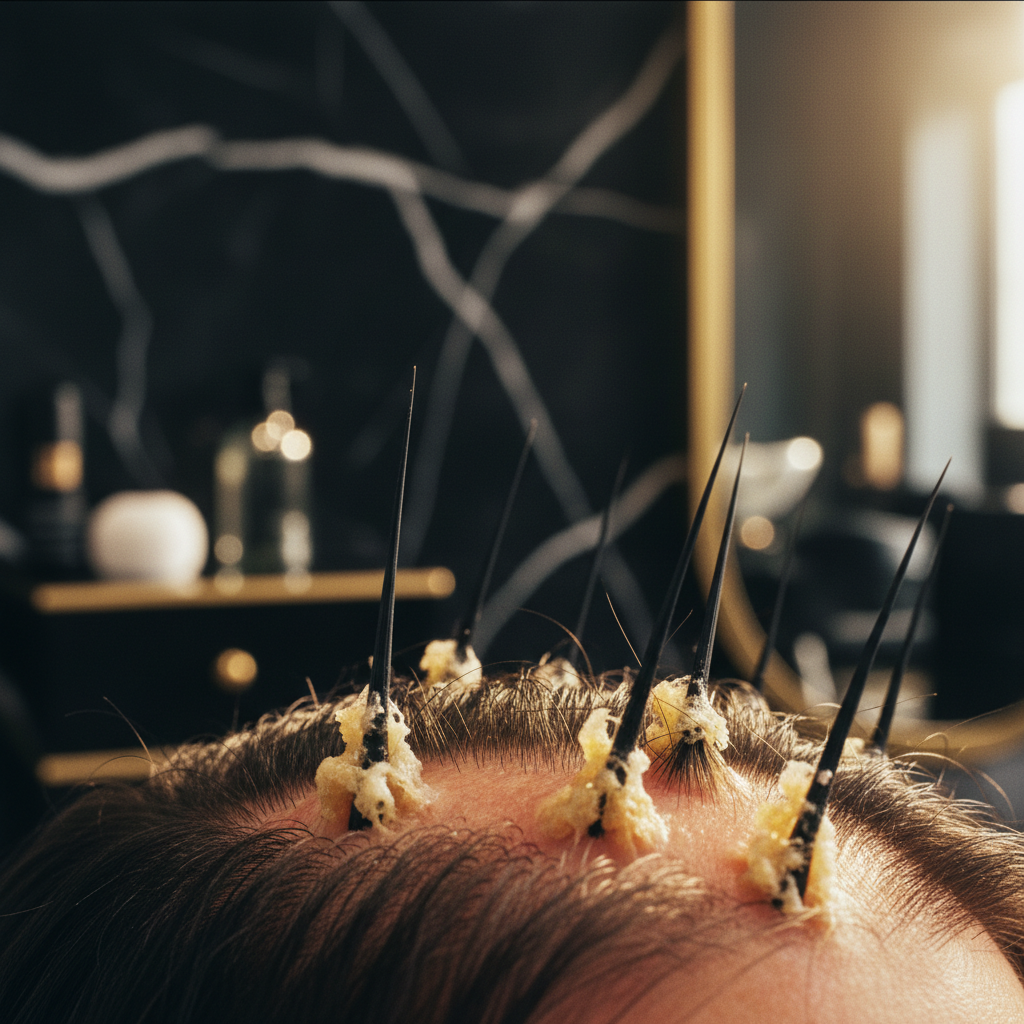
Quick answer: Clogged Hair Follicles occur when sebum, dead corneocytes, environmental debris, and styling product residue accumulate inside the follicular infundibulum. This buildup creates an occlusive plug that can lead to micro-inflammation, itchiness, and conditions like folliculitis. While clearing Clogged Hair Follicles restores a balanced scalp microbiome and supports unhindered hair growth, unclogging alone cannot cure genetic hair loss such as androgenetic alopecia, which is driven by dihydrotestosterone (DHT) rather than surface blockages.
Key takeaways
- The follicular infundibulum becomes blocked through a mix of excess sebum, shed skin cells (keratinocytes), and cosmetic residue.
- Clogged follicles can cause itching, tenderness, follicular pustules, and scale buildup, often mimicking or aggravating seborrhoeic dermatitis.
- Surface follicular occlusion does not cause male or female pattern baldness, which operates via hormonal miniaturisation beneath the scalp surface.
- Mild blockages respond well to chemical exfoliants like salicylic acid (0.5 to 2 percent), gentle clarification, and regular scalp hygiene.
- Persistent inflammatory bumps, severe pain, or spreading pustules require dermatological evaluation to rule out bacterial or fungal folliculitis.
Clogged Hair Follicles: what the evidence shows
Research into scalp biology confirms that the upper portion of the hair follicle, termed the infundibulum, is an active biological interface. Clogged Hair Follicles develop when the normal process of desquamation fails. Under normal physiological conditions, dead skin cells detach and travel up the canal alongside sebum produced by the sebaceous glands, dispersing onto the scalp surface.
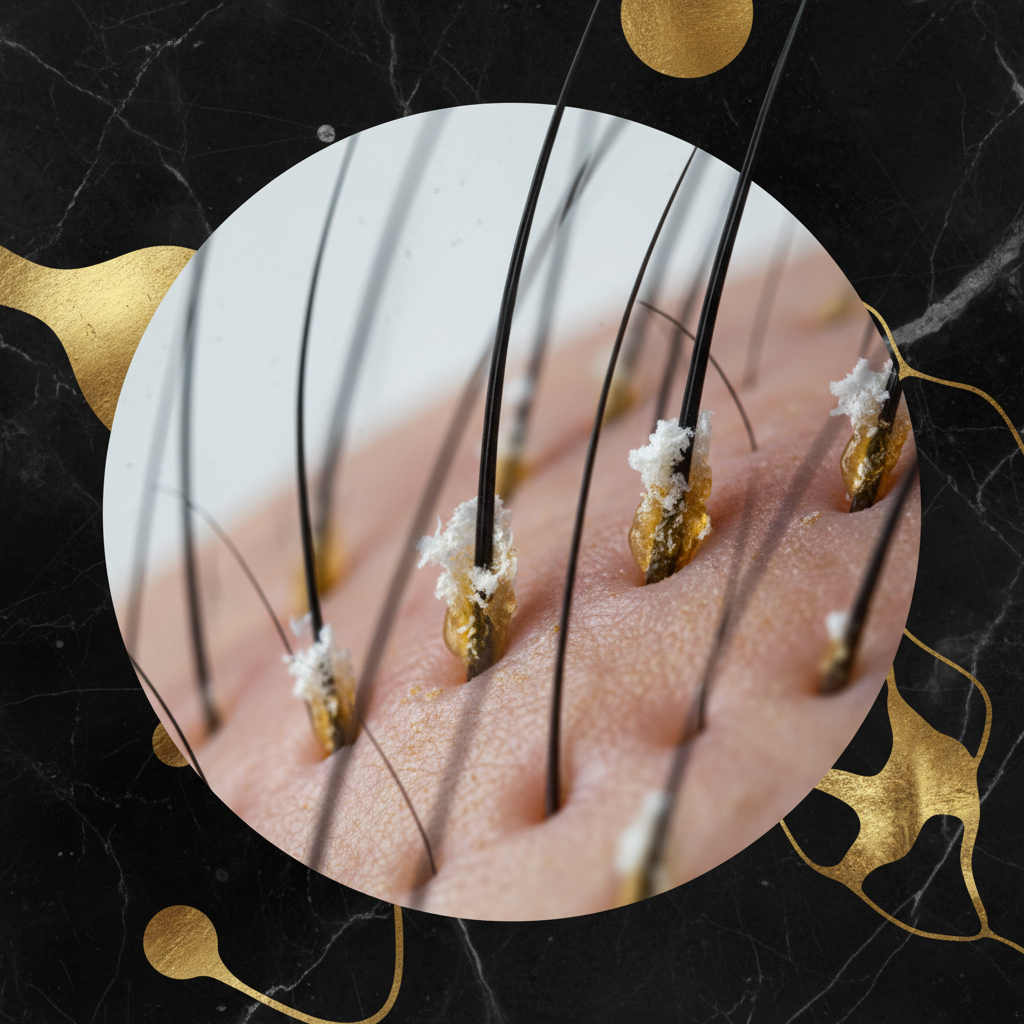
When sebum production rises or cellular turnover increases, keratinocytes stick together. This process forms a dense keratosebaceous plug. Clinical studies show that this stagnant environment alters the scalp microbiome. Lipophilic organisms, notably Malassezia yeasts and Cutibacterium acnes, thrive on the trapped lipids. Their metabolic byproducts, specifically free fatty acids, irritate the surrounding tissue, provoking localised erythema, pruritus, and follicular inflammation.
However, the medical evidence is clear about the limits of this process. Clogged follicles do not physically pinch off hair production to cause permanent baldness. While severe, untreated, chronic inflammation (such as folliculitis decalvans) can damage the stem cell niche in the follicular bulge and cause cicatricial scarring, everyday product buildup simply affects surface scalp health and the quality of emerging hair fibres.
The biological mechanism of follicular occlusion
Understanding how a follicle becomes blocked requires looking at three distinct components:
- Sebaceous hypersecretion: Sebaceous glands are regulated by systemic androgens. When these glands overproduce sebum, the lipid balance shifts, creating an oily matrix inside the follicular canal.
- Hyperkeratinisation: Just as in facial acne, the lining of the follicular funnel can shed cells too quickly or clump abnormally. When mixed with sebum, these corneocytes fail to slough away, creating a solid barrier.
- External accumulation: Heavy cosmetic waxes, silicones that resist gentle cleansing, dry shampoos, and airborne particulate matter settle into the follicular opening, cementing the internal plug.
Because the hair fibre continues to grow at roughly 1 centimetre per month from the dermal papilla beneath, the hair usually pushes through this debris. The issue arises when the trapped microflora release inflammatory mediators, weakening the structural integrity of the perivascular tissue around the upper sheath.
Signs of Clogged Hair Follicles versus other scalp conditions
Distinguishing between simple follicular buildup and deeper clinical disorders prevents unnecessary treatments.
| Feature | Clogged Hair Follicles | Scalp Psoriasis | Folliculitis | Androgenetic Alopecia |
|---|---|---|---|---|
| Primary cause | Sebum, dead skin, and product buildup | Autoimmune hyperproliferation | Bacterial (S. Aureus) or fungal infection | Genetic sensitivity to DHT |
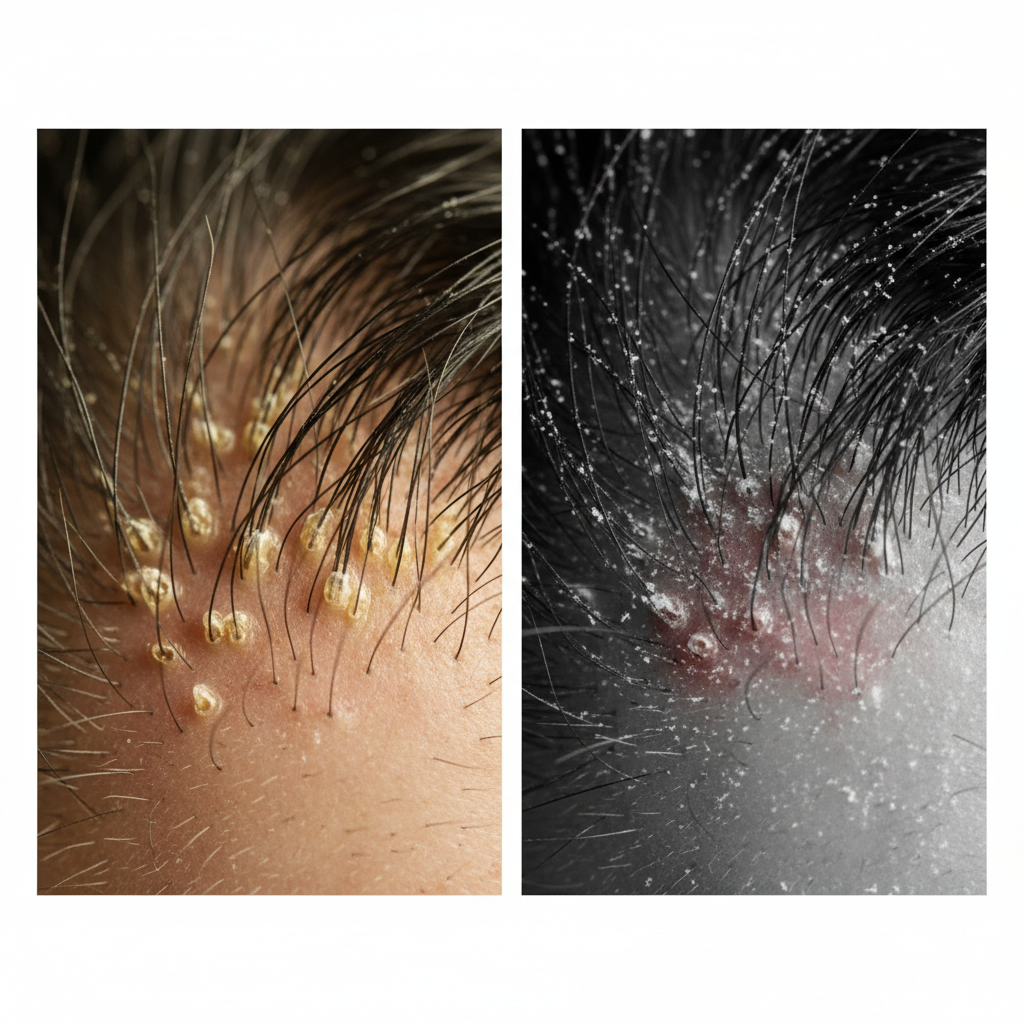
| Visual appearance | Tiny white or yellowish plugs at base; mild redness | Thick, well-demarcated silvery-white plaques | Erythematous papules or pustules piercing hair | Diffuse thinning, widened parting, receding hairline |
| Sensation | Mild itch, slight tightness | Intense itching, soreness | Tenderness, throbbing, stinging | Generally painless, no itch |
| Impact on hair | Temporary shedding from inflammation if chronic | Shedding linked to plaque trauma | Temporary loss; risk of scarring if deep | Progressive miniaturisation of the follicle |
| Primary remedy | Clarifying washes, salicylic acid, regular washing | Topical corticosteroids, coal tar, biologics | Topical or oral antimicrobials | Minoxidil, 5-alpha reductase inhibitors |
What the evidence does not show
There is a widespread myth across consumer haircare that a blocked follicle physically suffocates the hair root and causes pattern hair loss. Peer-reviewed dermatological literature does not support this claim.
Pattern hair loss (androgenetic alopecia) occurs deeper down at the hair bulb and dermal papilla, driven by the binding of dihydrotestosterone to androgen receptors. Washing your scalp cannot wash away genetic hair loss. Similarly, aggressive physical scrubbing will not free a stuck follicle; in fact, vigorous mechanical exfoliation often ruptures the delicate infundibular wall, converting a harmless surface plug into an inflamed, painful papule.
Practical steps to clear and prevent buildup
Managing follicular health requires a balance between adequate cleansing and barrier preservation.
1. Adjust washing frequency
Washing frequency must match your individual sebum production and lifestyle. Those who exercise daily, live in urban areas with high air pollution, or naturally produce high levels of sebum benefit from washing every 24 to 48 hours. Allowing sebum to oxidise on the scalp creates irritating lipid peroxides that aggravate the follicle.
2. Use targeted chemical exfoliants
Salicylic acid is a lipid-soluble beta hydroxy acid (BHA). Unlike water-soluble alpha hydroxy acids, salicylic acid penetrates lipid-rich environments, dissolving the sticky cellular bonds inside the pore opening. Formulations using 0.5 to 2 percent salicylic acid used once or twice weekly help break down stubborn plugs without disrupting the scalp barrier.
3. Review styling product usage
Dry shampoos and heavy styling pastes are frequent contributors to follicular occlusion. Dry shampoo does not clean the scalp; it merely absorbs surface oil with starches, leaving an occlusive layer that sits over the follicles. Limit leave-in powders and heavy occlusives directly at the root, and ensure thorough cleansing on wash days.
4. Support the scalp environment with Watermans
When product residue and surface congestion make the scalp feel sluggish, a balanced haircare routine restores comfort. Watermans GrowMe Shampoo is formulated to thoroughly cleanse the hair and scalp without stripping vital moisture. Its combination of biotin, rosemary, caffeine, and niacinamide invigorates the scalp surface, helping to remove daily impurities, sweat, and styling deposits while maintaining a balanced environment for fuller-looking, stronger-feeling hair.
When to seek professional advice
Mild follicular buildup resolves within two to three weeks of adopting appropriate cleansing habits. You should consult a doctor, dermatologist, or registered trichologist if you notice:
- Painful, hot, or rapidly spreading red bumps across the scalp.
- Pustules that ooze clear fluid, crust over, or bleed.
- Localised patches of complete hair loss where follicles appear smooth or absent (a sign of scarring alopecia).
- Severe scaling that does not respond to over-the-counter clarifying or medicated shampoos.
A dermatologist can perform a dermoscopy (trichoscopy) to inspect the follicular openings under high magnification, take microbiological swabs to test for bacterial or fungal pathogens, and prescribe targeted medical treatments if an infection is present.
Frequently asked questions about Clogged Hair Follicles
Can Clogged Hair Follicles cause permanent hair loss?
Simple follicular blockages do not cause permanent hair loss. They sit in the upper follicular infundibulum and do not destroy the hair bulb. However, if a blockage turns into an untreated, deep infectious folliculitis, severe inflammation can scar the tissue and damage stem cells, resulting in permanent localised loss.
How do I know if I have Clogged Hair Follicles?
Common signs include a persistent gritty feeling along the scalp, small white or yellowish plugs visible around the base of the hair, mild itchiness, and occasional tiny red pimples. A clean scalp should feel smooth and comfortable without visible flaking or oiliness immediately after washing.
Does scrubbing the scalp remove blocked pores?
Aggressive physical scrubbing with salt, sugar, or stiff bristles is not recommended. It can scratch the scalp, damage the hair cuticle, and cause micro-tears that invite bacterial infection. Chemical exfoliants like salicylic acid or a well-formulated clarifying shampoo dissolve plugs far more safely and effectively.
How often should I clarify my scalp?
Most people benefit from using a clarifying shampoo once every 7 to 14 days, depending on their hair type, water hardness, and use of styling products. Those with dry or chemically processed hair should limit clarifying washes to once a fortnight to prevent stripping the lengths.
Scalp care and long-term follicular health
Maintaining clear, healthy hair follicles is an essential foundation for resilient hair growth. When the scalp is clean, hydrated, and free from persistent inflammation, hair fibres can emerge without structural disruption. While clearing Clogged Hair Follicles will not change your genetic hair density, eliminating dead skin, sebum, and cosmetic buildup prevents secondary irritation, soothes sensitivity, and creates the ideal conditions for your hair to thrive.
Sources and references
- British Association of Dermatologists: Folliculitis Management Guidelines.
- Clinical and Experimental Dermatology: The role of scalp sebum and Malassezia in follicular occlusion.
- Journal of the American Academy of Dermatology: Scalp desquamation and microbial dynamics in inflammatory conditions.
- World Trichology Society: Scalp Hygiene and Follicular Health Parameters.
Find these ingredients in Watermans products
- Niacinamide: you will find this ingredient in our Hair Mask.