Clarifying Shampoo vs Regular Shampoo: The Complete Scientific Guide
9 min read ·
Understand the science of Clarifying Shampoo vs Regular Shampoo. Learn how surfactant strength, pH, and hair build-up dictate when to clean and when to clarify.

Quick answer: The core distinction in Clarifying Shampoo vs Regular Shampoo lies in surfactant concentration, cleansing intensity, and formulation pH. Regular shampoo is formulated for routine maintenance, cleansing light daily sebum and dirt while preserving fibre moisture. Clarifying shampoo functions as an intensive reset, using stronger anionic surfactants to break down stubborn mineral deposits, silicones, and heavy styling polymers. However, its primary limitation is drying potential: overuse strips essential intercellular lipids, leading to cuticle weathering and fibre breakage.
Key takeaways
- Regular shampoos balance mild cleansing with conditioning agents, making them suitable for frequent use.
- Clarifying shampoos contain higher concentrations of primary surfactants and fewer conditioning polymers to strip away persistent build-up.
- The typical pH of regular shampoos falls between 4.5 and 5.5, whereas clarifying formulas often sit between 5.5 and 7.0 to facilitate cuticle swelling and thorough cleaning.
- Clarifying formulas do not treat scalp disorders or stimulate follicles, but they remove barriers that prevent topical treatments from reaching the scalp.
- Most individuals benefit from clarifying once every two to four weeks, adjusting based on water hardness and styling habits.
Clarifying Shampoo vs Regular Shampoo: what the evidence shows
The debate surrounding Clarifying Shampoo vs Regular Shampoo comes down to surface chemistry and hair surface dynamics. Every day, human hair collects a cocktail of environmental pollution, natural sebum, oxidised lipids, and cosmetic residues. These cosmetic residues frequently include water-insoluble silicones (such as dimethicone), polyquaterniums, heavy conditioning waxes, and styling polymers. Over time, these substances form an occlusive film over the hair shaft, weighing it down and dulling its natural shine.
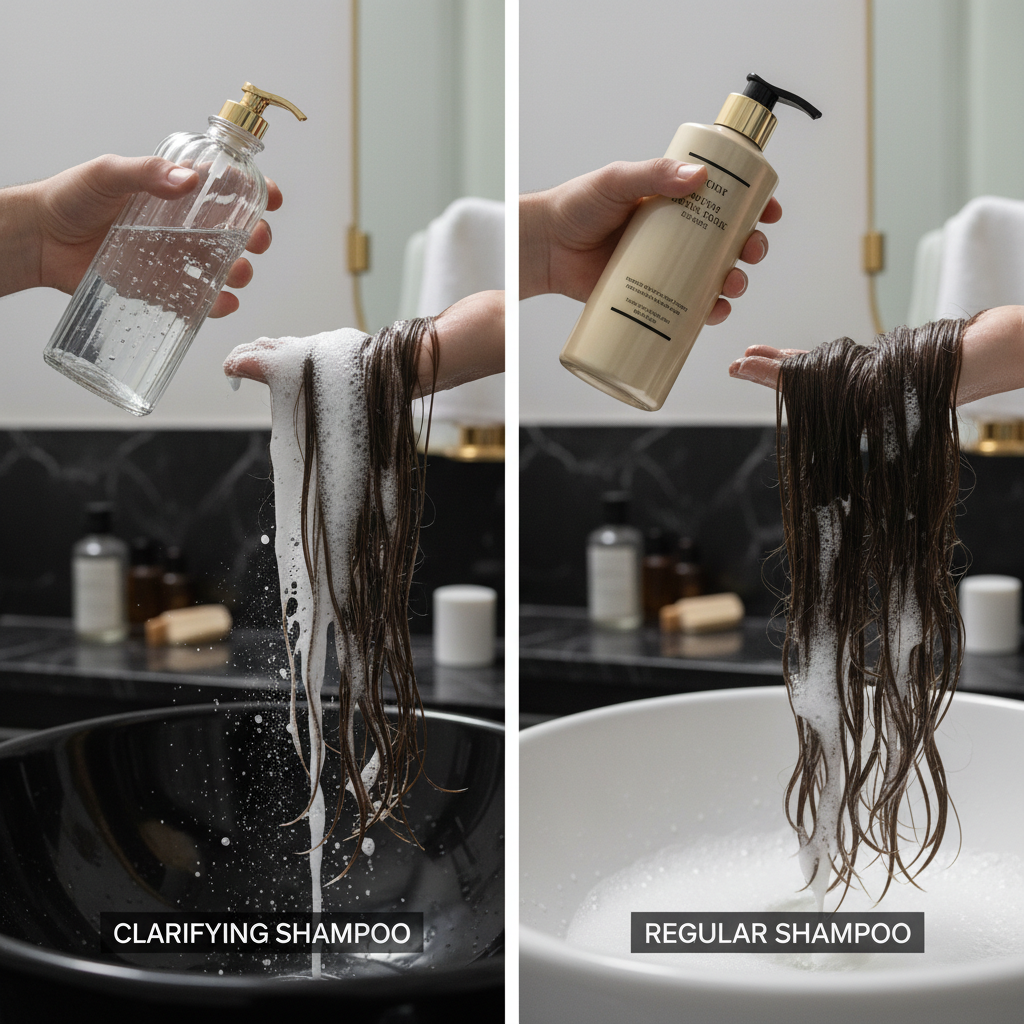
Cosmetic science demonstrates that standard daily shampoos are intentionally engineered not to strip the hair completely. They employ lower active surfactant levels (typically 8% to 15%) paired with secondary amphoteric surfactants (like cocamidopropyl betaine) and conditioning agents. This balance allows them to lift excess surface oil while leaving a fraction of natural lipids and conditioning polymers behind to minimise friction.
In contrast, clarifying formulations increase the ratio of primary anionic surfactants, such as sodium laureth sulfate, ammonium laureth sulfate, or high-efficiency olefin sulfonates, often raising the total active surfactant content up to 15% to 20%. They purposefully minimise or omit conditioning agents (like polyquats and silicones) to prevent re-deposition. Independent surfactant chemistry research demonstrates that clarifying formulas possess a much higher critical micelle concentration, allowing them to solubilise hydrophobic resins and mineral films that standard washes glide over.
| Feature | Regular Shampoo | Clarifying Shampoo |
|---|---|---|
| Primary Purpose | Daily or frequent hygiene and light sebum removal | Periodic deep cleansing to strip stubborn cosmetic and mineral build-up |
| Cleansing Strength | Mild to moderate | Strong, deep-cleansing |
| Surfactant Concentration | Generally lower (8% to 15%) | Generally higher (15% to 20%) |
| Conditioning Agents | Abundant (silicones, polyquaterniums, oils) | Minimal to none, preventing residue deposition |
| Typical pH Range | 4.5 to 5.5 (isoelectric balance) | 5.5 to 7.0 (mildly alkaline to neutral) |
| Recommended Frequency | 2 to 5 times per week, as needed | Once every 2 to 4 weeks (or post-swim) |
| Primary Risk | Insufficient removal of styling polymers | Cuticle swelling, lipid depletion, and hair fibre dryness |
The underlying mechanism: cuticle behaviour and surfactant action
Hair fibres exist at an isoelectric point of roughly pH 3.67, while the skin and scalp maintain an acid mantle around pH 5.5. When hair is exposed to water and surfactants, its physical structure responds to the chemical environment:
- Cuticle Swelling: Clarifying shampoos often lean toward a neutral or slightly higher pH (5.5 to 7.0) compared to regular shampoos. This mild shift, combined with water uptake, causes the imbricated scales of the hair cuticle to swell slightly.
- Micellar Solubilisation: This slight swelling grants the concentrated anionic micelles access beneath stubborn surface films. The lipophilic tails of the surfactant molecules latch onto non-polar cosmetic polymers, styling resins, and oxidised sebum.
- Suspension and Rinsing: As water floods the fibre, the hydrophilic heads pull the encapsulated residues into solution, rinsing them down the drain without leaving conditioning polymers behind.
- Frictional Trade-off: Because clarifying shampoo strips both cosmetic build-up and the hair's natural 18-methyleicosanoic acid (18-MEA) lipid layer, the coefficient of friction between fibres rises immediately. Without follow-up conditioning, wet combing force increases significantly, raising the risk of mechanical breakage.
Regular shampoos, conversely, maintain an acidic pH (often 4.5 to 5.5) to keep the cuticle tightly closed, depositing conditioning agents during the rinse to keep wet combing friction low.
Signs your hair needs clarifying rather than regular washing
Using a regular shampoo is sufficient for general freshness, but specific warning signs indicate it is time to cycle in a clarifying wash:
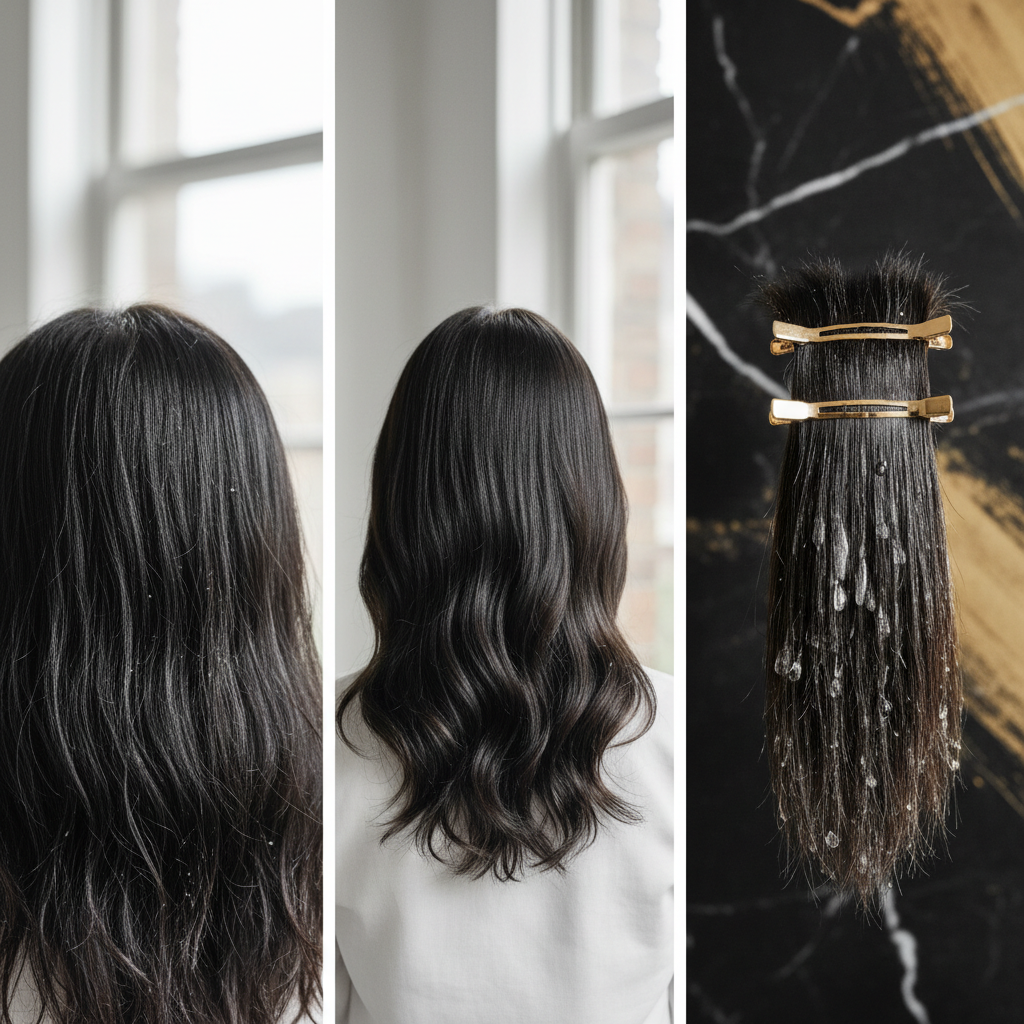
- Product Buildup Film: Your hair feels sticky, waxy, or coated even immediately after washing and drying.
- Unresponsive Styling: Clean hair refuses to hold a curl, lies limp at the roots, or behaves as though heavily weighed down.
- Dullness and Lack of Shine: Light scatters poorly across the fibre due to an uneven microscopic layer of polymers and hard water minerals.
- Dryness Despite Conditioning: Deep conditioning treatments, masks, or oils seem to sit on top of your strands without penetrating or softening them.
- Scalp Greasiness Combined with Dry Ends: An occlusive layer on the scalp traps sebum at the root, while moisture cannot penetrate down the shaft.
What the evidence does not show
It is vital to separate cosmetic benefits from clinical claims. The physical difference in Clarifying Shampoo vs Regular Shampoo does not alter hair genetics or follicle biology.
First, clarifying shampoo does not treat hair loss or alopecia. Androgenetic alopecia is governed by dihydrotestosterone (DHT) binding to follicular receptors, while conditions like telogen effluvium involve systemic cycle shifts. A clarifying wash simply removes debris from the scalp surface; it does not alter internal hair cycle signalling. Confusing cosmetic shedding from mechanical friction with clinical hair loss leads to misguided treatment.
Second, clarifying shampoo is not an anti-dandruff treatment. Flaking is frequently caused by Malassezia yeast overgrowth or seborrhoeic dermatitis. While a clarifying wash can lift loose scale temporarily, it lacks antimicrobial actives (such as ketoconazole, piroctone olamine, or zinc pyrithione). Stripping the scalp too aggressively can compromise the epidermal barrier, exacerbating irritation and triggering reactive sebum production.
Managing your wash routine: practical application
Balancing these two formulations depends entirely on your lifestyle, environmental exposure, and hair architecture:
- Hard Water Areas: If you live in an area with hard tap water (calcium carbonate exceeding 180 mg/L), minerals like calcium and magnesium bind with fatty acids from sebum and styling products. This creates insoluble soap scum on the hair shaft. Use a clarifying shampoo with chelating agents (such as tetrasodium EDTA or disodium EDTA) every two weeks.
- Swimmers: Chlorine and dissolved copper in swimming pools bind to hair proteins, causing brittleness and green discolouration on lighter shades. A clarifying wash removes these chemical residues promptly.
- Heavy Stylers: Those using dry shampoo, silicone serums, and strong-hold hairsprays should clarify every two to three weeks to avoid polymer layering.
- Dry, Coarse, or Curly Textures: Curly and afro hair textures produce the same sebum at the follicle, but the elliptical shape of the fibre makes it harder for lipids to travel down the shaft. Clarifying should be infrequent (once a month or less), followed immediately by an intensive, emollient-rich deep conditioning mask to replenish lost moisture.
When the cause may be something else
If your hair remains perpetually limp, greasy, or brittle despite alternating your cleansing routine, the issue may not be product build-up:
- Seborrhoeic Dermatitis: Red, inflamed patches with greasy yellow flakes indicate a clinical scalp condition requiring medical shampoos, not cosmetic clarifying.
- Severe Porosity Damage: Chemically bleached or heat-damaged hair has missing cuticle scales. If your hair feels gummy, tangles relentlessly, and snaps under mild tension, it lacks internal protein integrity. Clarifying this hair can cause extreme cuticle weathering.
- Underlying Nutritional or Endocrine Shifts: Sudden changes in hair density, sudden diffuse shedding (more than 100 to 150 hairs daily), or rapid changes in scalp oil production warrant investigation by a GP or trichologist to examine thyroid levels, ferritin, or hormone balance.
The Watermans perspective on balanced scalp care
At Watermans, healthy-looking hair begins with an optimal scalp environment. While aggressive clarifying formulas serve a periodic purpose, frequent stripping can disrupt the scalp microbiome and impair barrier function. Watermans focuses on regular, premium formulations engineered to cleanse without harshness. By delivering nourishing botanicals, rosemary, caffeine, and biotin directly to the scalp during regular washing routines, hair feels revitalised, resilient, and visibly fuller without compromising moisture levels.
Frequently asked questions about Clarifying Shampoo vs Regular Shampoo
Can I use clarifying shampoo every time I wash my hair?
No, clarifying shampoos are not formulated for frequent use. Using one every wash strips away essential surface lipids, leading to cuticle damage, increased friction, and fibre breakage. For most hair types, a regular shampoo should handle routine washing, reserving a clarifying formula for every two to four weeks.
In the debate of Clarifying Shampoo vs Regular Shampoo, which is safer for colour-treated hair?
Regular shampoos formulated for colour-treated hair are significantly safer. Clarifying shampoos have a higher surfactant potency and slightly elevated pH, which opens the cuticle and leaches out synthetic colour molecules rapidly. If you must clarify colour-treated hair to remove build-up, use it sparingly right before a fresh colour service.
Does clarifying shampoo help with an oily scalp?
It offers brief temporary relief, but overusing it often backfires. Aggressively stripping the scalp of all lipids can compromise the epidermal barrier, triggering a reactive rebound in sebum production. A balanced regular shampoo used consistently is a safer strategy for managing daily oiliness.
Do I need a clarifying shampoo if I use silicone-free products?
Yes, you may still benefit from one. Silicones are not the only culprits behind build-up. Mineral ions from domestic hard water, environmental pollutants, styling waxes, natural plant butters, and oxidised sebum all accumulate on the hair shaft over time and require a clarifying wash to fully dissolve.
Will clarifying shampoo stop my hair shedding?
No, clarifying shampoo does not affect follicular shedding cycles. Shedding occurs from within the follicle beneath the skin. In fact, roughly scrubbing hair with a high-friction clarifying formula can increase mechanical hair breakage, which may be mistaken for true follicular shedding.
Summary: striking the right balance
Understanding Clarifying Shampoo vs Regular Shampoo is fundamental to constructing an effective haircare regimen. Regular shampoo remains your daily workhorse, sustaining hygiene, preserving moisture, and keeping the cuticle layer smooth. Clarifying shampoo is your targeted reset button, designed to strip away the stubborn polymer films, mineral deposits, and heavy oils that regular washes cannot dissolve. By reserving clarifying treatments for occasional, purposeful use and following them with restorative conditioning, you preserve fibre integrity while maintaining a pristine, healthy-looking scalp.
Sources and references
- International Journal of Trichology, "Shampoo and Conditioners: What a Dermatologist Should Know?", 2015.
- Journal of the Society of Cosmetic Chemists, "The Cleansing Action of Shampoos: Surface and Interfacial Phenomena", 1986.
- British Journal of Dermatology, "The effect of cosmetic treatments on hair protein integrity", 2004.
- National Health Service (NHS), "Hair loss causes and treatments", nhs.uk.
- Journal of Cosmetic Dermatology, "Hair shaft damage from environmental and chemical factors", 2018.
Find these ingredients in Watermans products
- Biotin: you will find this ingredient in our Hair Growth Shampoo.
- Zinc: you will find this ingredient in our Hair Vitamins.