The Science of Clarifying Shampoo Ingredients: Mechanisms and Formulations
9 min read ·
Learn how clarifying shampoo ingredients work, from surfactants to chelating agents, to strip stubborn build-up, hard water minerals, and excess sebum safely.

Quick answer: Clarifying shampoo ingredients are specialised surfactants, chelating agents, and mild acids formulated to strip stubborn product build-up, sebum, hard water minerals, and environmental pollutants from the hair fibre and scalp. Typical formulations rely on strong primary cleansers such as sodium C14-16 olefin sulfonate or ammonium lauryl sulfate alongside chelators like tetrasodium EDTA. However, their high cleansing power can strip protective surface lipids and cause dryness if used excessively, making careful ingredient selection and balanced use essential.
Key takeaways
- Clarifying formulas rely on higher concentrations of primary surfactants to break down stubborn sebum, non-water-soluble silicones, and styling polymers.
- Chelating agents like tetrasodium EDTA and disodium EDTA bind to hard water minerals such as calcium, magnesium, and copper to prevent discolouration and stiffness.
- The pH of a clarifying shampoo typically sits between 5.0 and 7.0, balancing cuticular lifting for deep cleansing with scalp barrier safety.
- Unlike everyday shampoos, clarifying products contain minimal conditioning agents, polyquaterniums, or heavy oils to avoid leaving behind fresh residue.
- Overusing strong clarifying agents can degrade hair fibre cuticle integrity and accelerate colour fade, so most hair types require them only once every one to four weeks.
Clarifying Shampoo Ingredients: what the evidence shows
Formulations designed for deep cleansing differ fundamentally from standard cleansers in both surfactant strength and additive balance. Typical clarifying shampoo ingredients target four distinct forms of residue: stubborn biological sebum, synthetic polymer coatings from styling products, cosmetic silicones, and mineral deposits from domestic water supplies.

Primary and secondary surfactants
Surfactants represent the workhorse components of any clarifying shampoo. They consist of molecules with both a water-loving (hydrophilic) head and an oil-loving (lipophilic) tail. In clarifying blends, cosmetic chemists select surfactants capable of forming dense micelles that encapsulate heavy greases and rinse them cleanly away.
- Sodium C14-16 Olefin Sulfonate: A potent, sulfate-free anionic surfactant widely chosen for its ability to cut through heavy sebum and cosmetic waxes without requiring traditional sulfates.
- Ammonium Lauryl Sulfate (ALS) and Sodium Lauryl Sulfate (SLS): Small-molecule anionic surfactants that generate exceptional foam and deliver maximum degreasing power. While traditional, they remain benchmarks for deep cleansing.
- Sodium Laureth Sulfate (SLES): An ethoxylated anionic surfactant that provides thorough polymer removal while remaining slightly milder on the scalp skin than SLS.
- Cocamidopropyl Betaine and Cocamide MIPA: Amphoteric and non-ionic secondary surfactants frequently added to moderate irritation, stabilise foam, and ensure the primary surfactant does not cause excessive cuticular swelling.
Chelating agents
When hair is washed in hard water, dissolved ions of calcium, magnesium, and heavy metals such as iron and copper bind to the keratin protein structure. Over time, these minerals make hair feel brittle, impede chemical processing, and produce dull or brassy tones.
Chelating agents act like molecular claws, surrounding metal ions with multiple chemical bonds to render them water-soluble so they rinse down the drain. The most common chelators include:
- Tetrasodium EDTA and Disodium EDTA: Synthetic polyaminocarboxylic acids that sequester divalent and trivalent metal cations with high efficiency.
- Sodium Gluconate and Sodium Phytate: Plant-derived, biodegradable chelating alternatives that bind mineral deposits in eco-certified formulations.
- Citric Acid: A weak organic acid that acts as both a mild chelator and a crucial pH adjuster.
The role of pH adjusters and clarifying acids
The natural pH of the hair shaft is approximately 3.67, while the scalp surface sits between 4.5 and 5.5. Everyday shampoos are usually buffered between 4.5 and 5.5 to keep the cuticle scales tightly closed and flat.
Clarifying shampoo ingredients often include buffers that keep the formula between 5.5 and 6.5. This slightly higher, near-neutral pH causes the cuticle layer to swell subtly. This mild opening allows surfactants and chelators to reach trapped styling residues and mineral crystals caught just beneath the cuticular edges. After cleansing, an acidic rinse or conditioner restores the natural acidic mantle to flatten the cuticle again.
| Ingredient category | Common examples | Primary function in clarifying shampoos |
|---|---|---|
| Anionic surfactants | Sodium C14-16 olefin sulfonate, SLES, ALS | Dissolve heavy oils, hair sprays, and non-soluble polymers |
| Amphoteric surfactants | Cocamidopropyl betaine, sodium cocoamphoacetate | Reduce irritation and support foam density |
| Chelating agents | Tetrasodium EDTA, disodium EDTA, sodium phytate | De-mineralise the hair by binding calcium, copper, and iron |
| Alpha hydroxy acids | Citric acid, lactic acid, glycolic acid | Adjust formula pH, exfoliate scalp dead cells, loosen film |
| Solubilisers & clarity aids | Polysorbate 20, hexylene glycol | Prevent formulation separation and keep cleansing agents dispersed |
What the evidence does not show
There is no scientific evidence demonstrating that clarifying shampoo ingredients cure hair loss or treat follicular conditions such as androgenetic alopecia. Deep cleansing acts strictly on the fibre and the stratum corneum of the scalp. While clearing follicular openings of dried sebum and debris creates a clean environment, it does not alter internal hormone production, dihydrotestosterone (DHT) binding, or biological growth cycles.
Furthermore, research does not show that hair requires "detoxing" in a medical sense. Hair is non-living keratinised tissue. It accumulates external dirt and minerals, but it does not process toxins. Stripping hair repeatedly under the premise of internal purification merely weakens the cuticle and causes structural breakage.
How clarifying ingredients work on the hair shaft
The cleansing mechanism relies on physical chemistry. Non-polar substances like dimethicone, microcrystalline wax, and squalene do not dissolve in water alone. When you massage clarifying surfactants over wet hair, the lipophilic tails embed themselves into these hydrophobic coatings.
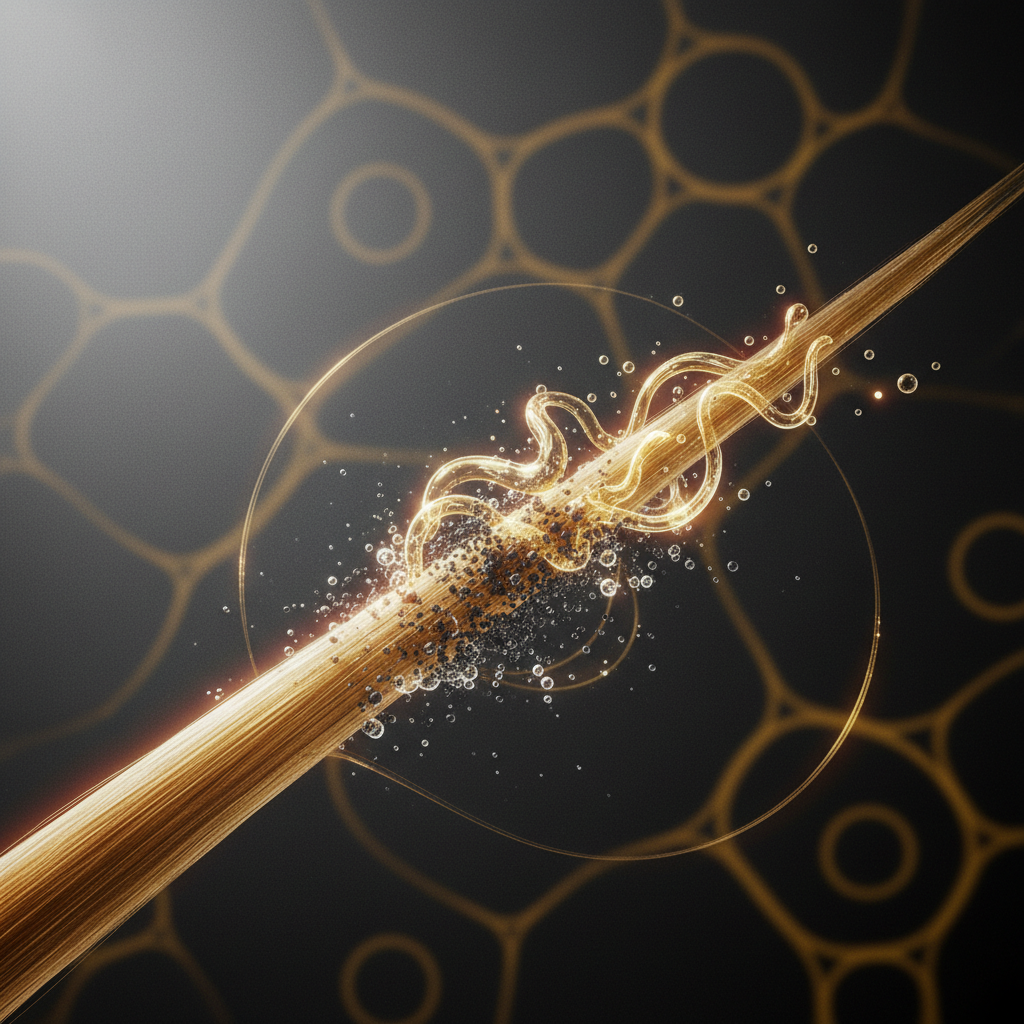
As you work up a lather, these molecules rearrange into spherical structures called micelles. The hydrophobic tails remain buried inside, holding the trapped oil and product build-up, while the hydrophilic heads face outward toward the rinse water.
Simultaneously, chelators like tetrasodium EDTA capture positively charged metal ions (Ca2+, Mg2+, Cu2+) that have attached to the negatively charged sites on weathered keratin. By removing these mineral bridges, the brittle mineral crust disintegrates, leaving the fibre surface clean and receptive to moisture.
Signs your hair needs deep cleansing
You can determine whether clarifying is necessary by monitoring specific physical changes in your hair fibre and scalp:
- Persistent heaviness and limpness: Clean hair that feels coated, greasy, or stiff immediately after drying.
- Product failure: Conditioners, leave-in serums, and styling foams no longer absorb or perform as expected.
- Flaking and scalp buildup: Whitish or yellowish film on the scalp that is not responsive to normal washing, often accompanied by mild itching.
- Tonal shifts in coloured hair: Blonde or grey hair taking on a greenish tint (from copper exposure in swimming pools or tap water) or a brassy, muddy appearance.
- Lack of curl definition: Naturally curly or coiled hair losing its spring and clumping inconsistently due to heavy silicone or butter build-up.
Protecting your hair when using clarifying formulas
Because clarifying shampoo ingredients lack high levels of quaternary ammonium compounds, silicones, and fatty alcohols, they do not deposit a lubricating film. If used incorrectly, they can cause excessive friction, cuticle chipping, and hair breakage.
- Limit frequency: Use a clarifying formula once every two to four weeks if you have fine, dry, or chemically processed hair. If you swim frequently, live in an extreme hard water area, or use heavy styling waxes daily, once weekly may be appropriate.
- Focus on the scalp and roots: Apply the lather directly to the scalp and allow the run-off to cleanse the mid-lengths and ends as you rinse. Avoid scrubbing the ends together.
- Always follow with a deep conditioner: Replenish the hair's surface lubrication immediately with a nourishing mask containing fatty alcohols (such as cetyl or stearyl alcohol) and hydrolysed proteins to smooth the cuticle down.
- Time chemical services carefully: Clarify hair 24 to 48 hours before professional colour or perm treatments to remove mineral barriers, but avoid clarifying directly after a fresh dye service to prevent rapid pigment leaching.
When the cause may be something else
If your hair remains limp, brittle, or shedding excessively despite adjusting your wash routine, the underlying issue may not be product build-up:
- True hair shedding (telogen effluvium): If hairs are coming out from the scalp with the white bulb attached, this is a physiological shift in the hair cycle often triggered by illness, nutritional gaps, or stress. Clarifying will not reduce it.
- Seborrheic dermatitis: Thick, greasy scales accompanied by inflammation, burning, and persistent redness require antifungal or medicinal ingredients (such as ketoconazole, zinc pyrithione, or salicylic acid) rather than standard cosmetic clarifying surfactants.
- Mechanical hair breakage: Snapping mid-shaft is caused by thermal damage, chemical over-processing, or tension, which clarifying shampoos cannot repair.
Considering daily cleansing balance
When choosing products for routine maintenance, it is wise to distinguish between occasional clarifying formulas and your everyday wash. While clarifying treatments reset the fibre, regular washing requires gentle scalp stimulation and balanced moisture retention. Watermans GrowMe Shampoo, for instance, focuses on scalp vitality using ingredients like biotin, caffeine, rosemary, and argan oil, offering a balanced daily cleanse without the aggressive stripping associated with periodic clarifying treatments.
Frequently asked questions about Clarifying Shampoo Ingredients
Are clarifying shampoo ingredients safe for colour-treated hair?
Clarifying shampoo ingredients can cause cosmetic hair dye to fade prematurely, especially semi-permanent and demi-permanent pigments. Strong surfactants and higher pH levels lift the cuticle, allowing small dye molecules to escape. If you colour your hair, look for chelating formulas designed for colour preservation, or restrict clarifying to the days immediately before your next salon colour appointment.
Do clarifying shampoos cause hair breakage?
Clarifying shampoos do not dissolve hair, but they temporarily strip away lubricating surface lipids. Without these protective lipids, inter-fibre friction rises sharply. If you aggressively scrub your lengths or brush wet hair without applying a rich conditioner afterwards, the hair fibre can snap, resulting in mechanical breakage.
What is the difference between a clarifying and a chelating shampoo?
All chelating shampoos are clarifying, but not all clarifying shampoos are chelating. A standard clarifying shampoo focuses on dissolving oil, waxes, and polymers using potent surfactants. A chelating shampoo specifically incorporates higher levels of agents like tetrasodium EDTA to dissolve hard water minerals, chlorine, and heavy metals.
Can clarifying shampoo ingredients dry out your scalp?
Yes. Surfactants that strip heavy product polymers can also disrupt the scalp's natural lipid barrier if used too often. Over-cleansing can lead to trans-epidermal water loss, resulting in tightness, dry flaking, and reactive sebum overproduction. Using these formulas periodically rather than daily prevents barrier compromise.
How do I know if a shampoo has clarifying properties?
Examine the ingredient label for strong primary cleansers (like sodium C14-16 olefin sulfonate or ammonium lauryl sulfate) placed near the top, paired with chelators (disodium or tetrasodium EDTA) and minimal conditioning agents. If ingredients like dimethicone, shea butter, or heavy oils appear high on the list, it is not a true clarifying formula.
Selecting the right clarifying approach
Understanding clarifying shampoo ingredients gives you complete control over your haircare routine. By identifying the exact surfactants, chelators, and acids in a bottle, you can remove stubborn styling residue and mineral buildup without compromising hair shaft integrity. Used with discipline and followed by adequate conditioning, these targeted cleansers provide an essential reset that keeps both the scalp environment fresh and the hair fibre responsive.
Sources and references
- International Journal of Cosmetic Science, "Shampoo and condition: the science of hair cleansing", 2015.
- Journal of the American Academy of Dermatology, "Surfactants in hair care: cleansing mechanisms and scalp tolerability", 2010.
- Cosmetic Science and Technology, "The chemistry and manufacture of cosmetics: hair care formulations", Allured Publishing, 2008.
- Journal of Cosmetic Dermatology, "Effects of hard water and mineral deposition on the mechanical properties of human hair", 2018.
Find these ingredients in Watermans products
- Zinc: you will find this ingredient in our Hair Vitamins.
- Shea Butter: you will find this ingredient in our Curly Hair Conditioner.