Chemical Hair Straightening Risks: Evidence, Mechanisms, and Safe Practice
9 min read ·
Discover the evidence behind chemical hair straightening risks, from fibre breakage and scalp burns to systemic health considerations and safe salon protocols.
Quick answer: Chemical hair straightening risks span immediate structural hair damage and long-term systemic health concerns. Chemically breaking the hair's natural disulfide bonds causes acute fibre weakening, severe breakage, cuticle stripping, and scalp burns. Epidemiological research has linked frequent exposure to chemical straighteners containing endocrine-disrupting chemicals or formaldehyde with elevated risks of uterine, ovarian, and breast conditions. However, individual risk depends heavily on chemical formulation, application frequency, ventilation, scalp barrier integrity, and personal health history.
Understanding chemical hair straightening risks allows individuals and salon professionals to make informed choices regarding hair health, application protocols, and personal safety.
Key takeaways
- Chemical hair relaxers and texturisers use high pH alkaline chemicals (pH 11 to 14) or reducing agents to permanently alter structural bonds, severely reducing tensile strength.
- The most immediate physical damage is hair breakage along the shaft, cuticle loss, and chemical scalp burns, which are distinct from follicular hair loss.
- Brazilian-style keratin treatments often release formaldehyde or methylene glycol vapours under heat, posing respiratory, ocular, and carcinogenic risks.
- Cohort studies, including the Sister Study by the US National Institute of Environmental Health Sciences (NIEHS), have linked frequent use of chemical straighteners with increased incidences of hormone-sensitive health conditions.
- Damage mitigation requires strict time limits, neutralising steps, protective base creams on the scalp, and thorough salon ventilation.
Chemical hair straightening risks: what the evidence shows
Chemical hair straightening risks fall into two distinct categories: structural dermatological damage to the hair fibre and scalp, and systemic toxicological risks from chemical absorption and inhalation.
On the structural side, chemical straighteners fundamentally dismantle the hair fibre's internal architecture. Human hair consists of keratin chains cross-linked by disulfide bonds. Lye relaxers (sodium hydroxide) operate at an extreme pH of 12 to 14, converting disulfide bonds into permanent lanthionine bonds through a process called lanthionisation. "No-lye" relaxers (guanidine hydroxide or calcium hydroxide) operate at a slightly lower but still aggressive pH of 11 to 12. Both chemical processes weaken the cortex, deplete hair lipids, and erode the protective cuticle. This degradation leaves the fibre porous, brittle, and prone to mechanical snapping.
On the systemic side, public health concerns have intensified following large-scale epidemiological data. Peer-reviewed research from the Sister Study, led by the US National Institute of Environmental Health Sciences (published in 2022), tracked over 33,000 women aged 35 to 74 over a decade. The study identified that women who reported frequent use of chemical straightening products (more than four times in the previous 12 months) had more than double the risk of developing uterine cancer compared to non-users. Researchers highlighted endocrine-disrupting chemicals (EDCs) such as phthalates, parabens, cyclosiloxanes, and formaldehyde-releasing agents, which can enter the bloodstream through micro-burns or transdermal absorption in the scalp.
Similarly, smoothing treatments marketed as "keratin treatments" frequently contain methylene glycol or formalin. When heated with a flat iron at 200°C to 230°C, these chemicals convert directly into formaldehyde gas. Inhaling formaldehyde vapour is proven to cause acute mucosal irritation, occupational asthma, and has been classified as a known human carcinogen by the International Agency for Research on Cancer (IARC).
| Treatment Type | Active Chemical Agents | Typical pH | Primary Structural Risks | Systemic Health Concerns |
|---|---|---|---|---|
| Lye Relaxer | Sodium hydroxide (NaOH) | 12.0 to 14.0 | Acute tensile loss, chemical scalp burns, severe fibre breakage | Transdermal chemical absorption via scalp irritation or open burns |
| No-Lye Relaxer | Calcium hydroxide + Guanidine carbonate | 11.0 to 12.5 | Severe cuticle erosion, calcium deposits, brittle breakage | Endocrine disruptor exposure (phthalates, parabens, fragrance) |
| Thio Straightener | Ammonium thioglycolate | 9.0 to 9.5 | Disulfide bond cleavage, over-processing breakage | Skin sensitisation, contact dermatitis, scalp irritation |
| Keratin / Smoothing | Methylene glycol, Glyoxylic acid, Formalin | 1.5 to 3.0 | Protein denaturation from high-heat flat ironing (230°C) | Formaldehyde vapour inhalation, respiratory damage, carcinogenicity |
What the evidence does not show
It is critical to distinguish between proven risks and unverified assumptions.
First, chemical straighteners do not automatically cause female pattern hair loss or androgenetic alopecia. Hair loss caused by genetics or hormonal fluctuations originates at the hair follicle. While a severe chemical burn from improperly applied relaxer can destroy follicles and lead to permanent cicatricial (scarring) alopecia, the everyday snapping experienced after chemical treatments is hair breakage along the shaft. Breakage reduces hair density and length, but the follicle beneath the skin remains intact and capable of growing new fibres.
Second, the evidence does not show that using a chemical relaxer once in your life guarantees serious systemic illness. Epidemiological studies point to associative patterns, with heightened risks concentrated among frequent, long-term users (often defined as four or more applications per year over multiple years). Correlation in cohort data reflects elevated statistical risk, not a direct, guaranteed clinical outcome for every individual.
The mechanical process: why hair becomes fragile
The process of chemically altering curl patterns inevitably degrades the fibre's mechanical resilience. Healthy hair can stretch up to 30% of its original length when dry and return to shape without breaking. Once chemical relaxers alter the disulfide matrix, tensile strength drops by roughly 30% to 50%.
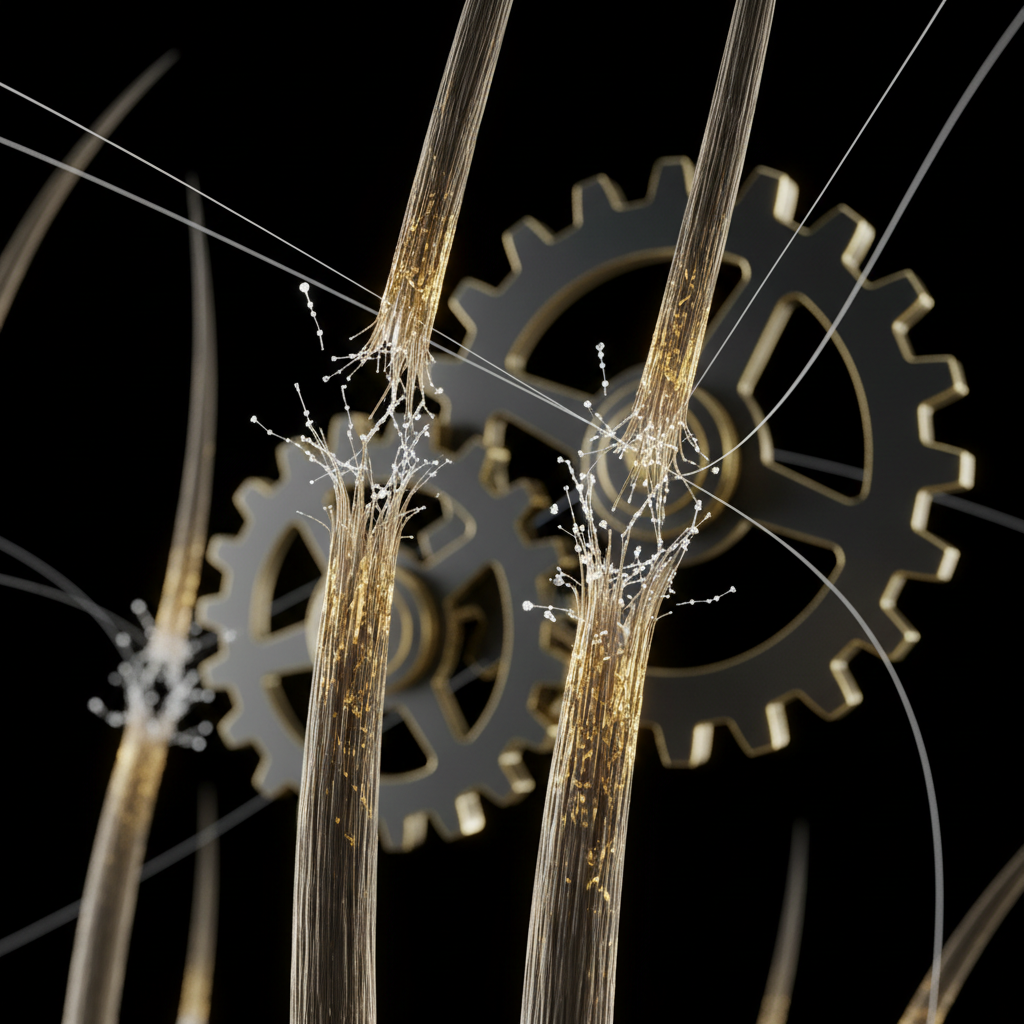
The high alkalinity forces the cuticle scales to flare wide open, dissolving the hydrophobic 18-methyleicosanoic acid (18-MEA) lipid layer that protects the hair from moisture loss and external friction. Without 18-MEA, hair absorbs environmental water rapidly, swells, and loses its structural integrity. Furthermore, repeated applications often lead to overlapping, where previously straightened sections are coated again. Overlapping strips residual structural protein, creating clear demarcation lines where the hair snaps under standard combing.
Warning signs to monitor
If you undergo chemical straightening, be watchful for early physical warnings:
- Burning or tingling during processing: A severe burning sensation is not normal. It indicates the chemical has penetrated the sebum barrier and is causing chemical erythema or an acute alkaline burn.
- Point-of-demarcation breakage: Short, uniform fragments of hair falling out when brushing, particularly snapping at the line between new growth and previously relaxed hair.
- Extreme porosity and tangling: Hair that feels gummy, spongy, or elastic when wet, and hard and brittle when dry.
- Persistent scalp crusting or oozing: Localised weeping or scab formation on the scalp points to chemical burns, which require dermatological intervention to prevent follicular scarring.
Minimising chemical exposure and structural damage
If you choose to use chemical straighteners, you can take practical steps to reduce risks:
- Protect the scalp: Apply a petroleum-based barrier cream thoroughly across the entire scalp, hairline, and ears before chemical application to block direct skin contact.
- Never scratch or wash before application: Avoid washing or vigorous brushing for at least 72 hours prior to relaxing to keep the natural protective sebum layer intact.
- Avoid overlapping: Ensure the stylist applies fresh product exclusively to new growth, leaving a buffer zone before previously processed sections.
- Demand proper salon ventilation: If receiving a smoothing treatment involving heat, ensure the salon uses active chemical fume extraction systems, not just open windows.
- Adhere to timing and neutralisation: Use a neutralising shampoo with a built-in pH indicator (which changes colour until the acid-base balance is restored) to ensure zero active chemical remains on the fibre.
When hair issues are caused by something else
Not all shedding or thinning following a salon visit is caused by chemical processing. If you notice full-length hairs coming out with a visible white bulb attached, this is hair shedding (telogen effluvium), not breakage. Telogen effluvium is triggered by internal events that occurred two to three months prior, including high fevers, psychological stress, rapid weight loss, thyroid imbalances, or postpartum hormonal shifts.
Similarly, gradual widening of the central parting without breakage points toward androgenetic alopecia. Always examine the fallen hairs: short, jagged pieces without a bulb indicate chemical breakage, while long strands with bulbs signify natural shedding or systemic follicular triggers.
Professional care with Watermans
When recovering from chemical damage, hair fibres require external support to minimise friction and retain moisture while new growth emerges. Watermans offers targeted cosmetic care formulated to support healthy-looking hair and condition the scalp without harsh additives.
Utilising mild cleansing bases free from aggressive sulphates helps prevent further moisture stripping of fragile, post-chemical fibres. Watermans GrowMe Shampoo and ConditionMe Conditioner deliver hydrolysed lupin protein, caffeine, biotin, and argan oil to improve surface smoothness, enhance hair slip, and reduce mechanical breakage during everyday detangling. While cosmetic treatments cannot reverse chemical bond breakage, consistent conditioning keeps the remaining fibre supple and resilient.
When to seek medical advice
Consult a GP or a registered trichologist if you experience:
- Severe, blistering chemical burns on your scalp that fail to heal within 48 hours.
- Sudden, patchy hair shedding leaving completely smooth, shiny skin (a sign of potential scarring alopecia).
- Persistent respiratory irritation, wheezing, or eye inflammation following salon visits.
- Signs of secondary scalp infection, such as yellow crusting, swelling, or throbbing pain.
Frequently asked questions about chemical hair straightening risks
Do chemical straighteners cause permanent hair loss?
Chemical straighteners primarily cause hair breakage along the shaft rather than follicular hair loss. However, if strong alkaline chemicals are left on the scalp too long, they can cause deep chemical burns that destroy the hair follicles, leading to permanent cicatricial (scarring) alopecia.
How often can you safely use hair relaxers?
To minimise chemical hair straightening risks, dermatologists and trichologists recommend spacing treatments at least 8 to 12 weeks apart. This ensures sufficient new growth exists to prevent overlapping fresh chemicals onto previously processed hair, which drastically accelerates shaft breakage.
What are the main chemical hair straightening risks during pregnancy?
During pregnancy, your scalp may be more sensitive to irritation, and hormonal shifts alter hair texture. Furthermore, frequent exposure to endocrine-disrupting chemicals found in certain relaxers and formaldehyde emissions from keratin treatments carry potential developmental risks, leading many clinicians to recommend avoiding chemical straighteners while pregnant.
Can damaged, chemically relaxed hair be repaired?
Once disulfide bonds are broken or converted into lanthionine bonds, the internal structure of that hair fibre cannot be repaired permanently. Deep conditioners, bond-building formulations, and protein treatments can temporarily coat and reinforce the hair shaft to prevent further breakage, but trimmed ends remain the only permanent fix.
Final perspectives on chemical straighteners
Navigating chemical hair straightening risks requires balancing aesthetic styling preferences against physical hair integrity and systemic health considerations. The chemicals responsible for permanently softening or resetting hair bonds carry inherent risks of severe mechanical breakage, protein loss, and scalp burns. Modern epidemiological research provides strong justification for moderating your exposure, insisting on strict salon safety standards, and embracing lower-risk haircare routines. Prioritising scalp barrier health and gentle handling ensures you keep your hair resilient for the long term.
Sources and references
- US National Institute of Environmental Health Sciences (NIEHS) / National Institutes of Health (NIH), "Use of Straighteners and Other Hair Products and Incident Uterine Cancer", Journal of the National Cancer Institute, 2022.
- International Agency for Research on Cancer (IARC), "Formaldehyde, 2-Butoxyethanol and 1-tert-Butoxypropan-2-ol", IARC Monographs on the Evaluation of Carcinogenic Risks to Humans, Volume 88, 2006.
- US Food and Drug Administration (FDA), "Hair Smoothing Products That Release Formaldehyde When Heated", Consumer Updates, 2023.
- British Association of Dermatologists (BAD), "Chemical burns and occupational contact dermatitis in hairdressing", Clinical Guidelines, 2021.
- Occupational Safety and Health Administration (OSHA), "Hazard Alert: Hair Smoothing Products That Could Release Formaldehyde", US Department of Labor, 2011.