Causes of Folliculitis Decalvans: Mechanisms, Triggers, and Evidence
7 min read ·
Discover the primary causes of folliculitis decalvans, from bacterial triggers to immune dysregulation, and learn how to recognise early signs to prevent hair loss.
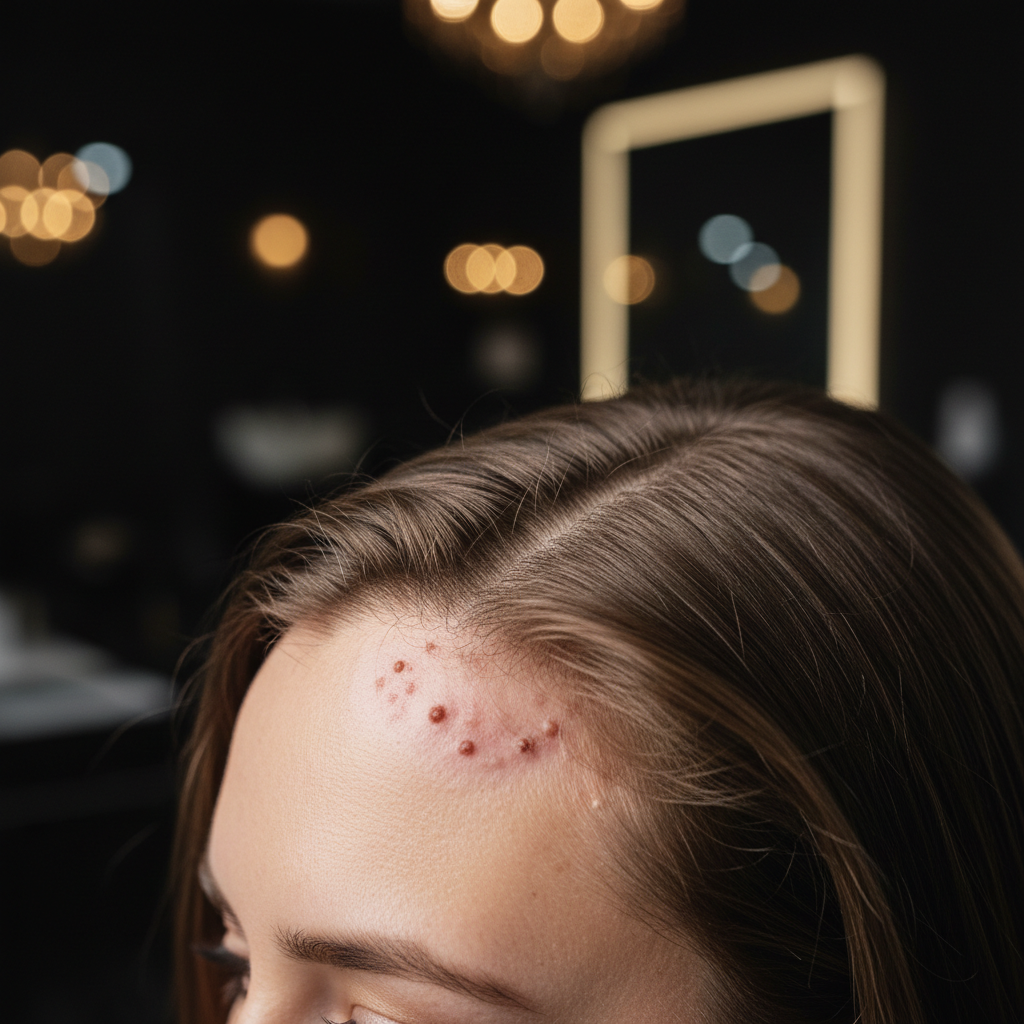
Quick answer: The exact Causes of Folliculitis Decalvans stem from a complex interaction between a chronic bacterial infection (most commonly Staphylococcus aureus) and an altered host immune response. While the bacteria trigger persistent inflammation, an abnormal immune reaction attacks the follicle, leading to irreversible destruction of hair stem cells and permanent scarring alopecia. The main limitation in current dermatology is that science has not yet isolated whether the bacterial colonisation or the underlying immune defect happens first.
Key takeaways
- Folliculitis decalvans is a rare, chronic form of cicatricial (scarring) alopecia that results in permanent hair loss.
- Staphylococcus aureus is isolated from scalp lesions in the vast majority of active cases, serving as a primary disease driver.
- Genetic predisposition and immune dysregulation prevent the scalp from clearing common surface bacteria, creating chronic neutrophilic inflammation.
- The condition destroys the follicular bulge, where epithelial stem cells reside, replacing active follicles with fibrous scar tissue.
- Over-the-counter hair care products and cosmetic shampoos cannot cure this condition; medical management by a dermatologist is mandatory.
Causes of Folliculitis Decalvans: what the evidence shows
Research shows that the causes of folliculitis decalvans involve a combination of microbiological triggers and host susceptibility rather than poor hygiene or external contamination.
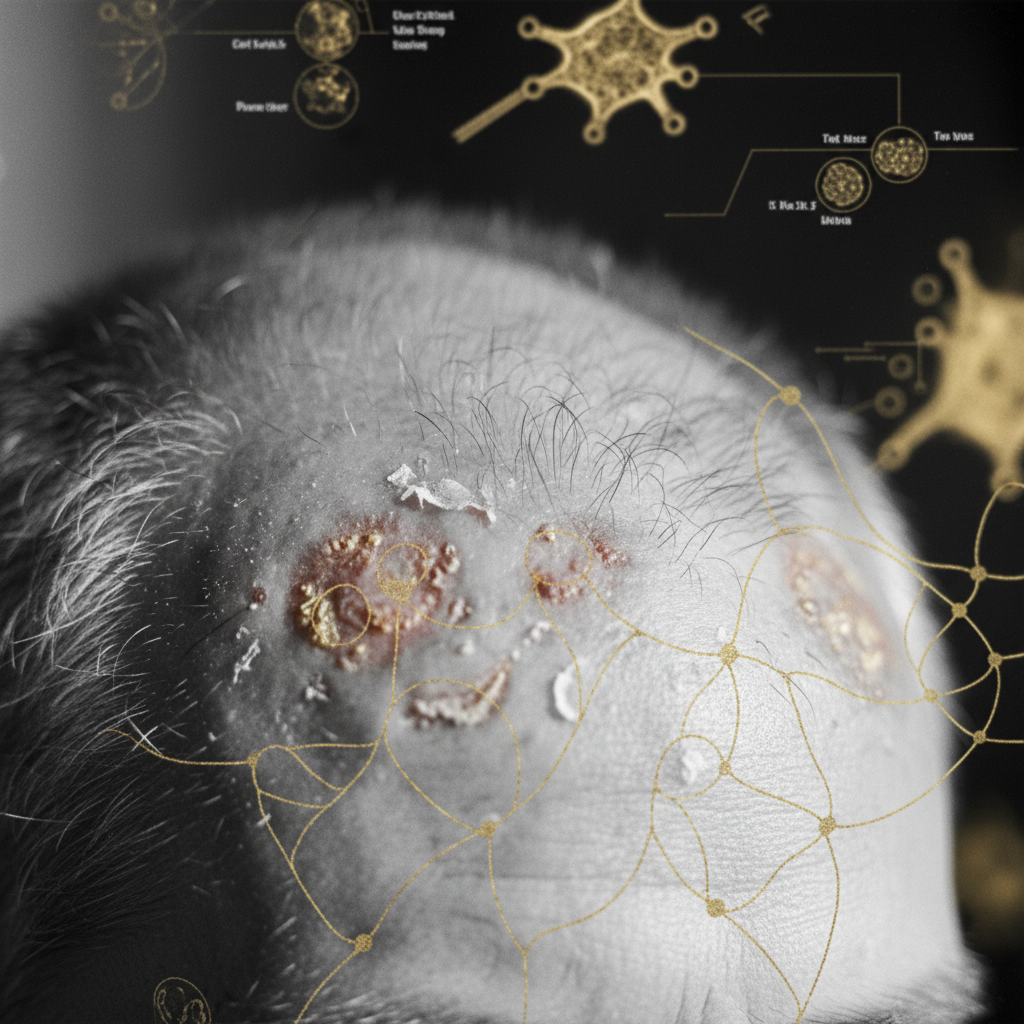
The primary bacterial culprit identified across peer-reviewed clinical studies is Staphylococcus aureus. When dermatologists swab active pustules, S. Aureus colonises the follicular opening in up to 90 percent of untreated patients. However, S. Aureus is a common organism that resides harmlessly on the skin of roughly 30 percent of the healthy human population. This fact confirms that bacterial presence alone does not cause the disease.
Instead, the condition emerges when this bacterium interacts with a defective or hypersensitive host immune system. In affected individuals, the immune system fails to mount a balanced response to ordinary staphylococcal proteins and superantigens. Rather than resolving the minor infection, white blood cells called neutrophils flood the follicular canal in excessive numbers. This uncontrolled neutrophilic infiltration produces persistent pustules, intense swelling, and tissue destruction.
Genetic susceptibility also plays a distinct role. Familial clusters of folliculitis decalvans have been documented in dermatological literature, indicating that specific human leukocyte antigen (HLA) types or inherent defects in skin barrier antimicrobial peptides may predispose certain families to this severe reaction.
The biological mechanism: how follicles are destroyed
To understand folliculitis decalvans, one must look at the follicular bulge, an anatomical zone located near the insertion of the arrector pili muscle. This region houses the multipotent epithelial stem cells responsible for regenerating hair follicles throughout standard hair growth cycles.
- Bacterial entry and biofilm formation: Staphylococcus aureus colonises the infundibulum (the upper segment of the hair follicle). Over time, the bacteria can produce biofilms, which shield them from standard antimicrobial defences and topically applied washes.
- Neutrophilic cascade: Bacterial toxins provoke an intense release of pro-inflammatory cytokines (such as IL-1, IL-8, and TNF-alpha). Neutrophils migrate into the follicle, forming follicular pustules and abscesses deep within the dermis.
- Destruction of the stem cell reservoir: As inflammation spreads downward, collateral tissue damage reaches the follicular bulge and the sebaceous gland. The intense inflammatory enzymes destroy the epithelial stem cells.
- Fibrosis and scarring: Once the stem cells perish, the follicle cannot regenerate a new hair shaft. The body repairs the tissue bed using dense collagen, resulting in fibrotic scar tissue. Multiple neighbouring hair shafts often become trapped together within a single scarred follicular opening, producing the hallmark sign called tufted folliculitis (polytrichia).
Signs and clinical presentation to look for
Identifying folliculitis decalvans early is crucial because lost follicles cannot be restored. Stylists and clients should watch for specific clinical signs:
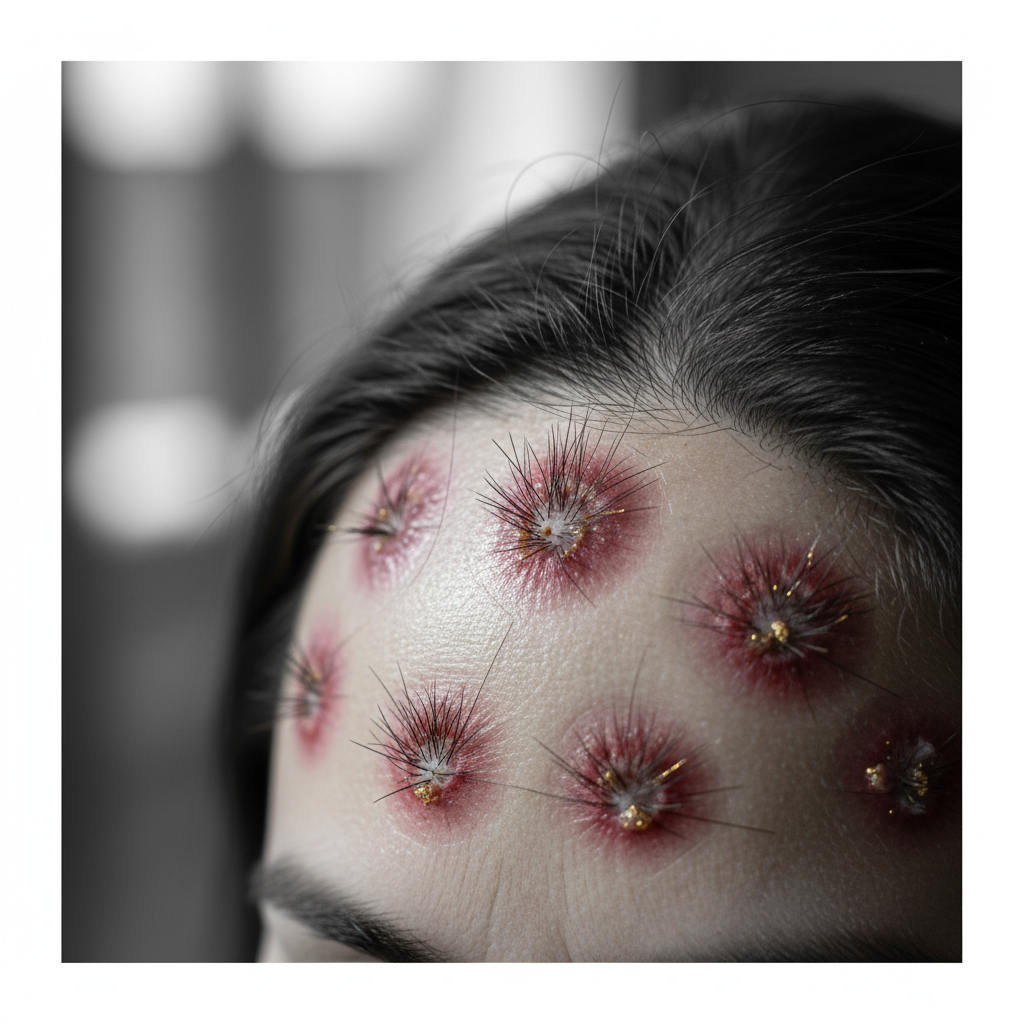
- Follicular pustules and crusts: Small, yellow-topped pimples pierced by a hair fibre, often surrounded by thick yellowish crusts and dried exudate.
- Tufted hairs (polytrichia): Clusters of five to twenty individual hair fibres emerging from a single dilated follicular opening, resembling the bristles of a toothbrush or doll's hair.
- Expanding patches of smooth scalp: Areas of hair loss where the scalp skin appears shiny, pale, or ivory, completely lacking visible follicular pores.
- Pain, burning, and pruritus: Unlike standard male or female pattern hair loss, active scarring inflammation often causes throbbing discomfort, tenderness to touch, or severe itching.
- Bleeding on touch: Friable granulation tissue around crusts may bleed when washed, brushed, or combed.
When the cause may be something else
Several other scalp conditions produce pustules or scarring hair loss. A correct diagnosis requires differentiating folliculitis decalvans from clinically similar presentations.
| Condition | Primary Mechanism | Characteristic Features | Reversible? |
|---|---|---|---|
| Folliculitis Decalvans | Neutrophilic reaction to S. Aureus | Tufting (polytrichia), pustules, yellow crusting, scarring | No (scarred areas permanent) |
| Lichen Planopilaris | Lymphocytic autoimmune attack | Perifollicular erythema, violaceous scale, no pustules | No (scarring alopecia) |
| Dissecting Cellulitis | Follicular occlusion triad | Deep fluctuating nodules, sinuses, extensive burrowing pus | No (advanced stages scar) |
| Bacterial Folliculitis | Superficial S. Aureus infection | Isolated red bumps and small whiteheads, minimal pain | Yes (non-scarring) |
| Tinea Capitis | Fungal (dermatophyte) infection | Broken stubbles, scaling, kerion formation, common in children | Yes (if treated promptly) |
What the evidence does not show
There is no clinical evidence that poor personal hygiene, infrequent hair washing, or the use of styling waxes and gels causes folliculitis decalvans. While occlusive hair oils can irritate the scalp, they do not trigger the deep neutrophilic destruction characteristic of this condition.
Furthermore, folliculitis decalvans is not contagious in everyday social contact. Although Staphylococcus aureus can transfer between individuals, the recipient will not develop folliculitis decalvans unless they carry the same abnormal host immune susceptibility. Finally, scientific evidence does not support treating this condition with non-medical methods such as dietary eliminations, essential oils, or cosmetic scalp scrubs alone.
Medical interventions and scalp management
Managing this condition requires rapid, coordinated care overseen by a medical dermatologist.
Medical treatments
Dermatologists aim to halt active inflammation and eradicate bacterial overgrowth to protect remaining follicles:
- Combination oral antibiotics: The combination of rifampicin (300 mg twice daily) and clindamycin (300 mg twice daily) for a course of 10 to 12 weeks is considered a primary standard of care in published literature, often inducing long-term remissions.
- Other antibiotic regimens: Doxycycline, minocycline, or cotrimoxazole are frequently used for anti-inflammatory maintenance.
- Topical and intralesional therapies: Potent topical corticosteroids or intralesional triamcinolone acetonide injections reduce focal inflammation and ease painful flare-ups.
- Oral retinoids: Isotretinoin is sometimes considered in refractory cases, though results vary compared to classical antibiotic regimens.
Gentle cosmetic scalp care
Cosmetic products cannot replace medical therapy, but gentle care supports the scalp barrier during clinical treatment:
- Use mild, pH-balanced cleansers (pH 5.0 to 5.5) that cleanse without stripping natural lipids.
- Avoid mechanical scalp scrubbing, harsh bristle brushes, or scratching crusts, as mechanical trauma can worsen inflammation via the Koebner phenomenon.
- For those maintaining remaining unaffected hair, gentle formulas such as Watermans Grow Me shampoo provide non-irritating cosmetic cleansing and conditioning that keep hair fibres manageable without disrupting medical scalp therapies.
When to seek professional advice
If you or a salon client notice clusters of hairs emerging from single pores, painful pustules that persist for more than two weeks, bleeding crusts, or smooth patches of scalp skin lacking follicular openings, consult a GP or dermatologist immediately.
Folliculitis decalvans represents a true trichological emergency. Because hair loss from cicatricial alopecia is permanent once stem cells are destroyed, early intervention is the only way to safeguard remaining hair density.
Frequently asked questions about Causes of Folliculitis Decalvans
Can stress trigger the causes of folliculitis decalvans?
Stress does not directly cause the condition, but physiological or psychological stress can alter immune regulation and skin barrier function. In patients with an underlying susceptibility, high stress levels can trigger acute flare-ups or worsen neutrophilic inflammation around the hair follicles.
Are the causes of folliculitis decalvans linked to diet?
Current medical literature has found no direct link between dietary factors and the causes of folliculitis decalvans. While an anti-inflammatory diet supports overall physical health, dietary adjustments cannot clear Staphylococcus aureus colonisation or halt autoimmune destruction of the follicular bulge.
Is folliculitis decalvans an autoimmune disease?
It is not classified purely as a classical autoimmune disease, but rather an autoinflammatory disorder driven by immune dysregulation. The immune system reacts excessively to common surface bacteria rather than directly attacking healthy self-antigens from the outset.
Can hair styling tools cause this condition?
Heat tools and tight hairstyles do not cause folliculitis decalvans. Tight hairstyles can cause traction alopecia, and hot tools can cause thermal fibre breakage, but neither produces the deep bacterial and neutrophilic destruction seen in folliculitis decalvans.
Protecting your scalp health
Understanding the complex causes of folliculitis decalvans demystifies a challenging condition and underscores why professional intervention matters. Because the disease destroys follicular stem cells through an aggressive interaction between Staphylococcus aureus and host immune responses, prompt medical treatment is vital. By combining prescribed dermatological therapies with gentle, non-irritating scalp care, individuals can control inflammation, preserve healthy follicles, and manage long-term scalp comfort.
Sources and references
- British Association of Dermatologists (BAD). Guidelines on the Management of Cicatricial Alopecia, 2021.
- Powell, D. Et al. "Folliculitis decalvans: A review of 18 cases." British Journal of Dermatology, 1999.
- Otberg, N. Et al. "Folliculitis decalvans." Dermatologic Therapy, 2008.
- Bunagan, M. J. K. Et al. "Cicatricial Alopecia: Clinicopathological Review." Dermatologic Clinics, 2013.
- National Institute for Health and Care Excellence (NICE). Alopecia: Management and Referral, 2022.