Caffeine Shampoo Benefits: What the Science Truly Proves
10 min read ·
Discover the real-world caffeine shampoo benefits for hair thinning, shedding, and scalp health, backed by dermatological research and trichology evidence.

Quick answer: The core Caffeine Shampoo Benefits stem from caffeine's ability to penetrate the scalp barrier quickly, counteract dihydrotestosterone (DHT) activity around the follicle, and stimulate cellular proliferation in vitro. In daily use, caffeine shampoos help maintain a fertile scalp environment, support active anagen growth, and decrease everyday shedding. However, cosmetic caffeine shampoos are formulated to nurture healthy hair growth and reduce breakage; they cannot instantly reverse severe genetic miniaturisation or cure scarring alopecias.
Key takeaways
- Topical caffeine reaches hair follicles within two minutes of contact time through transfollicular absorption.
- Laboratory studies show caffeine helps counteract the suppressive effects of DHT on hair follicle elongation.
- Caffeine encourages microcirculation in the scalp, ensuring nutrients reach the germinative hair matrix.
- Cosmetic caffeine shampoos reduce breakage and shedding, creating visibly denser, thicker-looking hair over consistent use.
- Meaningful visible changes generally require three to six months of regular application.
- Caffeine shampoo is not a standalone cure for permanent medical hair loss such as scarring alopecia or advanced pattern baldness.
Caffeine Shampoo Benefits: what the evidence shows
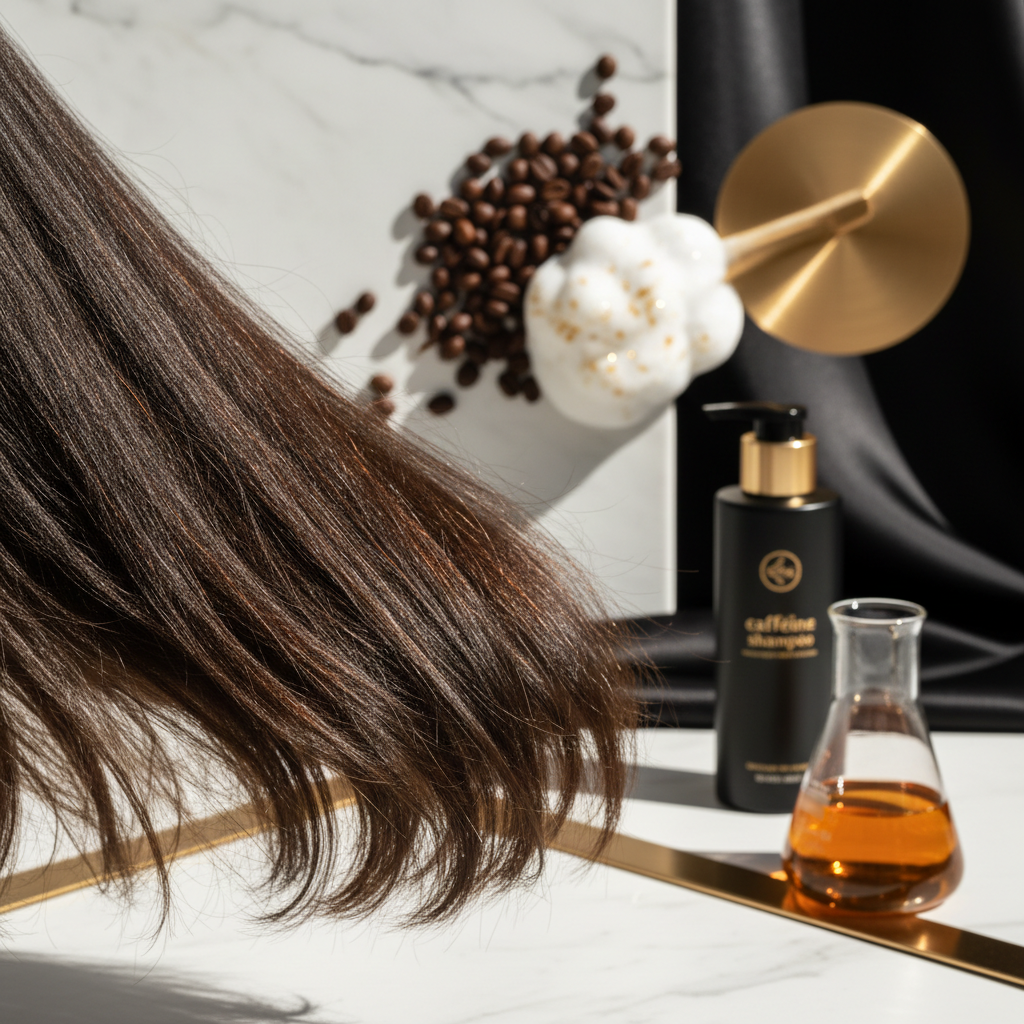
Research into topical caffeine reveals significant biological activity within human hair follicles. The primary Caffeine Shampoo Benefits rely on transfollicular delivery, where caffeine travels down the hair canal and penetrates the surrounding dermal tissue far faster than it can cross intact stratum corneum. A landmark study published in Skin Pharmacology and Physiology (Otberg et al., 2007) demonstrated that caffeine applied via a rinse-off shampoo penetrated hair follicles within two minutes and remained detectable for up to 24 hours.
Once inside the follicular unit, caffeine acts on several cellular pathways:
- Inhibition of Phosphodiesterase: Caffeine increases intracellular levels of cyclic adenosine monophosphate (cAMP). Elevated cAMP promotes metabolic activity and cell proliferation within hair matrix keratinocytes, driving active fibre production.
- Mitigation of Androgenic Suppression: In androgenetic alopecia, dihydrotestosterone (DHT) shortens the anagen (growth) phase and induces follicle miniaturisation. In vitro research published in the International Journal of Dermatology (Fischer et al., 2007) showed that caffeine counteracted DHT-induced growth suppression, leading to significant elongation of the hair shaft.
- Stimulation of Keratinocyte Proliferation: In vitro culture models confirmed that caffeine stimulates human hair follicle matrix cells, prolonging the anagen phase while downregulating transforming growth factor beta 2 (TGF-beta 2), a known promoter of the catagen (regression) phase.
- Improved Follicular Barrier Function: Topically applied caffeine improves scalp epidermal barrier function, reducing transepidermal water loss and soothing the perifollicular skin environment.
What the evidence does not show
It is vital to separate laboratory discoveries from clinical real-world limits. In vitro studies apply pure caffeine directly to micro-dissected, isolated follicles suspended in culture medium for days. A cosmetic shampoo, by contrast, sits on your scalp for two to five minutes before rinsing away.
Caffeine shampoo does not:
- Revive dead or completely fibrosed hair follicles where hair production stopped years ago.
- Alter your underlying genetic sensitivity to androgens across your lifetime.
- Substitute for medical diagnosis or clinical prescription treatments when addressing severe alopecia areata, lichen planopilaris, or frontal fibrosing alopecia.
- Show instantaneous results overnight. Follicular growth cycles move in fractions of a millimetre per day; structural improvements take months to show along the hair fibre.
Mechanisms: how caffeine works on the scalp
To understand caffeine's real-world impact, you must distinguish between follicular growth and cosmetic fibre retention. Hair loss happens when follicles shut down or miniaturise; hair shedding occurs when hairs transition into the telogen phase; hair breakage happens when weak shafts snap along their length. Caffeine shampoos target all three areas through distinct physical and biochemical mechanisms.
Follicular penetration and microcirculation
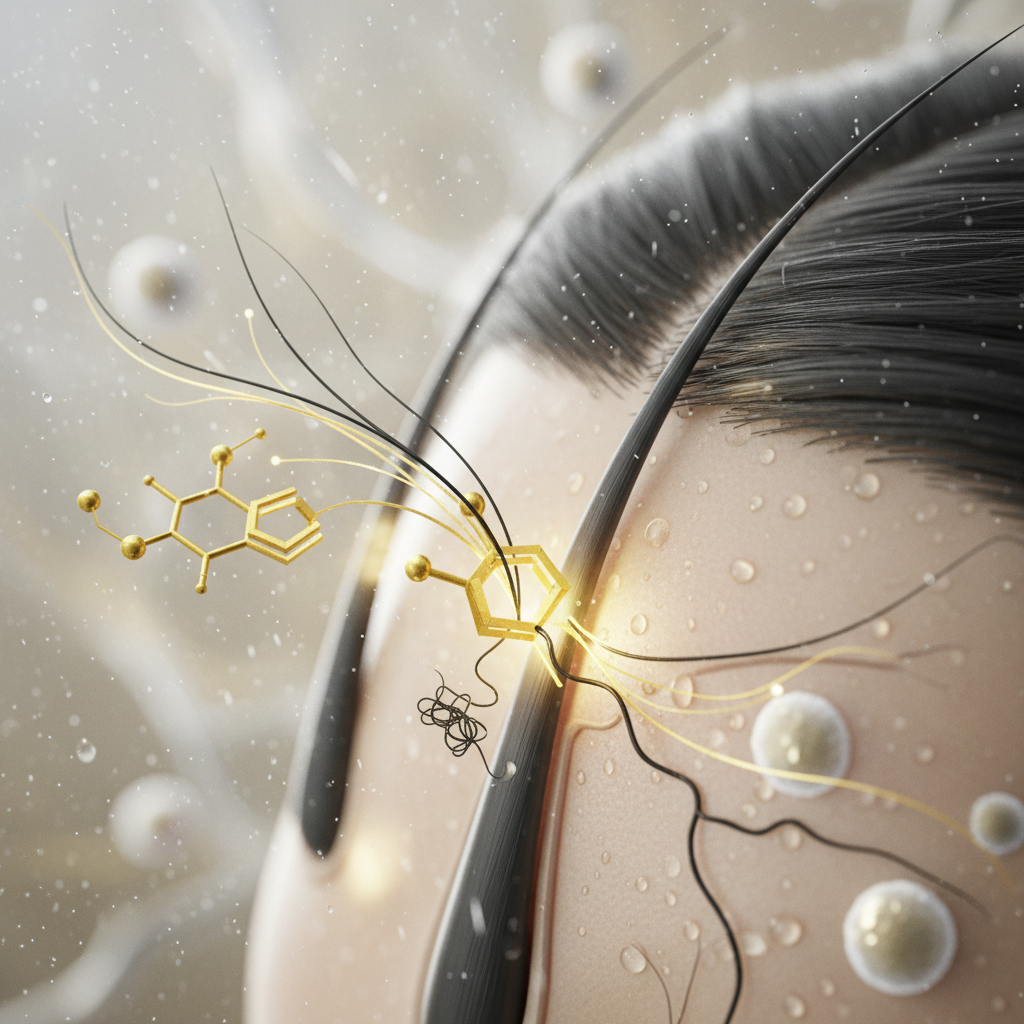
Caffeine is a hydrophilic and lipophilic xanthine alkaloid with a low molecular weight (194.19 g/mol). This molecular profile makes it ideal for penetrating skin barriers. While typical leave-on serums depend on slow transdermal migration, rinse-off caffeine shampoos exploit the follicular pathway. The follicle acts as a reservoir, drawing caffeine deep into the bulb. Here, caffeine promotes local capillary perfusion, supplying oxygen and amino acids necessary for robust keratin synthesis.
Counteracting DHT-driven miniaturisation
In individuals with a genetic predisposition to pattern thinning, 5-alpha reductase converts testosterone into DHT at the follicle site. DHT binds to androgen receptors, shrinking the hair dermal papilla over repeated cycles. Caffeine does not alter systemic hormones in your bloodstream. Instead, it acts locally to outcompete inhibitory pathways, shielding follicular cells from DHT-triggered apoptosis (programmed cell death) and encouraging the follicle to stay in an active growth phase.
Reinforcing the hair cuticle and shaft
Beyond the scalp, quality caffeine shampoos deliver direct structural support to hair strands. Caffeine formulations are frequently paired with proteins, panthenol, and natural oils. As the shampoo cleanses the scalp of sebum, debris, and dead skin cells, it coats the cuticle with restorative agents that smooth the outer layers, preventing moisture loss, mechanical friction, and subsequent hair breakage.
| Feature | Standard Cleansing Shampoo | Dedicated Caffeine Shampoo |
|---|---|---|
| Primary Target | Hair fibre surface and oil removal | Follicular reservoir and scalp skin |
| Active Scalp Delivery | Low; active agents wash away immediately | High; caffeine penetrates hair canal within 2 minutes |
| Follicular Microcirculation | Negligible | Stimulated via localized vasodilation pathways |
| Action on DHT Pathway | None | Helps counter DHT-induced growth suppression locally |
| Required Contact Time | 30 to 60 seconds | 2 to 5 minutes on the scalp before rinsing |
| Primary Consumer Outcome | Clean hair | Fuller-looking, denser hair with reduced breakage |
Signs to look for: when caffeine shampoo helps most
A caffeine shampoo proves most beneficial when your hair shows signs of early follicular sluggishness, general fatigue, or external stress rather than permanent scarring.
Watch for these specific signs:
- Excessive Daily Shedding: Finding significantly more than 100 hairs a day on your brush, pillowcase, or shower drain, often triggered by stress, dietary shifts, or seasonal changes.
- Diffuse Thinning along the Part: The hair parting looks slightly wider than normal, and the ponytail feels less dense in circumference.
- Fine, Weakened Strands: Hair snaps easily when combed damp or exposed to heat styling, signalling high structural vulnerability.
- Congested Scalp: Buildup of sebum, sweat, and styling products around follicular openings that blocks optimal hair emergence.
Practical steps: how to get the most from caffeine shampoo
Application technique directly determines follicular absorption. If you wash your hair and rinse it away in 20 seconds, the active xanthine compounds cannot reach therapeutic concentrations within the follicle.
Follow these proven salon steps:
- Drench the Hair Thoroughly: Use lukewarm water around 37 degrees Celsius. Avoid scalding water, which strips necessary lipids and causes scalp inflammation.
- Apply Directly to the Scalp: Dispense a five-pence to ten-pence coin amount. Work the lather across your scalp with your fingertips, using circular, firm motions rather than scrubbing the mid-lengths.
- Leave for Two to Five Minutes: Allow the shampoo to remain on your scalp so the caffeine can enter the follicular opening. Use this window to wash the rest of your body.
- Rinse Completely: Clear all residue with cool or lukewarm water.
- Use Consistently: Follicular cycles operate over months. Use the shampoo three to five times weekly for a minimum of 12 to 16 weeks to evaluate genuine changes in density and shedding rates.
When the cause may be something else
Not all shedding or thinning stems from common androgenic miniaturisation or stress-related telogen effluvium. If your hair is coming out rapidly, caffeine shampoo will not resolve an unchecked medical issue.
Consider whether underlying factors are driving your symptoms:
- Thyroid Disorders: Hypothyroidism and hyperthyroidism disrupt the hair cycle, producing coarse, brittle hair or diffuse shedding across the entire head.
- Nutritional Deficiencies: Low serum ferritin (stored iron), vitamin D insufficiency, or severe zinc deficits directly impair matrix cell division.
- Autoimmune Activity: Conditions like alopecia areata produce smooth, coin-sized circular bald patches caused by white blood cells mistakenly attacking hair roots.
- Mechanical Traction: Tight ponytails, braids, and extensions exert continuous tension, causing traction alopecia that requires styling changes rather than topical ingredients.
When to get professional advice
Consult a GP, dermatologist, or registered trichologist if you notice:
- Sudden, patchy hair loss that develops over days or weeks.
- Burning, itching, redness, or painful sensations on the scalp skin.
- Scaling, pustules, or visible scar tissue where follicular openings have vanished.
- Continuous heavy shedding that lasts longer than six months without improvement.
- Rapid thinning accompanied by unexplained weight changes, fatigue, or menstrual irregularities.
Premium scalp support with Watermans
If you want to incorporate high-grade caffeine into your routine, Watermans Grow Me Shampoo provides a targeted, revitalising option. Formulated without harsh sulphates, this premium British product combines laboratory-grade caffeine with biotin, argan oil, rosemary extract, allantoin, and hydrolysed lupin protein.
Rather than drying out the hair fibre, Watermans Grow Me balances scalp moisture, gently cleanses away sebum and styling residue, and floods the follicular environment with fortifying botanical nutrients. When left on the scalp for three to four minutes, it supports healthier-looking, thicker, and more resilient hair while visibly reducing breakage.
Frequently asked questions about Caffeine Shampoo Benefits
How long does it take to see Caffeine Shampoo Benefits?
You can expect initial structural Caffeine Shampoo Benefits, such as enhanced fibre volume and reduced snapping, within four weeks. Noticeable reductions in shedding and visible improvements in scalp coverage typically require consistent use for three to six months. Hair grows approximately 1 to 1.25 centimetres per month, so newly fortified growth requires time to emerge.
Can drinking coffee provide the same benefits as caffeine shampoo?
No. To deliver a comparable concentration of caffeine to your hair follicles through drinking coffee, you would need to consume 50 to 60 cups a day. That amount would cause severe, toxic cardiovascular side effects. Topical shampoo routes caffeine directly into the follicle without entering systemic circulation in significant amounts.
Does caffeine shampoo cause shedding when you first start?
Some individuals notice a brief, mild increase in shedding during the first two to three weeks of use. This occurs because caffeine stimulates matrix cells, prompting hairs in the late telogen (resting) phase to shed so a fresh, robust anagen (growth) hair can take its place. This temporary shift usually subsides quickly.
Can women use caffeine shampoo safely?
Yes. Topical caffeine works identically in male and female hair follicles. In women, caffeine helps counter the effects of fluctuating hormones, post-partum shifts, and peri-menopausal thinning by stimulating cellular proliferation and supporting follicular energy metabolism without altering blood hormone levels.
Does caffeine shampoo regrow hair on completely bald areas?
No. Caffeine works by invigorating living, functional hair follicles. If a follicular opening has fully closed, scarred over, or ceased activity years ago, topical cosmetic ingredients cannot resurrect it. Caffeine shampoo is designed to fortify existing, thinning, or miniaturising follicles.
Making the most of caffeine haircare
Understanding real-world Caffeine Shampoo Benefits allows you to set realistic expectations and create an effective haircare plan. By acting directly through follicular pathways, counteracting localised DHT effects, and strengthening the hair fibre against friction, caffeine provides meaningful support for individuals experiencing premature thinning, sluggish growth, or everyday breakage. When paired with a healthy lifestyle, gentle handling, and consistent contact time on the scalp, caffeine shampoo acts as an exceptional foundation for dense, vibrant hair.
Sources and references
- Fischer, T. W., Hipler, U. C., & Elsner, P. (2007). Effect of caffeine and testosterone on the proliferation of human hair follicles in vitro. International Journal of Dermatology, 46(1), 27-35. DOI: 10.1111/j.1365-4632.2007.03119.x
- Otberg, N., Teichmann, A., Rasuljev, U., Sinkgraven, R., Sterry, W., & Lademann, J. (2007). Follicular penetration of topically applied caffeine via a shampoo formulation. Skin Pharmacology and Physiology, 20(4), 195-198. DOI: 10.1159/000101389
- Fischer, T. W., Herczeg-Lisztes, E., Funk, W., Zillikens, D., Bíró, T., & Paus, R. (2014). Differential effects of caffeine on hair shaft elongation, matrix proliferation and energy metabolism in gender-specific human hair follicles. British Journal of Dermatology, 171(5), 1031-1043. DOI: 10.1111/bjd.13114
- Teichmann, A., Otberg, N., Jacobi, U., Sterry, W., & Lademann, J. (2007). Follicular penetration: development of a method to monitor caffeine penetration into hair follicles. Skin Research and Technology, 13(2), 215-222. DOI: 10.1111/j.1600-0846.2007.00218.x
- National Institute for Health and Care Excellence (NICE). (2022). Alopecia androgenetica: Clinical knowledge summary. NHS.
Find these ingredients in Watermans products
- Zinc: you will find this ingredient in our Hair Vitamins.
- Panthenol (Provitamin B5): you will find this ingredient in our Heat Protection Spray.