Best Detangling Practices for Healthy, Breakage-Free Hair
9 min read ·
Master the Best Detangling Practices to prevent hair breakage and protect your cuticle. Learn science-backed wet vs. dry techniques for all curl patterns.
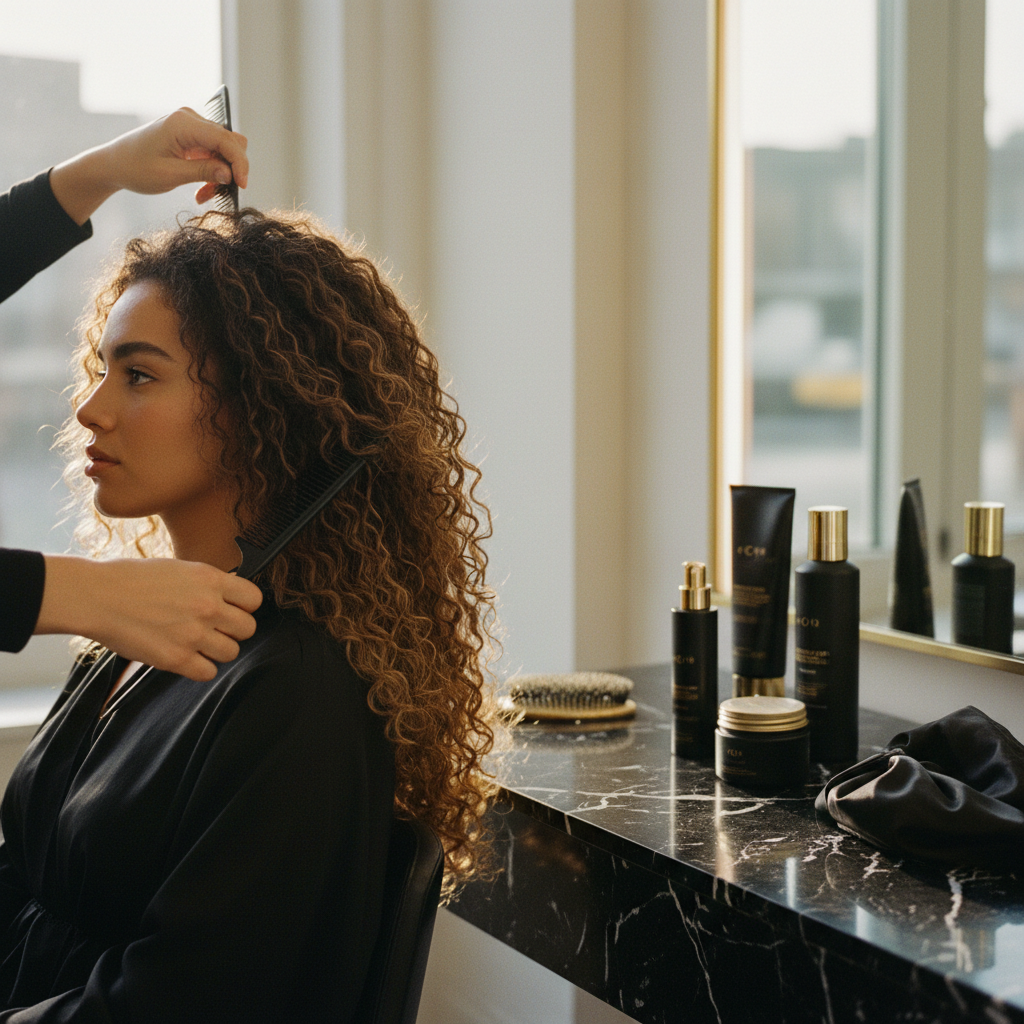
Quick answer: The Best Detangling Practices centre on minimising friction and mechanical tension to prevent fibre fracture along the hair shaft. Effective detangling requires working in small sections from ends to roots, using ample lubrication, and selecting tools suited to your curl pattern. While the Best Detangling Practices dramatically reduce cosmetic breakage and preserve cuticle integrity, they cannot repair split ends that have already formed, nor do they prevent genetic hair thinning or physiological follicular shedding.
Key takeaways
- Detangling must always start at the tips and progress upward to prevent tightening knots into solid tangles.
- Wet hair stretches easily and snaps under lower tensile loads, so high-friction hair types require slip agents like conditioner before combing.
- Fine and straight hair textures often detangle with less breakage when dry, whereas curly, coily, and afro textures should almost always be detangled wet and coated in conditioner.
- Mechanical breakage differs fundamentally from follicular shedding; detangling tools remove hairs that have already detached from the scalp, but poor technique snaps intact shafts.
- Wide-tooth combs, flexible-bristle brushes, and fingers generate significantly less cuticle abrasion than fine-tooth combs or rigid nylon brushes.
Best Detangling Practices: what the evidence shows
Adopting the Best Detangling Practices protects the delicate cuticle scales that sheath every human hair strand. Biophysical studies on hair mechanics reveal that combing forces multiply exponentially when a tool hits an entangled knot. When you pull a brush straight down from scalp to ends, loose knots travel downward, compacting into dense mats that require extreme force to separate. This force regularly exceeds the elastic limit of the keratin cortex, leading to mid-shaft fractures, trichorrhexis nodosa (frayed fibre nodes), and split ends.
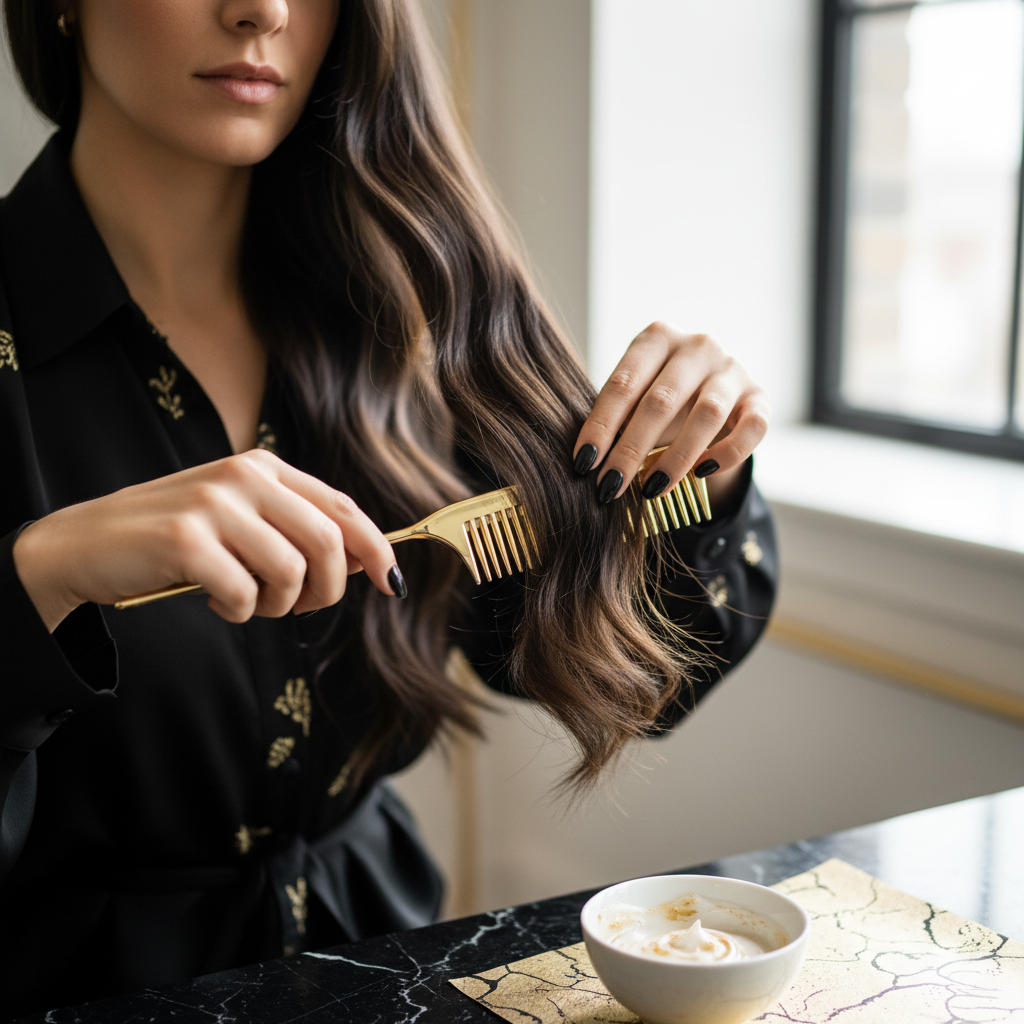
Scientific testing demonstrates that hair behaves differently depending on its hydration level. When dry, a healthy hair fibre can stretch by roughly 15 to 20 percent before breaking. When fully saturated with water, the fibre can stretch by up to 30 to 50 percent, but its overall tensile strength decreases. Water temporarily breaks hydrogen bonds within the cortex, making wet hair structurally weaker and more prone to stretching beyond its recovery point.
However, wet hair also possesses a higher baseline friction coefficient than dry hair because swollen cuticles drag against each other. For this reason, detangling wet hair without a lubricant causes severe friction damage. Applying a conditioner or detangling spray deposits cationic surfactants and fatty alcohols onto the fibre, which flattens the cuticle scales, neutralises negative surface charges, and cuts surface friction by more than 50 percent. For textured and curly hair, this lubrication outweighs the vulnerability of the wet state, making wet conditioning detangling the gold standard.
The mechanical mechanism of tangling and breakage
Tangling occurs when adjacent hair strands intertwine, snagging on raised cuticle edges or wrapping around shed strands. Every individual sheds between 50 and 100 telogen hairs each day. In straight hair, these shed fibres slip out easily. In wavy, curly, and coily patterns, the shed hairs remain trapped within the surrounding canopy, forming anchor points for new knots.
Smooth, intact cuticles -> Low friction -> Fibres slide past each other
Lifted, damaged cuticles -> High friction -> Cuticles interlock and knot
Shed hairs left trapped -> Physical web -> Dense mats form around shed fibres
When you force a comb through these knots, the tension causes three distinct types of mechanical damage:
- Cuticle stripping: The comb edge shears off the protective lipid layer (18-methyl eicosanoic acid, or 18-MEA) and lifts the outer cuticle cells.
- Plastic deformation: The cortex stretches past its elastic threshold, leaving the strand permanently misshapen, limp, and crinkled.
- Catastrophic snapping: The tension exceeds the absolute tensile strength of the fibre, resulting in a clean snap or an irregular, split break along the shaft.
Signs of poor detangling habits
Spotting the physical consequences of rough detangling helps you adjust your technique before severe thinning occurs:
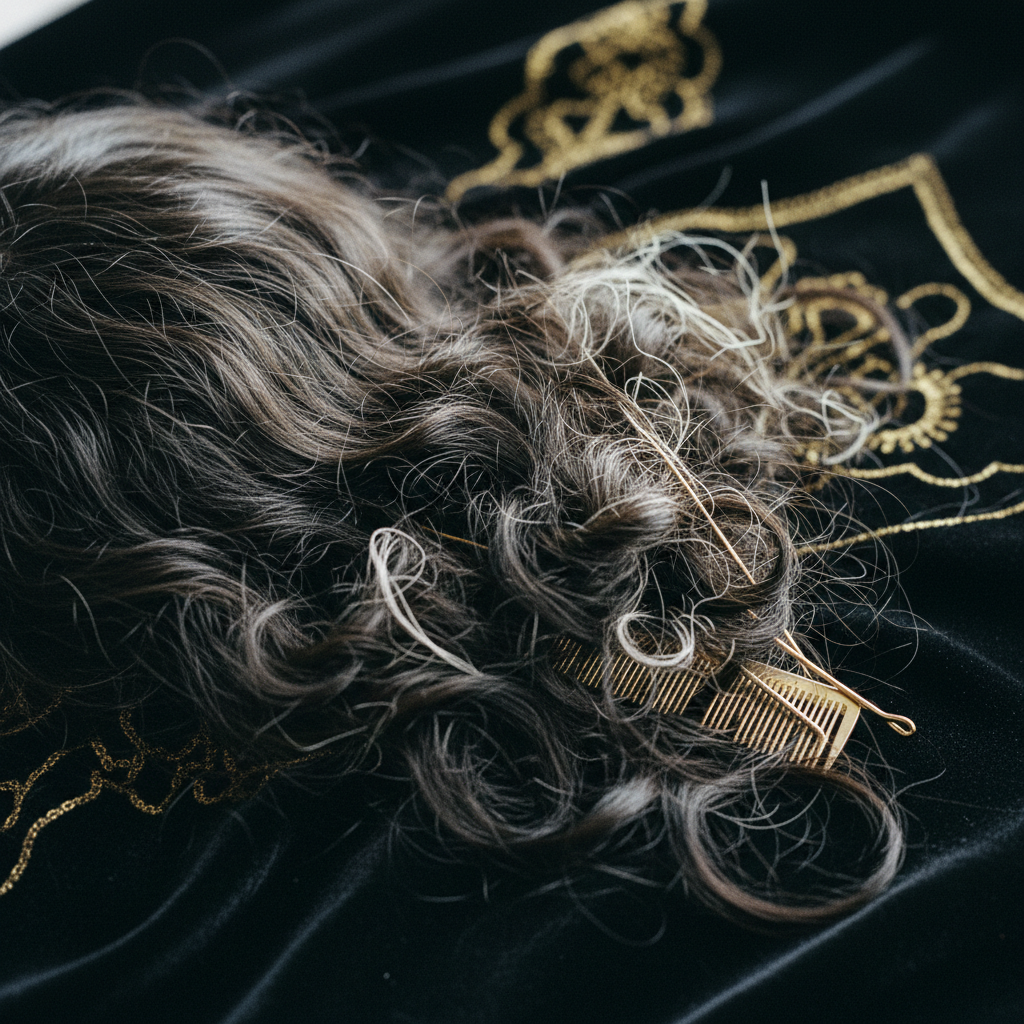
- White bulbs vs. clean ends: Look closely at the hairs left in your brush. Hairs shed from the root feature a tiny white keratin bulb at one end. Hairs broken by detangling lack this bulb and are often shorter than your actual hair length.
- Audible snapping: Hearing a popping or ripping noise while combing indicates that you are tearing through cortex fibres rather than separating knots.
- Uneven, frayed ends: Chronic mechanical strain causes the ends of your hair to look thin, frizzy, and see-through, even if your roots appear dense.
- Mid-shaft split ends: Small white dots visible along the mid-lengths of individual strands signal structural micro-fractures caused by excessive combing tension.
Best Detangling Practices by hair texture
Tailoring your approach to your specific diameter, porosity, and curl diameter ensures you minimise strain.
| Hair Type | Detangling State | Primary Tool | Key Lubricant | Critical Technique |
|---|---|---|---|---|
| Straight (Type 1) | Dry or damp | Wide-tooth comb or paddle brush | Light leave-in spray or serum | Detangle dry before washing to limit wet-comb strain |
| Wavy (Type 2) | Damp to wet | Flexible-bristle detangling brush | Rinse-out conditioner | Work in 2 to 4 quadrants from ends upward |
| Curly (Type 3) | Saturated wet | Wide-tooth comb or flexible brush | Rich conditioner with high slip | Section into 4 to 6 parts; never comb dry |
| Coily / Afro (Type 4) | Saturated wet | Fingers first, then wide-tooth comb | Deep conditioner or leave-in cream | Detangle in 6 to 8 small twists; fingers dissolve mats |
Step-by-step detangling protocol
Following a methodical routine prevents cumulative cuticle wear and tear.
1. Pre-wash preparation
If your hair is prone to dense matting, perform a pre-wash detangle using your fingers and a few drops of plant oil or a pre-shampoo treatment. Gently pull apart large webs of hair before stepping into the shower. This prevents water from swelling existing knots into tighter tangles.
2. Section the hair
Never attempt to detangle your entire head in a single sweep. Divide your hair into 4 to 8 manageable sections using sectioning clips. Working with smaller amounts of hair reduces the lateral pressure on adjacent strands.
3. Saturate with conditioner
For curly, wavy, and coily hair, saturate the strands with water and apply a generous amount of conditioner. Look for products containing slip agents such as behentrimonium chloride, cetrimonium chloride, or natural fatty alcohols. The hair should feel slippery, often described as resembling wet seaweed.
4. Bottom-up execution
Hold the section of hair firmly above the area you are working on to absorb the pulling force and protect the follicle. Place your comb or brush 2 to 3 inches from the very ends. Comb through smoothly. Once that bottom section is completely clear of knots, move the tool 2 inches higher and comb through to the bottom again. Continue this gradual upward progression until you reach the roots.
5. Finger-separate stubborn knots
When your tool encounters a stubborn knot, stop immediately. Do not pull harder. Set the comb down and use your pads of your fingers to gently pull the individual hairs outward from the knot horizontally, loosening the mat before passing the comb through again.
What the evidence does not show
It is common to blame detangling for pattern hair loss or sudden diffuse shedding, but scientific evidence does not support this connection:
- Detangling does not cause alopecia areata, androgenetic alopecia, or telogen effluvium. These conditions originate within the hair follicle beneath the scalp, governed by genetics, hormones, systemic health, and immune responses.
- Detangling tools do not pull out healthy anagen (growing) hairs under normal handling. Hairs that exit easily during combing are almost exclusively telogen hairs that detached from the dermal papilla weeks prior and were simply waiting to be dislodged.
- No detangling technique or product can physically mend or fuse severed cortex fibres. Cuticle smoothing conditioners temporarily glue fractured ends together cosmetically, but permanent repair requires trimming away the split ends.
When tangles signal an underlying issue
If your hair tangles instantly despite gentle handling, the primary cause often lies in environmental or chemical changes to the fibre surface:
- High chemical porosity: Bleaching, relaxers, permanent waves, and oxidative dyes lift and strip the protective F-layer (lipid coating) of the hair. This leaves the outer layer raw and porous, causing neighbouring strands to act like Velcro when they touch.
- Hard water buildup: Mineral ions like calcium and magnesium bind to the keratin matrix, creating a rough, chalky coating that increases surface friction and resists conditioning agents.
- Heat degradation: Regular use of flat irons and curling wands above 185°C degrades keratin proteins and causes cuticle blistering, leading to chronic snagging.
- Excessive split ends: When ends split, the tiny split fibrils wrap around adjacent healthy fibres, creating recurring clusters of knots at the tips.
Professional care: supporting fibre integrity with Watermans
While gentle technique forms the foundation of fibre preservation, supporting your hair with fortifying cosmetic formulas makes strands far more resilient to daily styling friction. The Watermans haircare range is formulated to optimise the environment for stronger-feeling, healthier-looking hair.
Using Watermans Grow Me Shampoo and Condition Me Conditioner supplies the hair canopy with essential nutrients, including biotin, rosemary extract, niacinamide, and hydrolysed lupin protein. The conditioning complex delivers targeted slip to reduce surface drag during wet styling, helping cuticles lie flat and smooth. By reinforcing the hair surface and maintaining scalp vitality, Watermans products help reduce mechanical breakage caused by comb resistance, keeping your mid-lengths and ends looking fuller and substantially more manageable over time.
Frequently asked questions about Best Detangling Practices
Is it better to detangle hair wet or dry?
The ideal method depends on your hair pattern. Fine, straight textures have lower baseline friction and are strongest when dry, meaning gentle dry detangling before washing often yields the least breakage. Conversely, curly, coily, and afro textures possess naturally raised cuticles and irregular geometries; detangling these hair types dry causes severe snapping. Textured hair should almost always be detangled wet, saturated with a high-slip conditioner.
What are the Best Detangling Practices to avoid thinning hair?
The Best Detangling Practices to prevent mechanical thinning focus on sectioning the hair, starting at the tips, and using tools with wide, smooth teeth. Always hold the section firmly above the comb to prevent tension from pulling at the scalp. Never rip through knots. Dislodge shed hairs gently so they do not accumulate into dense, breakable mats.
Does detangling pull out hair from the root?
Normal detangling dislodges telogen-phase hairs that have already shed naturally from the follicle. An average person loses 50 to 100 hairs daily, which often remain trapped within textured hair until washed or combed. However, detangling with aggressive, yank-and-pull motions can cause traction stress, snapping hair shafts or prematurely extracting anagen hairs from sensitive follicles.
What detangling tool causes the least cuticle damage?
Wide-tooth seamless combs, flexible-bristle wet brushes, and human fingers create the least cuticle abrasion. Avoid combs with rough plastic seam lines running down the teeth, as these seams act as microscopic blades that slice the cuticle. Brushes with rigid, ball-tipped nylon bristles can also snag inside textured curls and should be swapped for brushes with soft, independent, flexible rows.
Perfecting your detangling routine
Mastering the Best Detangling Practices transforms your regular wash day from a damaging mechanical chore into a strand-preserving ritual. Protecting the integrity of the hair shaft requires patience, adequate hydration, reliable slip, and an upward progression from ends to roots. By matching your method to your natural curl pattern and respecting the biophysical limits of the hair fibre, you effectively eliminate preventable breakage, reduce knot formation, and allow your hair to reach its full length potential.
Sources and references
- British Journal of Dermatology: "Physical and chemical properties of hair and grooming practices", 2012.
- International Journal of Cosmetic Science: "The impact of combing and brushing forces on cuticle wear and hair breakage", 2009.
- Journal of the Society of Cosmetic Chemists: "Tensile properties of human hair: Effects of wet and dry environments", 2017.
- NHS: "Hair loss and hair shedding overview", 2023.
- Journal of Investigative Dermatology: "The biology of hair shedding and telogen dynamics", 2018.
Find these ingredients in Watermans products
- Biotin: you will find this ingredient in our Hair Growth Shampoo.