Afro Hair Care: An Evidence-Based Guide to Health and Hydration
10 min read ·
Afro Hair Care involves a specialised approach to cleansing, conditioning and styling that acknowledges the unique structure of coily hair, aiming to minimise breakage and maximise moisture retention.
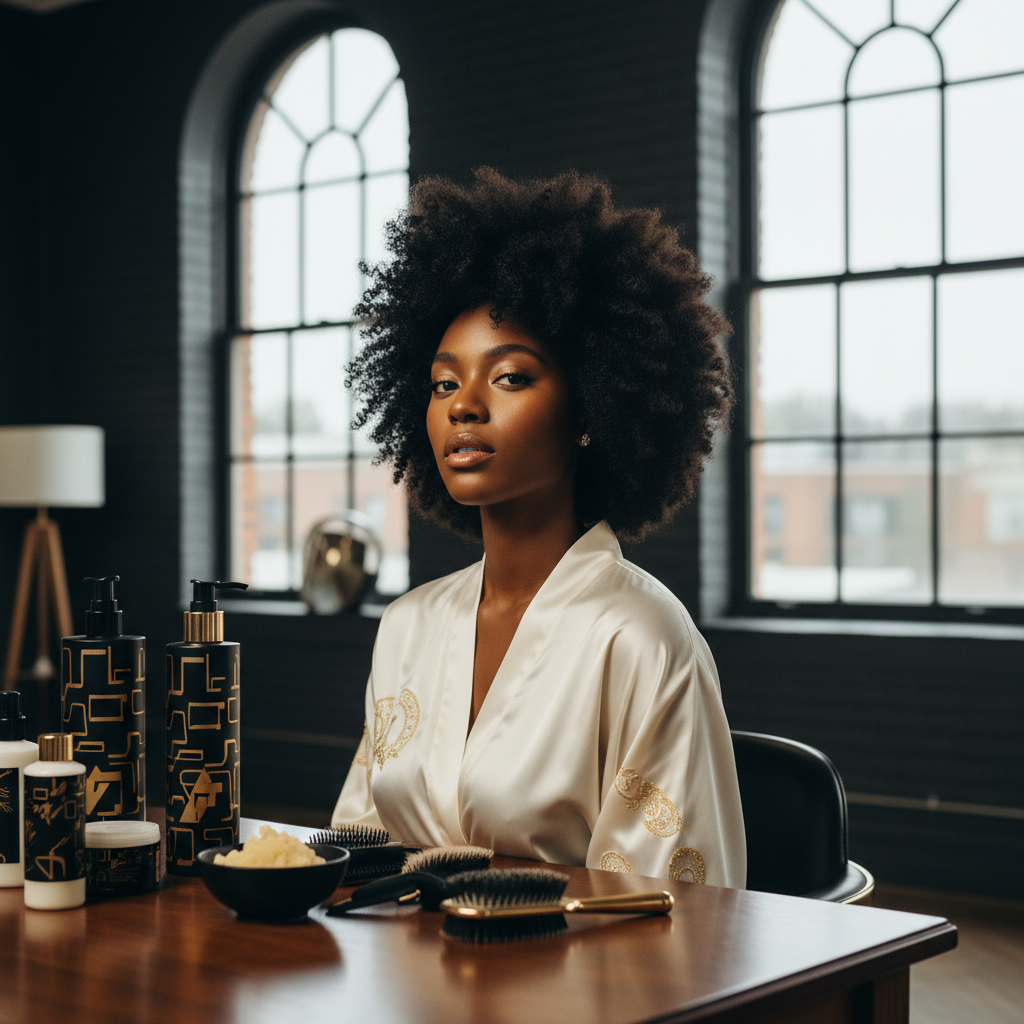
Quick answer: Afro Hair Care is a tailored regimen designed to maintain the health, hydration, and strength of Afro-textured hair, which is characterised by its unique coily structure. This care involves specific techniques for washing, conditioning, moisturising and styling to counteract its natural propensity for dryness and breakage. While good Afro Hair Care practices can significantly improve hair condition and appearance, they do not treat underlying medical conditions like alopecia or extreme hair shedding.
Key takeaways
- Afro-textured hair's unique structure makes it prone to dryness and breakage.
- Moisture retention is paramount, best achieved through regular deep conditioning and effective sealing methods.
- Gentle cleansing, such as co-washing or using sulfate-free shampoos, helps preserve natural oils.
- Protective styles can minimise manipulation and reduce mechanical damage.
- Understanding your hair's porosity guides product and technique choices.
- Consistent, gentle care is more important than product hopping for optimal Afro Hair Care.
Afro Hair Care: what the evidence shows
Afro-textured hair, also known as coily or kinky hair, is distinguished by its tight, helical (spiral) or zig-zag curl pattern. This unique morphology sets it apart from straight or wavy hair types. Structurally, Afro-textured hair often has an elliptical cross-section and fewer cuticle layers that are not as tightly packed as other hair types, which can contribute to its delicate nature. The points where the hair shaft bends in its coil are natural stress points, making the fibre more susceptible to mechanical damage and breakage.
One of the most significant characteristics influencing Afro Hair Care is the way natural scalp sebum travels down the hair shaft. Due to the numerous twists and turns of the coil, sebum often struggles to coat the entire length of the hair, leading to chronic dryness. This dryness, coupled with the hair's structural vulnerabilities, means Afro-textured hair is inherently more prone to breakage compared to other hair types, even though it may appear robust.
Effective Afro Hair Care focuses on countering these inherent characteristics by prioritising moisture, minimising mechanical stress, and protecting the hair fibre. Evidence supports that a regimen centred on gentle cleansing, deep conditioning, regular moisturising, and protective styling can significantly improve the strength, elasticity, and overall health of Afro-textured hair, leading to reduced breakage and a healthier appearance.
Understanding your hair's unique needs
Effective Afro Hair Care starts with understanding your specific hair type and its porosity. Hair porosity refers to how well your hair absorbs and retains moisture, and it's determined by the condition of the cuticle, the hair's outermost layer. Knowing your hair's porosity can help you choose the right products and techniques to ensure optimal hydration and minimise breakage.
- Low Porosity Hair: This hair type has tightly bound cuticles, which can make it difficult for moisture to penetrate. Once absorbed, however, moisture is well-retained. For low porosity hair, using lighter, liquid-based products and applying heat during deep conditioning (e.g., with a steamer or warm towel) can help open the cuticle and facilitate moisture absorption. Products that are too heavy can build up and weigh the hair down. Gently clarifying shampoo use is also beneficial (see 'How to Do a Clarifying Wash: A Guide to Deep Hair Cleansing').
- Normal Porosity Hair: This hair type has a balanced cuticle layer, allowing moisture to be absorbed and retained effectively. Normal porosity hair tends to be easier to manage and less prone to breakage. A consistent Afro Hair Care routine with a good balance of protein and moisture treatments works well.
- High Porosity Hair: This hair type has raised or damaged cuticles, which absorb moisture quickly but also lose it just as fast. This can be due to genetics or damage from chemical treatments (like colouring or relaxing), heat styling, or environmental factors. For high porosity hair, rich, creamy products, leave-in conditioners, and heavier oils are crucial for sealing in moisture. Regular protein treatments can also help to temporarily strengthen the cuticle and reduce moisture loss (see 'The Science of Conditioners: How Hair Care Formulations Work' and 'Hair Damage: Causes, Signs, and Solutions').
You can often gauge your hair's porosity by how quickly it dries or how products absorb. For instance, high porosity hair might dry very quickly after washing, while low porosity hair might take a long time.
Cleansing and conditioning for Afro Hair Care
Cleansing and conditioning are foundational steps in Afro Hair Care, aimed at removing product build-up and environmental impurities while preserving essential moisture. Due to the inherent dryness of Afro-textured hair, the approach to washing needs to be gentle and strategic.
Shampooing frequency and product choice
Traditional shampoos often contain strong detergents, such as sulphates, which can strip the hair of its natural oils, exacerbating dryness. For Afro-textured hair, frequent shampooing (more than once a week for many) can lead to significant dehydration and increased breakage. Most individuals find that shampooing every 1 to 2 weeks is sufficient, or even less frequently if they opt for co-washing between washes.
When you do shampoo, choose sulfate-free formulas (see 'Sulfate-Free Shampoo Benefits'). These types of cleansers are designed to remove impurities without harshly stripping the hair's natural lipid barrier. Look for shampoos that contain moisturising ingredients such as glycerin, aloe vera, and natural oils, which can help to hydrate the hair during the cleansing process. Refer to 'Choosing the Right Shampoo: A Comprehensive Guide to Hair Cleansing' for more details.
Co-washing: conditioning without the strip
Co-washing, or conditioner-only washing, is a popular alternative to traditional shampooing for Afro Hair Care. It involves using a cleansing conditioner to refresh the hair and scalp. This method is particularly beneficial for very dry hair or for those who prefer to cleanse more frequently without risking dehydration. Co-washing can be done 2 to 3 times a week, depending on individual hair needs and activity levels. This approach helps maintain moisture levels, softens the hair, and reduces tangling during the wash process.
The importance of deep conditioning
Deep conditioning is crucial for replenishing moisture, strengthening the hair fibre, and improving elasticity. These treatments, typically applied after cleansing and left on for 20 to 30 minutes (sometimes with gentle heat for enhanced penetration), often contain a blend of humectants, proteins, and emollients.
- Humectants (e.g., honey, glycerine, hyaluronic acid) attract and draw moisture from the air into the hair shaft (see 'Humectants: Understanding How They Hydrate and Protect Your Hair').
- Proteins (e.g., hydrolysed wheat protein, keratin) temporarily reinforce the hair's structure, helping to fill in gaps in the cuticle and reduce breakage. They can improve elasticity and strength (see 'Hydrolysed Wheat Protein: What It Is and How It Benefits Your Hair').
- Emollients (e.g., shea butter, argan oil, coconut oil) soften and smooth the hair cuticle, reducing frizz and adding shine.
Regular deep conditioning, ideally once a week, helps to improve the hair's overall condition, making it more manageable, resilient, and less prone to breakage. This is a cornerstone of effective Afro Hair Care.
Moisturising and sealing for optimal hydration
Moisture retention is paramount for Afro-textured hair. Due to its structure, natural sebum struggles to coat the hair shaft fully, making external moisturisation essential. The goal is to provide hydration and then seal it into the hair fibre to prevent rapid moisture loss.
The LOC/LCO method
The Liquid, Oil, Cream (LOC) or Liquid, Cream, Oil (LCO) methods are popular layering techniques designed to maximise and retain moisture. The choice between LOC and LCO often depends on individual hair porosity, product preferences, and environmental humidity. Some find LCO more effective for high porosity hair, as the cream may provide a better initial seal before the oil.
- Liquid (L): This first step provides the initial layer of hydration. It can be water, a water-based leave-in conditioner, or a hydrating mist. Water is the most effective humectant, directly providing moisture. (See 'How to Moisturise Afro Hair: A Guide to Hydration and Retention').
- Oil (O): Applied after the liquid (LOC) or cream (LCO), the oil acts as a sealant. It creates a hydrophobic barrier that helps to prevent the rapid evaporation of the water and other hydrators from the hair shaft. Lightweight oils like jojoba, grapeseed, or almond oil are often preferred, but heavier oils such as castor oil or olive oil can be beneficial for thicker hair or for specific sealing needs. Oils also add shine and reduce friction.
- Cream (C): A rich, creamy product, such as a styler or a moisturising butter, provides another layer of moisture and further aids in sealing. Creams often contain a blend of emollients and humectants, offering softness, definition, and extended hydration.
Preventing dryness and breakage
Beyond the LOC/LCO method, several practices contribute to preventing dryness and breakage:
- Protective Styling: Styles like braids, twists, buns, or cornrows minimise manipulation and exposure to environmental stressors, reducing breakage. Ensure these styles are not too tight, as excessive tension can lead to traction alopecia (see 'Protective Styling: A Comprehensive Guide').
- Night Protection: Sleeping on a satin or silk pillowcase, or using a satin bonnet or scarf, reduces friction between your hair and bedding, thereby preventing moisture loss and breakage that can occur with cotton.
- Gentle Detangling: Always detangle Afro-textured hair when it is damp and lubricated with conditioner or a leave-in. Use your fingers or a wide-tooth comb, working from the ends upwards to minimise stress on the hair. (See 'How to Detangle Afro Hair Without Breakage: An Evidence-Based Guide').
- Avoid Excessive Heat: High heat styling can strip moisture and damage the hair cuticle, leading to breakage. If heat is used, always apply a heat protectant and use the lowest effective temperature (see 'Heat Styling Safety Best Practices').
When the cause may be something else
While proper Afro Hair Care is crucial for maintaining hair health, some concerns may stem from underlying issues beyond cosmetic care. It's important to distinguish between typical cosmetic concerns (dryness, breakage, frizz) and signs that might indicate a medical condition.
For example, sudden or excessive hair shedding (telogen effluvium) may be linked to stress, nutritional deficiencies, hormonal changes, or certain medications. Hair loss, particularly if it presents as receding hairlines, thinning patches, or scarring, could indicate conditions like traction alopecia, central centrifugal cicatricial alopecia (CCCA), or other forms of follicular alopecia. These conditions require diagnosis and treatment by a medical professional, such as a dermatologist.
Table: Differentiating Common Hair Concerns in Afro-Textured Hair
| Concern | Description | Primary Cause | What to Look For | When to Seek Professional Advice |
|---|---|---|---|---|
| Dryness | Hair feels rough, lacks shine, and is brittle. | Inherent hair structure, insufficient moisture, product choice | Dull, stiff hair; difficulty retaining moisture | Persistent dryness despite consistent moisturising regimen |
| Breakage | Hair strands snap along the shaft; split ends, short pieces of hair. | Mechanical stress, chemical damage, dryness, lack of elasticity | Hair fragments on clothing/brush; uneven hair length | Excessive breakage not reduced by improved cosmetic care |
| Shedding | Normal hair cycle (25-100 hairs/day) or excessive shedding from the root. | Hair cycle, stress, diet, hormones, medication | Hair with a small white bulb at the root; diffuse thinning | Sudden, significant increase in shedding; patches of noticeable thinning |
| Hair Loss | Reduction in hair density, patches of baldness, receding hairline; follicular damage. | Genetics, autoimmune conditions, trauma, traction, CCCA | Patches of thinning or baldness; inflammation; scalp changes | Any persistent, localised, or progressive hair loss; scalp pain |
If you observe signs of persistent scalp irritation, inflammation, itching, significant hair thinning, or unusual patterns of hair loss despite diligently following good Afro Hair Care practices, it is advisable to consult a dermatologist. They can provide an accurate diagnosis and recommend appropriate medical treatment. Early intervention can be crucial for managing certain conditions and preserving hair health.
Frequently asked questions about Afro Hair Care
How often should I wash my Afro-textured hair?
For most, washing every 1 to 2 weeks with a sulfate-free shampoo is sufficient to cleanse without stripping natural oils. If your hair feels dry or you're co-washing, you might cleanse more frequently. Listen to your hair's needs and adjust. Consistent gentle cleansing is a key part of Afro Hair Care.
Can protein treatments help with breakage?
Yes, protein treatments can temporarily strengthen the hair shaft and reduce breakage, especially for high porosity or chemically treated hair. They work by filling in gaps in the cuticle layer. However, too much protein without adequate moisture can lead to stiffness and further breakage, so balance is key.
What are the best ingredients to look for in Afro Hair Care products?
Look for humectants like glycerin and hyaluronic acid for moisture, emollients like shea butter and natural oils (e.g., argan, jojoba) for softness and sealing, and mild cleansers. Avoid harsh sulfates, parabens, and excessive alcohol, which can cause dryness.
Is heat styling completely off-limits for Afro-textured hair?
No, but it should be minimised and approached with caution. High heat can lead to irreversible damage. If you must use heat, always apply a heat protectant, use the lowest effective temperature, and ensure hair is thoroughly dry before styling to prevent
Find these ingredients in Watermans products
- Argan Oil: you will find this ingredient in our Hair Growth Shampoo.
- Castor Oil: you will find this ingredient in our Camellia & Black Castor Hair & Body Oil.
- Aloe Vera: you will find this ingredient in our Curly Hair Conditioner.