Understanding Shampoo pH: The Definitive Science Guide
9 min read ·
Understanding Shampoo pH reveals how acidic formulas protect the hair cuticle, maintain the scalp mantle, and reduce breakage for healthier, smoother hair.
Quick answer: Understanding Shampoo pH is essential for protecting the hair cuticle and maintaining a balanced scalp microbiome. Healthy hair fibre has an isoelectric point around pH 3.67, while the scalp surface maintains an acidic mantle between pH 4.5 and 5.5. Cleansers formulated outside this range, particularly alkaline formulas above pH 7.0, cause cuticular swelling, friction, and breakage. However, pH alone does not determine product performance; surfactant selection and conditioning agents also dictate how gently a formula cleanses.
Key takeaways
- The scalp surface is naturally acidic, sitting between pH 4.5 and 5.5, which helps suppress pathogenic bacteria and fungi.
- The hair shaft fibre possesses an isoelectric point near pH 3.67, meaning acidic conditions keep the outer cuticle compact and flat.
- Alkaline shampoos with a pH above 7.0 increase the negative electrical charge on hair, lifting the cuticle scales and generating friction that leads to breakage.
- An acidic shampoo cannot reverse genetic hair loss or cure follicular conditions, but it significantly reduces mechanical damage, colour fading, and tangling.
- Shampoos formulated in the pH range of 4.5 to 5.5 best preserve both cuticle integrity and scalp barrier health.
Understanding Shampoo pH: what the evidence shows
Understanding Shampoo pH begins with recognising that cosmetic formulations interact directly with two distinct biological structures: living scalp skin and dead keratinised hair fibre. Dermatological research consistently demonstrates that the physiological surface of human scalp skin is slightly acidic, generally measuring between pH 4.5 and 5.5. This natural acidity, often called the acid mantle, is maintained by sebum, sweat, and cellular breakdown products. It regulates microflora and protects against opportunistic pathogens like Staphylococcus aureus.
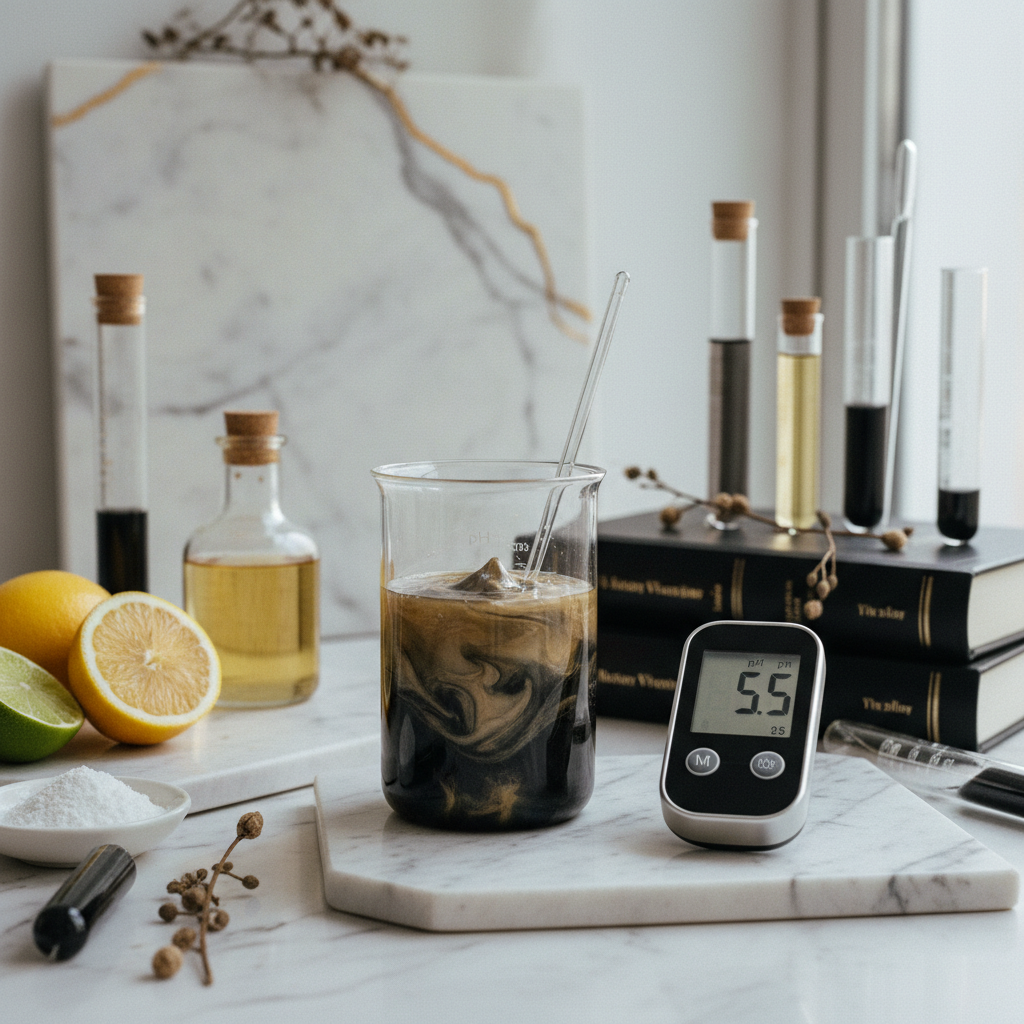
In contrast, the hair shaft does not produce its own sebum or regulate its environment. The hair fibre's isoelectric point is approximately pH 3.67. At this value, the positive and negative electrical charges across the keratin structure are balanced. When hair encounters cleansers with a pH higher than its isoelectric point, the net negative charge of the fibre increases.
Independent laboratory analyses, notably a widely cited 2014 study published in the International Journal of Trichology, evaluated over one hundred commercial shampoos. The researchers discovered that only 38 percent of popular shampoos had a pH of 5.5 or lower, while more than 60 percent exhibited alkaline values ranging up to pH 9.0. Professional salon products scored significantly better, with roughly 75 percent maintaining an acidic profile. The evidence shows that alkaline formulations provoke cuticle swelling, which increases wet combing friction and leaves the hair cortex vulnerable to environmental and physical damage.
| Formula Type | Typical pH Range | Cuticle Response | Scalp Barrier Impact | Ideal Use Case |
|---|---|---|---|---|
| Acidic Shampoo | 4.0 to 5.5 | Tight, smooth, closed | Preserves acid mantle, reduces dryness | Daily cleansing, colour-treated hair, bleached hair |
| Neutral Shampoo | 6.0 to 7.0 | Mild swelling | Minimal disruption to resilient skin | Standard cleansing for virgin, untreated hair |
| Alkaline Shampoo | 7.5 to 9.0 | Heavy swelling, lifted scales | Strips barrier lipids, increases trans-epidermal water loss | Clarifying treatments, chemical prep (perms, relaxers) |
| Pure Water (Tap) | 6.5 to 8.5 | Slight swelling over time | Neutral to mild drying depending on mineral hardness | Rinsing stages |
The physical mechanism: how pH alters the hair fibre
The outer protective layer of each hair strand consists of six to ten overlapping layers of dead, flattened cuticle cells. These cells act like roof shingles, shielding the delicate, fibrous cortex inside. The integrity of these shingles depends heavily on the electrical charge of the fibre.
When exposed to an alkaline environment, water molecules penetrate the outer lipid layer (the 18-methyleicosanoic acid layer) more rapidly. The high pH introduces negative charges that repel one another across the protein structure. This repulsion forces the keratin matrix to swell, prying the cuticle shingles away from the shaft.
Lifted cuticle scales dramatically increase surface roughness. When you wash your hair, strands glide past one another; if the cuticles are flared, they interlock like teeth on a zipper. This produces severe mechanical friction during rinsing, detangling, and drying. Repeated cycles of cuticular swelling and harsh friction lead to surface abrasion, split ends, and fibre breakage along the shaft.
Conversely, acidic cleansers lying between pH 4.0 and 5.5 neutralise excess negative charges. This prevents fibre swelling, keeps the cuticle flat and smooth, and allows light to reflect evenly, creating natural shine while preventing unnecessary breakage.
What the evidence does not show
While pH plays a defining role in cosmetic fibre health, clear boundaries exist regarding what it can achieve:
- It does not treat follicular hair loss: Shampoo pH has no direct therapeutic effect on androgenetic alopecia, alopecia areata, or telogen effluvium. These conditions originate deep within the dermal papilla beneath the scalp surface, beyond the reach of topical surface pH.
- It is not the sole cause of scalp irritation: A product with an ideal pH of 5.0 can still irritate the skin if it contains aggressive surfactants, excessive fragrance, or sensitising preservatives.
- Acidity alone cannot repair structural cortex voids: An acidic rinse tightens the cuticle, but it cannot re-bond severed disulphide bonds within the cortex that have been destroyed by bleaching or thermal damage.
Signs that your shampoo pH is incorrect
Using a shampoo with an unsuitable pH level creates observable physical symptoms across both your hair fibre and scalp. Identifying these signs early prevents long-term fibre degradation.
Symptoms of an alkaline shampoo
- Hair feels excessively rough, "squeaky", or straw-like immediately after rinsing.
- Extreme tangling and knotting that requires heavy conditioner to tease apart.
- A sudden increase in fibre snapping and breakage during wet brushing.
- Premature fading of cosmetic hair dye, as open cuticles allow pigment molecules to wash out quickly.
- Scalp tightness, persistent itching, or flaking caused by a disrupted acid mantle and accelerated trans-epidermal water loss.
Symptoms of an overly acidic shampoo
Formulations dropping below pH 3.5 are rare in cleansing products, but prolonged contact with extreme acidity can lead to problems:
- Fibre brittleness due to protein contraction.
- Scalp stinging, redness, or burning sensations, particularly if you have active dermatitis, eczema, or abrasions.
What you can do to manage product pH
Achieving an optimal wash routine requires thoughtful product selection and washing practices. You do not need a chemistry laboratory at home to protect your hair fibre.
First, check manufacturer information. Transparent brands frequently state their formulation pH directly on the bottle or technical specification sheets. Aim for daily shampoos that state a balanced pH between 4.5 and 5.5.
Second, adjust your washing technique. Minimise intense friction while your hair is saturated with water. Gently press lather through your lengths rather than rubbing them vigorously. Because tap water itself usually sits between pH 6.5 and 8.5, hair naturally swells slightly during washing; an acidic shampoo helps mitigate this environmental shift.
Third, always follow with an acidic conditioner. Conditioners and post-wash treatments are nearly always formulated between pH 3.5 and 4.5. This final step guarantees that cuticles flatten securely after the cleansing stage, sealing in surface moisture and lowering friction before you comb or dry your hair.
When the cause may be something else
If your hair remains brittle, unmanageable, or dull despite switching to a pH-balanced cleanser, the root cause may lie elsewhere:
- Hard water mineral buildup: High concentrations of calcium and magnesium ions in domestic tap water bind to hair proteins, mimicking the rough, tangled texture of alkaline exposure.
- Thermal and chemical degradation: Frequent use of straightening irons above 185°C or repetitive chemical bleaching strips the outer cuticle completely, leaving nothing for an acidic formula to smooth down.
- Internal health and nutrient imbalances: Systemic conditions, thyroid irregularities, or low iron stores affect the hair matrix during formation, producing weaker fibres prone to snapping regardless of topically applied products.
When to seek professional advice
Consult a registered trichologist or a consultant dermatologist if you experience burning, severe erythema, weeping sores, or sudden circular patches of shedding. Shampoos, regardless of their pH, are topical cosmetic cleansers. They are not formulated to treat medical skin disorders such as seborrhoeic dermatitis, scalp psoriasis, or follicular scarring. If your primary concern is hair shedding from the root rather than snapping along the shaft, medical investigation is necessary.
The Watermans approach to balanced haircare
Formulating effective hair products requires strict attention to the scalp's delicate biological parameters. Watermans shampoos and conditioners are deliberately formulated within the skin's natural acidic range (pH 4.5 to 5.5). By pairing gentle, non-stripping surfactants with an acidic profile, these formulations keep the hair cuticle lying flat while respecting the scalp's moisture barrier. This balanced pH design reduces mechanical breakage, protects natural and coloured pigments, and creates an optimal environment for fuller-looking, stronger-feeling hair.
Frequently asked questions about Understanding Shampoo pH
Why is understanding shampoo pH so important for coloured hair?
Understanding Shampoo pH is critical for colour-treated hair because artificial colour molecules reside within the hair cortex. An alkaline shampoo swells the hair shaft and lifts the cuticle scales, allowing those large colour pigments to escape into the rinse water. Choosing a shampoo balanced between pH 4.5 and 5.5 keeps the cuticle tightly closed, locking in colour and extending the life of your salon treatment.
Does a lower pH shampoo completely stop hair loss?
No. While understanding shampoo pH helps you protect the external hair fibre from snapping, it does not stop follicular hair loss such as genetic thinning. The hair follicle is situated deep within the dermis, where topical wash-off products do not alter genetic or hormonal pathways. A low pH shampoo reduces mechanical hair breakage, which keeps your hair looking thicker, but it does not treat medical alopecia.
Can tap water neutralise the benefits of a low pH shampoo?
Tap water usually has an alkaline pH between 6.5 and 8.5, which causes mild hair swelling on its own. However, a properly formulated low-pH shampoo temporarily lowers the surface environment during washing. Following your shampoo with an acidic conditioner (typically pH 3.5 to 4.5) ensures that the cuticle scales contract and flatten, even after exposure to alkaline tap water.
What is the ideal pH level for everyday shampoo?
The ideal pH for an everyday shampoo ranges between 4.5 and 5.5. This target matches the natural acidity of the scalp's protective mantle and sits close to the hair fibre's isoelectric point (pH 3.67). Formulations in this bracket clean away dirt and excess sebum without causing cuticle disruption, friction, or skin barrier irritation.
Summary
Gaining clarity by understanding shampoo pH transforms how you manage your hair's long-term health and structural resilience. The biological reality is straightforward: human hair fibre and the human scalp thrive in an acidic environment. Avoiding alkaline cleansers prevents unnecessary cuticle friction, colour wash-out, and shaft breakage. By choosing cleansers that respect the natural pH range of 4.5 to 5.5, you safeguard your scalp barrier and ensure your hair fibre remains smooth, shiny, and protected against everyday styling stresses.
Sources and references
- Gavazzoni Dias, M. F., et al. (2014). "The Shampoo pH can Affect the Hair: Myth or Reality?" International Journal of Trichology, 6(3), pp. 95 to 99.
- Ali, S. M., and Yosipovitch, G. (2013). "Skin pH: From Basic Science to Basic Skin Care." Acta Dermato-Venereologica, 93(3), pp. 261 to 267.
- Robbins, C. R. (2012). Chemical and Physical Behavior of Human Hair. 5th ed. Springer-Verlag.
- British Association of Dermatologists. (2022). "Hair breakage and cosmetic hair damage." Dermatology Guidelines.