Type 4 Hair Breakage Prevention: Evidence, Mechanics, and Care
8 min read ·
Master Type 4 Hair Breakage Prevention with evidence-based techniques to protect delicate coils, reduce mechanical friction, and improve length retention.
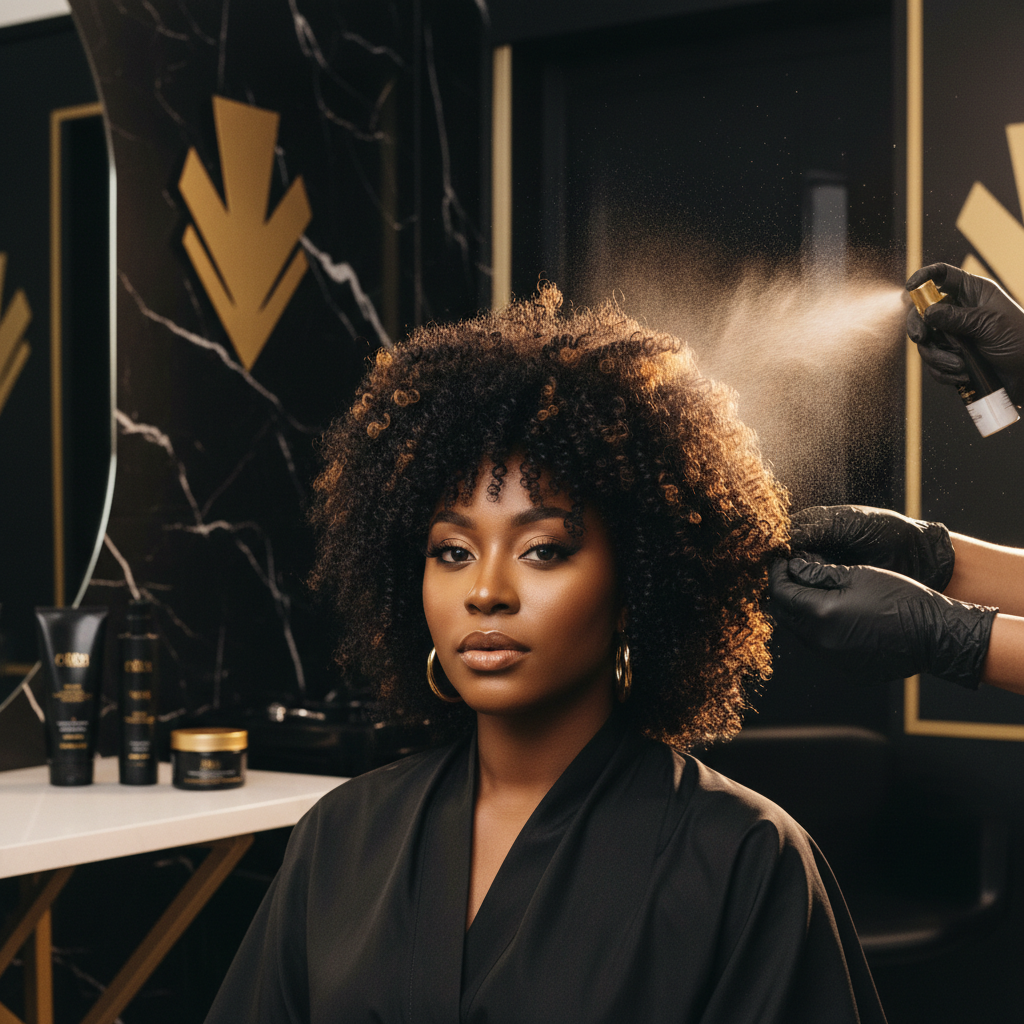
Quick answer: Effective Type 4 Hair Breakage Prevention relies on understanding the unique geometry of afro-textured coils. Type 4 hair features elliptical cross-sections and sharp curl turns that create natural points of structural weakness along the shaft. Successful Type 4 Hair Breakage Prevention requires minimising friction, detangling strictly when lubricated, maintaining a strict moisture-protein equilibrium, and limiting high-tension styling. The main limitation is that topical products cannot permanently repair fractured keratin bonds; prevention focuses on protecting the existing fibre from physical, chemical, and environmental stress.
Key takeaways
- Type 4 hair fibres have an elliptical, flat cross-section with frequent curvature variations that act as natural stress concentration points.
- Hair breakage is purely structural fibre fracture along the shaft; it is entirely distinct from follicle-level hair shedding (telogen effluvium) or alopecia.
- Detangling dry Type 4 hair generates severe mechanical stress; lubrication with water, conditioners (pH 4.5 to 5.5), and plant oils significantly lowers the required friction force.
- Low-manipulation routines and silk or satin barriers prevent cuticle erosion caused by rough cotton fibres.
- High-tension protective styles, excessive heat above 180°C, and chemical relaxers drastically reduce tensile strength and accelerate snapping.
Type 4 Hair Breakage Prevention: what the evidence shows
Scientific research into afro-textured hair demonstrates that Type 4 fibres possess distinct geometric and biomechanical characteristics. Studies published in the Journal of Investigative Dermatology and the International Journal of Cosmetic Science confirm that afro-textured hair fibres exhibit varying diameters along a single strand. At each sharp turn or twist of the coil, the cuticle layer is naturally thinner, creating structural focal points where mechanical strain gathers.

When you comb, brush, or manipulate dry Type 4 hair, the force required to move past tangles exceeds the tensile limit of these narrow points, causing the cuticle to chip and the cortex to snap. Consequently, evidence-based Type 4 Hair Breakage Prevention focuses on physical stress reduction rather than attempting to fundamentally alter hair biology. Clinical evaluations show that applying cationic surfactants (found in quality rinse-out and leave-in conditioners) neutralises the hair fibre's negative surface charge, smoothing the cuticle scales and reducing wet combing force by more than 50 percent.
The mechanical and biochemical mechanisms of breakage
To protect tightly coiled hair, you must look at what happens under the microscope. Three primary mechanisms drive fibre failure in Type 4 strands:
- Geometry and Stress Distribution: Straight hair has an almost circular cross-section, which distributes pulling tension evenly. Type 4 hair has an elliptical, ribbon-like cross-section. Every twist along the coil behaves like a kink in a hose. When tension is applied, force concentrates at the inner curvature of that twist rather than distributing across the entire strand.
- Cuticle Weathering and Friction: The cuticle consists of overlapping keratin scales that shield the cortex. Type 4 hair has fewer cuticle layers at the crimp folds. Cotton pillowcases, wool collars, and aggressive towel drying strip away these outer layers, exposing the cortex to rapid moisture loss and splitting.
- Tensile Fatigue and Moisture Cycles: Hair is hygroscopic. It absorbs water from the air, expanding the shaft, and contracts as it dries (hygral fatigue). Repeated rapid swelling and shrinking weakens the internal hydrogen and salt bonds of the cortex. Without sealing agents like lipids or butters to slow water evaporation, the fibre becomes brittle and fractures easily.
Breakage versus shedding: identifying the signs
It is critical to distinguish between broken fragments and natural shedding, as their causes and interventions differ entirely.
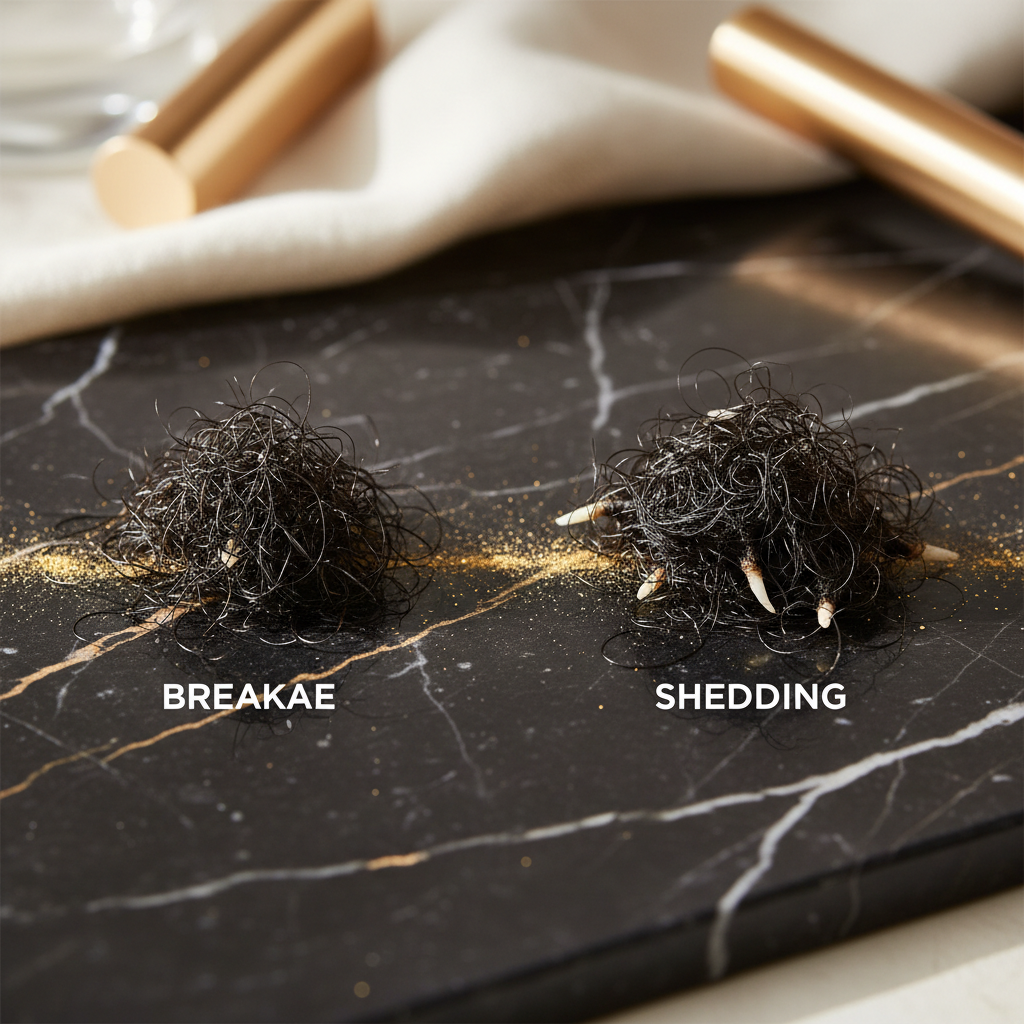
- Hair Breakage: Short, uneven pieces of hair without a white bulb at the end. You will often see these fragments in your sink, on your clothes, or on your shoulders after styling. The ends may feel rough, split, or feature tiny white dots (trichorrhexis nodosa).
- Hair Shedding: Full-length strands that match your current hair length, featuring a small white keratin bulb at the root end. Normal shedding ranges from 50 to 100 strands per day as part of the natural telogen phase.
| Feature | Hair Breakage (Fibre Fracture) | Hair Shedding (Telogen Phase) |
|---|---|---|
| Visible Root Bulb | Absent | Present (white/translucent bulb) |
| Strand Length | Short, uneven fragments | Full length of the hair strand |
| Primary Cause | Mechanical, thermal, or chemical damage | Follicular cycle, stress, hormonal shifts |
| Fibre Texture | Rough, dry, frayed ends | Intact, tapered root |
| Target Treatment | Lubrication, protective styling, gentle handling | Scalp care, addressing internal biology |
Practical strategies for Type 4 Hair Breakage Prevention
Minimising mechanical and environmental strain preserves the integrity of delicate coils. Implement these evidence-based techniques:
Lubricated finger-detangling
Never detangle dry Type 4 hair. Thoroughly saturate the hair with warm water and apply a slippery, acidic conditioner (pH 4.5 to 5.5). Work through the hair in small sections using your fingers first to separate knots, followed by a flexible, wide-tooth detangling tool. Always start at the tips and work gradually up to the roots.
Moisture retention and sealing
Type 4 hair requires water to maintain elasticity, but that water evaporates quickly due to elevated cuticle porosity. Use the Liquid-Oil-Cream (LOC) or Liquid-Cream-Oil (LCO) method. Start with a water-based leave-in conditioner, follow with a natural plant oil to coat the shaft, and finish with a richer lipid butter (such as shea butter) to form a barrier against ambient moisture loss.
Protective styling without excessive tension
Braids, twists, and cornrows reduce daily manipulation. However, if the style pulls tightly on the scalp or strains individual follicles, it will cause traction alopecia at the roots and mid-shaft snapping. Ensure edges remain loose, do not leave styles installed for longer than 6 to 8 weeks, and keep your natural hair moisturised while styled.
Friction-free sleeping environments
Cotton fabrics absorb moisture and pull at delicate curls. Sleep on a pure silk or high-grade satin pillowcase, or wrap your hair in a satin bonnet. This preserves natural and applied oils and prevents friction-induced cuticle tearing overnight.
What the evidence does not show
There is no scientific proof that cosmetic hair products can fuse split ends back together permanently. While conditioning polymers can temporarily glue fractured cuticles together until your next wash, the only permanent cure for split ends is trimming.
Furthermore, products marketed for rapid hair growth do not stop fibre snapping along the shaft. Biotin supplements, for instance, do not prevent mechanical breakage in individuals who do not have a diagnosed biotin deficiency. Breakage is an external, physical issue requiring gentler handling and better fibre protection, not an internal metabolic failure.
When breakage indicates a deeper issue
If your hair snaps despite gentle handling, minimal heat, and adequate moisturisation, examine potential systemic or chemical factors. Over-processing from ammonium thioglycolate or sodium hydroxide relaxers permanently degrades the cystine bonds inside the cortex, leaving the strand fragile.
In other cases, chronic severe shedding can mimic breakage by leaving the ends sparse and vulnerable. Severe protein deficiencies, iron deficiency anaemia, and thyroid disorders compromise the structural strength of new keratin fibres before they even emerge from the scalp. If you notice diffuse thinning across your scalp alongside snapping, consult a qualified trichologist or dermatologist for a full clinical assessment.
Supporting your regimen with Watermans
A complete haircare routine addresses both the health of the scalp where the fibre emerges and the condition of the exposed hair shaft. For supporting overall hair vitality, Watermans Grow Me Shampoo provides a gentle, nutrient-rich cleansing base free from harsh sulphate detergents that strip natural sebum. Paired with a deeply hydrating, lipid-rich conditioning routine, maintaining a healthy, balanced scalp environment ensures that new growth starts with optimal resilience.
Frequently asked questions about Type 4 Hair Breakage Prevention
How often should I trim my hair to stop breakage?
Trimming every 10 to 12 weeks is generally ideal for Type 4 hair. Trimming removes frayed ends before they split further up the shaft. If you regularly use heat or protective extensions, monitor your ends monthly and trim as soon as you notice persistent tangling or split ends.
Does protective styling always prevent Type 4 hair breakage?
Protective styles only prevent breakage if they are installed with moderate tension and taken down carefully. Heavy extensions, tight braided edges, and leaving styles in past 8 weeks cause severe tangling, matting, and breakage during the removal process.
Why does dry Type 4 hair break so easily when combed?
Dry Type 4 hair has low elasticity and a high coefficient of friction. When a comb hits a tangle in dry hair, the force cannot disperse along the coiled, elliptical shaft. The tension exceeds the structural strength of the cortex, snapping the strand at its weakest turn.
What is the best detangling tool for Type 4 Hair Breakage Prevention?
For optimal Type 4 Hair Breakage Prevention, start with your own fingers, as they allow you to feel and untangle knots without snapping them. Follow with a wide-tooth comb or a brush that features flexible, widely spaced silicone bristles that yield when encountering resistance.
Can protein treatments stop hair snapping completely?
Protein treatments temporarily fill structural gaps in a weathered cuticle, reinforcing the hair fibre. However, they do not stop breakage permanently. Using too much protein without balanced moisture makes Type 4 hair rigid and brittle, increasing the risk of snapping.
Supporting your routine for long-term retention
Achieving long-term length retention comes down to daily, protective habits. Successful Type 4 Hair Breakage Prevention is not about buying miracle products; it is about respecting the unique physics of tightly coiled strands. By prioritising lubricated manipulation, minimising high heat, balancing moisture and protein, and choosing low-tension styles, you preserve your hair fibre's structural integrity so your coils can thrive.
Sources and references
- British Association of Dermatologists. Guidelines on hair loss and structural hair disorders.
- International Journal of Cosmetic Science. Biomechanical properties of human hair: tensile strength and geometric variations across ethnic groups.
- Journal of Investigative Dermatology. Comparative structural analysis of human hair shafts: curvature, cross-sectional geometry, and mechanical resilience.
- Robbins, C. R. Chemical and Physical Behavior of Human Hair. Springer-Verlag.
- Journal of the American Academy of Dermatology. Traction alopecia and grooming practices in afro-textured hair.
Find these ingredients in Watermans products
- Biotin: you will find this ingredient in our Hair Growth Shampoo.
- Shea Butter: you will find this ingredient in our Curly Hair Conditioner.