Telogen Effluvium Hair Shedding: Causes, Mechanisms, and Recovery
10 min read ·
A clear guide to Telogen Effluvium Hair Shedding: explore underlying causes, the biological hair cycle, common triggers, diagnosis, and evidence-based recovery timelines.

Quick answer: Telogen Effluvium Hair Shedding is a temporary, non-scarring condition characterised by widespread, excessive shedding of resting hairs from the scalp. It occurs when a physiological or emotional stressor abruptly pushes large numbers of growing follicles into the resting (telogen) phase simultaneously, resulting in noticeable shedding roughly two to three months later. While the daily loss can be alarming, the condition does not destroy hair follicles. The primary limitation is that topical products cannot instantly stop the shedding cycle once triggered; recovery depends on removing the underlying trigger and allowing the natural hair cycle to reset.
Key takeaways
- Telogen Effluvium Hair Shedding involves diffuse shedding across the entire scalp rather than patchy bald spots or scarring.
- Shedding typically starts two to three months after the triggering event, due to the natural duration of the hair cycle's catagen and telogen phases.
- Healthy individuals lose 50 to 100 hairs daily, but acute telogen effluvium can increase this number to 300 or more hairs per day.
- Common triggers include acute febrile illness, major surgery, severe psychological stress, rapid weight loss, hormonal shifts (such as postpartum), and nutritional deficiencies.
- The condition is self-limiting in its acute form, usually resolving within three to six months once the primary trigger is addressed.
- Chronic telogen effluvium lasts longer than six months and requires comprehensive medical evaluation to identify subtle underlying metabolic or systemic factors.
Telogen Effluvium Hair Shedding: what the evidence shows
Telogen Effluvium Hair Shedding is one of the most common causes of acute diffuse hair shedding seen in dermatological clinics. Research published in clinical dermatology journals confirms that the human scalp contains approximately 100,000 hair follicles, with 85% to 90% actively growing in the anagen phase at any given moment. Roughly 10% to 15% reside in the resting telogen phase.
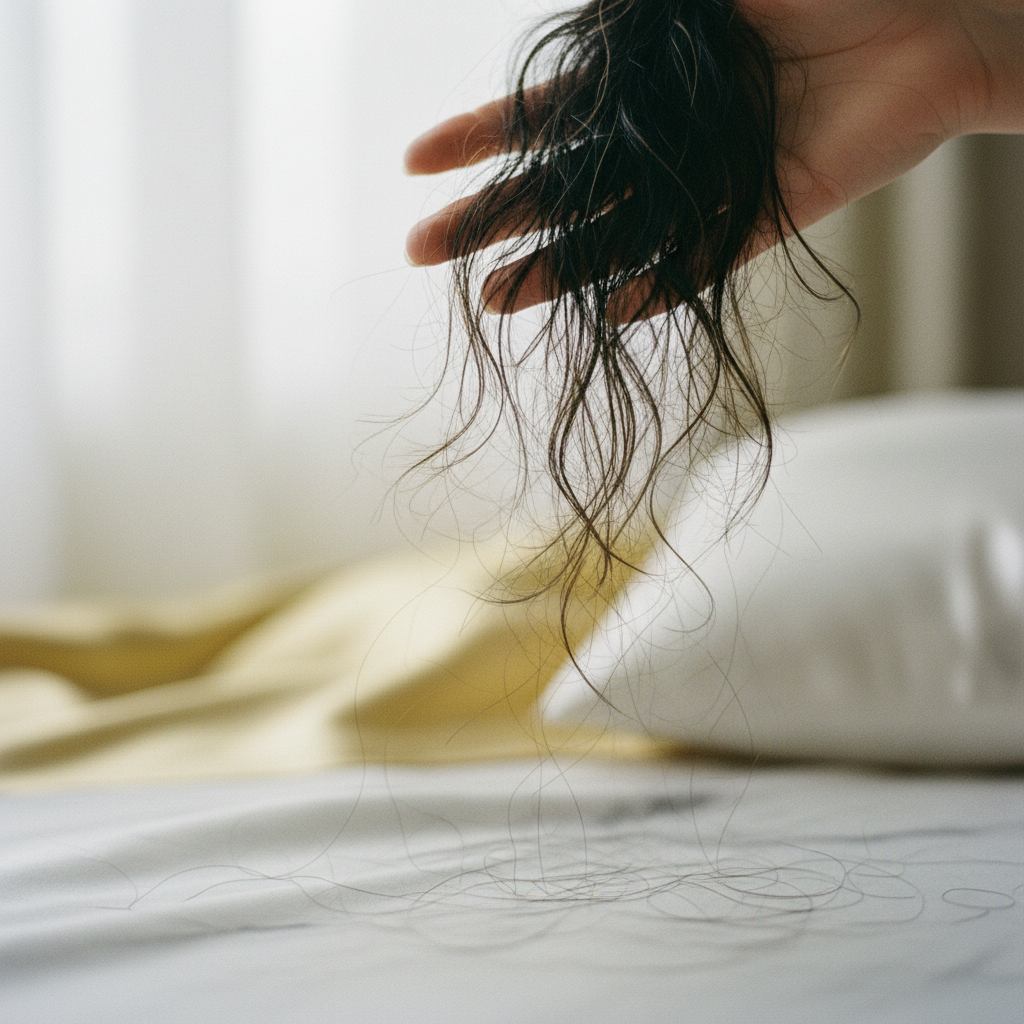
When a substantial systemic shock occurs, up to 30% to 50% of anagen follicles can prematurely arrest their growth cycle. They transition through the brief catagen phase and enter telogen. Because the telogen phase naturally lasts approximately 100 days (around three months) before the hair club is ejected from the follicle base, the shed occurs long after the initial insult has passed. Patients often struggle to connect the sudden hair shedding to an illness or stressful event that occurred months earlier.
Clinical studies demonstrate that shed hairs in telogen effluvium are telogen club hairs. These hairs display a tiny, non-pigmented keratin bulb at the proximal tip, without an epithelial sheath. The absence of miniaturised hairs or follicular destruction separates this condition fundamentally from pattern hair loss and scarring alopecias.
What the evidence does not show
Clinical research does not support several persistent myths surrounding telogen effluvium. First, evidence shows that telogen effluvium does not cause complete, permanent baldness. Because follicular stem cells remain viable in the hair bulge, the follicle retains its capacity to generate a new hair fibre once the resting phase completes.
Second, topical cosmetics, oils, or stimulating shampoos do not instantly arrest active telogen shedding. Once a follicle enters the telogen phase, biological ejection of that fibre is inevitable. Cosmetic products can support scalp hygiene, reduce fibre breakage, and improve the tactile density of existing hair, but they do not reverse follicular cellular signals that were locked in months prior.
Finally, evidence does not show that frequent washing worsens telogen effluvium. Washing simply dislodges hairs that have already detached from the dermal papilla and are resting loosely within the follicular canal. Avoiding shampooing merely causes these detached hairs to accumulate, leading to heavier, more distressing shedding during the next wash.
| Characteristic | Telogen Effluvium | Androgenetic Alopecia | Alopecia Areata |
|---|---|---|---|
| Primary Mechanism | Premature shift from anagen to telogen | Progressive follicular miniaturisation via DHT | Autoimmune attack on active anagen bulbs |
| Shedding Pattern | Diffuse across the entire scalp | Gradual thinning at crown, temples, or parting line | Distinct, well-demarcated circular bald patches |
| Hair Fibre Anatomy | Telogen club hairs with white proximal bulb | Progressively finer, shorter miniaturised fibres | Dystrophic anagen hairs, "exclamation mark" hairs |
| Onset Speed | Rapid onset 2 to 3 months after a trigger | Slow, insidious progression over years | Rapid, unpredictable appearance of smooth patches |
| Reversibility | High; spontaneous regrowth common | Requires long-term ongoing medical management | Variable; spontaneous regrowth or relapsing cycles |
Mechanisms and clinical phases of hair shedding
To understand why shedding occurs so suddenly, you have to look at the follicular cycle. Hair production is cyclical, consisting of three main phases:
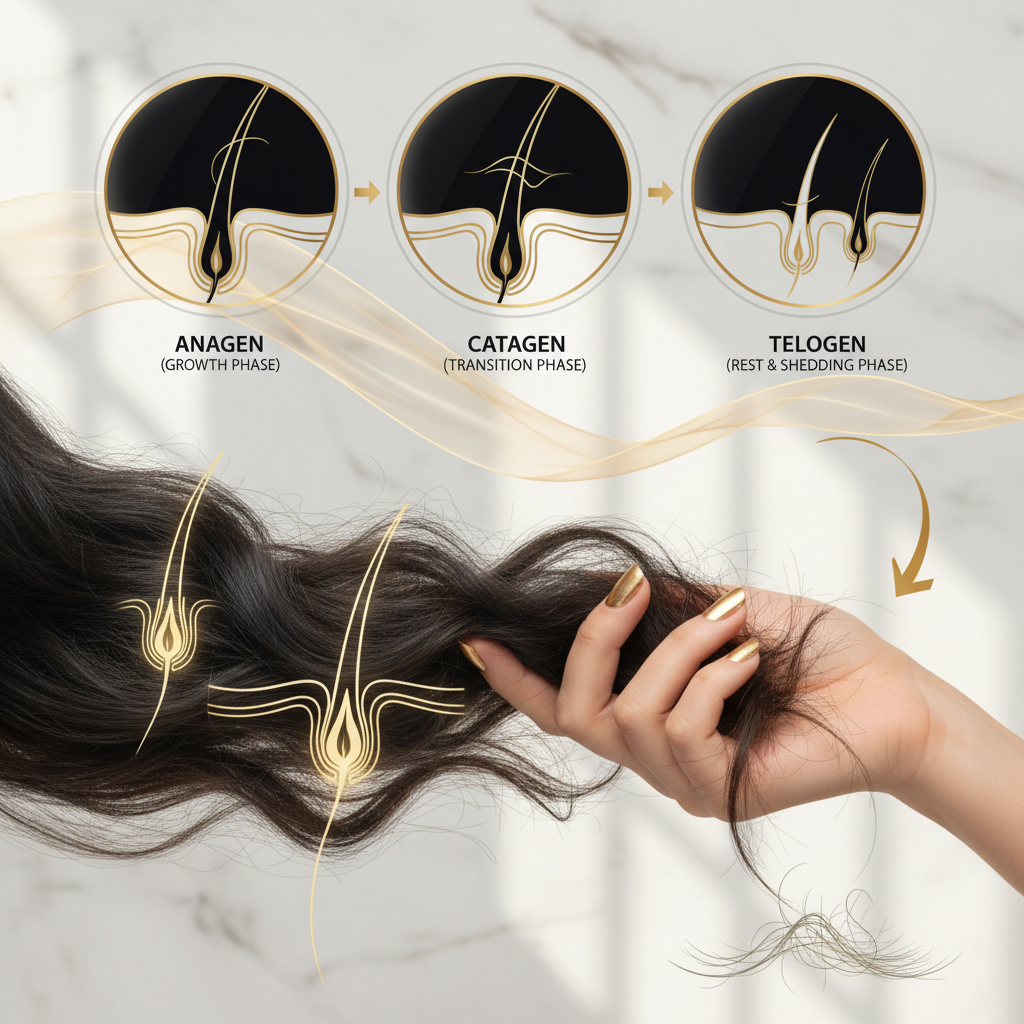
- Anagen (Growth phase): Lasts between two and seven years. Follicular matrix cells divide rapidly, synthesizing the keratinised fibre.
- Catagen (Transition phase): Lasts roughly two to three weeks. Cellular division ceases, the deep follicle retracts, and the hair bulb condenses into a club.
- Telogen (Resting phase): Lasts around two to four months. The club hair sits loosely in the upper follicle until an exogen signal causes it to detach and shed as a new anagen hair emerges beneath it.
In acute telogen effluvium, an acute physiological insult causes premature catagen induction. The synchronised transition of thousands of follicles means that three months down the line, an unusually large cohort of hairs reaches the exogen phase simultaneously.
Dermatologists also recognise chronic telogen effluvium, first described by Dr David Whiting in 1996. This variant predominantly affects women aged 30 to 60. Instead of resolving within six months, diffuse shedding fluctuates over several years. The underlying biological mechanism in chronic cases often involves shortened anagen cycles rather than a single synchronised shock.
Identifying the signs of telogen effluvium
Recognising the condition requires observing specific clinical presentations:
- Diffuse reduction in hair volume: You may notice your ponytail feels significantly thinner, or that the overall density across your scalp has diminished evenly rather than in a concentrated spot.
- Increased shedding during grooming: A noticeable uptick in hair collection on pillows, in shower drains, and on brushes. A gentle tug test (pulling lightly on 40 to 60 hairs) typically yields more than six telogen hairs from multiple scalp zones.
- Presence of club bulbs: Inspecting the root end of shed hairs reveals a small, firm, white or clear teardrop bulb without sticky tissue surrounding it.
- Trichodynia: Approximately 20% to 30% of individuals report scalp tenderness, burning, or tingling sensations alongside the shedding. While the mechanism is not fully understood, it correlates with perifollicular substance P release and neurogenic inflammation.
- Regrowth along the hairline: As shedding stabilises, a fringe of short, uniform, tapered upright hairs typically appears across the frontal hairline and vertex, confirming that follicles have re-entered the anagen phase.
Practical steps to support recovery
While you cannot halt shedding that is already biologically programmed, you can support follicular recovery and protect your remaining hair density:
- Identify and correct nutritional shortfalls: Check serum ferritin, vitamin D, zinc, and vitamin B12 levels. Ferritin levels below 50 ug/L are frequently associated with impaired follicular recovery in clinical studies. Correcting low iron stores with medical guidance supports healthy anagen re-entry.
- Minimise mechanical tension and heat: Avoid tight updos, high-tension braids, and aggressive brushing. When hair is shedding diffusely, the remaining fibres must not be subjected to traction, which adds mechanical breakage to your concerns.
- Prioritise dietary protein: Hair fibre is composed of approximately 85% to 90% keratin protein. Ensure daily protein intake meets physiological requirements (around 0.8 to 1.2 grams per kilogram of body weight) to supply the amino acids essential for synthesis.
- Maintain regular scalp hygiene: Wash the scalp every one to three days using a balanced, sulphate-free shampoo. Keeping the scalp free of excess sebum, oxidative byproducts, and microbial overgrowth provides an optimal foundation for emerging anagen fibres.
When the cause may be something else
Diffuse shedding is a symptom shared by several underlying health conditions. It is essential not to assume every instance of shedding is straightforward telogen effluvium.
Thyroid disorders (both hypothyroidism and hyperthyroidism) alter the metabolic rate of follicular cells and cause diffuse hair thinning that mimics telogen effluvium. Autoimmune conditions such as systemic lupus erythematosus can present with non-scarring diffuse thinning prior to other symptoms.
Furthermore, female or male pattern hair loss (androgenetic alopecia) can unmask itself during or following an episode of telogen effluvium. If your shedding does not slow after six months, or if you notice your central parting widening while the back and sides retain full density, a combined diagnosis may be present.
When to seek professional advice
You should consult a GP, dermatologist, or qualified trichologist if:
- Shedding persists beyond six months without signs of slowing down.
- You develop discrete circular bald spots, pustules, redness, or burning scales on the scalp.
- You experience unexplained fatigue, unexpected weight changes, irregular menstrual cycles, or heat/cold intolerance.
- Hair is breaking off mid-shaft rather than shedding from the root bulb.
- The emotional impact of the shedding causes significant anxiety or distress.
A clinician can run targeted blood panels (including full blood count, ferritin, thyroid stimulating hormone, and free T4) and perform dermoscopy (trichoscopy) to inspect follicular openings and exclude scarring alopecias.
Supportive cosmetic haircare: Watermans
Cosmetic haircare cannot alter underlying systemic triggers or stop the biological shedding of hairs already in the telogen phase. However, maintaining the scalp environment and supporting the condition of newly emerging fibres is vital as follicles re-enter active anagen.
The Watermans collection, including Grow Me Shampoo and Condition Me Conditioner, is formulated to support scalp cleanliness and optimise hair condition. Featuring ingredients such as caffeine, biotin, rosemary extract, niacinamide, and argan oil, these products help keep the scalp free from excess sebum while conditioning the hair fibre to resist daily mechanical breakage. Using a nourishing, non-stripping topical routine ensures that as fine new hairs emerge, they are supported by a clean, balanced scalp environment.
Frequently asked questions about Telogen Effluvium Hair Shedding
How long does Telogen Effluvium Hair Shedding usually last?
Acute Telogen Effluvium Hair Shedding typically lasts between three and six months. Shedding begins roughly 60 to 90 days after the inciting trigger, peaks for several weeks, and gradually subsides as follicles reset. If heavy shedding continues past six months, it is classified as chronic telogen effluvium and warrants comprehensive medical testing.
Does telogen effluvium affect eyebrow or body hair?
In most cases, telogen effluvium primarily affects the scalp because scalp hairs have an exceptionally long anagen phase (years) compared to body hairs (weeks to months). However, in severe or prolonged episodes, some people notice mild shedding in eyebrows, eyelashes, or body hair, though complete loss does not occur.
Can emotional stress alone cause this type of shedding?
Yes. Severe psychological distress triggers systemic neuroendocrine cascades, elevating cortisol and releasing substance P around the hair follicle. This neurogenic signalling can disrupt anagen cellular proliferation and push follicles prematurely into catagen. Everyday minor stress rarely causes severe shedding, but acute, distressing life events frequently do.
Will my hair grow back to its original thickness?
Yes, in the vast majority of acute cases, full baseline density returns. Because telogen effluvium does not damage or scar follicular stem cells, follicles naturally re-enter anagen once the trigger resolves. Regrowth takes time; since scalp hair grows roughly one centimetre per month, restoring noticeable volume can take 12 to 18 months.
Should I stop brushing or washing my hair while shedding?
No. Brushing gently with a wide-tooth comb and washing your scalp regularly is recommended. Hairs that shed during washing have already disconnected from their blood supply weeks earlier. Avoiding grooming merely causes loose hairs to tangle, which can lead to additional breakage and make the eventual shedding appear far more dramatic.
Recovery and long-term outlook
Experiencing Telogen Effluvium Hair Shedding can be deeply unsettling, particularly when handfuls of hair collect in the shower basin every day. The most important reassurance offered by clinical evidence is that the condition is temporary and non-scarring. The biological architecture of your follicles remains intact.
Recovery requires patience and consistency. Identify and address any physical, emotional, or nutritional triggers, give your body several months to reset its metabolic rhythm, and care gently for the hair you have. With time, the sudden shedding will subside, paving the way for healthy, steady regrowth across the scalp.
Sources and references
- British Association of Dermatologists. (2021). Telogen Effluvium: Patient Information Leaflet.
- Headington, C. T. (1993). Telogen effluvium: New concepts and review. Archives of Dermatology, 129(3), 356-363.
- Whiting, D. A. (1996). Chronic telogen effluvium: increased scalp hair shedding in middle-aged women. Journal of the American Academy of Dermatology, 35(6), 899-906.
- Asghar, F., Shamim, N., Farooque, U., Sheikh, H., & Aqeel, R. (2020). Telogen Effluvium: A Review of the Etiology and Pathogenesis. Cureus, 12(5), e8320.
- National Institute for Health and Care Excellence (NICE). (2022). Alopecia - diffuse hair loss (Clinical Knowledge Summary).
Find these ingredients in Watermans products
- Zinc: you will find this ingredient in our Hair Vitamins.
- Niacinamide: you will find this ingredient in our Hair Mask.