Shower Filter Hair Loss: Evidence, Mechanisms, and Real Solutions
10 min read ·
Investigating the real science behind shower filter hair loss, exploring how chlorine and mineral deposits cause shaft breakage rather than true follicular shedding.
Quick answer: The relationship between a Shower Filter Hair Loss connection and true shedding comes down to chemistry and mechanical breakage. Tap water containing free chlorine and heavy minerals like calcium and magnesium binds to the hair shaft, degrading the protective cuticle and causing severe fibre snapping that mimics thinning. However, an unfiltered shower does not cause genetic or hormonal follicular hair loss. Installing a filter prevents mineral build-up and surface brittleness, but it will not resolve internal, root-level conditions such as androgenetic alopecia or telogen effluvium.
Key takeaways
- Unfiltered tap water contains free chlorine and dissolved minerals (calcium carbonate, magnesium) that degrade the cuticle layer and cause fibre breakage.
- Breakage along the shaft is often confused with true hair loss, leading many people to believe their shower water is triggering follicular shedding.
- Controlled dermatological studies show that hard water does not reduce the tensile strength of the hair root or cause medical alopecias.
- Shower filters using KDF-55 (Kinetic Degradation Fluxion) media neutralise free chlorine and heavy metals, while standard carbon filters struggle under hot water flow.
- If your hair loss features visible white bulbs at the root, sudden diffuse shedding across the scalp, or a widening parting, the primary cause is internal rather than water quality.
Shower Filter Hair Loss: what the evidence shows
When people search for Shower Filter Hair Loss, they are usually reacting to clumps of tangled, snapped hair accumulating over the shower drain. Scientific literature clearly distinguishes between mechanical breakage of the shaft and biological hair loss from the follicle. Tap water in municipal supplies contains oxidising agents like hypochlorous acid (free chlorine) and dissolved alkaline earth metals such as calcium and magnesium ions.
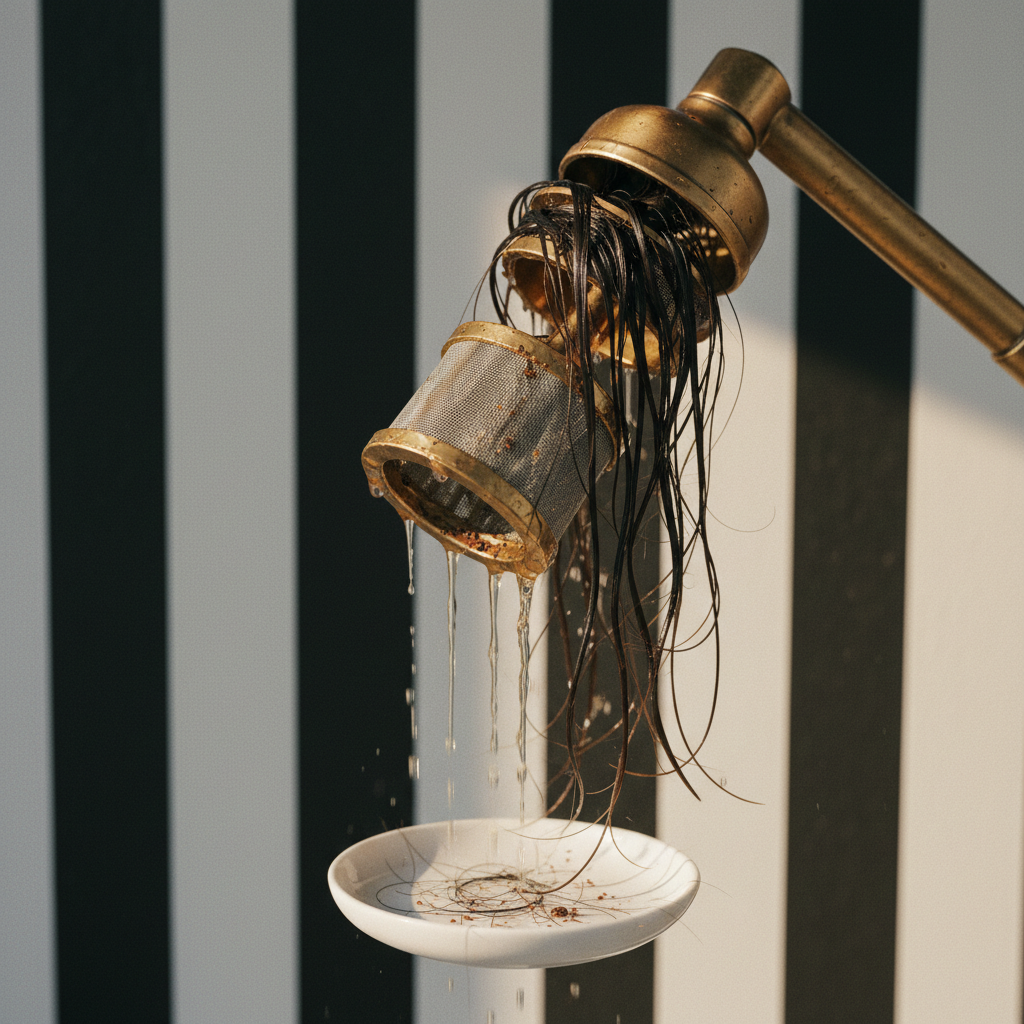
Research published in the International Journal of Trichology examined the tensile strength of hair washed in hard water versus distilled water. The study concluded that while hard water leaves mineral deposits that increase surface roughness and inter-fibre friction, it does not alter the intrinsic tensile strength of the hair fibre itself. Hard water deposits, known as calcium and magnesium stearate soaps, coat the hair when shampoo binds with tap minerals. This coating prevents proper hydration, stiffens the shaft, and makes tangles far more resistant to combing. When you drag a brush through mineral-coated strands, the hair fractures midway down the shaft. It looks and feels like shedding, but the follicle remains firmly anchored in the dermis.
What water quality can disrupt is the scalp microbiome and skin barrier. Chlorine is an oxidiser added to municipal water to kill pathogens. In the shower, warm water opens pores and volatilises chlorine into gas. Residual chlorine strips the scalp's natural sebum and oxidises structural lipids in the stratum corneum. For individuals predisposed to seborrhoeic dermatitis, contact dermatitis, or psoriasis, chlorinated water exacerbates scalp inflammation. Severe, chronic scalp inflammation can alter the hair growth cycle and provoke transient shedding (telogen effluvium). In this specific scenario, a shower filter helps restore skin barrier equilibrium, reducing reactive shedding secondary to dermatitis.
The mechanism: how tap water damages hair fibres
To understand why a shower filter changes how your hair behaves, you have to look at the chemistry taking place under the showerhead.
1. Calcium and magnesium crystallisation
Hard water contains dissolved mineral ions, primarily calcium ($Ca^{2+}$) and magnesium ($Mg^{2+}$). In regions with water hardness exceeding 180 mg/L (measured as calcium carbonate), these ions bind with the carboxyl groups of hair keratin. As the hair dries, these minerals crystallise both on the cuticle surface and within the endocuticle. The smooth, overlapping cuticle scales become propped open and rough. This raises friction between neighbouring strands by up to 40%, creating severe tangles that snap under standard brush tension.
2. Oxidative damage from free chlorine
Municipal tap water typically holds between 0.2 and 2.0 mg/L of free chlorine. When chlorinated water contacts keratin at elevated shower temperatures (38 to 42 degrees Celsius), it oxidises 18-methyleicosanoic acid (18-MEA), the primary hydrophobic lipid layer protecting the outer cuticle. Once this lipid barrier degrades, hair becomes porous, hydrophilic, and prone to swelling and contracting with every wash cycle. This constant swelling (hygral fatigue) weakens the cortex, leading to split ends and mid-shaft snapping.
3. Copper deposition and free-radical cascades
Older plumbing systems often leach trace amounts of copper ions into tap water. Copper accumulates within the hair cortex over successive washes. When exposed to sunlight or chemical treatments, this copper acts as a catalyst for Fenton reactions, generating hydroxyl free radicals that directly sever the disulphide bonds providing keratin with its structural elasticity.
| Water Contaminant | Mechanism of Hair Damage | Symptom Produced | Does a Filter Resolve It? |
|---|---|---|---|
| Free Chlorine (0.5 to 2.0 mg/L) | Oxidises 18-MEA surface lipids; dries scalp stratum corneum | Rough texture, faded colour, itching, inflamed scalp | Yes, high reduction via KDF-55 or calcium sulphite |
| Calcium & Magnesium (Hardness >180 mg/L) | Binds to keratin; forms insoluble soap scum with cleansers | Dullness, tangling, mid-shaft mechanical breakage | No. Filters do not soften water; ion exchange softeners are required |
| Trace Heavy Metals (Lead, Copper) | Catalyses free-radical generation; cleaves disulphide bonds | Internal structural weakness, brittleness, greenish tint | Yes, KDF-55 reduces heavy metals effectively |
| Systemic DHT / Hormones | Miniaturises genetically sensitive hair follicles | Widening part, receding hairline, miniaturised hairs | No. Mechanical water filtration has zero effect on hormones |
What a shower filter can and cannot do
A shower filter is not a whole-house water softener. Understanding this distinction saves frustration and wasted money.
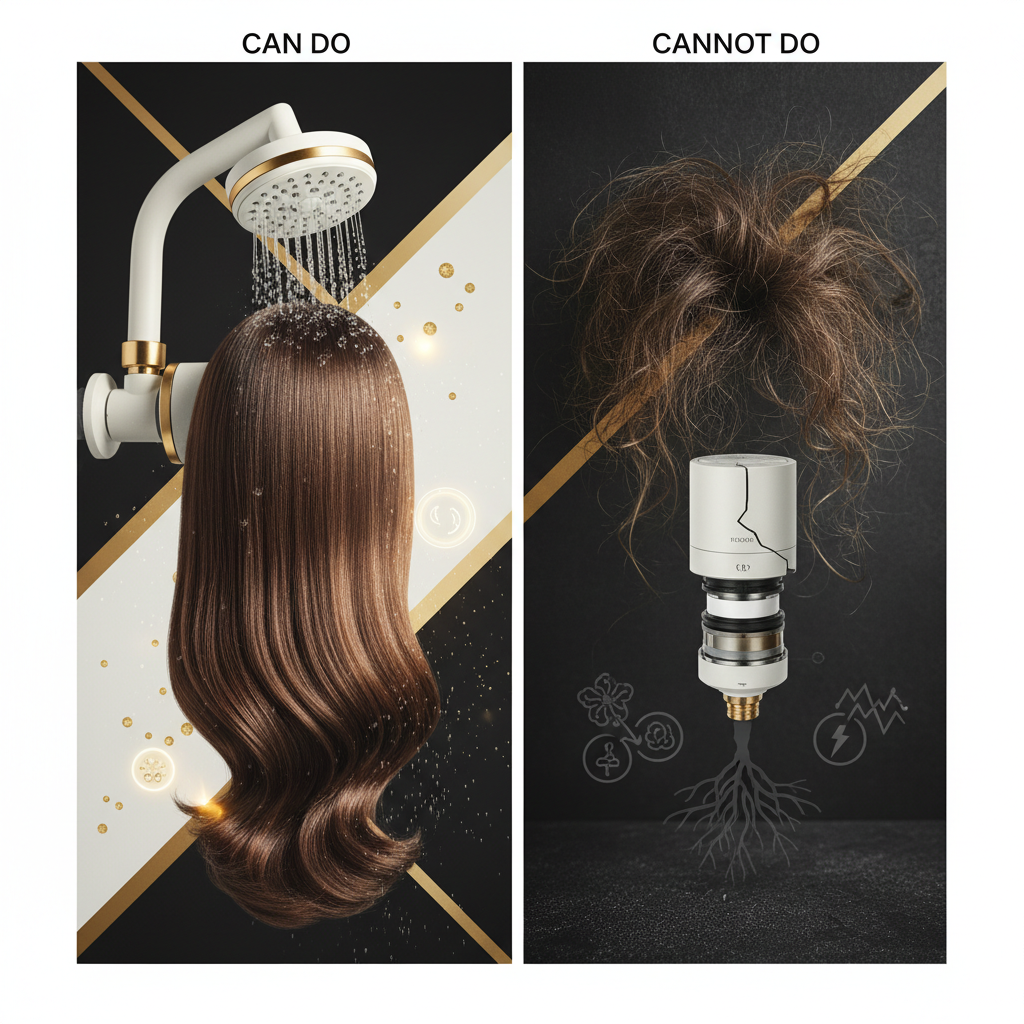
Water softeners use ion-exchange resins to physically swap calcium and magnesium ions for sodium ions, eliminating hard water minerals entirely. Showerhead filters do not have the physical volume or dwell time required for full ion exchange. A compact shower filter works primarily by redox (reduction-oxidation) reaction using media like KDF-55 (copper-zinc alloy) or calcium sulphite tablets.
KDF-55 converts free, harmful chlorine into harmless, water-soluble chloride ions and captures free heavy metals like lead and copper. It functions exceptionally well at high temperatures and high flow rates. Activated carbon filters, by contrast, drop rapidly in efficacy when water temperatures exceed 30 degrees Celsius.
A quality KDF filter will:
- Neutralise up to 90% of free chlorine.
- Prevent oxidative lipid loss on the hair surface.
- Ease scalp itching caused by municipal disinfectant residues.
- Significantly reduce friction-induced fibre breakage.
A shower filter will not:
- Soften water by removing dissolved calcium and magnesium scale.
- Alter the underlying genetics of pattern hair loss.
- Correct nutritional deficiencies (such as ferritin or vitamin D deficits).
- Treat internal autoimmune conditions like alopecia areata.
When the cause is something else
If you install a shower filter and notice no reduction in the amount of hair coming out, the underlying trigger is almost certainly internal. It is essential to differentiate between snapped fibres and true follicular shedding.
Examine the hairs collecting on your brush or in the plughole. A snapped hair has no bulb; it is often shorter than your actual hair length and may show split ends or white fracture dots along the shaft. A shedded hair features a small, white, keratinised bulb at one end. This indicates that the entire follicle completed its exogen phase and departed the scalp from the root.
If you are shedding full-length strands with intact bulbs, your symptoms point away from water quality and toward physiological drivers:
- Telogen Effluvium: A temporary, diffuse shedding episode triggered two to four months after a major physiological shock, such as severe illness, high fever, child delivery, rapid weight loss, or surgical procedures.
- Androgenetic Alopecia: Pattern thinning driven by dihydrotestosterone (DHT) binding to androgen-sensitive follicles, leading to progressive miniaturisation of the hair diameter.
- Nutritional Shortfalls: Sub-optimal levels of serum ferritin (stored iron), zinc, vitamin B12, or vitamin D, all of which starve the cellular matrix of the dermal papilla.
- Thyroid Dysfunction: Hypothyroidism and hyperthyroidism disrupt the metabolic rhythm of follicular cycling, causing dry, brittle strands coupled with persistent shedding.
Practical steps to protect hair from water stress
If you live in an area with hard or heavily chlorinated water, pair filtration with targeted haircare habits to minimise mechanical damage:
- Install a genuine KDF-55 filter: Ensure your shower filter relies on copper-zinc kinetic degradation fluxion or calcium sulphite rather than standard granular activated carbon alone.
- Incorporate a chelating wash: Use a clarifying, chelating wash once every two to three weeks containing tetrasodium EDTA or citric acid. Chelating agents bond with mineral scale and strip away calcium and copper crusts without eroding the hair fibre.
- Restore surface slip: Condition diligently with low-pH formulations (pH 4.5 to 5.5). Acidic environments smooth the cuticle scales flat, sealing the shaft and neutralising the raised-cuticle friction caused by alkaline mineral water.
- Detangle with caution: Never pull a standard comb forcefully through wet, mineral-exposed hair. Apply a leave-in conditioner or light oil to create lubrication, and use a wide-tooth comb starting at the ends, working upward to the root.
Supporting scalp and follicle vitality
While managing water quality protects the external hair fibre, long-term hair density relies on healthy follicular activity and a balanced scalp environment. Topical routines that focus on clean, stimulant-rich care help preserve optimal conditions for growing strands.
Watermans approaches hair maintenance from this biological perspective. Rather than relying on surface coating agents that trap mineral residues, Watermans formulations focus on scalp revitalisation. Incorporating topical ingredients such as biotin, caffeine, rosemary extract, niacinamide, and hydrolysed lupin protein, their Grow Me range supports the scalp's natural microcirculation and delivers vital nutrients directly to the follicular base. Addressing external friction with filtered water while nourishing the scalp with evidence-backed botanicals gives thinning or fragile hair the best possible environment to thrive.
Frequently asked questions about Shower Filter Hair Loss
Can an unfiltered shower head cause permanent baldness?
No. An unfiltered shower head cannot cause permanent follicular destruction or genetic pattern baldness. Tap water minerals and chlorine impact only the non-living keratin shaft and the epidermal surface of the scalp. While severe mineral build-up and chlorine oxidation lead to snapping and superficial breakage, the follicle itself remains undamaged beneath the skin.
Will installing a shower filter stop my hair loss immediately?
If your apparent shedding is actually mechanical breakage caused by chlorine-induced dryness and mineral friction, a shower filter will reduce snapped strands within two to four weeks. However, regarding true Shower Filter Hair Loss concerns where roots are shedding due to internal, hormonal, or nutritional factors, a filter will not halt the shed.
What is the best filter medium for hot shower water?
KDF-55 (Kinetic Degradation Fluxion) and calcium sulphite are the gold-standard media for hot showers. Unlike standard activated carbon, which loses its adsorption capacity as water temperatures climb above 30 degrees Celsius, KDF-55 uses a copper-zinc redox process that performs exceptionally well in hot, high-flow water to neutralise chlorine and heavy metals.
How do I tell if my hair is breaking or shedding from the root?
Inspect the hairs you find after showering. If the strand has a tiny white or clear bulb at one tip, it shed naturally from the follicle root. If the hair lacks a bulb, has blunt or frayed ends on both sides, or is noticeably shorter than your overall hair length, it broke along the shaft.
Does hard water make hair fall out directly?
No. Hard water contains dissolved calcium and magnesium that bind to the hair shaft, creating stiffness, dullness, and extreme friction. Clinical studies show that while hard water creates mineral deposits that encourage rough tangling, it does not penetrate the scalp or cause hair follicles to enter the shedding phase.
Conclusion
The widely discussed connection between Shower Filter Hair Loss and thinning hair is largely a matter of mistaking exterior fibre breakage for true follicular shedding. Unfiltered tap water carrying free chlorine and dissolved minerals attacks the cuticle, strips protective lipids, and leaves deposits that cause strands to fracture under minimal mechanical stress.
A high-grade shower filter neutralises chlorine and captures reactive metals, providing an immediate improvement in fibre softness, combability, and scalp comfort. Yet it remains an external intervention. If you are experiencing persistent shedding from the root, widening partings, or sudden thinning, look beyond the bathroom plumbing and consult a trichologist or GP to address the systemic causes driving your hair cycle.
Sources and references
- International Journal of Trichology: Srinivasan, G. Et al. "Evaluation of the Effect of Hard Water on Hair Tensile Strength" (2013).
- Journal of the Society of Cosmetic Chemists: Evans, T. A. "The Effect of Water Hardness and Washing Procedures on Hair Friction and Breakage" (2011).
- World Health Organization (WHO): "Guidelines for Drinking-water Quality: Chlorine and Water Disinfection" (2017).
- British Association of Dermatologists: "Telogen Effluvium: Clinical Guidance and Diagnostic Pathways" (2021).
- National Health Service (NHS): "Hair loss: Causes, diagnosis and treatments" (2023).
Find these ingredients in Watermans products
- Zinc: you will find this ingredient in our Hair Vitamins.
- Niacinamide: you will find this ingredient in our Hair Mask.