Shower Filter for Hair Loss: What the Evidence Really Shows
9 min read ·
Explore whether a shower filter for hair loss really works. Learn the science behind hard water, chlorine, fibre breakage, and scalp health.
Quick answer: Installing a shower filter for hair loss will not cure genetic pattern baldness or stop telogen effluvium, because true hair loss originates beneath the scalp within the follicle. However, shower filters reduce chlorine, heavy metals, and hard water minerals that coat the hair fibre, dry out the scalp, and cause severe mechanical breakage. While a filter cannot revive inactive follicles, it significantly reduces breakage along the hair shaft and relieves scalp irritation, helping your hair appear thicker, fuller, and substantially healthier.
Key takeaways
- Shower filters target surface water impurities such as chlorine, chloramines, and dissolved minerals, not internal hormonal or genetic pathways.
- Hard water and chlorine cause hair breakage and fibre weathering, which people frequently mistake for true hair loss from the root.
- A filter can alleviate scalp dryness, itching, and contact irritation, creating an optimal surface environment for natural hair growth.
- Genetic thinning (androgenetic alopecia) and excessive shedding (telogen effluvium) require medical evaluation rather than water filtration alone.
- Using a high-quality filter combined with strengthening topical haircare provides the best defence against water-induced hair damage.
Shower Filter for Hair Loss: what the evidence shows
The conversation surrounding a shower filter for hair loss usually begins when someone notices clumps of hair collecting around the shower drain. When you wash your hair in unfiltered municipal water, your strands and scalp encounter a mix of disinfectant chemicals and dissolved rock minerals.
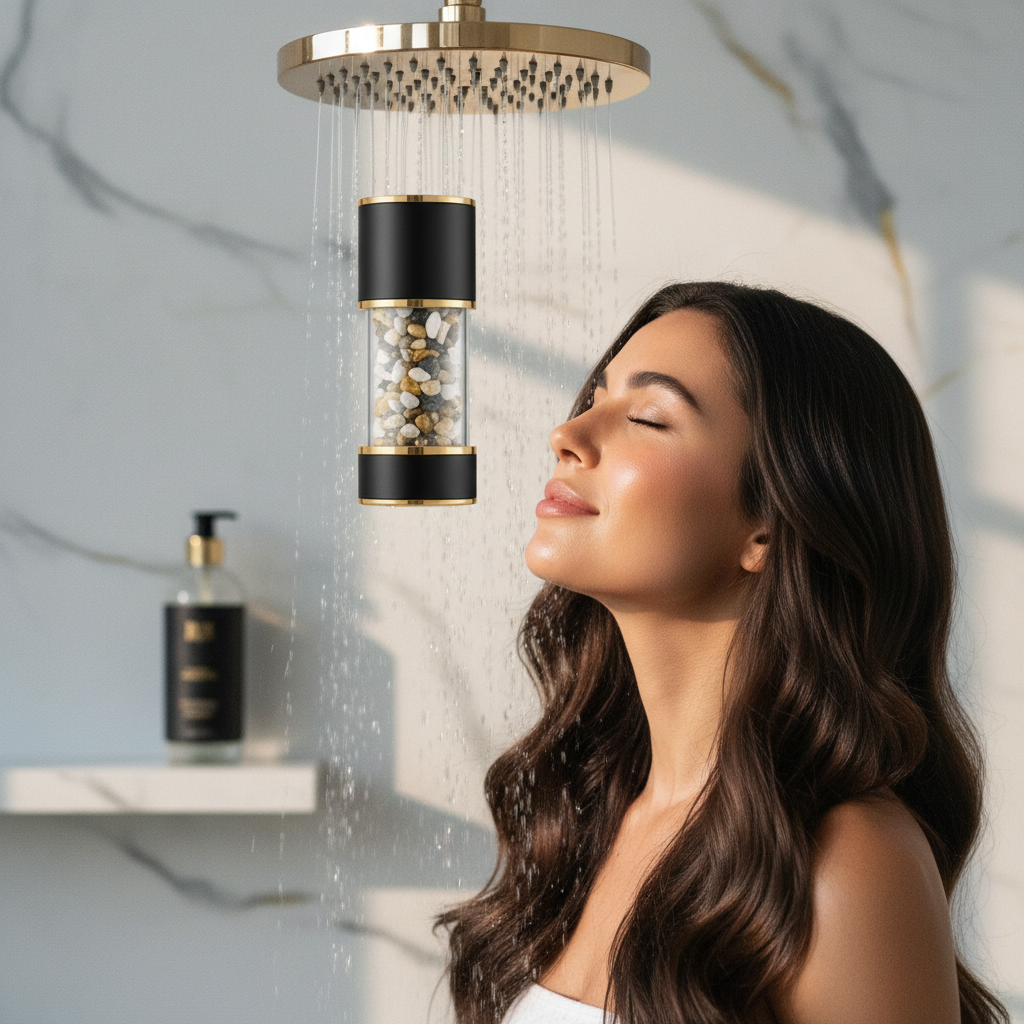
Municipal water providers routinely use chlorine or chloramines to disinfect tap water. While safe to drink, free chlorine is a strong oxidising agent. When chlorine contacts the hair shaft, it strips away the protective lipid layer (18-methyleicosanoic acid, or 18-MEA) that keeps the cuticle flat and hydrophobic. This oxidative damage leaves the cuticle lifted, rough, and porous.
Simultaneously, hard water contains elevated levels of calcium carbonate and magnesium ions. At levels exceeding 120 to 180 mg/L, water is classified as hard or very hard. Calcium and magnesium bind to the negatively charged keratin protein of your hair, forming an insoluble, chalky scale. Research published in the International Journal of Dermatology demonstrated that hair washed in hard water exhibits reduced tensile strength and higher surface mineral deposition compared to hair washed in distilled water.
When you combine oxidative chlorine damage with mineral encrustation, the hair fibre becomes brittle, inelastic, and fragile. As you wash, comb, or brush your hair, these weakened strands snap mid-shaft. To the naked eye, this extensive breakage looks identical to hair loss. A shower filter removes or reduces these chemical and physical stressors, halting excess breakage.
What the evidence does not show
It is critical to distinguish between hair breakage, hair shedding, and true follicular miniaturisation. A shower filter cannot alter biological processes inside the human body:
- Androgenetic alopecia: Pattern hair loss is driven by genetics and sensitivity to dihydrotestosterone (DHT) binding to androgen receptors in the follicle. Water chemistry does not create or block DHT.
- Telogen effluvium: Sudden, diffuse shedding triggered by physiological stress, nutritional deficiencies (such as low ferritin or vitamin D), thyroid dysfunction, or illness occurs deep within the follicular cycle. Water filters cannot stop this biological shedding phase.
- Follicular revival: No peer-reviewed study demonstrates that filtering shower water can reawaken dormant or scarred hair follicles.
If your hair is falling out entirely from the bulb (characterised by a small white keratinised bulb at the end of the strand) or thinning along your part or crown, a shower filter alone will not resolve the issue.
| Factor | Unfiltered Hard / Chlorinated Water | Filtered Shower Water |
|---|---|---|
| Primary Hair Impact | Cuticle erosion, mineral buildup, brittleness | Preserved lipid barrier, smoother cuticle |
| Mechanical Strength | Lower tensile strength, snaps easily during styling | Maintained elasticity, reduced mid-shaft breakage |
| Scalp Health | Barrier disruption, dryness, itching, flaking | Balanced moisture, reduced chemical irritation |
| Effect on True Alopecia | None (does not cause pattern baldness) | None (does not alter DHT or systemic pathways) |
| Lather & Product Performance | Weak lather; leaves soap scum and heavy residue | Rich lather; rinses clean without heavy deposits |
The biological mechanism: how water quality affects hair and scalp
To understand why people report improved density after installing a filter, look closely at the scalp skin barrier and the hair fibre structure.
Cuticle degradation and tensile failure
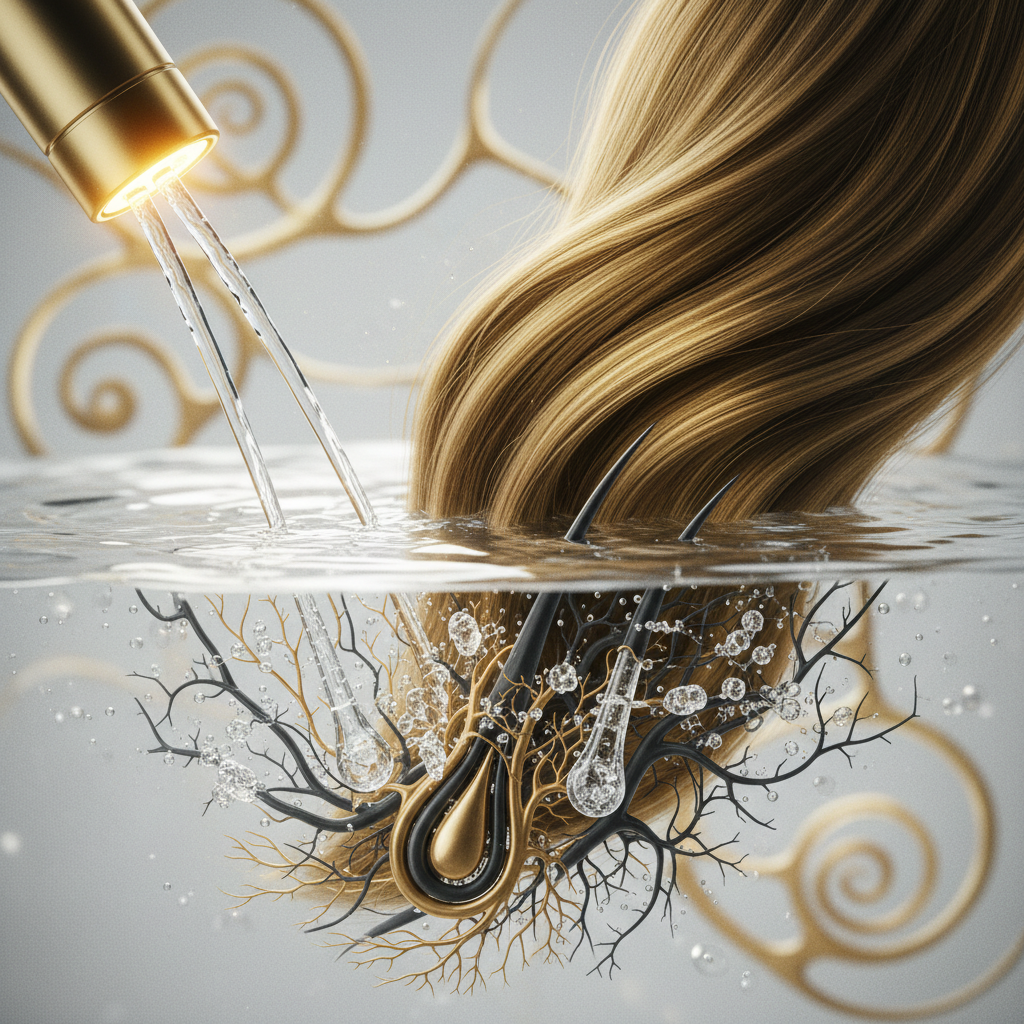
Every healthy hair strand is shielded by overlapping cuticle scales sealed with natural lipids. Unfiltered tap water with an alkaline pH (often between 7.5 and 8.5 due to mineral content) forces the cuticle to swell and flare. Free chlorine oxidises keratin proteins, while calcium ions wedge beneath the lifted scales. When the cuticle fails, the inner cortex loses moisture and structural integrity. Under the mechanical tension of washing or detangling, the hair snaps.
Scalp barrier disruption
Your scalp is delicate skin with a natural, slightly acidic pH of roughly 5.5. Hard water minerals react with fatty acids in shampoos to create insoluble "soap scum" (calcium stearate). This residue settles on the scalp, clogging pores and trapping sebum. Furthermore, chlorine strips natural ceramides, triggering transepidermal water loss. The resulting irritation, erythema, and flaking can aggravate conditions like seborrhoeic dermatitis. Chronic scalp inflammation is a recognised contributor to premature hair shedding, as inflamed tissue weakens the follicular anchor.
What shower filters can and cannot filter
Not all shower filters function the same way, and understanding their mechanisms prevents unrealistic expectations:
- KDF (Kinetic Degradation Fluxion): These high-purity copper-zinc formulations use a basic redox (reduction-oxidation) process to convert free chlorine into harmless, water-soluble chloride ions. KDF is highly effective in hot, high-pressure shower conditions and reduces heavy metals like lead and copper.
- Activated carbon: Excellent for absorbing chlorine, volatile organic compounds, and bad odours at lower temperatures. However, carbon filters degrade rapidly in high-temperature water.
- Vitamin C (Ascorbic acid): Chemically neutralises both chlorine and stubborn chloramines very effectively.
- True water softeners: Standard shower head attachments are filters, not ion-exchange softeners. A compact shower attachment cannot fully soften water by exchanging calcium and magnesium for sodium, because this requires a large resin tank and regeneration salt. However, high-grade filters do neutralise the mineral reactivity and sequester scale-forming deposits.
Practical steps to protect your hair in the shower
If you live in an area with hard or heavily treated tap water, take these practical steps to safeguard your hair:
- Install an independently certified filter: Look for units certified under NSF/ANSI Standard 177, which specifically validates free available chlorine reduction under realistic shower conditions.
- Wash with lukewarm water: Scalding water accelerates lipid loss and magnifies the drying effect of dissolved minerals. Keep wash temperatures close to body temperature.
- Incorporate chelating shampoos periodically: Use a gentle chelating or clarifying wash once every two to three weeks to bind and strip away stubborn mineral deposits that may have accumulated over time.
- Reinforce hair moisture and elasticity: Counteract water-induced dryness by using leave-in conditioners and protein-balanced treatments that strengthen the outer cuticle against friction.
Supporting your hair routine with Watermans
While addressing external water quality with a filter preserves strand integrity, your hair follicles also require targeted topical nourishment to thrive. Watermans Grow Me Shampoo is formulated to revitalise the scalp and support stronger-feeling hair from the root. Packed with clean, active ingredients such as biotin, caffeine, rosemary extract, niacinamide, and argan oil, it works harmoniously alongside filtered water. By washing away residual impurities and infusing the scalp with essential nutrients, it reinforces the hair against daily environmental stress, supporting a fuller-looking, robust head of hair.
When hair loss signals something else
If you install a filter and continue to notice severe shedding after 6 to 8 weeks, the water is unlikely to be the primary culprit. You should seek guidance from a GP, dermatologist, or qualified trichologist if you observe:
- Distinct patches of sudden hair loss (potential alopecia areata).
- Progressive widening of your central part or receding temples.
- Shedding exceeding 100 to 150 hairs daily for more than two consecutive months.
- Persistent scalp pain, burning, severe redness, or scaling that does not respond to gentle care.
A medical professional can perform blood tests to evaluate iron stores (ferritin), thyroid function, hormone balance, and autoantibodies to identify the true underlying driver.
Frequently asked questions about Shower Filter for Hair Loss
Can a shower filter for hair loss stop genetic thinning?
No. A shower filter for hair loss cannot prevent or cure androgenetic alopecia. Pattern hair loss is driven by genetic sensitivity to dihydrotestosterone (DHT) inside the scalp tissue. A shower filter works strictly on the outside of your head, filtering water impurities to prevent shaft damage and scalp irritation.
How quickly will I notice results after installing a shower filter?
Most people notice a difference in hair texture within one to two washes. Hair feels softer, tangles less, and styles with greater ease. Noticeable reductions in breakage-related hair fall typically become apparent within 3 to 4 weeks of regular use, as the cuticle layer remains intact.
How do I tell if my hair fall is breakage or true hair loss?
Examine the shed hairs under good lighting. If the hair strand has a small, white bulb at one end, it shed naturally from the follicle root. If the hair lacks a bulb, appears shorter than your typical length, or shows frayed ends, it is mechanical breakage along the shaft caused by brittleness.
Do shower filters remove calcium and magnesium completely?
Most compact shower head filters do not remove 100% of hard water minerals. Full mineral removal requires an ion-exchange water softener system installed at your home's main supply. However, multi-stage shower filters alter mineral crystallisation and capture heavy metals and chlorine, dramatically reducing their damaging impact on hair.
Understanding the true value of shower filtration
Investing in a shower filter for hair loss is a valuable, protective step for anyone struggling with dull, brittle, or snapping hair caused by treated municipal tap water. While it does not represent a medical cure for genetic alopecia or chronic telogen effluvium, it removes harsh chlorine and reactive minerals that degrade the hair cuticle and irritate the scalp skin barrier. By eliminating these external stressors, you shield your hair from avoidable mechanical breakage, protect your scalp's microenvironment, and ensure that every strand can reach its full cosmetic potential.
Sources and references
- International Journal of Dermatology: "Evaluation of the effect of hard water on hair: A study of tensile strength and surface morphology", 2018.
- NSF International: "NSF/ANSI Standard 177 - Shower Filtration Systems for Chlorine Reduction", 2021.
- Journal of the Society of Cosmetic Chemists: "The absorption of mineral ions by human hair and its effect on hair physical properties", 2011.
- British Association of Dermatologists: "Telogen Effluvium Guidelines and Patient Information", 2022.
- World Health Organization: "Guidelines for Drinking-water Quality: Hardness and Chlorine residual parameters", 2017.
Find these ingredients in Watermans products
- Vitamin D: you will find this ingredient in our Hair Vitamins.
- Niacinamide: you will find this ingredient in our Hair Mask.