Shedding vs Breakage Differences: A Complete Evidence-Based Guide
9 min read ·
Learn the crucial Shedding vs Breakage Differences, how to inspect root bulbs, and targeted strategies to protect your hair shaft and follicle health.
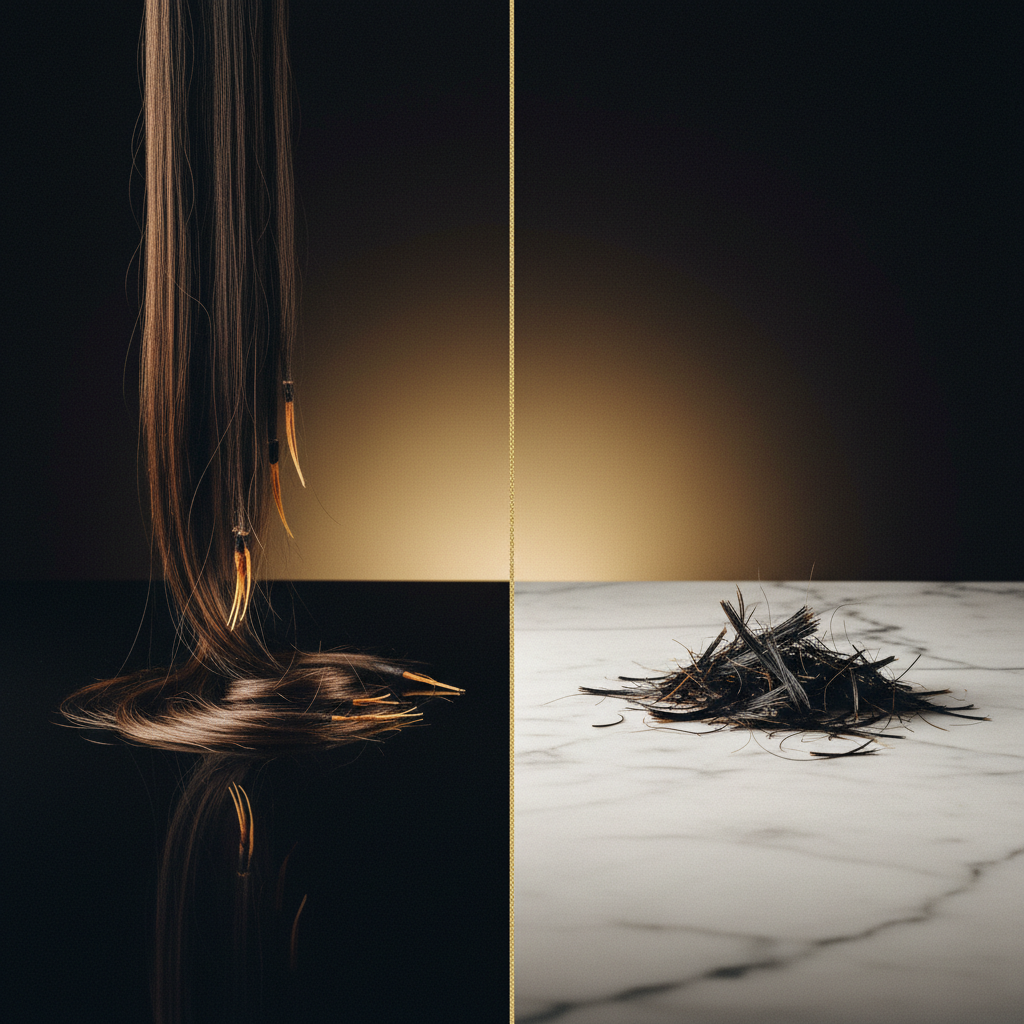
Quick answer: Understanding Shedding vs Breakage Differences comes down to where the hair separates. Shedding happens at the scalp follicle when a strand completes its natural growth cycle, detaching with a tiny white bulb at its root. Breakage occurs along the hair shaft when mechanical, chemical, or environmental stress snaps weakened keratin bonds, leaving a blunt or frayed edge without a bulb. While shedding is a normal biological turnover, breakage reflects structural damage, though both can occur simultaneously.
Key takeaways
- Shedding originates inside the hair follicle as part of the natural telogen phase, whereas breakage is mechanical or structural failure along the hair shaft.
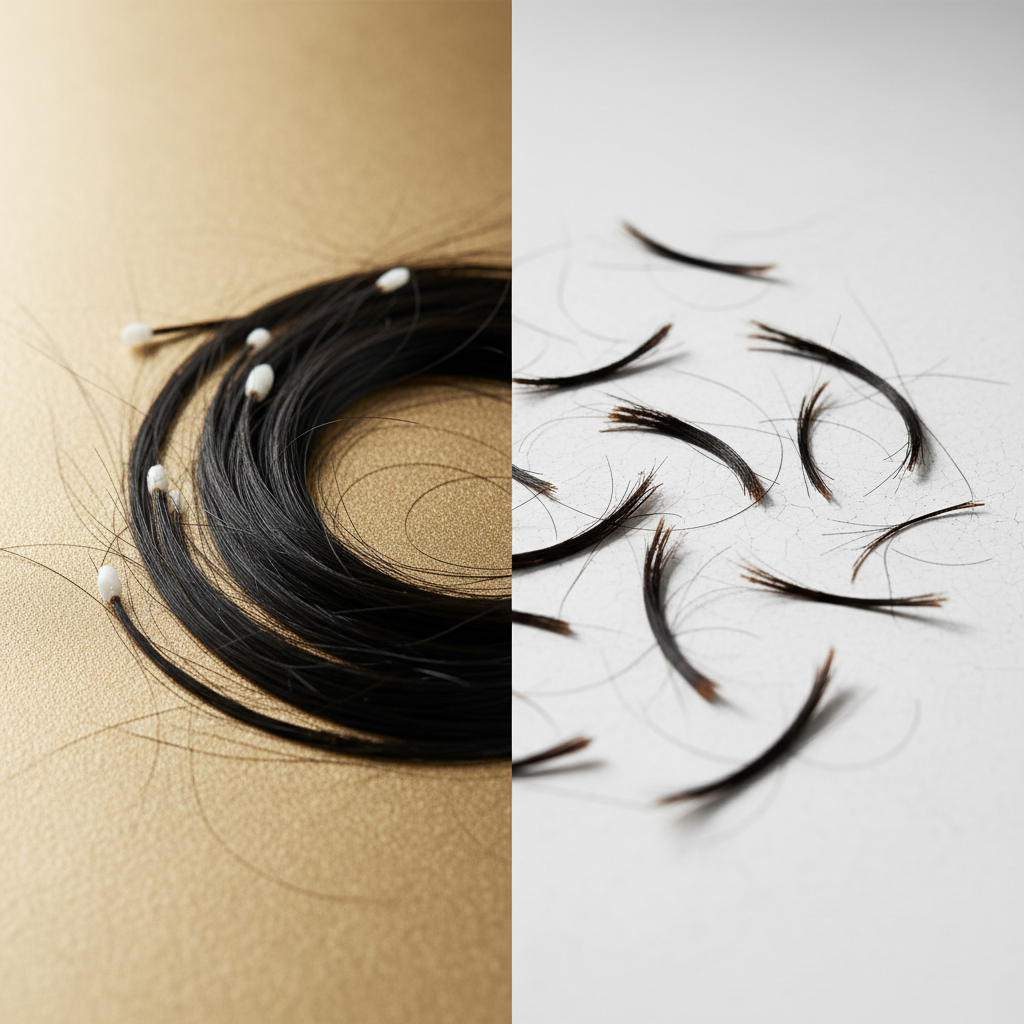
- A shed hair strand features a visible, rounded white or translucent bulb at the root end and matches your full hair length.
- A broken hair strand lacks a root bulb, shows blunt, split, or frayed ends, and is typically shorter than your overall hair length.
- Losing 50 to 100 hairs per day through natural shedding is completely normal physiological turnover for healthy adults.
- Breakage responds directly to gentler handling, protein-moisture balance, and heat protection, while excessive shedding requires investigating systemic, nutritional, hormonal, or scalp health triggers.
Shedding vs Breakage Differences: what the evidence shows
The primary Shedding vs Breakage Differences stem from biological cycles versus physical material degradation. The scalp naturally houses between 100,000 and 150,000 hair follicles. According to dermatological consensus published in the Journal of the American Academy of Dermatology, roughly 85 to 90 percent of these follicles are in the active growth phase (anagen), 1 to 2 percent are transitioning (catagen), and 9 to 10 percent rest in the telogen phase. At the conclusion of the telogen phase, the hair enters exogen, releasing from the scalp to allow a new hair shaft to emerge.
Breakage, by contrast, does not involve the follicle releasing the strand early. Instead, breakage represents a failure of the hair fibre's tensile strength. A single virgin hair strand can support between 50 and 100 grams of weight before snapping. However, chemical processing (such as bleaching or relaxers), excessive heat styling above 185°C, ultraviolet radiation, and vigorous mechanical friction deplete the internal cortex's disulfide bonds and strip the protective outer cuticle. When tensile forces exceed the compromised fibre's capacity, the strand snaps.
Distinguishing between these two conditions is essential for proper management. Treating breakage with follicle-stimulating topicals will not repair cracked cuticles, and treating excessive shedding with hair oils or bond builders will not resolve an internal telogen shift.
| Feature | Hair Shedding (Exogen / Telogen) | Hair Breakage (Fibre Fracture) |
|---|---|---|
| Point of origin | Inside the scalp follicle | Anywhere along the hair shaft |
| Root bulb present? | Yes, a tiny white or translucent bulb | No bulb; both ends look sheared or frayed |
| Strand length | Full length of your hair | Variable, often short pieces and fragments |
| Primary driver | Hormonal, systemic, metabolic, or natural cycle | Mechanical friction, chemical damage, heat |
| Daily baseline | 50 to 100 strands per day is normal | Zero breakage is the biological ideal |
| Reversibility | Follicle remains intact; hair regrows | Broken fibre cannot re-fuse; requires trimming |
| Targeted intervention | Scalp health, diet, stress reduction, medical care | Bond repair, conditioning, lower heat, gentle detangling |
Identifying the signs: the sink, brush, and stretch test
You can determine whether you are experiencing shedding or breakage using three practical diagnostic checks.
First, examine your shed collection on your brush or in the shower drain. Take an individual strand and look closely at both ends under good lighting. If one end terminates in a small, soft, bulb-like knot (the club hair), the hair was shed naturally from the follicle. If both ends terminate flat, splintered, or rough, the strand snapped.
Second, consider the length distribution of the strands you find. Normal shedding yields long hairs that mirror your current hair length. If you notice small, short fragments littering your bathroom counter, clothes, or pillowcase, you are observing active hair breakage.
Third, perform a wet elasticity test on a single shed hair that retains its root. Hold the root end with one hand and the tip with the other. Gently pull. Healthy, intact hair can stretch up to 30 percent of its dry length when wet and return to its original state without snapping. Hair suffering from severe cuticle degradation or low tensile strength will snap immediately under minimal tension, indicating high susceptibility to breakage.
The mechanical and biological mechanisms
Understanding the structural differences explains why these issues require distinct remedies.
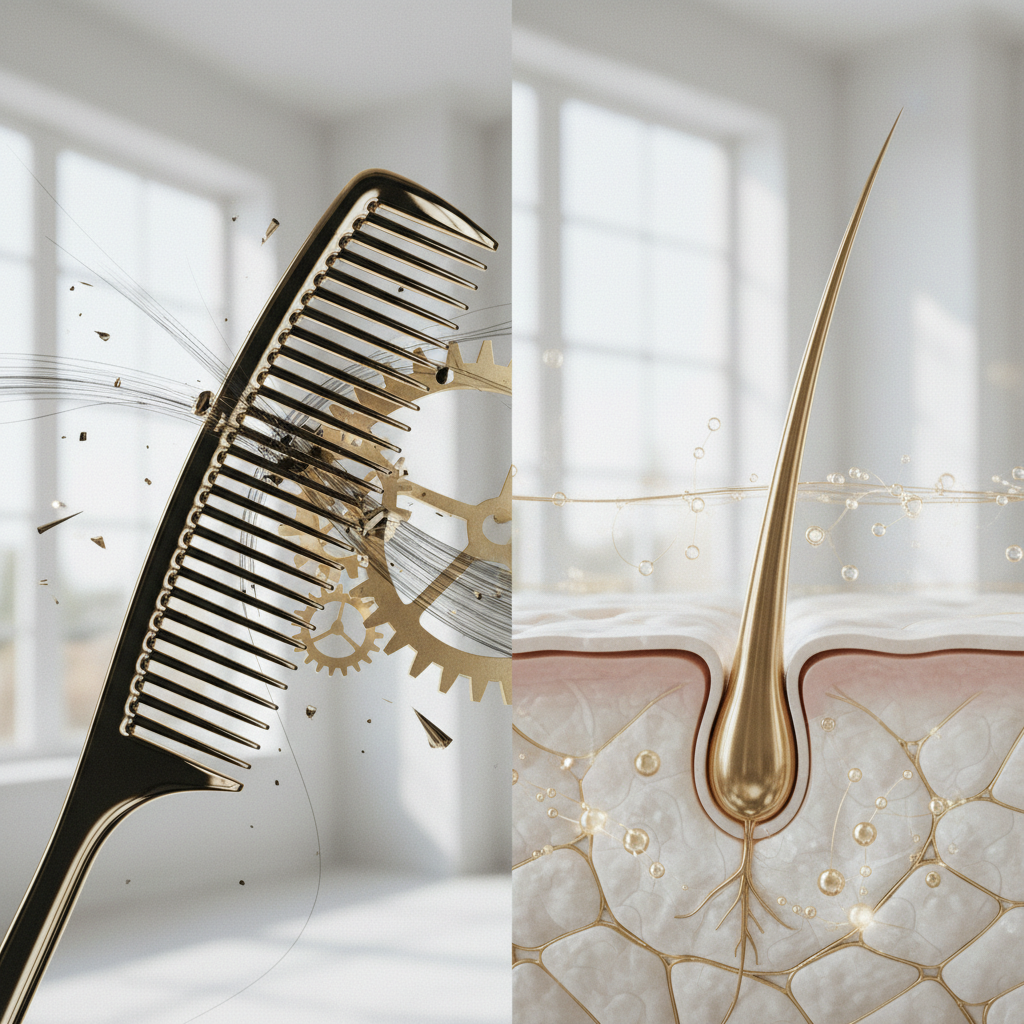
The hair shaft is composed of three primary layers: the outermost cuticle (composed of overlapping scale-like cells resembling roof shingles), the cortex (which contains dense keratin bundles and melanin granules), and the central medulla. The cortex provides tensile strength and elasticity through a matrix of intermediate filament proteins joined by disulfide, ionic, and hydrogen bonds.
When you apply oxidative bleaches or high alkaline chemical straighteners (often running at pH 11.0 to 13.0), the chemical reaction swells the cuticle and cleaves internal disulfide cross-links. Deprived of structural integrity, the cortex develops microscopic fissures known as trichorrhexis nodosa. Further friction causes the fibre to snap at these weak nodes.
Shedding, meanwhile, is governed by cellular signalling in the dermal papilla at the base of the follicle. Systemic stressors, such as acute illness, high physiological fever, severe nutritional deficiencies (notably ferritin, vitamin D, or zinc), or rapid hormonal shifts (such as postpartum changes) trigger a condition called telogen effluvium. In telogen effluvium, an abnormally high percentage of growing follicles (sometimes 30 to 50 percent) prematurely transition into the resting state. Two to three months after the initial trigger, these hairs release en masse.
What you can do to address breakage
Because breakage is structural, your priority is to preserve the integrity of the hair shaft and minimise friction.
- Lower heat exposure: Keep thermal styling tools below 185°C. Excessive heat vaporises moisture trapped inside the cortex, causing bubbles to form within the hair shaft (bubble hair deformity), which leads to instant fracturing.
- Maintain moisture-protein balance: Incorporate hydrolysed proteins (such as wheat or keratin proteins) to temporarily patch cuticle gaps, followed by emollient conditioning agents to smooth the surface and lower friction during combing.
- Detangle with care: Never aggressively brush wet hair. Hair fibres swell when wet and their hydrogen bonds are temporarily disrupted, leaving them significantly more vulnerable to mechanical stretching and snapping. Use a wide-tooth comb or flexible detangling brush, starting from the ends and working toward the roots.
- Reduce friction while sleeping: Cotton pillowcases create high surface friction against the hair cuticle. Switching to silk or satin pillowcases allows strands to glide smoothly during movement.
- Trim split ends regularly: Frayed ends (trichoptilosis) will continue to split upwards along the hair shaft if left untreated, turning minor tip damage into severe breakage further up the strand.
What you can do to address excessive shedding
Addressing shedding requires nurturing the scalp environment and addressing internal physiological triggers.
- Optimise nutritional intake: The dermal papilla relies on a continuous supply of micronutrients to sustain the rapid cellular turnover of the anagen phase. Ensure adequate intake of dietary iron, high-quality proteins, B vitamins, and essential fatty acids.
- Support scalp hygiene and circulation: A clean scalp environment free from excessive sebum buildup, Malassezia yeast overgrowth, and oxidative stress provides the ideal foundation for growing follicles.
- Manage acute stress: Elevated cortisol levels can disrupt the follicular cycle and push anagen follicles prematurely into catagen. Stress-reduction practices and adequate sleep support regular endocrine balance.
- Track timeline triggers: Because telogen effluvium typically presents six to twelve weeks after the inciting event, look back three months to identify illness, dietary crashes, or medication changes that may have sparked the shedding.
Supportive cosmetic care with Watermans
When addressing hair vitality, maintaining a healthy, balanced scalp while supporting fragile fibres is essential. Watermans develops targeted topical solutions formulated to support both scalp wellness and strand resilience.
Watermans Grow Me Shampoo combines scalp-nourishing ingredients such as biotin, caffeine, rosemary extract, niacinamide, and argan oil in a balanced formula designed to cleanse without stripping natural moisture. Complementing this, Watermans Condition Me Conditioner incorporates hydrolysed lupine protein and cholesterol to replenish moisture, coat the cuticle scales, and reduce the comb friction that directly drives fibre breakage. While cosmetic products do not treat clinical alopecia or systemic medical conditions, supporting the scalp microenvironment alongside fortifying the lengths creates the best conditions for full, strong, healthy-looking hair.
When to seek medical advice
You should consult a GP or a registered trichologist if your shedding exceeds 100 to 150 hairs daily for more than six to eight consecutive weeks, or if you notice distinct round patches of total hair loss, scalp redness, burning, tenderness, or scaling. These symptoms may point toward autoimmune conditions such as alopecia areata, androgenetic alopecia, or scarring alopecias, which require clinical diagnosis, blood tests, or prescription therapies.
Frequently asked questions about Shedding vs Breakage Differences
How can I tell Shedding vs Breakage Differences on short hair?
To determine Shedding vs Breakage Differences on short hair, inspect the strand under bright light or with a magnifying glass. Even short hairs shed naturally will possess a small, distinct white or translucent bulb at the end that emerged from the scalp. If the short strand has two cut, tapered, or ragged ends without a bulb, it snapped prematurely due to breakage.
Can a hair strand experience both shedding and breakage at the same time?
Yes. A hair strand can break off mid-shaft while another hair sheds naturally from the follicle. Furthermore, a single strand that has already weakened along its shaft can shed from the root and break into pieces simultaneously during washing or brushing.
Does brushing your hair cause shedding or breakage?
Normal brushing primarily removes hairs that have already detached from the follicle during the exogen phase and are trapped among neighbouring strands. However, rough, aggressive brushing (especially on wet or heavily tangled hair) exerts excessive mechanical force that snaps healthy strands, causing direct breakage.
Why is my hair shedding white bulbs?
The white or translucent bulb at the end of a shed hair is simply the keratinised root sheath typical of a club hair in the telogen phase. It does not indicate that you have pulled out your follicular root or that the follicle cannot grow a new strand.
Does bleaching cause hair shedding or hair breakage?
Bleaching primarily causes hair breakage. The alkaline oxidation process degrades the structural protein bonds of the cortex and lifts the cuticle, weakening the strand's tensile strength. Bleach will only cause shedding if chemical burns or severe contact dermatitis injure the scalp follicles directly.
Clarifying your hair care routine
Mastering the Shedding vs Breakage Differences allows you to take targeted action rather than wasting time and money on mismatched treatments. If your hair is breaking into short, bulb-less pieces, prioritise bond care, lower your styling heat, and reduce mechanical friction. If you are experiencing diffuse, full-length shedding with visible white bulbs, look inward to your nutrition, stress levels, and systemic health while maintaining a supportive, clean scalp environment. By accurately diagnosing where the strand is parting company, you can give your hair exactly what it needs to thrive.
Sources and references
- Journal of the American Academy of Dermatology, "Telogen Effluvium: A review", 2017.
- International Journal of Trichology, "Hair Shaft Damage from Heat and Cosmetic Treatments", 2011.
- British Association of Dermatologists, "Telogen Effluvium Patient Information Leaflet", 2021.
- Journal of Cosmetic Dermatology, "Evaluation of hair tensile strength and cuticle integrity under chemical processing", 2019.
- Clinical, Cosmetic and Investigational Dermatology, "Hair mechanics and structural characteristics of the hair fibre", 2018.
Find these ingredients in Watermans products
- Zinc: you will find this ingredient in our Hair Vitamins.
- Niacinamide: you will find this ingredient in our Hair Mask.