Scalp Microneedling for Hair Regrowth: The Evidence-Based Guide
9 min read ·
Scalp Microneedling for Hair Regrowth stimulates dormant follicles and boosts density, but safe technique and realistic expectations are essential for results.
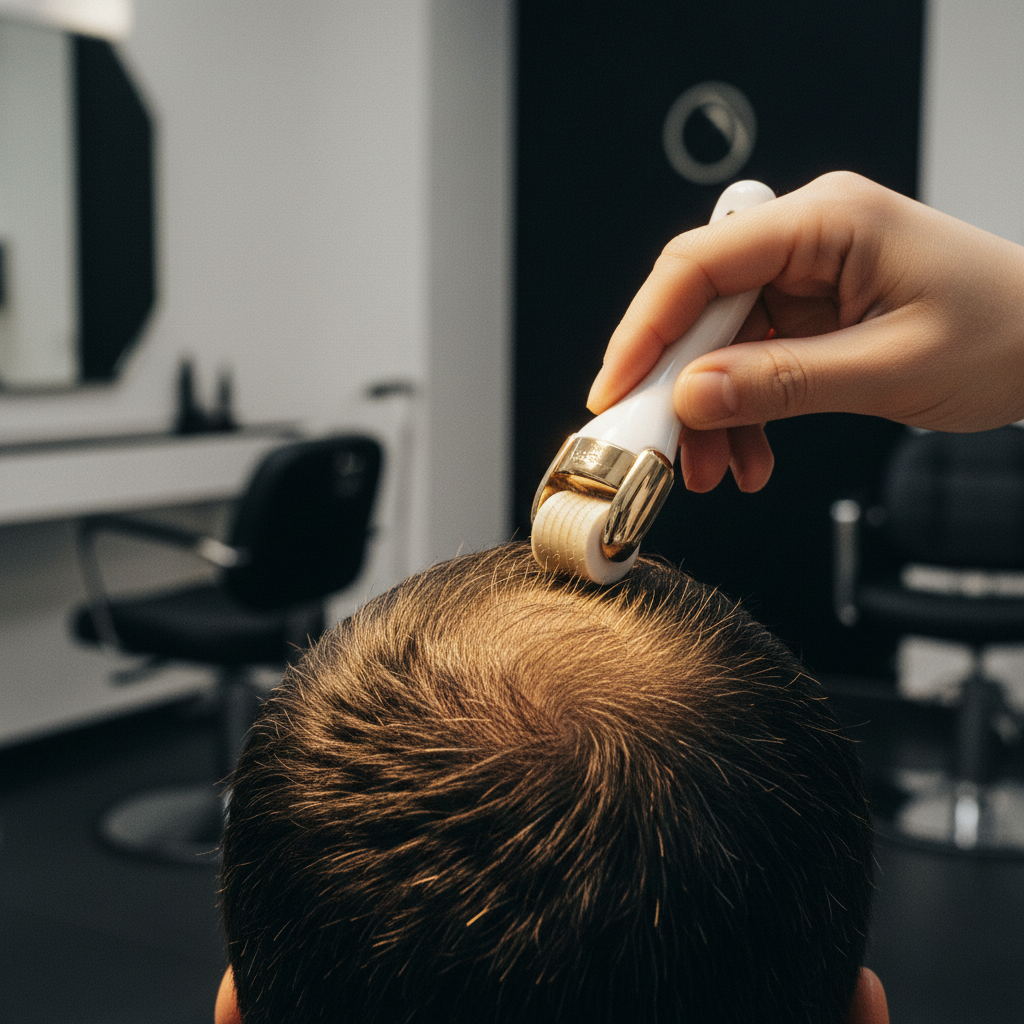
Quick answer: Scalp Microneedling for Hair Regrowth involves using tiny, sterile needles to create micro-injuries on the scalp, stimulating wound-healing pathways, blood flow, and growth factors around miniaturised follicles. Clinical studies indicate it substantially improves hair density, particularly when combined with topical therapies like minoxidil for androgenetic alopecia. However, its main limitation is that it cannot revive follicles that have been completely scarred over, and aggressive or unhygienic home use carries genuine risks of infection, scarring, and permanent hair loss.
Key takeaways
- Scalp microneedling triggers a local wound-healing response that releases platelet-derived growth factors and activates stem cells in the hair follicle bulge.
- Peer-reviewed clinical trials show that microneedling produces superior regrowth when paired with topical treatments compared to topical treatments alone.
- Needle depths between 0.5 mm and 1.5 mm are standard in clinical literature, with sessions spaced 1 to 4 weeks apart to allow tissue recovery.
- Microneedling cannot reverse long-standing cicatricial (scarring) alopecia or reawaken follicles that are fibrosed.
- Strict hygiene and proper technique are essential, as blunt needles or contaminated tools can cause folliculitis, scarring, and worsened thinning.
Scalp Microneedling for Hair Regrowth: what the evidence shows
Scalp Microneedling for Hair Regrowth has emerged from an experimental cosmetic concept into an evidence-supported dermatological intervention over the past decade. The pivotal clinical trial conducted by Dhurat and colleagues in 2013, published in the International Journal of Trichology, evaluated 100 men with mild to moderate androgenetic alopecia. One group received a 5 percent minoxidil lotion twice daily, while the second group received the same minoxidil regimen combined with weekly microneedling using a 1.5 mm roller.
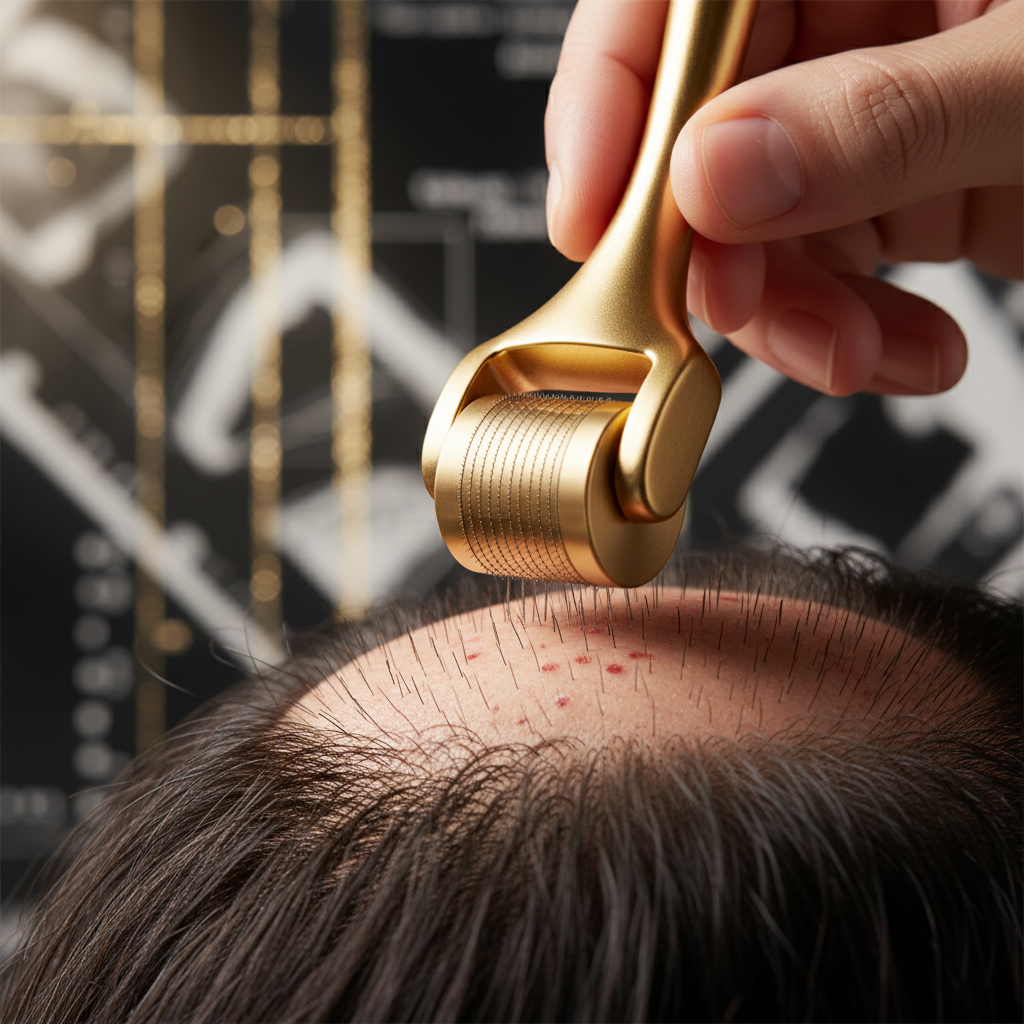
At the 12-week mark, the microneedling combination group showed an average increase of 91.4 hairs per square centimetre, compared to 22.2 hairs per square centimetre in the minoxidil-only group. Independent dermatologists rated 82 percent of patients in the microneedling group as showing marked improvement, versus only 4.5 percent in the monotherapy group.
Subsequent randomised trials and meta-analyses published in journals such as the Journal of Cosmetic Dermatology and Dermatologic Surgery have supported these findings. Researchers consistently observe increased hair count, thicker hair shaft diameter, and higher patient satisfaction scores. Microneedling appears to overcome the plateau that many individuals experience with topical solutions alone by physically bypassing the skin's stratum corneum and priming follicular biological pathways.
What the evidence does not show
While the clinical data is promising, microneedling is not a universal cure for all types of baldness. The evidence does not show that microneedling can regenerate hair in completely bald areas where follicles have been absent for years. If the skin is shiny and follicular openings are absent, the follicle has been replaced by fibrous scar tissue, rendering microneedling ineffective.
Furthermore, evidence does not support the idea that deeper needles or daily rolling yield faster results. Studies comparing needle depths suggest that exceeding 1.5 mm on the scalp often causes unnecessary pain, excessive bleeding, and deep dermal scarring without improving hair density. Microneedling has also not been proven safe or effective as a primary therapy for active scarring alopecias, such as lichen planopilaris or frontal fibrosing alopecia, where physical trauma can trigger a Koebner phenomenon and accelerate inflammatory destruction.
Biological mechanisms: how microneedling works on the scalp
Microneedling promotes hair regrowth through mechanical trauma that induces a controlled cascade of tissue repair without causing full-thickness wounds. This process stimulates the follicular microenvironment in three distinct ways:
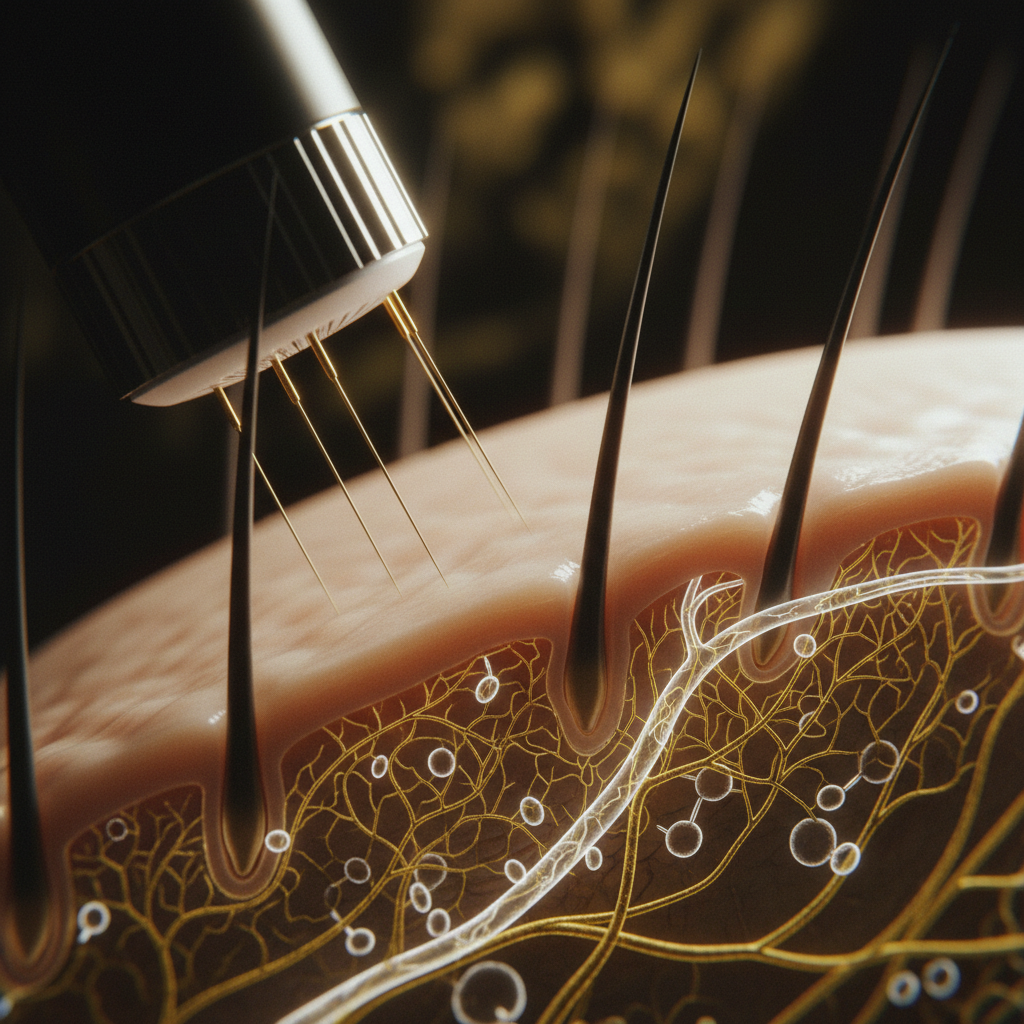
- Release of growth factors: The physical puncturing of the epidermis and papillary dermis causes platelets to aggregate and release vital wound-healing mediators. These include Platelet-Derived Growth Factor (PDGF), Vascular Endothelial Growth Factor (VEGF), and Transforming Growth Factor-beta (TGF-beta). VEGF, in particular, stimulates angiogenesis, creating new microcapillaries that supply oxygen and nutrients to starving follicles.
- Wnt/β-catenin pathway activation: Microneedling triggers cellular signals that upregulate the Wnt10b and beta-catenin signalling pathways. These pathways are crucial for prompting stem cells located in the hair follicle bulge to enter the anagen (active growth) phase from the telogen (resting) phase.
- Overcoming the skin barrier: The stratum corneum is a formidable lipid barrier designed to keep external substances out. Microneedling creates thousands of transient micro-conduits, increasing the penetration and bioavailability of topically applied active compounds by up to several hundredfold.
Clinical devices versus home rollers
There are significant differences between treatments performed by a trained practitioner and self-administered home routines. Understanding these differences helps prevent irreversible scalp trauma.
| Feature | In-Clinic Microneedling | At-Home Derma Rolling |
|---|---|---|
| Device type | Automated medical-grade pens or stamps | Manual rolling drums or basic hand stamps |
| Needle entry angle | Vertical 90-degree entry and exit | Curved entry and exit (can cause micro-tearing) |
| Typical depth | 1.0 mm to 1.5 mm | 0.25 mm to 0.5 mm |
| Needle quality | Single-use, surgical-grade stainless steel or titanium | Reusable needles that dull after 3 to 5 uses |
| Session frequency | Every 2 to 4 weeks | Once weekly or fortnightly |
| Risk of infection | Very low (sterile medical environment) | Moderate to high (inadequate sanitisation) |
| Primary goal | Deep growth factor cascade and collagen induction | Enhanced absorption of topical products |
Practical protocol: what you can do safely
If you choose to incorporate microneedling into your routine, strict adherence to sanitation and technique is vital to protect your scalp barrier.
Choosing your equipment
For home use, avoid long needles. Choose a stamp or automated pen over a mechanical drum roller where possible. Rollers enter and exit the scalp at an angle, which can slice tissue rather than puncture it, leading to micro-scarring and hair breakage. Limit home needles to 0.5 mm unless supervised by a medical professional.
Sanitation protocol
Sterilise your device before and after every single use by soaking the needle head in 70 percent isopropyl alcohol for at least 10 minutes. Allow it to air-dry completely. Wash your scalp thoroughly with a clarifying shampoo prior to the procedure. Never roll over an oily, sweaty, or product-laden scalp.
Technique and pressure
Divide your hair into clean sections. Part the hair to expose the scalp directly. Press the needles gently against the skin; you are aiming for mild erythema (temporary redness), not overt bleeding or pain. If you use a roller, roll 4 to 5 times in horizontal, vertical, and diagonal directions, lifting the device between passes rather than dragging it through the hair strands.
Post-treatment care and topical timing
Do not apply irritating chemical treatments or minoxidil immediately following a 1.0 mm or deeper session. Applying pharmaceutical agents to open micro-wounds can lead to systemic absorption, causing side effects such as palpitations, dizziness, and low blood pressure. Wait 24 hours after a 1.0 mm or 1.5 mm session before applying alcohol-based topicals. For shallow 0.25 mm rolling, gentle, non-irritating botanical serums may be applied after 30 to 60 minutes.
Supporting the scalp environment with Watermans
Microneedling addresses the mechanical stimulation of hair follicles, but lasting hair quality depends equally on a clean, nourished scalp foundation. Watermans Grow Me Shampoo and Condition Me Conditioner provide an ideal daily routine to support overall hair density and wash away debris that could otherwise clog freshly treated follicles.
Formulated with revitalising ingredients like biotin, rosemary, caffeine, niacinamide, and argan oil, the Grow Me system creates an optimal environment for existing hair to feel thicker and stronger. Incorporating these nutrient-rich washes on your non-treatment days helps keep the scalp barrier balanced, hydrated, and ready for your routine without introducing harsh irritants.
When the cause may be something else
Microneedling targets non-scarring miniaturisation, primarily androgenetic alopecia. If your hair is shedding diffusely across your entire head at a rapid rate, you may be experiencing telogen effluvium, triggered by acute stress, illness, hormonal shifts, or nutritional deficiencies (such as low ferritin or vitamin D). Microneedling will not resolve telogen effluvium and may physically aggravate shedding.
Similarly, if you notice smooth, round, coin-sized patches of complete hair loss, the issue is likely alopecia areata, an autoimmune condition. Puncturing the skin during an active autoimmune flare can exacerbate inflammation.
When to seek professional advice
Consult a qualified trichologist or dermatologist before undertaking any scalp microneedling routine if you experience any of the following:
- Redness, itching, scaling, or pustules on the scalp (signs of active seborrhoeic dermatitis or scalp psoriasis, which microneedling can spread).
- Sudden, rapid patches of shedding.
- Burning or pain in the scalp.
- Any personal or family history of keloid scarring.
- A lack of improvement after six months of consistent, safe application.
A specialist can use dermoscopy (trichoscopy) to inspect your follicular ostia, evaluate miniaturisation ratios, and verify whether your scalp tissue is healthy enough to benefit from mechanical micro-trauma.
Frequently asked questions about Scalp Microneedling for Hair Regrowth
How often should you perform Scalp Microneedling for Hair Regrowth?
When using needle depths between 1.0 mm and 1.5 mm, sessions should only be performed once every 2 to 4 weeks. The inflammatory and remodelling phases of wound healing require time to generate collagen and vascular growth factors. For shallow home needles of 0.25 mm to 0.5 mm used primarily to aid topical absorption, sessions can be done once weekly. Over-rolling prevents tissue recovery and causes scarring.
Does microneedling hurt, and should my scalp bleed?
Mild discomfort and pinpoint bleeding are common during professional 1.0 mm to 1.5 mm treatments, but heavy bleeding should never occur. The scalp contains a rich blood supply, yet micro-injuries should only reach the upper dermis. If you experience intense pain or bleeding at home, you are pressing too firmly or using needles that are too long for your scalp thickness.
Can microneedling cause hair shedding initially?
Yes, a brief period of increased shedding can occur during the first 2 to 6 weeks. The mechanical stimulation and surge of local growth factors can shock telogen hairs (hairs already resting in the follicle) into shedding sooner, clearing the path for a new anagen growth cycle. If shedding persists beyond eight weeks, discontinue treatment and consult a dermatologist.
Can I microneedle if I have dandruff or scalp acne?
No, you should never microneedle through active dandruff, seborrhoeic dermatitis, folliculitis, or scalp acne. Puncturing inflamed or infected skin drives fungal spores (such as Malassezia) and bacterial pathogens deep into the dermal tissue. This can cause widespread secondary infections, painful pustules, and permanent follicular scarring. Clear the scalp condition completely before starting.
Summary
Scalp Microneedling for Hair Regrowth represents one of the most promising physical interventions for androgenetic alopecia when performed with precision, correct needle depths, and strict hygiene. By triggering natural wound-healing cascades and facilitating better delivery of active compounds, it offers measurable improvements in hair density. However, patience and restraint are essential: more frequent sessions or excessive needle depths do not speed up results, and maintaining scalp health must always come before aggressive intervention.
Sources and references
- Dhurat, R., et al. (2013). "A Randomized Evaluator Blinded Study of Effect of Microneedling in Androgenetic Alopecia: A Pilot Study." International Journal of Trichology, 5(1), 6-11.
- Starace, M., et al. (2020). "Microneedling in androgenetic alopecia: A systematic review." Dermatologic Therapy, 33(6), e13911.
- Fertig, R. M., et al. (2018). "Microneedling for the treatment of hair loss?" Journal of the European Academy of Dermatology and Venereology, 32(4), 564-569.
- British Association of Dermatologists (BAD). "Androgenetic Alopecia Guidelines and Patient Information." Available at bad.org.uk.
- English, R. S., et al. (2022). "Microneedling and Its Role in Hair Loss: A Systematic Review." Dermatology and Therapy, 12(1), 41-60.
Find these ingredients in Watermans products
- Vitamin D: you will find this ingredient in our Hair Vitamins.
- Niacinamide: you will find this ingredient in our Hair Mask.