Scalp Health for Thinning Hair: The Complete Guide to Follicle Support
9 min read ·
Discover how scalp health for thinning hair reduces inflammation, protects follicles, and supports natural density with evidence-based trichology insights.
Quick answer: Prioritising scalp health for thinning hair creates the best biological environment for hair follicles to function, but it cannot alter genetic or hormonal hair loss on its own. A healthy scalp maintains an acidic pH balance between 4.5 and 5.5, controls surface microbes like Malassezia, and prevents chronic perifollicular micro-inflammation. While topicals, regular washing, and gentle massage improve scalp condition and reduce shedding from irritation, clinical conditions like androgenetic alopecia still require targeted medical diagnosis alongside general scalp care.
Key takeaways
- The scalp is living tissue: Hair strands are dead keratin structures, but the hair follicle is a metabolically active organ embedded in the scalp that depends on local microcirculation and low inflammation.
- Micro-inflammation accelerates miniaturisation: Oxidative stress, sebum buildup, and microbial imbalances trigger low-grade inflammation around the follicle collar, worsening progressive hair thinning.
- Clarifying without stripping is crucial: Over-washing with harsh alkaline surfactants disrupts the acid mantle, while under-washing leaves oxidised squalene and debris that suffocate the follicular opening.
- Breakage is not shedding: Scalp health primarily influences follicle retention and strand calibre; snapped ends require fibre conditioning rather than scalp treatments.
- Cosmetic care has clear limits: Topical scalp care supports hair density and reduces premature shedding, but it does not cure pattern baldness or scarring alopecias.
Scalp Health for Thinning Hair: what the evidence shows
Peer-reviewed dermatological research shows that scalp health for thinning hair directly influences both hair retention and fibre quality. The human scalp houses roughly 100,000 hair follicles alongside thousands of sebaceous glands. When sebum, environmental pollutants, dead skin cells, and micro-organisms accumulate, they trigger local oxidative stress.
Studies published in the International Journal of Trichology and the British Journal of Dermatology demonstrate that conditions such as seborrhoeic dermatitis and micro-inflammation around the infundibulum (the upper follicle opening) are significantly more common in individuals experiencing active hair thinning. This low-grade inflammation produces reactive oxygen species that damage follicular cells, shortening the anagen (growth) phase and pushing follicles prematurely into the telogen (shedding) resting phase.
Maintaining the scalp's protective barrier prevents this cascade. The epidermal barrier relies on an acidic pH (between 4.5 and 5.5) and a balanced microbiome dominated by Cutibacterium acnes and Staphylococcus epidermidis, alongside controlled levels of Malassezia yeasts. When excess sebum oxidises, Malassezia hydrolyses triglycerides into free fatty acids, specifically oleic acid, which irritates the skin barrier and triggers shedding. By stabilising the barrier and clearing lipid buildup, you remove an unnecessary obstacle to natural hair density.
What the evidence does not show
It is vital to separate follicular support from medical cures. Improving your scalp condition will not:
- Reverse genetic androgenetic alopecia on its own: Pattern thinning is driven by dihydrotestosterone (DHT) binding to androgen receptors in genetically susceptible follicles. Soothing an irritated scalp will not alter systemic hormone levels or genetic receptor sensitivity.
- Revive scarred or fibrotic follicles: In scarring alopecias like lichen planopilaris or frontal fibrosing alopecia, the follicle stem cells are permanently destroyed and replaced by scar tissue. No shampoo, oil, or scalp treatment can regenerate these lost pores.
- Instantly double hair density overnight: Hair grows at an average rate of 1 to 1.25 centimetres per month. Improvements in scalp health require at least 3 to 6 months before visible changes in hair calibre or reduced shedding appear.
The biological mechanism: how scalp health affects the follicle
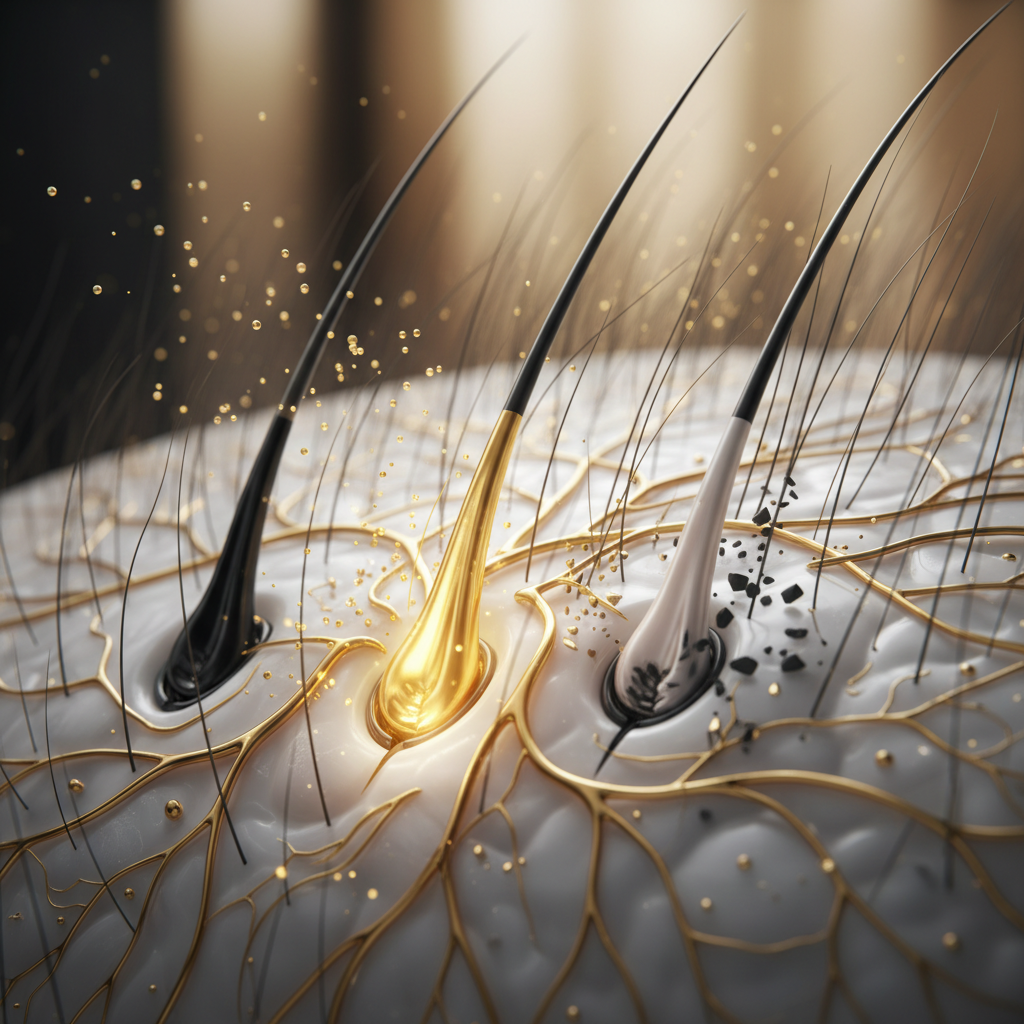
Every hair follicle relies on the dermal papilla, a cluster of specialised mesenchymal cells at the base of the bulb supplied by microscopic capillary loops. Nutrients, oxygen, and biochemical signals travel from these vessels directly to the rapidly dividing matrix cells that construct the hair shaft.
[Healthy Scalp Barrier (pH 4.5 to 5.5)]
 │
 ▼
 [Balanced Microbiome & Controlled Lipids]
 │
 ▼
 [Low Perifollicular Oxidative Stress]
 │
 ▼
 [Optimal Capillary Perfusion in Dermis]
 │
 ▼
 [Sustained Anagen Growth Phase & Fibre Calibre]
When the scalp barrier breaks down, inflammatory cytokines such as interleukin-1 alpha (IL-1α) and tumour necrosis factor-alpha (TNF-α) release into the upper dermis. This inflammatory cascade causes perifollicular fibrosis, a microscopic stiffening of collagen fibres around the hair follicle neck. Over time, this mechanical constriction compromises blood supply, starves the dermal papilla, and accelerates follicular miniaturisation, causing thick terminal hairs to degrade into fine, wispy vellus hairs.
Signs of an unhealthy scalp environment
Identifying early signs of scalp distress allows you to intervene before inflammation impacts hair shedding. Key indicators include:
- Persistent erythema (redness): Visible pink or red patches around follicular ostia (pores) indicate ongoing cutaneous micro-inflammation.
- Tightness or pruritus (itching): Sensation of burning, tightness, or persistent itching points to a disrupted acid mantle or microbial overgrowth.
- Adherent scale vs. loose flakes: Fine, dry, white flakes usually stem from dehydration or mild barrier irritation. Greasy, yellowish, adherent scales that cling to hair shafts suggest seborrhoeic dermatitis driven by Malassezia.
- Sebum plug accumulation: Hardened sebum plugs blocking the follicular openings prevent healthy sebum drainage and foster bacterial proliferation.
- Trichodynia: Scalp tenderness or pain when touching the hair roots, often reported alongside active telogen effluvium or early pattern thinning.
What you can do to support your scalp
An effective scalp regimen focuses on cleansing, gentle stimulation, and barrier maintenance.
1. Cleanse regularly with pH-balanced formulas
Do not fear washing your hair. Under-washing causes oxidised lipids and dead keratinocytes to accumulate, which worsens thinning. Use a sulphate-free or gentle sulphate shampoo formulated at pH 5.0 to 5.5 every one to two days if you have an oily scalp, or every two to three days if your scalp runs dry.
2. Practice mechanical scalp stimulation
Standardised scalp massage, performed using fingertip pads (never fingernails) for 4 to 5 minutes daily, stretches the dermal papilla cells. Mechanical tension has been shown in clinical trials to upregulate signalling genes like NOGGIN and VEGF, improving local microcirculation and slightly increasing hair thickness over a 24-week period.
3. Exfoliate chemically, not aggressively
Avoid harsh physical scrubs with jagged nutshells that cause micro-tears in the scalp stratum corneum. Instead, opt for low-dose chemical exfoliants such as salicylic acid (0.5 to 2 percent), which is lipophilic and penetrates sebum to clear inside the pore, reducing follicular clogging.
4. Support with topical botanicals and caffeine
Cosmetic topicals containing caffeine, rosemary extract, niacinamide, and biotin supply antioxidants directly to the scalp surface. Topical caffeine penetrates the follicular sheath within minutes, counteracting oxidative stress and supporting the hair's natural growth cycle.
Distinguishing shedding, thinning, and breakage
Understanding where your hair loss originates ensures you apply the correct care strategy:
| Characteristic | Hair Shedding (Telogen Effluvium) | Hair Thinning (Miniaturisation) | Hair Breakage (Fibre Fracture) |
|---|---|---|---|
| Primary Location | Whole scalp, generalised diffuse loss | Crown, parting line, temples | Mid-lengths and ends |
| Fibre Appearance | Full-length strand with white keratin bulb | Finer, shorter, wispy hairs | Short pieces without bulb, jagged ends |
| Primary Mechanism | Follicles triggered early into resting phase | Hormonal/genetic follicle shrinking | Mechanical or chemical cuticle degradation |
| Scalp Health Role | Calms stress-induced local inflammation | Optimises follicle condition and blood flow | Minimal; fibre conditioning is required |
| Typical Recovery | 3 to 6 months after trigger resolves | Ongoing long-term management | Instant reduction once handling changes |
The Watermans approach to scalp care
At Watermans, supporting the scalp is the cornerstone of healthy-looking hair. Formulations like GrowMe Shampoo are developed specifically around this philosophy: balancing surface condition rather than simply washing the hair fibre.
By combining topical caffeine, rosemary extract, biotin, niacinamide, and lupin protein within a gentle cleansing base, GrowMe cleanses away oxidised lipids while bathing the follicular collar in fortifying nutrients. It addresses the scalp environment without stripping the skin's essential moisture barrier, leaving thinning hair looking fuller, denser, and revitalised from the root up.
When the cause may be something else
Thinning hair often points to deeper internal shifts rather than purely cosmetic scalp issues. If your scalp appears completely clear, calm, and pale yet you continue to lose density rapidly, consider underlying physiological factors:
- Thyroid dysfunction: Both hypothyroidism and hyperthyroidism disrupt normal hair cycling, causing diffuse thinning across the entire scalp.
- Ferritin and nutritional deficiencies: Serum ferritin levels below 30 to 50 ng/mL often limit the metabolic energy available to the hair matrix. Deficiencies in vitamin D3, zinc, or essential amino acids produce similar shedding.
- Hormonal fluctuations: Postpartum hormonal drops, discontinuing oral contraceptives, or entering perimenopause cause rapid shifts into the telogen phase.
- High systemic stress: Acute psychological or physical illness (such as high fevers or surgery) can precipitate telogen effluvium roughly 2 to 3 months after the event.
When to seek professional medical advice
Always consult a GP, dermatologist, or qualified trichologist if you notice any of the following red flags:
- Patchy, coin-sized hair loss appearing suddenly (suggestive of alopecia areata).
- Severe burning, constant pain, or pustules across the scalp.
- Visible scarring, smoothness where pores should be, or receding along the frontal hairline accompanied by redness (potential cicatricial alopecia).
- Unexplained weight loss, extreme fatigue, or heavy menstrual cycles accompanying diffuse shedding.
Frequently asked questions about Scalp Health for Thinning Hair
Does poor scalp hygiene cause permanent hair loss?
Poor scalp hygiene does not cause permanent baldness, but it causes temporary shedding. When excess sebum and dead skin cells sit on the scalp, they oxidise and feed yeast populations, causing seborrhoeic dermatitis. The resulting inflammation and continuous scratching can weaken follicular anchor points, leading to increased shedding that reverses once clean scalp balance is restored.
Can scalp massage reverse genetic thinning?
Scalp massage cannot alter genetics or eliminate DHT, but it can support hair diameter. Research demonstrates that daily 4-minute mechanical massage delivers mechanical strain to dermal papilla cells, increasing local microcirculation and expression of growth-related genes. It serves as a helpful complementary practice alongside wider routines for scalp health for thinning hair.
How often should you wash your scalp if your hair is thinning?
Most trichologists recommend washing thinning hair every 1 to 2 days with a gentle, pH-balanced cleanser. Leaving hair unwashed out of fear that shampooing pulls hairs out is counterproductive. Those hairs were already detached in the telogen phase; allowing oil and debris to build up only worsens follicular inflammation.
Should I apply heavy oils directly to a thinning scalp?
Heavy plant oils like coconut or castor oil can coat the scalp heavily, potentially blocking follicular openings and creating an anaerobic environment that feeds Malassezia yeasts. If your hair is thinning, opt for lightweight, water-based botanical serums or targeted scalp cleansers rather than slathering pure culinary oils on your roots.
Summary
Focusing on scalp health for thinning hair is the foundational step in any evidence-based hair maintenance plan. By keeping the acid mantle balanced, clearing oxidised sebum, avoiding harsh mechanical abrasion, and soothing cutaneous micro-inflammation, you create the best possible biological foundation for your follicles to thrive. While cosmetic scalp care cannot override genetics or treat clinical alopecia, an optimally nourished, clean scalp ensures that your hair grows with maximum strength, retention, and vitality.
Sources and references
- British Association of Dermatologists. Clinical Guidelines for the Management of Alopecia. 2021.
- Trüeb, R. M. "Oxidative Stress in Ageing of Hair." International Journal of Trichology, 2009.
- Koyama, T. Et al. "Standardized Scalp Massage Results in Increased Hair Thickness by Inducing Stretching Forces on Dermal Papilla Cells in the Subcutaneous Tissue." Eplasty, 2016.
- Sadick, N. S. "A Structural Approach to Scalp Health and Hair Longevity." Journal of Drugs in Dermatology, 2019.
- Fischer, T. W. Et al. "Effect of caffeine and testosterone on the proliferation of human hair follicles in vitro." International Journal of Dermatology, 2007.
Find these ingredients in Watermans products
- Zinc: you will find this ingredient in our Hair Vitamins.
- Castor Oil: you will find this ingredient in our Camellia & Black Castor Hair & Body Oil.
- Niacinamide: you will find this ingredient in our Hair Mask.