Scalp Dryness vs Dandruff: How to Identify and Manage Each Condition
9 min read ·
Confused by Scalp Dryness vs Dandruff? Discover the distinct biological causes, flake characteristics, and targeted treatments for lasting scalp comfort.
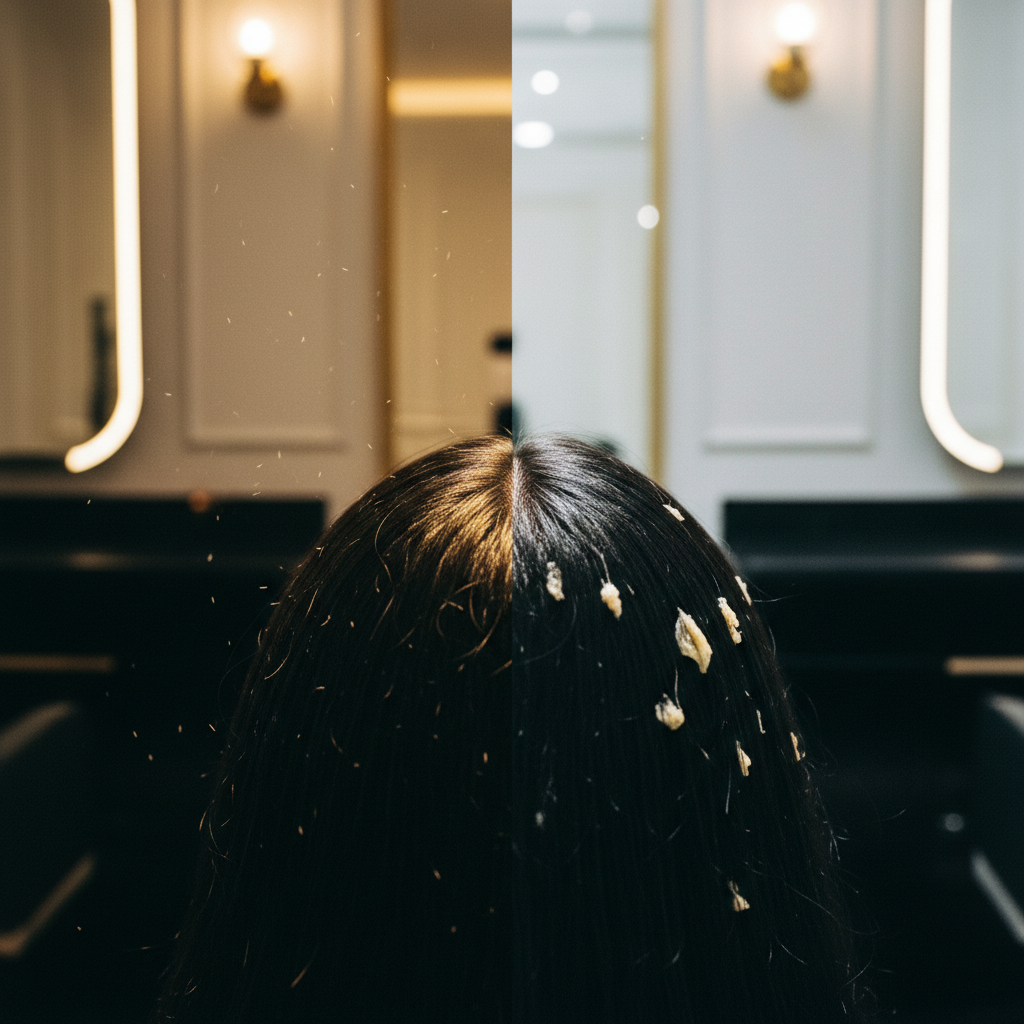
Quick answer: Understanding Scalp Dryness vs Dandruff comes down to moisture versus oil and yeast. A dry scalp is a skin barrier issue where the skin lacks water, shedding small, white, powdery flakes alongside tightness. Dandruff (pityriasis capitis) is driven by an overgrowth of Malassezia yeast feeding on scalp sebum, producing larger, greasy, yellowish flakes. The main limitation in self-diagnosis is that chronic inflammation, psoriasis, or contact dermatitis can mimic both conditions, requiring professional clinical evaluation if flakes persist.
Key takeaways
- Primary driver: Dry scalp stems from transepidermal water loss and barrier disruption, whereas dandruff stems from sebum breakdown by the lipophilic yeast Malassezia.
- Flake appearance: Dry scalp flakes are tiny, dry, and white. Dandruff flakes are typically larger, clumped, oily, and range from off-white to yellowish.
- Washing frequency: Washing hair less often can soothe a dry scalp but often worsens dandruff by allowing scalp sebum to accumulate.
- Treatment targets: Dry scalp requires gentle surfactants and humectants to restore hydration. Dandruff requires antimicrobial actives (such as ketoconazole, zinc pyrithione, or piroctone olamine) to manage yeast levels.
- Underlying conditions: Severe redness, thick silvery scales, or plaques extending beyond the hairline indicate conditions like seborrhoeic dermatitis or scalp psoriasis, not simple dryness.
Scalp Dryness vs Dandruff: what the evidence shows
Differentiating Scalp Dryness vs Dandruff requires examining the biological environment of the stratum corneum, the outermost layer of the scalp. While both conditions cause visible shedding and occasional itching, dermatological literature separates them into two distinct operational categories: barrier hydration deficit and microbial-induced desquamation.
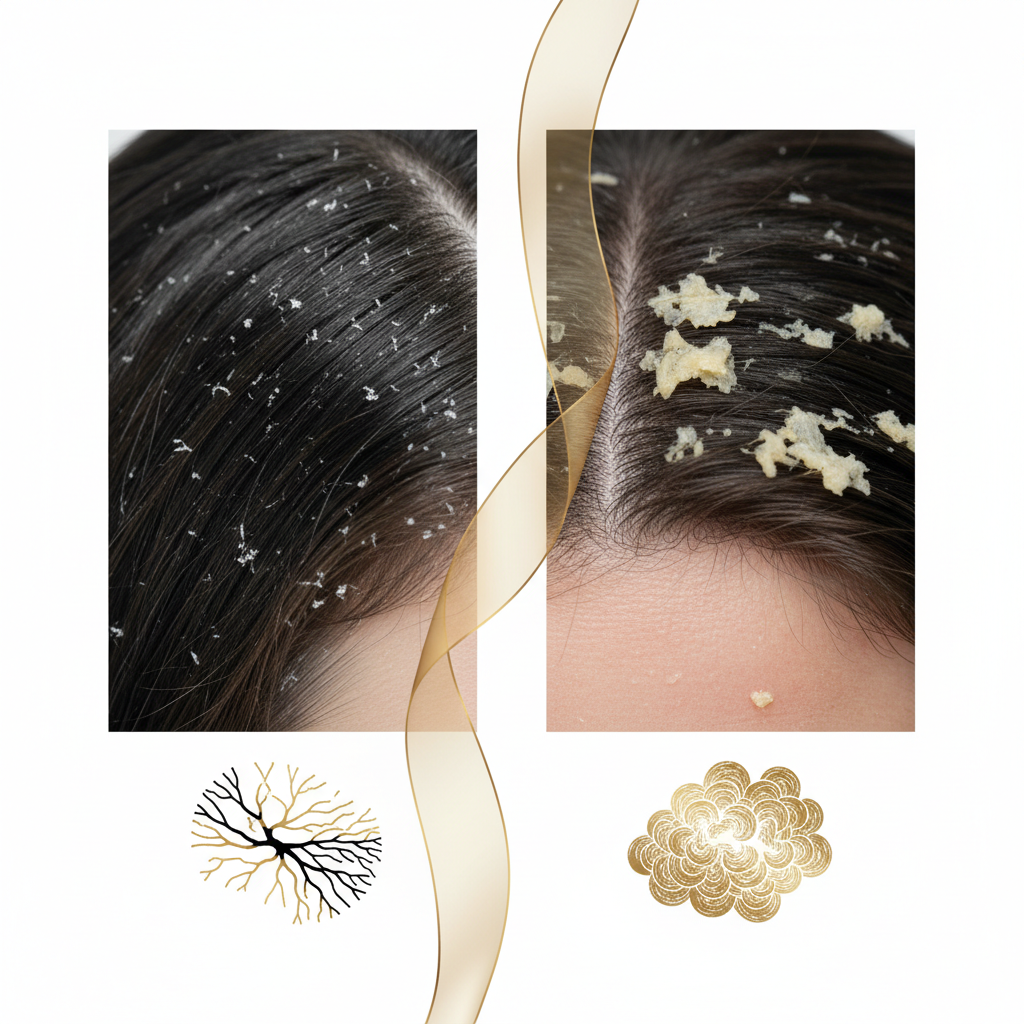
A healthy scalp sheds microscopic corneocytes continuously as part of normal epidermal turnover, which takes approximately 28 days. In a dry scalp, environmental factors (such as cold air, central heating, or harsh alkaline detergents) strip intercellular lipids, accelerating transepidermal water loss (TEWL). When skin moisture levels drop below 10%, corneocytes fail to detach cleanly. Instead, they slough off in small, visible clusters.
Dandruff, recognized clinically as mild, non-inflammatory seborrhoeic dermatitis, involves an accelerated cell turnover cycle of just 7 to 14 days. The human scalp naturally hosts Malassezia yeasts, predominantly Malassezia restricta and Malassezia globosa. These organisms depend on external lipids for survival because they lack fatty acid synthase genes. They consume scalp triglycerides and secrete lipase enzymes, releasing irritating free fatty acids (particularly oleic acid). In sensitive individuals, these fatty acids disrupt the epidermal barrier, trigger hyperproliferation of keratinocytes, and cause incomplete cornification. The resulting sheds are clumpy, sebum-rich, and oily.
| Clinical Feature | Dry Scalp | Dandruff (Pityriasis Capitis) |
|---|---|---|
| Primary Cause | Lack of moisture / damaged lipid barrier | Malassezia yeast metabolising sebum |
| Flake Texture | Small, fine, powdery, dry | Large, oily, clumped, sticky |
| Flake Colour | Translucent to bright white | Off-white to yellow |
| Scalp Sensation | Tight, stinging, itchy without grease | Pruritic (itchy), greasy, greasy-heavy |
| Skin Elsewhere | Often accompanied by dry skin on legs/arms | Often normal or prone to oily T-zone |
| Effect of Washing | Over-washing worsens it | Infrequent washing worsens it |
| Core Remedy | Humectants, emollients, mild pH shampoos | Antifungal and keratolytic agents |
What the biological mechanism reveals
The fundamental difference lies in sebaceous gland activity and microbial balance. The scalp possesses one of the highest densities of sebaceous glands on the human body (between 400 and 900 glands per square centimetre).
In dandruff, high sebum production provides unlimited substrate for Malassezia. The lipases produced by the yeast break down triglycerides into unsaturated fatty acids. Oleic acid penetrates the compromised stratum corneum, inducing an irregular inflammatory cascade that forces premature desquamation. Nucleated, immature cells reach the surface, sticking together with excess sebum to form thick flakes.
In scalp dryness, sebaceous activity is often low or normal, but structural hydration is depleted. Exposure to water with a high pH, prolonged hot showers, or sodium lauryl sulphate (SLS) removes natural moisturising factor (NMF) from the scalp. Without NMF, ceramides, and fatty acids, the scalp loses elasticity. The itch associated with dryness is neurosensory, caused by microscopic micro-fissuring of the skin barrier, unlike the histamine- and cytokine-mediated itch seen in active dandruff flares.
Signs to look for: how to assess your scalp
You can distinguish between the two by observing physical signs and daily hair habits:
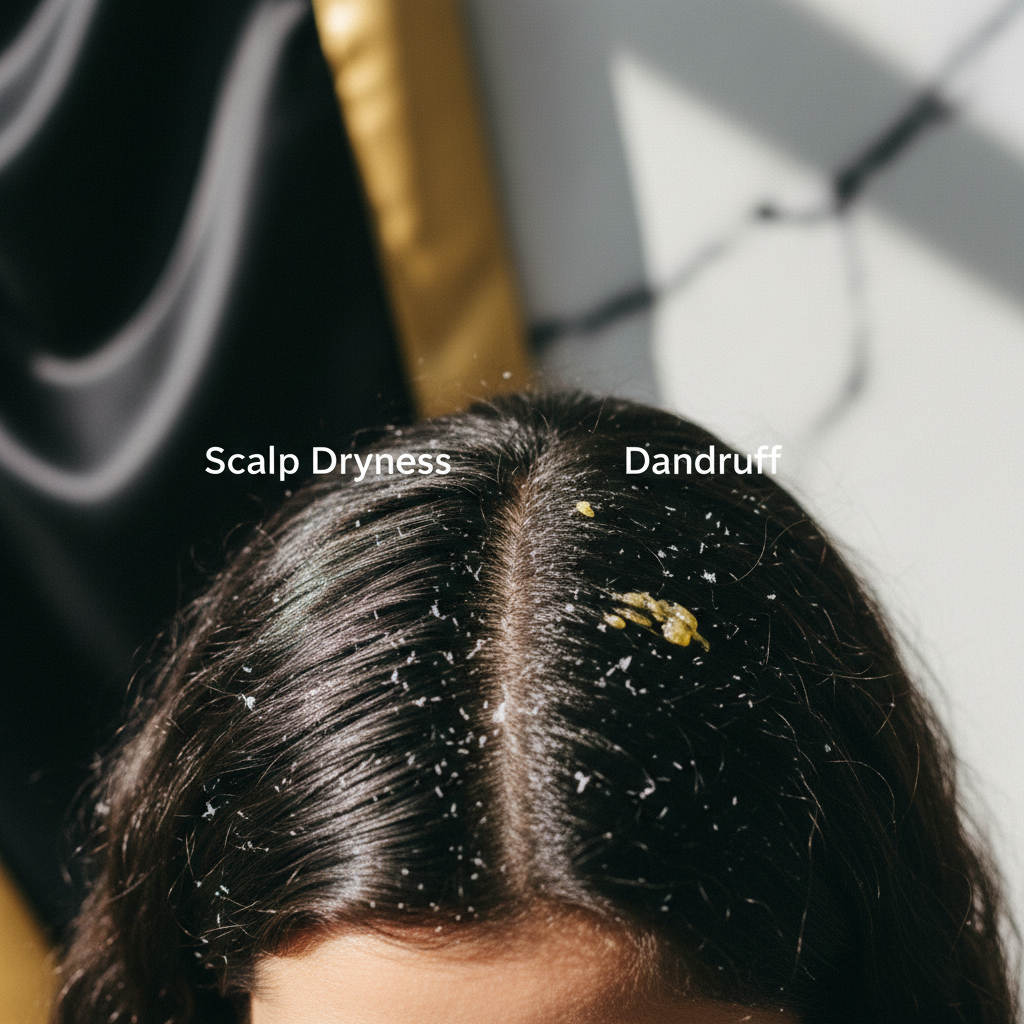
- Examine the flakes: Part your hair in bright, natural light. If the flakes fall like fine snow onto your shoulders when you rub your hair, it is likely dry scalp. If the flakes stick to the hair shafts, feel greasy when rubbed between your fingertips, or exhibit a yellowish hue, dandruff is the culprit.
- Check your scalp after 24 hours: Cleanse your hair with a basic, neutral cleanser. Wait 24 hours. Touch your scalp with a clean finger. If the skin feels tight, paper-like, or shows signs of micro-flaking without any oiliness, you are dealing with dryness. If your fingertips pick up noticeable oil alongside flakes, yeast proliferation is more likely.
- Observe the rest of your body: Dry scalp rarely occurs in isolation. It frequently accompanies dry hands, dry shins, or conditions like atopic eczema. Conversely, dandruff tends to appear in individuals with oily complexions, prominent pores, or oily skin along the nasolabial folds and eyebrows.
What you can do: targeted care strategies
Because their biological triggers are opposites, treating a dry scalp with anti-dandruff products or treating dandruff with heavy oils will invariably worsen both conditions.
Addressing a dry scalp
- Switch to mild, pH-balanced cleansing: The scalp naturally sits at an acidic pH between 4.5 and 5.5. Alkaline soaps and harsh surfactants degrade the acid mantle. Use sulphate-free shampoos formulated with gentle glucosides or amphoteric surfactants.
- Lower the water temperature: Hot water dissolves essential epidermal lipids. Wash with lukewarm water to preserve natural sebum and prevent elevated water loss.
- Replenish hydration: Apply leave-in scalp tonics or serums containing humectants like glycerin, hyaluronic acid, betaine, and panthenol (vitamin B5). These ingredients pull water into the stratum corneum without leaving heavy residues.
- Avoid heavy mineral oils: Applying thick plant butters or petroleum jellies to an itchy scalp can block follicular openings and inadvertently trigger yeast growth. Stick to lightweight, non-comedogenic hydration.
Managing dandruff
- Use targeted active ingredients: Look for over-the-counter therapeutic shampoos containing active ingredients verified to curb Malassezia populations:
- Piroctone olamine: A gentle antifungal agent that reduces yeast counts while maintaining hair softness.
- Zinc pyrithione: An antimicrobial agent that normalises epithelial keratinisation.
- Ketoconazole (1% to 2%): A broad-spectrum imidazole antifungal used for persistent flaking.
- Salicylic acid: A keratolytic agent that breaks the bonds between clumped dead cells, assisting in mechanical removal.
- Leave treatments on the scalp: Antifungal shampoos require contact time to be effective. Lather the product into the scalp and leave it for 3 to 5 minutes before rinsing.
- Maintain regular cleansing: Wash oily hair daily or every other day. Leaving sebum on the scalp provides sustained nourishment for yeast, accelerating the flaking cycle.
Supporting the scalp ecosystem: Watermans
When formulating a scalp-first routine, balancing microbial control with moisture retention is critical. Harsh anti-dandruff formulations often strip hair lengths, leading to fibre breakage and cosmetic dryness.
Watermans products are formulated to support the scalp environment by providing balanced cleansing and targeted nutrition. Watermans GrowMe Shampoo incorporates ingredients such as rosemary extract, caffeine, biotin, and allantoin, which soothe irritation, refresh the follicular environment, and maintain the scalp's natural surface balance. By pairing balanced cleansing with conditioning agents, you can preserve strand strength and scalp comfort without relying on aggressive, drying chemicals.
When the cause may be something else
If your flakes do not respond to targeted hydration or standard anti-dandruff shampoos, another dermatological condition may be present:
- Seborrhoeic dermatitis: When dandruff involves prominent erythema (redness), burning, and extends to the ears, eyebrows, or chest, it has progressed into clinical seborrhoeic dermatitis.
- Scalp psoriasis: Characterised by sharply demarcated, thick, silvery-white plaques with underlying red, indurated skin. It frequently extends beyond the hairline and does not resolve with standard dandruff cleansers.
- Contact dermatitis: An allergic or irritant reaction to hair dyes, fragrances, or preservatives (such as methylisothiazolinone). It produces sudden, intense itching, redness, and peeling.
- Tinea capitis: A fungal ringworm infection more common in children, which presents with patchy scaling, inflammation, and localised areas of hair shedding or broken stubble.
When to get professional advice
Consult a GP, dermatologist, or qualified trichologist if:
- Flaking persists after four consecutive weeks of targeted over-the-counter care.
- Your scalp becomes severely inflamed, swollen, painful, or hot to the touch.
- You observe crusting, weeping, or fluid-filled lesions, which may signal a secondary bacterial infection.
- The flaking is accompanied by unexplained, patchy hair shedding or thinning along the affected areas.
Frequently asked questions about Scalp Dryness vs Dandruff
Can you have both a dry scalp and dandruff at the same time?
Yes. It is possible to have a chemically dehydrated skin barrier (dry scalp) alongside an overgrowth of Malassezia yeast (dandruff). This often happens when individuals with dandruff overuse harsh, stripping antifungal shampoos without replenishing hydration. The result is an irritated scalp that produces both fine dry flakes and greasy clumps simultaneously.
Does oiling your hair help Scalp Dryness vs Dandruff?
Oiling may temporarily soothe a purely dry scalp, but it often worsens dandruff. Because the yeast species responsible for dandruff (Malassezia) feed directly on lipids and fatty acids, applying natural oils like coconut, olive, or argan oil can stimulate yeast proliferation. For this reason, clarifying the debate between Scalp Dryness vs Dandruff is critical before applying raw oils to your roots.
How often should I wash my hair if my scalp is flaking?
Your washing schedule depends entirely on the root cause. If your flaking is driven by dryness, reduce your washing frequency to two or three times a week using a sulphate-free, hydrating cleanser. If your flakes are caused by dandruff, you should wash more frequently, daily or every other day, to remove the sebum that fuels yeast growth.
Can hard water cause dry scalp or mimic dandruff?
Hard water contains high levels of dissolved calcium and magnesium. These minerals can react with cleansing products to form an insoluble residue that coats the hair and scalp, disrupting the skin's acidic barrier. This exacerbates dryness, triggers micro-flaking, and can easily be mistaken for genuine dandruff, though it is primarily an environmental moisture issue.
A balanced approach to scalp care
Sorting through the differences in Scalp Dryness vs Dandruff allows you to tailor your hair care regimen to what your skin actually requires. Treating a fungal imbalance with heavy moisturising butters will only accelerate yeast turnover, while stripping a dehydrated barrier with aggressive medicated washes leaves the scalp tight, cracked, and inflamed. By paying close attention to flake size, texture, sebum levels, and overall skin behaviour, you can restore physiological equilibrium to the scalp and maintain resilient, healthy hair.
Sources and references
- British Journal of Dermatology: The role of Malassezia in the pathogenesis of dandruff and seborrheic dermatitis. (2011).
- NHS England: Dandruff. Health A to Z guidance. (Reviewed 2022).
- Journal of the American Academy of Dermatology: Seborrheic dermatitis and dandruff: A comprehensive review. (2015).
- International Journal of Cosmetic Science: Scalp condition impacts hair growth through oxidative stress. (2018).
- National Institute for Health and Care Excellence (NICE): Seborrhoeic dermatitis: Clinical knowledge summaries. (2023).
Find these ingredients in Watermans products
- Zinc: you will find this ingredient in our Hair Vitamins.
- Oleic Acid: you will find this ingredient in our Camellia & Black Castor Hair & Body Oil.
- Panthenol (Provitamin B5): you will find this ingredient in our Heat Protection Spray.