Scalp Build-up and Follicle Health: A Trichological Guide
9 min read ·
Explore the science behind Scalp Build-up and Follicle Health. Learn how sebum, products, and dead skin affect hair anchoring, and discover evidence-based cleansing habits.
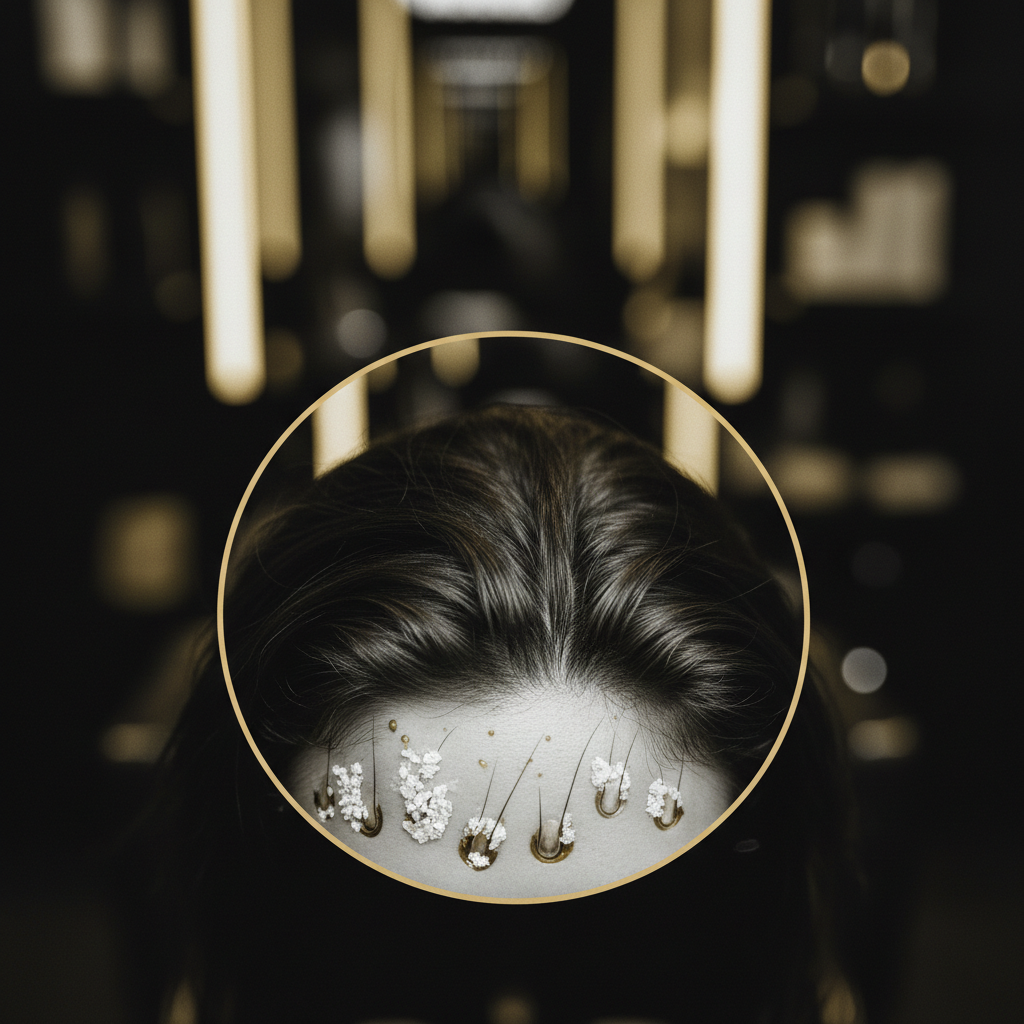
Quick answer: The relationship between Scalp Build-up and Follicle Health centres on how layers of sebum, dead corneocytes, sweat, and styling residue impact the perifollicular environment. Build-up does not permanently destroy hair follicles or cause androgenetic alopecia. However, it alters the microbiome, fuels inflammatory conditions like seborrhoeic dermatitis, and triggers oxidative stress that can compromise hair anchoring and increase shedding. Regular, effective scalp cleansing restores ecological balance, though stubborn inflammatory skin disorders require medical diagnosis rather than just cosmetic washing.
Key takeaways
- Scalp build-up consists of endogenous debris (sebum, desquamated skin cells, sweat) and exogenous residues (silicones, styling polymers, particulate pollution).
- The follicle opening (the infundibulum) can become physically occluded, creating an anaerobic, lipid-dense environment that favours Malassezia yeast overgrowth.
- Scalp build-up does not cause male or female pattern hair loss, but chronic inflammation from untreated build-up can precipitate telogen effluvium and weaken the hair anchor.
- Clarifying agents, chemical exfoliants like salicylic acid, and proper mechanical washing resolve cosmetic build-up without stripping the skin barrier.
- Persistent scaling, redness, or itching indicates an underlying dermatological condition such as psoriasis or dermatitis, which requires clinical evaluation.
Scalp Build-up and Follicle Health: what the evidence shows
Research into Scalp Build-up and Follicle Health reveals that the scalp skin surface requires balanced follicular desquamation to remain healthy. The human scalp contains roughly 100,000 hair follicles, each accompanied by an active sebaceous gland. These glands produce sebum, a complex lipid mixture of triglycerides, wax esters, squalene, and free fatty acids.
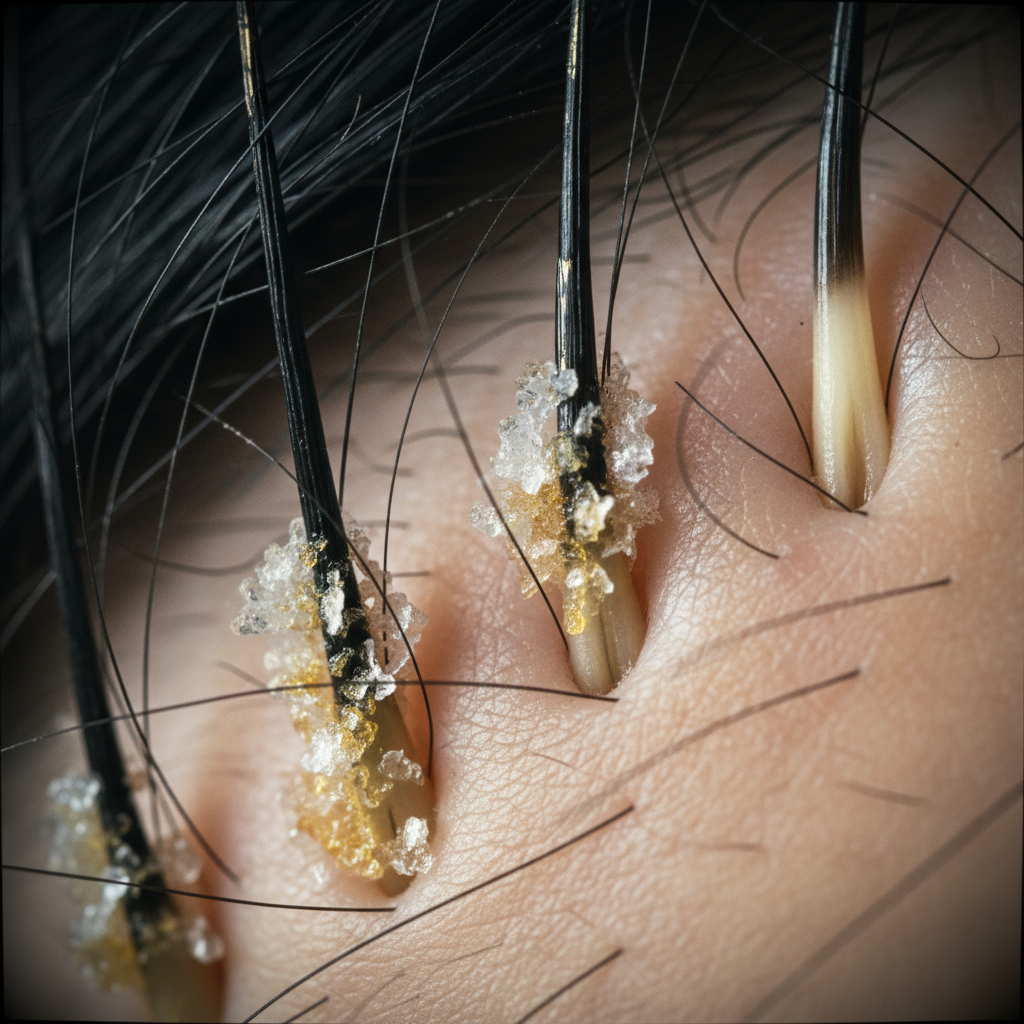
When shedding skin cells (corneocytes) mix with excess sebum and unwashed cosmetic polymers, they form an adherent film across the stratum corneum and inside the follicular infundibulum. Clinical dermatology studies show that this dense layer disrupts the native scalp microbiome. Specifically, lipophilic yeasts belonging to the Malassezia genus metabolise triglycerides in sebum, releasing irritating free fatty acids such as oleic acid.
These fatty acids breach the epidermal barrier, triggering subclinical micro-inflammation around the follicle. This inflammatory response leads to pruritus (itching), erythema, and flaking. Left unchecked, the oxidative stress generated by this inflammatory cascade weakens the structural integrity of the hair cuticle within the follicle pore, accelerating premature transition from the anagen (growth) phase to the telogen (resting) phase.
What the evidence does not show
The wellness and beauty industries frequently claim that build-up "suffocates" the hair root or directly causes permanent baldness. Medical evidence does not support these claims:
- Follicles do not "breathe" atmospheric oxygen: Hair follicles receive oxygen and metabolic nutrients from the microvascular capillary network in the dermal papilla, deep beneath the skin surface. Surface residues do not cut off the root's oxygen supply.
- Build-up does not cause pattern hair loss: Androgenetic alopecia is driven by genetic sensitivity to dihydrotestosterone (DHT) acting on follicular receptors. Product accumulation cannot trigger or replicate this hormonal process.
- Cosmetics do not permanently seal follicles: Shampoos, conditioners, and styling resins wash away or wear off over time. They do not form an impermeable, permanent glue over the pore.
Confusing cosmetic debris with genuine follicular miniaturisation delays appropriate treatment. While a clean scalp provides the optimal foundation for hair growth, stripping the scalp with harsh solvents will not halt genetic thinning.
The biological mechanisms behind follicular compromise
The scalp functions as a specialised ecological niche. Understanding how build-up interacts with hair follicles requires looking at three distinct mechanisms.
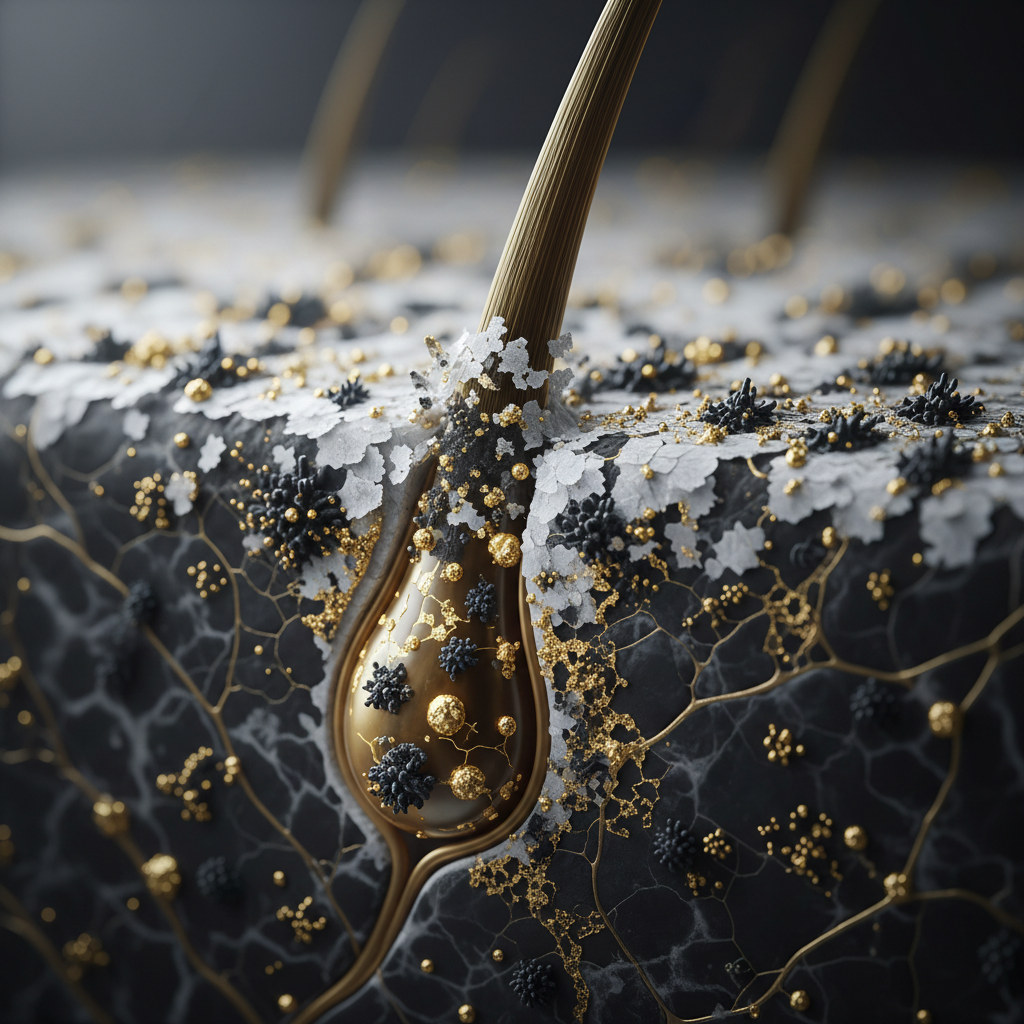
1. Microbiome dysbiosis and lipid peroxidation
The scalp surface is home to an ecosystem dominated by Cutibacterium acnes, Staphylococcus epidermidis, and Malassezia restricta. When heavy styling residues, dry shampoos, or natural oils sit on the scalp for days, they alter the local microclimate. Sebum trapped under this film oxidises, producing squalene peroxides and lipid hydroperoxides. These reactive species are highly cytotoxic, irritating the keratinocytes lining the follicular opening and provoking localized immune responses.
2. Infundibular hyperkeratosis
Just as facial pores develop comedones, hair follicles on the scalp can experience infundibular hyperkeratosis. Dead cells lining the upper portion of the hair canal fail to shed normally. When bound by sticky sebum and cosmetic waxes, they form a keratinous plug. While a hair fibre can usually push through this soft debris, the resulting friction and local swelling can degrade the root sheath, leading to diffuse shedding (telogen effluvium).
3. Mechanical trauma from itching
The inflammation caused by build-up inevitably triggers sensory nerve endings, creating a persistent urge to scratch. Scratching causes physical excoriation of the scalp barrier, breaks hair shafts near the surface, and introduces opportunistic bacteria like Staphylococcus aureus. This self-inflicted trauma converts mild superficial flaking into secondary infections that disrupt the follicular growth cycle.
Signs of scalp build-up versus dermatological conditions
Identifying whether residue is merely cosmetic or part of an inflammatory skin condition dictates how you treat it.
| Feature | Cosmetic Scalp Build-up | Seborrhoeic Dermatitis | Scalp Psoriasis |
|---|---|---|---|
| Appearance | Dull, powdery or waxy film; coats hair shafts near root | Yellowish, greasy flakes adhering to red skin | Thick, well-demarcated silvery-white plaques |
| Sensation | Mild tightness or light itch when overdue for a wash | Moderate to severe itching, burning sensation | Itching, tightness, occasional soreness or cracking |
| Scalp Texture | Slightly gritty or greasy to the touch | Inflamed, moist, or slick beneath flakes | Raised, indurated, dry, and rough plaques |
| Response to Cleansing | Clears completely with a clarifying shampoo | Returns rapidly; requires antifungal or medicated wash | Does not clear with regular shampoo; requires targeted therapy |
| Hair Shedding Impact | Minimal to none; occasional mechanical breakage | Temporary shedding from localized inflammation | Possible temporary shedding if plaques are thick or picked |
What you can do to maintain follicle health
Maintaining a clean environment around the follicle does not require aggressive scrubbing or dozens of products. It demands consistent, targeted habits.
Adopt an appropriate wash frequency
Wash frequency depends on your hair texture, sebum production rate, and daily routine. Straight and fine hair types often produce noticeable sebum within 24 to 48 hours and benefit from frequent washing. Coarser, highly textured, or afro hair types produce similar sebum levels, but the lipid spreads down the curl pattern more slowly; these hair types benefit from thorough weekly or bi-weekly cleansing routines.
Use targeted clarifying and exfoliating agents
Incorporate products designed to break down specific residues:
- Salicylic acid (0.5% to 2%): A beta-hydroxy acid (BHA) that is oil-soluble, allowing it to penetrate into the sebum within the follicular pore and dissolve keratin plugs.
- Chelating shampoos: Formulated with disodium or tetrasodium EDTA to lift mineral deposits left by hard water (calcium and magnesium salts) that bind to styling polymers.
- Surfactant balance: Alternate between gentle, sulphate-free cleansers for routine maintenance and clarifying surfactant formulas (such as sodium C14-16 olefin sulfonate or mild sulphates) every few washes to strip away heavy residues.
Refine your mechanical technique
When washing, use the pads of your fingertips (never your fingernails) to massage the cleanser across the entire surface of the scalp for at least 60 seconds. This lifts physical deposits without abrading the stratum corneum. Rinse thoroughly with lukewarm water (around 37°C to 38°C); excessively hot water strips essential lipids and provokes rebound oiliness, while cold water fails to dissolve dense sebum fats.
Limit dry shampoo and root sprays
Dry shampoos rely on starch or talc powders to absorb oil. They do not remove sebum, sweat, or dead skin; they merely add another layer of particulate matter to the follicle opening. Limit dry shampoo to emergency touch-ups, and wash your scalp within 24 hours of application.
When the cause is something else
If your scalp remains flaky, itchy, or tender despite thorough cleansing with clarifying shampoos, cosmetic build-up is not the primary issue.
- Contact dermatitis: An allergic or irritant reaction to fragrances, preservatives (like methylisothiazolinone), or hair dyes. It produces persistent weeping, red, intensely itchy skin.
- Folliculitis: A bacterial or fungal infection of the hair follicle itself, marked by small, red, pustular bumps that resemble acne and can be tender or painful.
- Cicatricial (scarring) alopecia: Conditions such as lichen planopilaris or frontal fibrosing alopecia involve inflammation that permanently destroys follicles. Early signs include perifollicular redness, scale around individual hairs, and localized hair loss without visible pore openings.
Supporting the scalp: the Watermans approach
For individuals seeking to balance cleansing efficacy with gentle daily care, Watermans incorporates targeted botanical and peptide complexes into its formulations. Products like Watermans Grow Me shampoo provide an invigorating cleanse designed to lift surface impurities, excess sebum, and everyday cosmetic residue without stripping the essential moisture barrier. By combining gentle surfactants with biotin, caffeine, rosemary extract, and niacinamide, it maintains an optimal scalp environment that feels refreshed, revitalised, and clean, supporting healthier-looking and fuller-feeling hair.
When to get professional advice
Consult a GP, dermatologist, or qualified trichologist if you notice any of the following symptoms:
- Scaling or flaking that does not improve after two weeks of targeted cleansing or over-the-counter anti-dandruff care.
- Visible redness, swelling, burning, or oozing along the hairline or crown.
- Distinct patches of hair loss, widening partings, or sudden, dramatic shedding.
- Follicular pustules, crusting, or persistent soreness.
A medical specialist can perform a dermoscopic evaluation (trichoscopy) to distinguish simple product accumulation from clinical skin disorders, ensuring you receive correct medical treatment.
Frequently asked questions about Scalp Build-up and Follicle Health
Can scalp build-up stop hair from growing out of the follicle?
Cosmetic scalp build-up cannot physically block a hair fibre from emerging. The force generated by a growing hair shaft easily pushes through soft debris. However, chronic build-up can create local inflammation and microbial overgrowth, which weakens the surrounding tissue, causes oxidative stress, and may prompt hair to shed earlier than normal.
Does dry shampoo contribute to poor Scalp Build-up and Follicle Health?
Yes. Dry shampoos use starches and powders that sit directly on the scalp, binding to sebum and sweat without removing them. Over several days, this creates a dense, pore-clogging paste. If not washed out promptly, it fosters an environment prone to inflammation, irritation, and compromised follicle anchorage.
How often should you use a clarifying shampoo to prevent build-up?
For most people, using a clarifying shampoo once every 7 to 14 days is ideal. If you exercise frequently, use heavy silicone styling waxes, or live in a hard water area, once a week helps prevent residue. Those with dry or chemically processed hair should limit clarifying to once every fortnight to prevent strand dryness.
What is the difference between dandruff and normal scalp build-up?
Scalp build-up is an accumulation of unwashed cosmetic products, sebum, and normal skin shed that washes away with a regular cleanser. Dandruff is a clinical condition driven by an overgrowth of Malassezia yeast and an accelerated skin turnover rate, producing larger, oily, itchy flakes that require active antimicrobial ingredients to manage.
Nurturing long-term Scalp Build-up and Follicle Health
Maintaining clean, healthy scalp skin is an essential part of any haircare routine. While Scalp Build-up and Follicle Health are closely linked through microbiome balance and superficial inflammation, build-up is a manageable cosmetic issue rather than a permanent sentence for your follicles. By pairing mindful cleansing techniques with targeted, non-stripping formulations, you keep the scalp ecosystem stable, providing the optimal environment for your hair to look its best.
Sources and references
- British Association of Dermatologists. "Seborrhoeic Dermatitis." Updated 2022.
- Journal of the European Academy of Dermatology and Venereology. "Scalp condition and its impact on hair quality." 2018.
- International Journal of Trichology. "The role of the scalp microbiome in health and disease." 2019.
- Journal of Investigative Dermatology. "Lipid composition of sebum and its relation to microflora on the human scalp." 2020.
- NHS. "Itchy scalp and hair loss conditions." Reviewed 2023.
Find these ingredients in Watermans products
- Oleic Acid: you will find this ingredient in our Camellia & Black Castor Hair & Body Oil.
- Niacinamide: you will find this ingredient in our Hair Mask.