Scalp Barrier Function and Hair Health: The Biological Guide
9 min read ·
Understand the vital link between Scalp Barrier Function and Hair Health, exploring how stratum corneum lipids, pH, and inflammation dictate fibre strength.

Quick answer: The relationship between Scalp Barrier Function and Hair Health centres on the stratum corneum, which shields hair follicles from microbial imbalance, chemical irritation, and transepidermal water loss. When this barrier weakens, subclinical inflammation can alter follicular cycling, prompting premature shedding and weakening the emerging hair shaft. However, topical barrier repair alone cannot reverse genetic hair loss or treat medical alopecias, meaning an intact barrier supports hair anchorage and fibre quality rather than acting as a universal cure for thinning.
Key takeaways
- The scalp stratum corneum maintains an acidic surface pH between 4.5 and 5.5, locking in hydration while keeping opportunistic micro-organisms in check.
- A compromised scalp barrier elevates transepidermal water loss (TEWL), triggering inflammatory cytokine release that can disrupt the follicular growth phase (anagen).
- Chronic scalp inflammation from barrier breakdown degrades emerging hair fibre cuticle cohesion, rendering hair brittle and prone to breakage.
- Restoring the lipid matrix with physiological lipids (ceramides, free fatty acids, cholesterol) and mild cleansing stabilises follicular anchorage.
- Barrier repair addresses reactive shedding and surface irritation, but it cannot override hormonal triggers in pattern hair loss.
Scalp Barrier Function and Hair Health: what the evidence shows
Dermatological research demonstrates that Scalp Barrier Function and Hair Health are fundamentally linked through the follicular microenvironment. The scalp possesses roughly 100,000 hair follicles, accompanied by abundant sebaceous glands. While this high density of sebaceous output provides natural lubrication, the stratum corneum of the scalp is paradoxically more permeable and sensitive than facial skin.
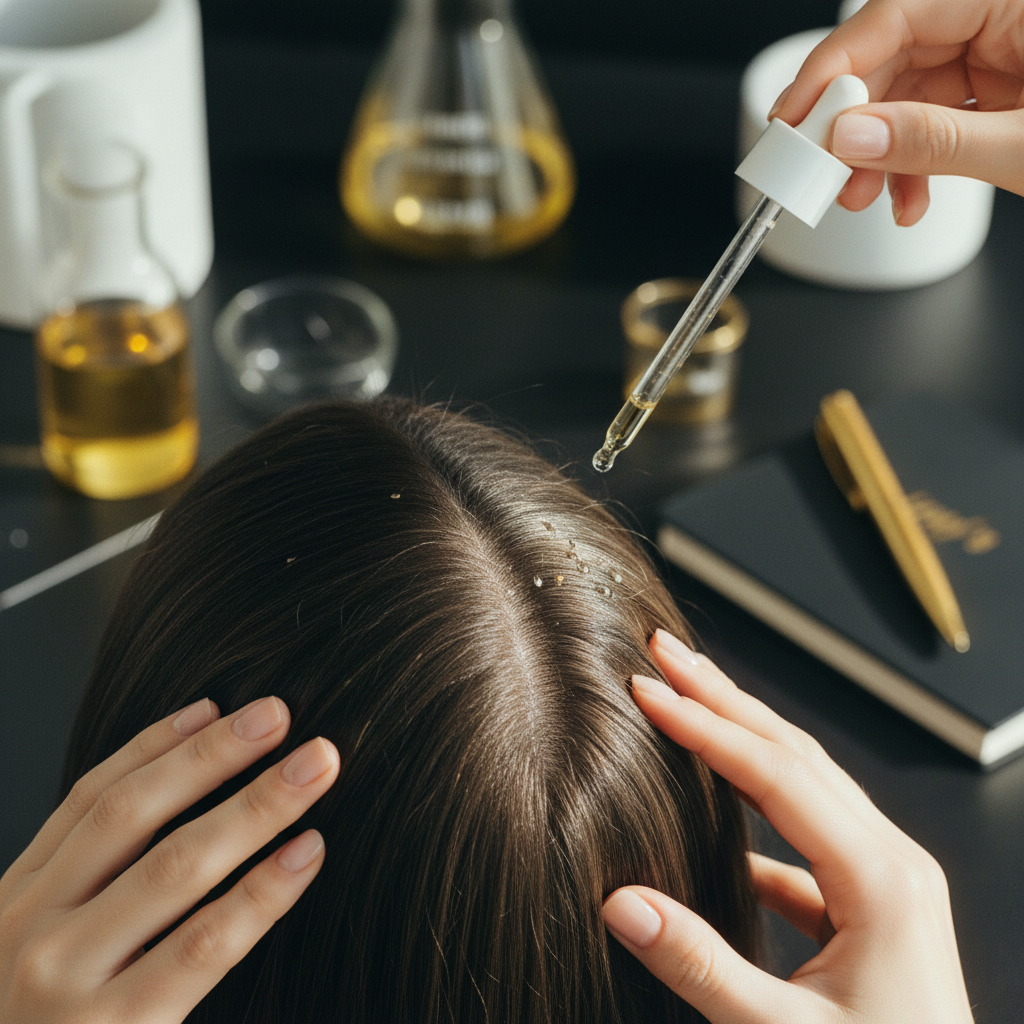
Clinical measurements reveal that baseline transepidermal water loss is higher on the scalp than on the forearms or cheeks, largely because the numerous follicular openings present physiological pathways through which moisture escapes and irritants penetrate.
When the scalp barrier remains intact, the lipid bilayer, composed of approximately 50% ceramides, 25% cholesterol, and 15% free fatty acids, forms an impermeable seal. This seal controls microbial communities, primarily Malassezia yeasts and Cutibacterium acnes, while retaining intrinsic moisture.
If this lipid mortar is stripped by alkaline cleansers, harsh physical exfoliation, or chemical processing, permeability spikes. Research published in the International Journal of Cosmetic Science shows that oxidative stress and barrier disruption directly correlate with an increase in telogen (resting) hair shedding. Subclinical micro-inflammation at the infundibulum (the upper portion of the hair follicle) signals the hair matrix to prematurely curtail anagen, precipitating diffuse shedding (telogen effluvium) and causing newly formed fibres to emerge with poorly aligned cuticle scales.
What the evidence does not show
It is critical to separate established biological mechanisms from cosmetic overreach. The evidence does not show that repairing your scalp barrier will cure androgenetic alopecia (male or female pattern hair loss). Pattern hair loss is driven by androgen sensitivity (specifically dihydrotestosterone, or DHT) and genetic programming within the dermal papilla cells deep inside the dermis, far beneath the stratum corneum.
Furthermore, evidence does not show that natural oils alone restore barrier competence. Applying heavy plant oils such as coconut, olive, or argan oil does not automatically replicate the complex physiological ratio of ceramides, cholesterol, and free fatty acids. In some individuals, feeding oleic acid-rich oils to the scalp can actually aggravate barrier degradation by fuelling Malassezia proliferation, worsening conditions like seborrhoeic dermatitis.
The biological mechanisms connecting barrier integrity to hair quality
To understand how a damaged barrier impairs hair fibres, you have to look at the follicular unit.

[Healthy Barrier: Intact Lipids + Acid Mantle (pH 4.5-5.5)]
 │
 ▼
 Shields Infundibulum from Irritants
 │
 ▼
 Normal Anagen Growth Phase
 │
 ▼
 Smooth Cuticle Formation & Stable Anchorage

----------------------------------------------------

[Compromised Barrier: Depleted Lipids + Alkaline pH]
 │
 ▼
 High TEWL + Pathogen / Allergen Penetration
 │
 ▼
 Infundibular Micro-Inflammation
 │
 ▼
 Early Catagen Transition + Weak Fibre Extrusion
The role of the acid mantle
The scalp surface is naturally acidic, sitting between pH 4.5 and 5.5. This acidity regulates enzymatic processes involved in lipid synthesis, specifically beta-glucocerebrosidase, which processes precursor lipids into protective ceramides. Washing with alkaline soaps (pH 8.0 or above) neutralises this mantle, halting lipid synthesis for several hours. This sustained shift allows opportunistic microbes to flourish, producing irritating free fatty acids that provoke itching, erythema, and barrier detachment.
Follicular infundibulum inflammation
The infundibulum is the gateway where the hair shaft emerges through the epidermal barrier. When the intercorneocyte lipid matrix breaks down, environmental pollutants, airborne allergens, and surfactant residues penetrate down to the follicular stem cell niche.
In response, keratinocytes release pro-inflammatory cytokines, including Interleukin-1 alpha (IL-1α) and Tumour Necrosis Factor-alpha (TNF-α). These signalling proteins induce premature catagen (the regression phase of the hair cycle). The follicle detaches from its vascular supply early, resulting in shedding two to three months down the line.
Impact on emerging cuticle architecture
Before a hair fibre clears the scalp surface, it undergoes a delicate keratinisation process. Oxidative stress resulting from chronic barrier damage interferes with the disulphide bonding of keratin proteins in the precortical zone.
When hair develops in an inflamed, barrier-compromised environment, it emerges from the scalp with defective cuticle cohesion. The cuticles are ragged, raised, and mechanically vulnerable, leaving the mid-lengths and ends prone to severe weathering, split ends, and breakage.
Signs of a compromised scalp barrier
Recognising early signs of barrier failure helps prevent downstream shedding and fibre weakness.
| Feature | Intact Scalp Barrier | Compromised Scalp Barrier |
|---|---|---|
| Surface Hydration | Supple, pliable, balanced moisture | Tight, dry, flaky, or reactive hyper-seborrhoea |
| Surface pH | Acidic (4.5 to 5.5) | Shifted alkaline (6.5 to 8.0+) |
| Sensation | Neutral, comfortable | Pruritus (itching), burning, stinging on contact |
| Microbiome | Balanced Malassezia and C. Acnes | Dysbiosis, overgrowth of yeasts or staphylococci |
| Fibre Resilience | Intact cuticles, high tensile strength | Dull, brittle emerging hair, prone to breakage |
| Follicular Cycling | Normal shedding (50 to 100 hairs daily) | Elevated telogen shedding, premature anagen end |
Practical steps to restore scalp barrier function
Rebuilding a depleted scalp barrier requires eliminating external aggressors while supplying topical physiological support.
- Adjust cleansing pH: Select shampoos formulated at pH 4.5 to 5.5. An acidic wash preserves the activity of enzymes responsible for ceramide synthesis and prevents hair cuticle swelling.
- Eliminate aggressive mechanical abrasion: Coarse physical scrubs with jagged particles (such as crushed nut shells or sea salt) create micro-fissures across the stratum corneum, worsening barrier disruption. Use gentle chemical exfoliants like lactic acid (an alpha-hydroxy acid that also functions as a natural humectant) if desquamation support is needed.
- Incorporate humectants and physiological lipids: Look for leave-on serums and tonics containing niacinamide (vitamin B3), panthenol (pro-vitamin B5), and biomimetic ceramides. Niacinamide accelerates endogenous ceramide and keratin production within epidermal keratinocytes, lowering TEWL over 4 to 8 weeks.
- Moderate water temperature: Washing hair with hot water (above 40°C) dissolves intercorneocyte lipids, stripping the barrier much like dish soap cuts through grease. Use lukewarm water (around 36°C to 38°C) to protect the lipid membrane.
- Manage chemical service exposure: Permanent oxidative hair dyes and chemical relaxers have high alkalinity (pH 9.0 to 12.0) and strong oxidising agents. Apply barrier-protecting lotions (such as pure squalane or dimethicone-based scalp shields) prior to chemical treatments to limit epidermal contact.
When the cause may be something else
Not all scalp flaking, redness, or hair shedding stems from basic cosmetic barrier degradation. A variety of underlying dermatological and systemic conditions mimic a simple disrupted barrier:
- Psoriasis: Marked by well-demarcated, thick, silvery-white plaques caused by hyper-proliferation of keratinocytes driven by autoimmune pathways, rather than simple dehydration.
- Seborrhoeic Dermatitis: An inflammatory response to Malassezia metabolites producing yellowish, greasy scales, often needing medicated anti-fungal agents (ketoconazole, zinc pyrithione, or ciclopirox olamine) rather than standard moisturisation.
- Cicatricial (Scarring) Alopecias: Conditions like Lichen Planopilaris (LPP) or Frontal Fibrosing Alopecia (FFA) present with perifollicular erythema, scaling, and permanent follicle destruction. These require immediate medical intervention.
- Systemic Deficiencies: Iron deficiency, thyroid abnormalities, and acute stress events prompt systemic telogen effluvium that topical barrier creams cannot correct.
When to seek professional advice
Consult a GP, dermatologist, or qualified trichologist if you experience:
- Persistent erythema, weeping, or crusting that does not settle within two weeks of switching to mild, neutral products.
- Sudden, patchy hair shedding leaving distinct smooth or inflamed circular areas.
- Severe pain, burning sensations, or follicular pustules across the scalp.
- Visible thinning concentrated at the hairline or vertex that progresses over several months.
Targeted cosmetic care: supporting the scalp ecosystem
A dedicated approach to personal haircare respects the scalp as living skin. Within cosmetic routines, Watermans formulations are engineered with scalp wellness at the fore. Rather than stripping the epidermal mantle with harsh surfactants, Watermans products integrate scalp-friendly conditioning agents, biotin, rosemary extract, and allantoin.
These ingredients work alongside gentle cleansers to support a comfortable, hydrated surface. While topical solutions do not replace medical management for hormonal hair disorders, maintaining optimal scalp moisturisation provides an ideal foundation for emerging hair fibres to look fuller, feel stronger, and resist mechanical snapping.
Frequently asked questions about Scalp Barrier Function and Hair Health
Does a damaged scalp barrier cause permanent baldness?
No. A compromised barrier primarily triggers transient telogen shedding or hair fibre breakage due to surface inflammation. It does not cause permanent follicular destruction unless accompanied by an untreated, chronic scarring inflammatory dermatosis (such as lichen planopilaris). Once the barrier heals and inflammation subsides, follicles typically resume normal anagen growth.
How does Scalp Barrier Function and Hair Health influence hair breakage?
When Scalp Barrier Function and Hair Health are neglected, follicular inflammation disrupts the early stages of hair keratinisation. The hair shaft emerges with irregular, uplifted cuticles that fail to retain internal cortex moisture. This structural vulnerability makes the fibre far more likely to snap during standard brushing, washing, and heat styling.
How long does it take to repair a damaged scalp barrier?
Under favourable conditions, the stratum corneum replaces itself roughly every 28 days. By removing stripping sulphates, lowering wash water temperatures, and applying humectants and ceramides, noticeable improvements in comfort and flake reduction usually appear within 14 to 28 days, while normalised shedding rates follow within 2 to 3 months.
Can washing your hair too often ruin your scalp barrier?
Yes, excessive washing can deplete essential surface lipids, especially if your shampoo relies on harsh, unbuffered surfactants or an alkaline pH. If you need to wash daily due to exercise or high sebum production, switch to an ultra-mild, pH-balanced (4.5 to 5.5) shampoo that cleanses without stripping the stratum corneum's structural lipids.
Can oiling my scalp fix my broken barrier?
Not necessarily. While some oils offer emollient benefits, pure plant oils lack the precise 3:1:1 physiological ratio of ceramides, cholesterol, and fatty acids needed to repair the epidermal bilayer. Furthermore, oils high in oleic acid can feed Malassezia yeasts, worsening itching and barrier irritation. Lightweight formulas containing squalane or physiological ceramide blends are better choices.
The foundation for resilient hair growth
Maintaining sound Scalp Barrier Function and Hair Health is essential for anyone seeking strong, resilient hair and minimal daily shedding. Protecting the stratum corneum's acid mantle and lipid composition creates an environment where follicles can complete their full growth cycles unhindered by inflammatory triggers.
By treating the scalp with the same gentle, barrier-focused care typically reserved for facial skin, prioritising balanced pH, mild surfactants, and proven humectants, you safeguard the biological machinery responsible for producing lustrous, break-resistant hair fibres.
Sources and references
- British Association of Dermatologists. "Seborrhoeic Dermatitis." BAD Patient Information Leaflet, 2020.
- International Journal of Cosmetic Science. "The scalp condition impacts hair growth and retention via oxidative stress." 2018. DOI: 10.1111/ics.12496.
- Journal of Investigative Dermatology Symposium Proceedings. "The role of the scalp microbiome in health and disease." 2021.
- National Institute for Health and Care Excellence (NICE). "Alopecia - abnormal hair loss: Clinical Knowledge Summaries." 2022.
- World Trichology Society. "Scalp Conditions and Hair Follicle Dynamics." 2019.
Find these ingredients in Watermans products
- Zinc: you will find this ingredient in our Hair Vitamins.
- Oleic Acid: you will find this ingredient in our Camellia & Black Castor Hair & Body Oil.
- Niacinamide: you will find this ingredient in our Hair Mask.
- Panthenol (Provitamin B5): you will find this ingredient in our Heat Protection Spray.