Postpartum Hair Loss Causes and Care: An Evidence-Based Guide
9 min read ·
Understand postpartum hair loss causes and care, from the sudden post-birth oestrogen drop to practical routines for managing shedding and supporting healthy regrowth.

Quick answer: Understanding Postpartum Hair Loss Causes and Care helps new mothers manage the sudden, alarming shedding that frequently occurs two to four months after giving birth. Known medically as postpartum telogen effluvium, it is triggered by an abrupt plunge in oestrogen levels, which pushes prolonged growing hairs into a resting phase simultaneously. The main limitation is that no topical cosmetic product or supplement can instantly stop this physiological reset; however, gentle handling and proper scalp care protect the recovering strands while the cycle naturally recalibrates.
Key takeaways
- Postpartum hair shedding is a temporary form of telogen effluvium, not permanent follicular miniaturisation or true female pattern hair loss.
- High oestrogen levels during pregnancy artificially prolong the anagen (growth) phase, creating unusually thick hair that sheds en masse once hormones drop post-delivery.
- The heaviest shedding typically begins around 3 months postpartum and peaks around 4 to 5 months before gradually tapering off.
- Most women see a return to their baseline hair density between 9 and 12 months after giving birth.
- Gentle cosmetic handling, adequate dietary protein and iron, and scalp-focused care minimise concurrent hair breakage during recovery.
- Severe, patchy loss or shedding that persists well past 12 months warrants a clinical blood panel to check ferritin, vitamin D, and thyroid function.
Postpartum Hair Loss Causes and Care: what the evidence shows
Clinical dermatology categorises postpartum hair loss as an acute telogen effluvium. During pregnancy, circulating levels of oestrogen and progesterone soar. Oestrogen exerts a protective, prolonging effect on the hair follicle, keeping strands anchored in the anagen (active growth) phase far longer than normal. Under standard conditions, roughly 85 to 90 percent of scalp hairs grow actively, while 10 to 15 percent rest in the telogen phase. During the third trimester of pregnancy, the proportion of growing hairs often climbs above 95 percent.

Following birth and the expulsion of the placenta, systemic oestrogen levels plunge back to pre-pregnancy baselines within 24 to 72 hours. This dramatic endocrine shift shocks the hair follicles, prompting millions of hairs that would have shed over the preceding nine months to transition rapidly through catagen (regression) and into telogen (resting). Because the resting phase lasts roughly 100 days (about three months), new mothers notice sudden, heavy clumps of loose hair in the shower or on their hairbrushes around week 12 to 16.
Research published in dermatological literature indicates that up to 50 percent of women experience noticeable shedding after childbirth. Although distressing, this process does not damage the hair bulb or cause permanent scarring. The follicle remains fully viable beneath the surface, preparing to produce a brand new anagen strand once the resting club hair releases.
What the evidence does not show
There is no credible scientific evidence that postpartum shedding can be halted entirely. Because the shedding results from a systemic endocrine withdrawal that took place months earlier, no shampoo, lotion, or hair mask can freeze those resting hairs in the scalp.
Furthermore, evidence does not show that cutting your hair short stops postpartum shedding. A shorter haircut can make shedding look less voluminous because shorter strands take up less space in the drain, and it reduces mechanical weight on fragile fibres, but the actual number of departing follicles remains the same.
Finally, controlled studies do not support taking mega-dose biotin or random dietary supplements unless a genuine biochemical deficiency is diagnosed. Supplementing blind will not speed up the biological clock of follicular cycling.
Shedding vs breakage vs permanent loss
To assess your hair correctly, you must distinguish between hairs exiting the follicle, structural snapping along the shaft, and progressive follicular miniaturisation.
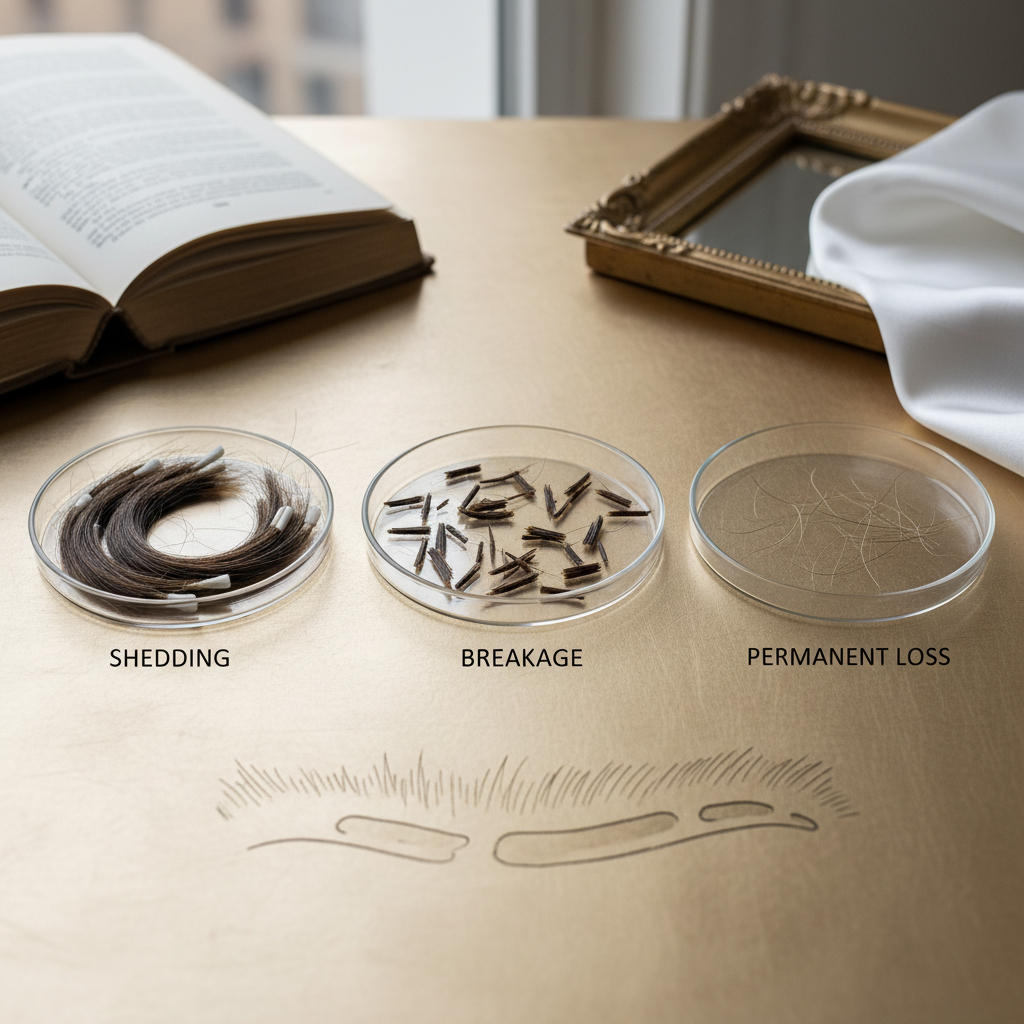
| Feature | Postpartum Shedding (Telogen Effluvium) | Hair Breakage | Female Pattern Hair Loss (Androgenetic Alopecia) |
|---|---|---|---|
| Root Cause | Systemic drop in oestrogen after delivery | Mechanical, thermal, or chemical damage | Genetic sensitivity to dihydrotestosterone (DHT) |
| Appearance of Strand | Full-length hair with a tiny white keratin bulb at the tip | Shorter, fractured fragments without a bulb | Fine, progressively miniaturised, wispy hairs |
| Typical Location | Diffuse across the entire scalp, prominent at temples | Mid-lengths and fragile ends | Widening central parting, crown thinning |
| Reversibility | Self-resolving, usually within 6 to 12 months | Fully reversible by halting physical damage | Chronic and progressive without clinical intervention |
| Onset | Sudden, typically 2 to 4 months post-delivery | Gradual as cuticle wear accumulates | Very gradual over years, often post-menopausal |
Practical care strategies for recovering hair
While you cannot bypass the biological shedding phase, you can implement an evidence-based care routine that preserves existing density, avoids mechanical breakage, and supports healthy new growth.
1. Minimise mechanical tension and traction
Postpartum hair fibres are vulnerable. Avoid tight ponytails, slicked-back buns, and tight braiding, which create sustained traction on already-loosened follicles. Use silk, satin, or soft fabric scrunchies instead of elastic bands. Detangle hair gently, starting at the tips and working upward toward the scalp using a wide-tooth comb or a flexible-bristle brush, preferably when hair is coated in conditioner to provide slip.
2. Prioritise nutritional recovery
The postpartum period involves immense physical healing, lactation demands, and interrupted sleep. Low iron stores (serum ferritin below 30 to 50 ng/mL) directly hinder follicular recovery. Focus on bioavailable iron, dietary protein (the building block of keratin), zinc, and essential fatty acids. Continue your postnatal multivitamin if advised by your GP or midwife, especially while breastfeeding.
3. Optimise cosmetic wash routines
Many women wash their hair less frequently when shedding starts, fearing that washing causes hair loss. In reality, water and shampoo only dislodge club hairs that detached from the follicle weeks ago. Infrequent washing can lead to sebum accumulation, dead skin buildup, and seborrhoeic dermatitis, which worsens scalp discomfort. Wash your scalp regularly with a mild, pH-balanced (pH 5.0 to 5.5) cleanser. Use lightweight, volumising formulations that provide body without weighing down low-density areas around the temples.
4. Thermal caution
Heat styling tools (straighteners, curling tongs) strip the protective moisture barrier from the hair cuticle, causing moisture bubbles and cuticle fractures. Allow hair to air-dry partially before using a hairdryer on a low-to-medium heat setting, and always apply a silicone- or polymer-based thermal protectant beforehand.
When the cause may be something else
Although diffuse shedding 3 months after giving birth is typical, you should remain vigilant for overlapping medical conditions that mimic or amplify postpartum telogen effluvium:
- Postpartum thyroiditis: Roughly 5 to 10 percent of women develop thyroid inflammation within the first year after giving birth. Symptoms alternate between hyperthyroidism (anxiety, palpitations, rapid weight loss) and hypothyroidism (extreme fatigue, dry skin, severe prolonged hair shedding).
- Postpartum anaemia: Significant blood loss during delivery, combined with poor iron intake, can deplete ferritin reserves. Hair follicles require ferritin to support the rapid cell division of the anagen phase.
- Alopecia areata: If your hair falls out in completely smooth, coin-sized circular patches rather than diffusing evenly across the scalp, this points to an autoimmune response rather than hormonal telogen effluvium.
When to seek professional advice
Consult your GP, a dermatologist, or a qualified trichologist if:
- Shedding continues at peak intensity beyond 9 to 12 months postpartum.
- You develop visible circular bald spots or skin changes on the scalp (redness, scaling, burning, or pustules).
- You experience pronounced systemic symptoms, including extreme exhaustion, unexplained weight changes, or chronic cold intolerance.
- You notice substantial miniaturisation (hairs growing back much finer and thinner along the central parting).
A simple blood test checking your full blood count, ferritin, thyroid stimulating hormone (TSH), free T4, and vitamin D levels will quickly rule out underlying metabolic causes.
Supporting the scalp environment with Watermans
When managing hair recovery during this transitional phase, maintaining a healthy, invigorated scalp environment is beneficial. The Watermans Grow Me range is designed to support the appearance of density and vitality.
Formulated with scalp-supportive ingredients such as biotin, caffeine, rosemary extract, niacinamide, and argan oil, the shampoo and conditioner improve the tactile feel and body of the hair fibre. While cosmetic products do not alter systemic postpartum hormonal shifts, using a balanced, nutrient-rich regimen helps keep the scalp clean, reduces mechanical breakage, and gives fine, regrowing hairs a fuller, thicker look as your body's natural hair cycle stabilises.
Frequently asked questions about Postpartum Hair Loss Causes and Care
How long does postpartum shedding typically last?
Most shedding begins around 2 to 4 months postpartum, peaks between months 4 and 5, and gradually settles as your hormone levels balance. By month 9 to 12, the majority of women find their regular hair growth cycle has re-established itself, though long hair will take time to regain full length.
Can breastfeeding cause or worsen postpartum hair loss?
No. Breastfeeding does not cause hair loss. The primary trigger for shedding is the hormonal drop that occurs immediately after the placenta is delivered. While breastfeeding maintains elevated prolactin levels, it does not stop or worsen the shedding of hairs that transitioned into the telogen phase shortly after birth.
What are the most effective Postpartum Hair Loss Causes and Care routines for temples?
The front hairline and temples tend to show the most thinning because hair here is naturally finer. Effective Postpartum Hair Loss Causes and Care for this area includes avoiding tight ponytails, brushing with minimal tension, using lightweight thickening sprays, and keeping the scalp clean so newly emerging short baby hairs can grow through unhindered.
Will taking extra prenatal vitamins stop my hair from falling out?
No. Prenatal vitamins are vital for replenishing depleted maternal nutrient reserves, but they cannot override the natural drop in oestrogen that signals follicles to shed. Taking more than the recommended daily dose of vitamins will not preserve resting hairs and can lead to adverse nutritional imbalances.
Does postpartum hair always grow back?
Yes, in the vast majority of cases. Because postpartum telogen effluvium is a non-scarring, temporary event, the follicular stem cells remain healthy. As the telogen club hair sheds, a new anagen hair starts forming within the pore, visible a few months later as fine, upright regrowth along your hairline.
Protecting your hair during hormonal recovery
Navigating Postpartum Hair Loss Causes and Care requires patience, realistic expectations, and gentle styling habits. Experiencing large quantities of shedding can be unsettling, but it is an entirely predictable physiological recalibration rather than permanent loss. By prioritising whole-body nutrition, treating fragile lengths with care, and monitoring for underlying deficiencies like low iron or thyroid imbalances, you give your follicles the optimal environment to flourish as your natural hair density restores itself over the coming year.
Sources and references
- American Academy of Dermatology Association. "Hair loss in new moms." AAD.org, 2022.
- British Association of Dermatologists. "Telogen Effluvium (A Guide for Patients)." bad.org.uk, 2021.
- National Health Service (NHS). "Hair loss." nhs.uk, 2023.
- Piérard-Franchimont, C., & Piérard, G. E. "Telogen effluvium: a review." Journal of the European Academy of Dermatology and Venereology, 2002.
- Strumia, R. "Dermatologic signs in patients with eating disorders and postpartum conditions." Clinics in Dermatology, 2013.