Iron Deficiency Hair Loss: Evidence, Ferritin Levels, and Recovery
10 min read ·
Iron Deficiency Hair Loss occurs when low ferritin stores interrupt the hair growth cycle. Learn the biological mechanisms, optimal blood levels, and recovery steps.

Quick answer: Iron Deficiency Hair Loss occurs when depleted iron stores rob hair follicle matrix cells of the oxygen and enzymatic cofactors needed for rapid cellular division. This metabolic disruption forces active growing hairs into premature resting and shedding phases, most commonly presenting as diffuse telogen effluvium. While restoring ferritin levels through targeted medical therapy generally triggers regrowth, the main limitation is time: correcting systemic iron deficits takes three to six months, and follicular recovery typically lags several months behind blood normalisation.
Key takeaways
- Iron is an essential cofactor for ribonucleotide reductase, the rate-limiting enzyme in DNA synthesis for rapidly dividing follicle matrix cells.
- Serum ferritin reflects total body iron storage. Many dermatologists view levels below 30 to 50 micrograms per litre as potential contributors to excessive shedding, even without anaemia.
- Low iron stores typically trigger diffuse telogen effluvium (shedding from the follicle), rather than structural fibre breakage along the hair shaft.
- Taking iron supplements without a confirmed clinical deficiency carries serious risks, including gastrointestinal damage and organ toxicity from iron overload.
- Hair shedding usually continues for two to four months after starting iron therapy, as the natural biological hair growth cycle resets gradually.
Iron Deficiency Hair Loss: what the evidence shows
Iron Deficiency Hair Loss is one of the most widely researched nutritional triggers of non-scarring alopecia. Hair follicle matrix cells are among the most rapidly proliferating cells in the human body. To sustain this constant cellular turnover, the matrix demands a massive, uninterrupted supply of energy, oxygen, and micronutrients.
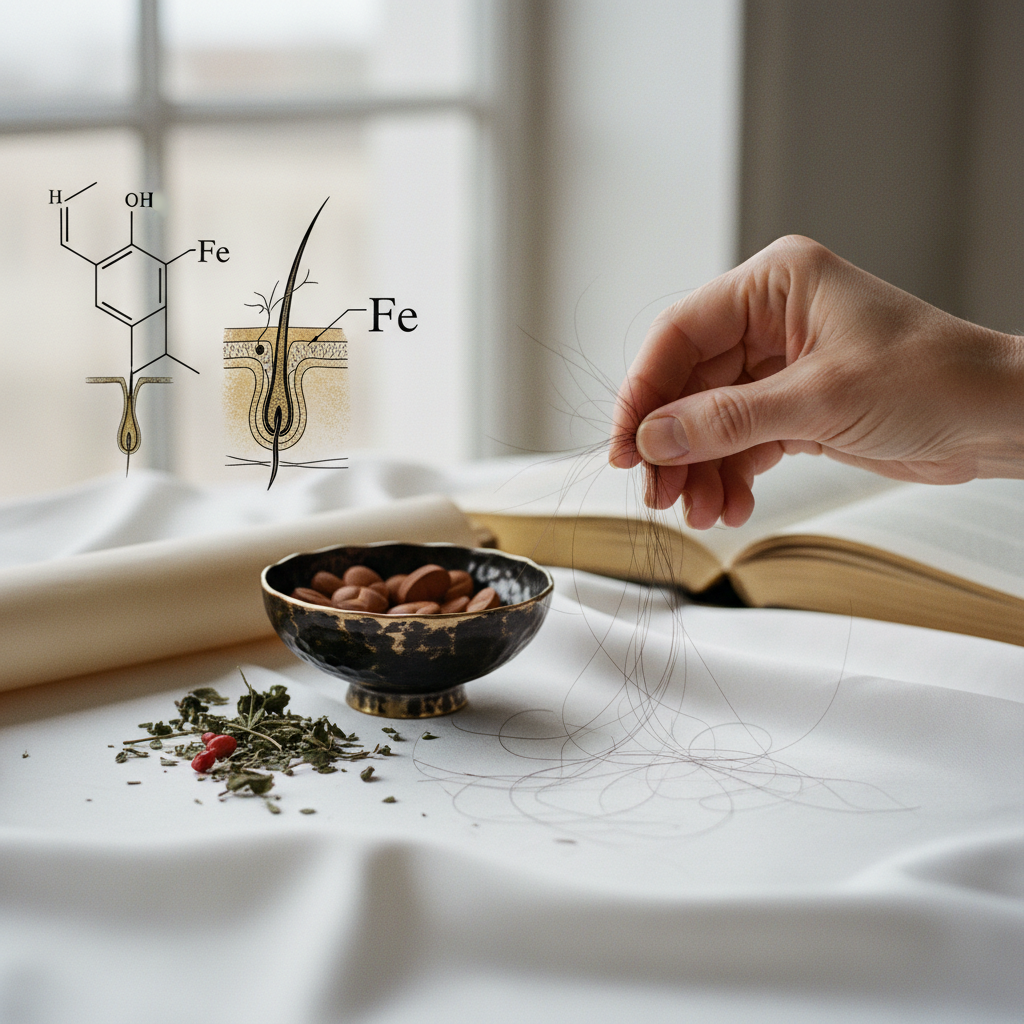
Iron serves two critical biological functions in this process. First, it forms the functional core of haemoglobin, which transports oxygen from your lungs directly to the microvasculature surrounding each hair bulb. When iron levels fall, oxygen delivery drops, starving matrix cells of the aerobic fuel needed to produce keratin. Second, iron acts as an indispensable cofactor for ribonucleotide reductase. This enzyme regulates the conversion of ribonucleotides into deoxyribonucleotides, the building blocks of DNA. Without adequate iron, matrix cells cannot replicate their DNA efficiently, bringing cellular division in the hair bulb to a halt.
When follicle cells face metabolic starvation, the follicle protects itself by aborting the active growing phase (anagen). It transitions prematurely into catagen (regression) and then telogen (resting). Approximately two to three months later, these resting club hairs release from the scalp, resulting in sudden, diffuse shedding known as telogen effluvium.
Clinical evidence shows a clear correlation between low serum ferritin (the protein that stores iron in cells) and diffuse hair thinning in premenopausal women. A landmark study published in the Journal of the American Academy of Dermatology evaluated iron stores in women with chronic diffuse hair loss and observed significantly lower mean ferritin levels compared to non-shedding controls. However, the exact threshold remains debated: while standard laboratory ranges define normal ferritin as anything between 15 and 200 micrograms per litre, clinical dermatologists frequently aim for levels between 50 and 70 micrograms per litre to support active hair cycling.
What the evidence does not show
The relationship between iron status and hair thinning is frequently oversimplified in popular wellness discussions. The medical literature does not support several widespread assumptions.
First, the evidence does not prove that iron deficiency directly causes female pattern hair loss (androgenetic alopecia). While low iron stores can unmask or accelerate pattern thinning in genetically susceptible individuals, iron deficiency alone does not cause the miniaturisation of follicles driven by dihydrotestosterone (DHT).
Second, clinical trials have not demonstrated that supplementing with iron when your blood levels are already optimal will make hair grow faster, thicker, or longer. If your serum ferritin is sitting comfortably at 70 micrograms per litre, taking extra iron provides zero benefit to the follicle and can trigger dangerous complications.
Third, low iron does not cause hair breakage. Breakage happens when the physical keratin fibre is damaged by heat, bleaching, or friction. Iron deficiency affects the biological engine inside the scalp, causing whole, intact hairs with white bulbs attached to shed from the root.
Understanding blood tests: ferritin versus haemoglobin
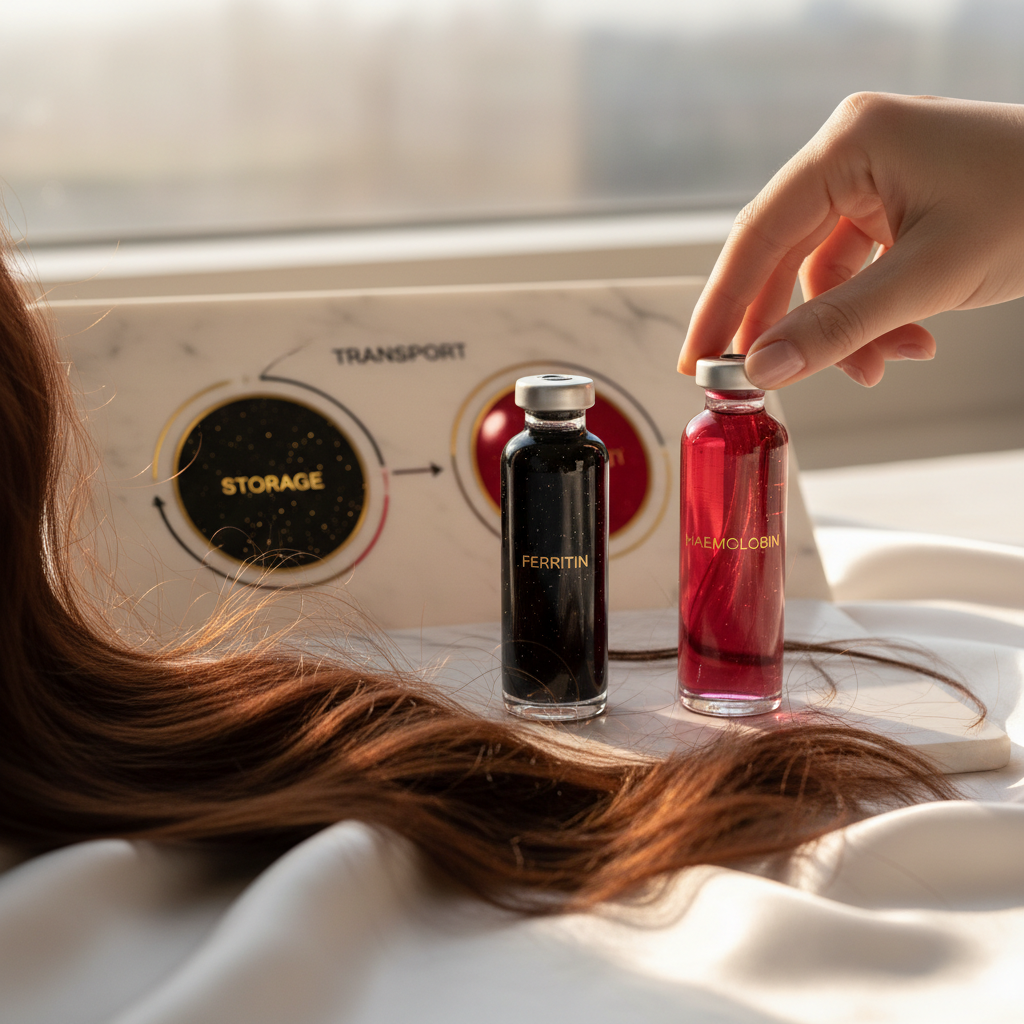
Understanding the distinction between standard anaemia and non-anaemic iron deficiency is vital when assessing hair shedding. Many people visit a doctor, receive a routine complete blood count, and are told their bloodwork is completely normal despite persistent shedding.
| Metric | Biological Function | Standard Reference Range | Optimal Range for Hair Recovery | Clinical Significance in Hair Shedding |
|---|---|---|---|---|
| Haemoglobin | Oxygen transport protein in red blood cells | 120 to 150 g/L (women), 130 to 170 g/L (men) | Normal clinical baseline | Drops only in late-stage iron deficiency anaemia; often normal in early shedding. |
| Serum Ferritin | Primary storage protein holding intracellular iron | 15 to 200 µg/L | 50 to 70 µg/L | The most reliable marker of iron stores; shedding often occurs when below 30 to 50 µg/L. |
| Total Iron Binding Capacity (TIBC) | Measures the blood's capacity to bind iron with transferrin | 45 to 72 µmol/L | Mid-range | Elevated TIBC indicates that available transferrin sites are empty due to low iron. |
| Transferrin Saturation | Percentage of transferrin occupied by iron | 20% to 50% | 25% to 40% | Levels below 16% to 20% suggest poor iron supply to peripheral tissues like hair follicles. |
Ferritin is an acute-phase reactant, meaning systemic inflammation, illness, fatty liver disease, or infection can artificially inflate your ferritin score on a lab test. If an underlying inflammatory condition is present, a seemingly normal ferritin reading of 45 micrograms per litre might conceal a true functional iron deficiency.
Signs and symptoms to watch for
Because hair shedding lags behind systemic deficiency by eight to twelve weeks, you may notice physical symptoms of low iron well before excessive hair appears in your brush.
Key signs include:
- Diffuse shedding across the entire scalp: Finding significantly more hairs on your pillow, in the shower drain, and on clothing. You lose full-length hairs with a tiny white bulb on the end.
- Persistent fatigue and low stamina: Feeling drained even after adequate sleep, driven by reduced cellular oxygenation.
- Cold sensitivity: Unusually cold hands and feet due to altered thermoregulation.
- Brittle, concave nails: Nails that chip easily, peel in layers, or develop vertical ridges (or in severe cases, spoon-shaped koilonychia).
- Pale mucous membranes: Noticeable paleness inside the lower eyelids, pale gums, or an unusually smooth, sore tongue (atrophic glossitis).
- Restless legs or breathlessness: Feeling short of breath during mild exertion like climbing stairs.
What you can do to address low iron levels
Addressing iron-related hair shedding requires a disciplined, medical approach rather than self-prescribed remedies.
1. Identify the underlying cause
Iron does not disappear from the body without a reason. Before supplementing, work with your general practitioner to identify why your iron dropped. Common culprits include heavy menstrual bleeding (menorrhagia), gastrointestinal conditions that impair absorption (such as coeliac disease or inflammatory bowel disease), occult blood loss, or strict plant-based diets lacking bioavailable haem iron.
2. Follow medical iron repletion protocols
If blood tests confirm depleted ferritin, your doctor will likely prescribe oral iron salts, such as ferrous fumarate, ferrous sulphate, or ferrous gluconate. These supply elemental iron in therapeutic doses (often 60 to 100 mg of elemental iron daily or on alternate days). Alternate-day dosing has gained significant scientific backing because it lowers hepcidin, a hormone that blocks iron absorption when daily doses flood the gut.
To maximise absorption:
- Take oral iron with vitamin C (ascorbic acid) or a glass of water on an empty stomach, if tolerated.
- Avoid consuming calcium, dairy products, tea, coffee, and whole grains within two hours of taking your dose, as polyphenols and phytates bind to iron and block absorption.
- If oral iron causes severe gastrointestinal upset or malabsorption persists, consult your doctor about intravenous iron infusions.
3. Provide cosmetic support during recovery
While waiting for biological regrowth, focus on preserving existing hair strands and supporting the scalp environment. Minimise high-tension hairstyles, avoid aggressive chemical processing, and maintain a balanced, nutrient-rich scalp routine.
Supporting the hair environment with Watermans
While systemic nutritional deficiencies must be diagnosed and managed medically by a healthcare professional, your external haircare routine plays a complementary role in protecting fragile, shedding hair.
Watermans Grow Me Shampoo and Condition Me Conditioner are formulated to improve the cosmetic appearance of thinning hair while maintaining scalp health. The blend of caffeine, biotin, argan oil, rosemary, and hydrolysed lupin protein delivers moisture, reduces friction-induced breakage, and cleanses the scalp of sebum and debris. For individuals navigating the recovery window of Iron Deficiency Hair Loss, keeping the scalp clean, stimulated, and balanced provides an optimal cosmetic environment while internal iron stores slowly rebuild.
When the cause may be something else
Hair shedding is non-specific; different biological triggers produce almost identical patterns of diffuse thinning. If iron supplementation fails to reduce shedding after six months, investigate alternative causes:
- Thyroid dysfunction: Both hypothyroidism and hyperthyroidism disrupt the hair cycle and can coexist with low iron.
- Vitamin D deficiency: Vitamin D nuclear receptors in the follicle play a vital role in initiating the anagen growth phase.
- Post-febrile or post-stress effluvium: Severe physiological stress, high fevers, surgery, or rapid weight loss three months prior can induce acute telogen effluvium regardless of iron levels.
- Early female pattern hair loss: Gradual widening of the central parting without dramatic, sudden shedding points toward androgenetic sensitivity rather than nutritional deficiency.
When to seek professional medical advice
Schedule a consultation with your GP or a qualified trichologist if you experience sudden, patchy hair loss, if your shedding is accompanied by an inflamed, burning, or scaly scalp, or if you lose more than normal shedding volumes for longer than eight weeks.
Never purchase high-dose iron supplements without diagnostic blood tests. Iron accumulates in the liver, heart, and endocrine organs when taken unnecessarily. This can cause organ damage through haemochromatosis or systemic toxicity. A qualified professional will interpret your full iron panel, check your inflammatory markers, and establish an appropriate repletion plan.
Frequently asked questions about Iron Deficiency Hair Loss
Can Iron Deficiency Hair Loss be reversed completely?
Yes. Because Iron Deficiency Hair Loss is a non-scarring form of shedding, the hair follicles remain alive and intact. Once systemic ferritin stores reach healthy levels (typically above 50 micrograms per litre) and stay stable, hair follicles return to their normal anagen growth cycle, allowing hair density to recover over several months.
How long does it take for hair to stop shedding after starting iron?
It generally takes three to six months to see a noticeable reduction in shedding after beginning iron therapy. Your body must first replenish core metabolic iron stores before directing resources to the follicles. Furthermore, hairs already pushed into the resting phase cannot be halted; they must shed naturally before new growth emerges.
What ferritin level is needed to stop hair loss?
While standard medical ranges consider a ferritin level of 15 micrograms per litre normal, clinical dermatologists often recommend maintaining ferritin levels between 50 and 70 micrograms per litre to support active follicular recovery and prevent ongoing diffuse telogen effluvium.
Can iron deficiency cause hair breakage along the shaft?
No, iron deficiency does not directly cause physical hair breakage. Iron deficiency acts on the follicle bulb beneath the scalp surface, triggering premature shedding of full strands from the root. Structural breakage along the hair fibre is caused by chemical processing, heat styling, mechanical friction, or severe protein deficiency.
Supporting hair recovery through evidence-based care
Overcoming Iron Deficiency Hair Loss requires a clear medical strategy, patience, and a realistic understanding of human hair biology. Because the hair growth cycle operates on a multi-month delay, quick fixes do not exist. By confirming your ferritin levels through comprehensive blood panels, working with a healthcare professional to replenish depleted reserves, and treating delicate hair fibres with gentle cosmetic care, you can safely resolve internal triggers and restore natural, healthy hair growth.
Sources and references
- Journal of the American Academy of Dermatology: "Iron deficiency in female pattern hair loss, chronic telogen effluvium, and alopecia areata" (2003).
- British Journal of Dermatology: "The role of iron in hair disorders" (2006).
- National Institute for Health and Care Excellence (NICE): "Anaemia - iron deficiency: Scenario: Management in adults" (2021).
- NHS: "Iron deficiency anaemia: Symptoms, causes, and treatment" (2023).
- Clinical and Experimental Dermatology: "Iron deficiency and diffuse hair loss in women: a diagnostic and therapeutic approach" (2010).