The Hydrophobic Barrier and 18-MEA: The Ultimate Hair Science Guide
8 min read ·
Understand the science behind the Hydrophobic Barrier and 18-MEA, how chemical processes strip this protective lipid layer, and how to protect vulnerable strands.
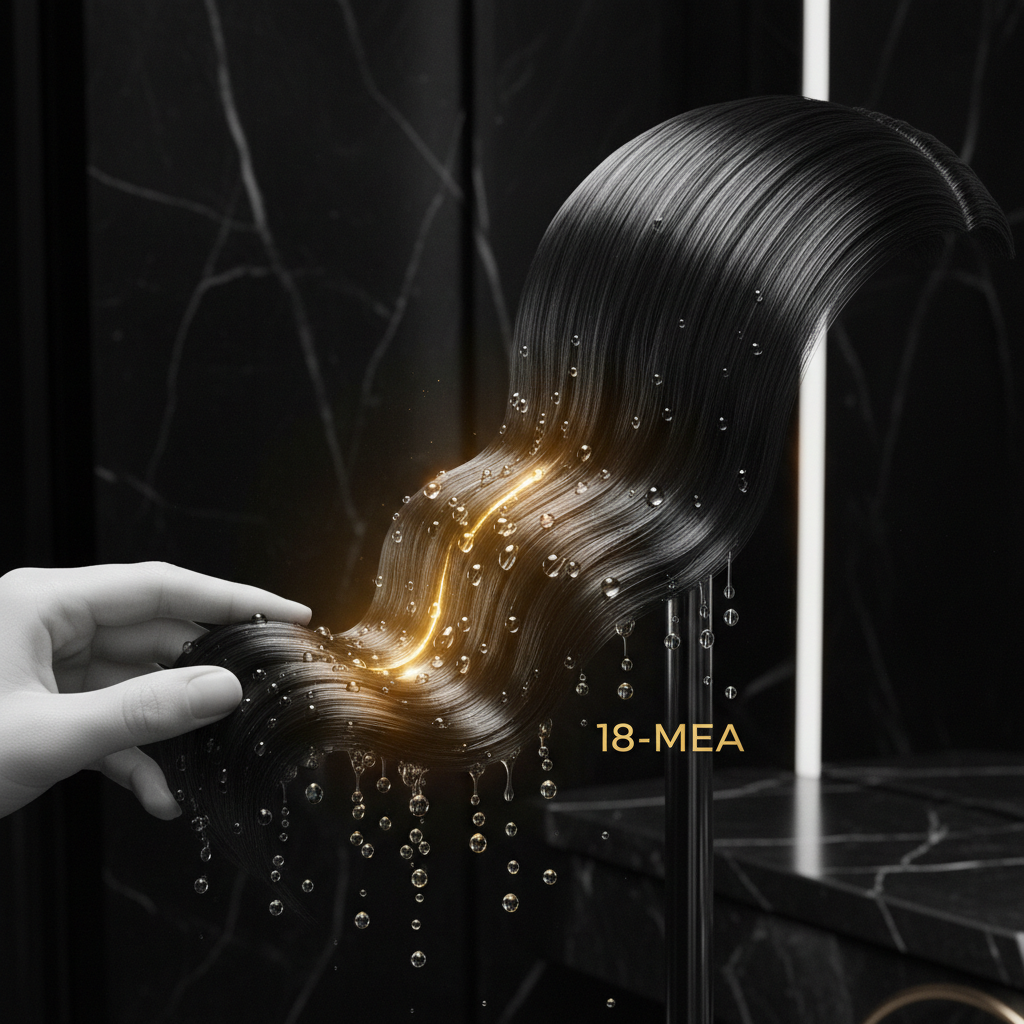
Quick answer: The hair fibre's outermost defence relies on the Hydrophobic Barrier and 18-MEA (18-methyleicosanoic acid), a specialised, covalently bonded lipid layer covering the cuticle surface. This lipid sheath repels ambient moisture, minimises friction, and prevents water-induced swelling inside the cortex. However, this lipid layer cannot biologically regenerate once removed by alkaline bleaching, chemical relaxers, or excessive heat. Cosmetic conditioning agents can mimic its hydrophobic performance, but they cannot permanently re-establish the original covalent bond.
Key takeaways
- The Hydrophobic Barrier and 18-MEA forms the epicuticle, making virgin hair naturally water-repellent (hydrophobic).
- 18-methyleicosanoic acid is a branched-chain fatty acid covalently bound via thioester bonds to cysteine residues within the cuticle.
- Chemical treatments like bleaching, permanent colouring, and alkaline perms cleave these thioester bonds, turning hair hydrophilic (water-absorbing).
- Hydrophilic hair absorbs excess water, swells excessively, tangles easily, and experiences higher mechanical friction and breakage.
- While the human body cannot regrow or repair 18-MEA along existing hair shafts, topical biomimetic lipids and cationic conditioners can temporarily replicate its protective effects.
Hydrophobic Barrier and 18-MEA: what the evidence shows
The relationship between the Hydrophobic Barrier and 18-MEA is fundamental to cosmetic hair science. Healthy, uncoloured hair is naturally hydrophobic. When you place a droplet of water onto a virgin hair strand, it beads up cleanly rather than flattening or soaking immediately into the shaft.
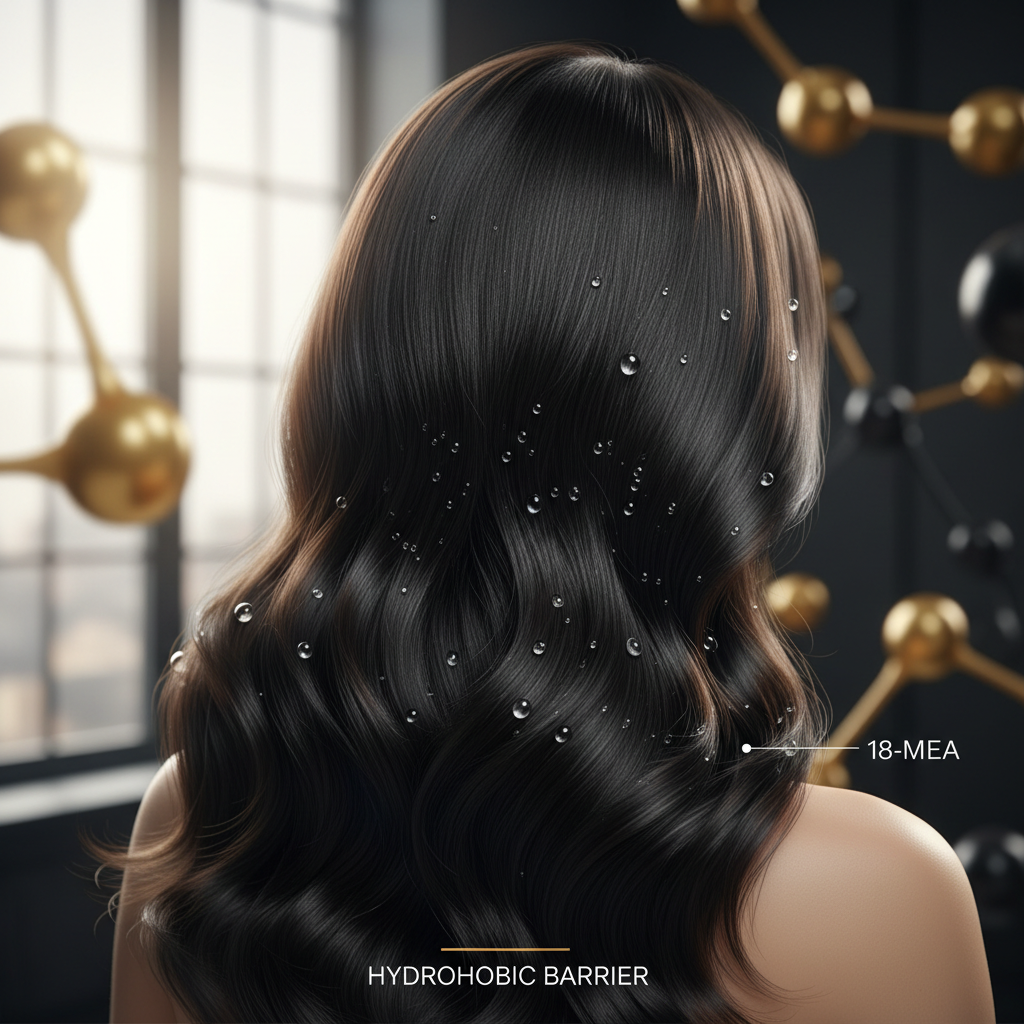
This water-repelling capability exists because of a single molecular layer of lipids lining the outermost surface of each cuticle scale. The primary constituent of this layer is 18-methyleicosanoic acid (18-MEA), which accounts for roughly 40 to 50 percent of the total extractable surface lipids on the human hair cuticle. Research published in the Journal of Cosmetic Science and dermatological texts confirms that 18-MEA is not merely resting on the surface like natural sebum. Instead, it is covalently anchored to structural proteins (specifically sub-membranous cysteine proteins in the epicuticle) via thioester linkages.
Because 18-MEA is an anteiso-branched fatty acid with a methyl group at the carbon-18 position, it packs into a dense, flexible monolayer with its hydrophobic hydrocarbon tails pointing outwards. This structural orientation creates an invisible, water-resistant shield. It serves three main physiological and mechanical functions:
- Repelling external water: It restricts how quickly environmental humidity or wash water enters the hair cortex.
- Lowering surface friction: The lipid tails act as a dry lubricant, allowing neighbouring hairs to slide past one another without snagging.
- Protecting structural proteins: By preventing rapid moisture fluctuation, it stops repeated cycles of cuticle swelling and deswelling (hygral fatigue).
How chemical and thermal damage destroys the 18-MEA barrier
The vulnerability of 18-MEA lies in its chemical anchor. The thioester bond connecting 18-MEA to the protein matrix of the epicuticle is sensitive to alkaline hydrolysis and oxidation.
When hair undergoes bleaching or permanent colouring, alkaline agents such as ammonium hydroxide (often operating at pH 9.0 to 10.5) combine with hydrogen peroxide oxidisers. This chemical environment cleaves the thioester bonds. The free fatty acid is washed away during rinsing, leaving behind exposed, oxidised cysteine residues known as cysteic acid.
Cysteic acid carries a strong negative electrical charge and readily binds to water molecules. Consequently, the cuticle transitions from being hydrophobic to hydrophilic. Once this shift occurs:
- The hair shaft absorbs water rapidly, swelling up to 15 to 20 percent of its dry diameter during washing.
- Wet hair becomes gummy, stretchy, and weak, increasing the risk of mechanical snap during detangling.
- Surface friction between wet strands can increase by 200 to 300 percent compared to virgin fibres, leading to severe knotting.
High-temperature thermal styling tools (flat irons and curling wands running above 185°C) also degrade these lipids, baking and degrading the outer lipid envelope over repeated applications.
| Property | Intact 18-MEA Barrier (Virgin Hair) | Stripped 18-MEA Barrier (Processed Hair) |
|---|---|---|
| Surface Nature | Hydrophobic (water-repelling) | Hydrophilic (water-attracting) |
| Water Droplet Contact Angle | High (typically > 95 degrees) | Low (typically < 40 degrees) |
| Water Absorption Speed | Slow and controlled | Extremely rapid |
| Inter-fibre Wet Friction | Low; strands slide smoothly | High; strands catch and drag |
| Surface Charge | Neutral to weakly negative | Strongly negative (high cysteic acid) |
| Susceptibility to Breakage | Low under normal grooming | High during wet detangling |
Signs of a compromised hydrophobic barrier
You do not need a laboratory contact-angle goniometer to tell if hair has lost its hydrophobic integrity. The signs are immediately noticeable during regular washing and styling:
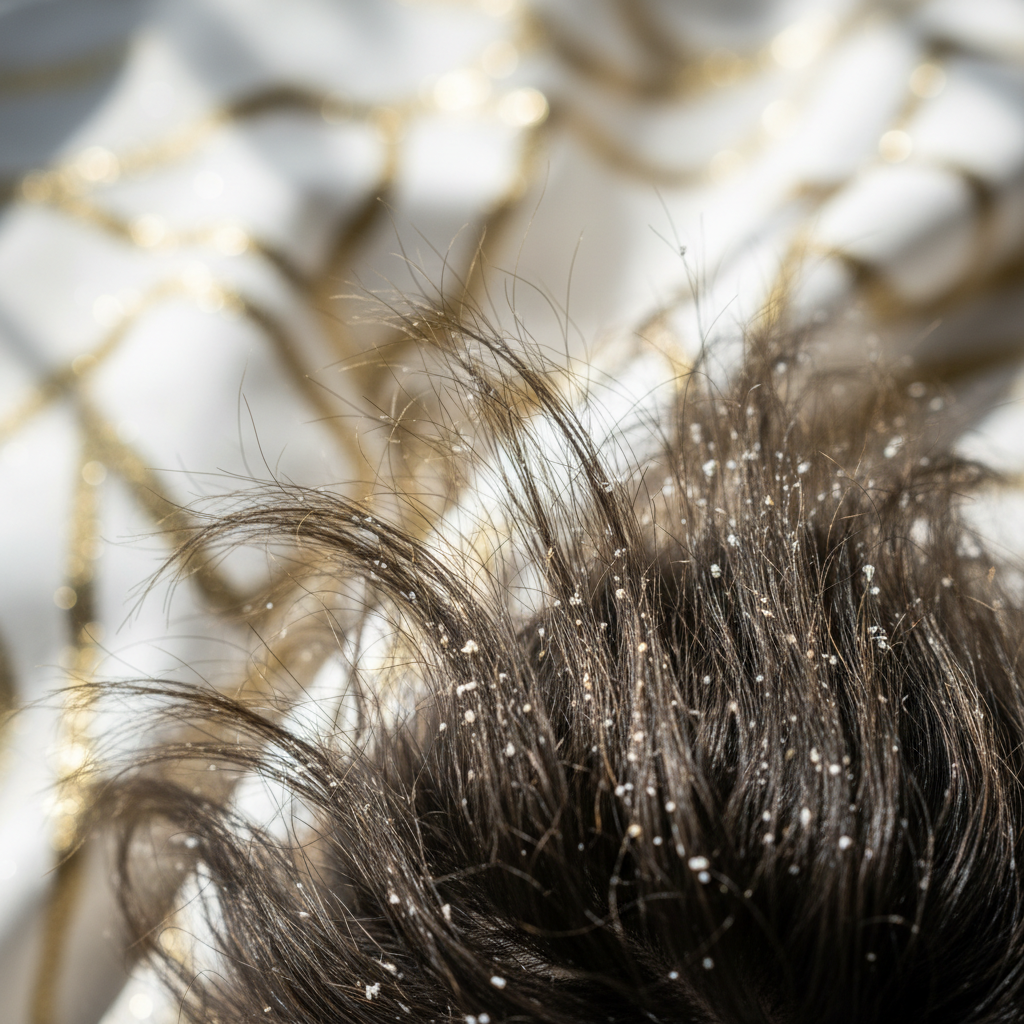
- The sponge effect: When wet, damaged strands soak up water almost instantly, becoming noticeably heavy and limp.
- Prolonged drying times: Hair that lacks a hydrophobic layer takes significantly longer to blow-dry or air-dry because excess water has penetrated deep into the porous cortex.
- Wet tangling and matting: As soon as shampoo is rinsed out, the hair feels rough, squeaky, or like wet wool, sticking together and tangling aggressively.
- Flash drying under heat: While regular drying takes longer, individual sections exposed to direct styling heat lose their surface moisture too rapidly, leaving the ends brittle, frizzy, and straw-like.
Remember to distinguish breakage from genuine hair shedding. A compromised 18-MEA layer causes hair fibre breakage along the shaft due to surface friction and structural weakening. It does not damage the dermal papilla inside the scalp follicle, nor does it cause medical alopecia or telogen effluvium shedding.
Restoring hydrophobicity: what cosmetic science can and cannot do
A common myth in haircare marketing is that specific treatments can permanently rebond or regenerate the natural lipid layer. The biological reality is clear: once the hair fibre has emerged past the scalp surface, it is non-living keratinised tissue. It cannot metabolise, repair, or regrow 18-MEA.
Topical products can, however, deposit biomimetic lipids and conditioning agents that temporarily restore hydrophobicity to the hair surface.
1. Cationic conditioning agents
Damaged hair has a strong negative charge due to exposed cysteic acid. Cosmetic chemists use this by formulating with positively charged (cationic) quaternary ammonium compounds, such as behentrimonium chloride, cetrimonium chloride, and amodimethicone. These molecules are electrostatically drawn to the damaged, negatively charged patches on the cuticle. Their hydrophobic tail groups face outward, temporarily recreating a low-friction, water-repelling barrier.
2. Lipid replenishment therapies
Formulations containing plant sterols, ceramides, and free fatty acids help seal micro-fissures along lifted cuticle scales. Certain functional hair treatments utilise synthetic or bio-derived lipid analogues specifically designed to mimic the branched structure of 18-MEA, temporarily raising the water contact angle and reducing comb force.
3. PH-balanced routine care
Rinsing with acidic products (pH 4.0 to 5.5) helps contract the cuticle layers, reducing the mechanical exposure of damaged lower layers and limiting excessive water absorption during washing.
Supporting the hair shaft with Watermans
When managing hair that has lost its native hydrophobic lipid integrity, preventing excessive mechanical friction is essential. Watermans focuses on scalp and fibre support by delivering balanced, sulphate-free cleansing and conditioning routines.
Watermans GrowMe Shampoo cleanses the scalp gently without relying on high-pH, harsh sulphate detergents that exacerbate cuticle lipid stripping. Pairing this with Watermans ConditionMe Conditioner helps coat vulnerable, hydrophilic strands with smoothing, cuticle-flattening conditioning agents. This step mimics lost surface lipids, softening rough cuticle edges, cutting friction down during brushing, and protecting the fragile shaft from physical snapping while new, protected hair grows out from the root.
Frequently asked questions about Hydrophobic Barrier and 18-MEA
Can damaged hair naturally regrow its 18-MEA layer?
No. Hair is biologically dead once it leaves the follicle. The cells cannot synthesise new fatty acids along the length of the shaft. Once chemical processing cleaves the thioester bonds holding 18-MEA in place, that portion of the hair remains permanently depleted. Any improvement in smoothness or water repellency comes entirely from topical cosmetic films that wash out over time.
How does bleaching specifically destroy the Hydrophobic Barrier and 18-MEA?
Bleaching uses an alkaline oxidising mixture of persulphates, ammonia, and hydrogen peroxide. This solution lifts the cuticle scales and hydrolyses the thioester bonds that secure 18-MEA to the epicuticle. As these chemical bonds break, the fatty acid washes away, oxidising the underlying protein into hydrophilic cysteic acid and leaving the cuticle permanently water-absorbent.
What is the difference between sebum and 18-MEA?
Sebum is a variable, oily mixture of triglycerides, wax esters, squalene, and free fatty acids produced continuously by the sebaceous glands in the scalp. It coats the outside of the hair loosely and washes off easily with surfactant cleansers. In contrast, 18-MEA is a structural component of the cuticle itself, chemically bonded via covalent thioester links.
Can coconut oil or argan oil replace 18-MEA?
Natural plant oils cannot form covalent chemical bonds with the cuticle proteins like 18-MEA does. However, oils containing short or medium straight-chain triglycerides (such as lauric acid in coconut oil) can penetrate the cortex, while heavier oils lubricate the exterior. They offer temporary hydrophobicity and reduce wet friction, but they act as temporary coatings rather than true replacements.
The vital role of the 18-MEA barrier
Understanding the delicate balance between the Hydrophobic Barrier and 18-MEA transforms the way we approach hair damage and maintenance. This single, microscopic lipid layer represents nature's engineering at its finest: an ultra-thin, highly specialised barrier that keeps ambient water out, guards internal keratin structures, and keeps strands sliding effortlessly against one another.
While everyday chemical treatments can strip this barrier away in a single salon session, thoughtful care can preserve and supplement it. By respecting the natural fragility of the cuticle, choosing low-friction grooming techniques, and using conditioning formulations that mimic native lipids, you can protect exposed fibres from unnecessary breakage and enjoy smoother, more resilient hair.
Sources and references
- Robbins, C. R. (2012). Chemical and Physical Behavior of Human Hair (5th ed.). Springer-Verlag.
- Ruetsch, S. B., Kamath, Y. K., & Weigmann, H. D. (2003). "Photodegradation of human hair: an overview." Journal of Cosmetic Science, 54(4), 395-409.
- Negri, A. P., Cornell, H. J., & Rivett, D. E. (1993). "The nature of the covalent bonds between 18-methyleicosanoic acid and hair proteins." Journal of the Society of Cosmetic Chemists, 44(5), 257-264.
- Breakspear, S., et al. (2022). "The epicuticle: Structure, composition, and function." International Journal of Cosmetic Science, 44(2), 123-134.
- Evans, T., & Wickett, R. R. (2012). Practical Modern Hair Science. Allured Business Media.