Hair Transplant Recovery and Care: The Complete Clinical Guide
11 min read ·
Complete guide to hair transplant recovery and care, covering graft anchoring timelines, post-op washing, shock loss management, and long-term scalp support.

Quick answer: Hair Transplant Recovery and Care requires strict adherence to physical protection during the first 10 to 14 days, followed by long-term maintenance of the scalp microenvironment. Newly implanted follicular units need roughly 9 days to anchor fully into the recipient dermis. While surgical techniques such as FUE and FUT relocate robust donor follicles, successful Hair Transplant Recovery and Care depends entirely on preventing graft dislodgement, controlling inflammation, avoiding early mechanical trauma, and managing physiological shedding during the initial months.
Key takeaways
- Follicular grafts become mechanically secure between 8 and 10 days post-surgery, meaning mechanical rubbing or scratching before this point risks permanent graft loss.
- Post-operative swelling typically peaks around days 3 to 4, gradually descending toward the forehead and periorbital tissue.
- Shock loss (temporary telogen effluvium of transplanted and native hairs) frequently occurs between 2 and 8 weeks and is a normal physiological response.
- Gentle washing with physiological saline or diluted, neutral-pH cleansers usually starts 24 to 48 hours post-op, avoiding direct high-pressure shower streams.
- Final aesthetic density and mature shaft diameter take 12 to 18 months to fully materialise as follicles cycle through normal anagen phases.
Hair Transplant Recovery and Care: what the evidence shows
Clinical dermatological literature outlines clear chronological stages for successful graft integration. Modern techniques like Follicular Unit Extraction (FUE) and Follicular Unit Transplantation (FUT) excise healthy follicles from the androgen-insensitive occipital donor zone and implant them into recipient sites. However, the procedure only represents the first phase. Proper Hair Transplant Recovery and Care dictates survival rates.
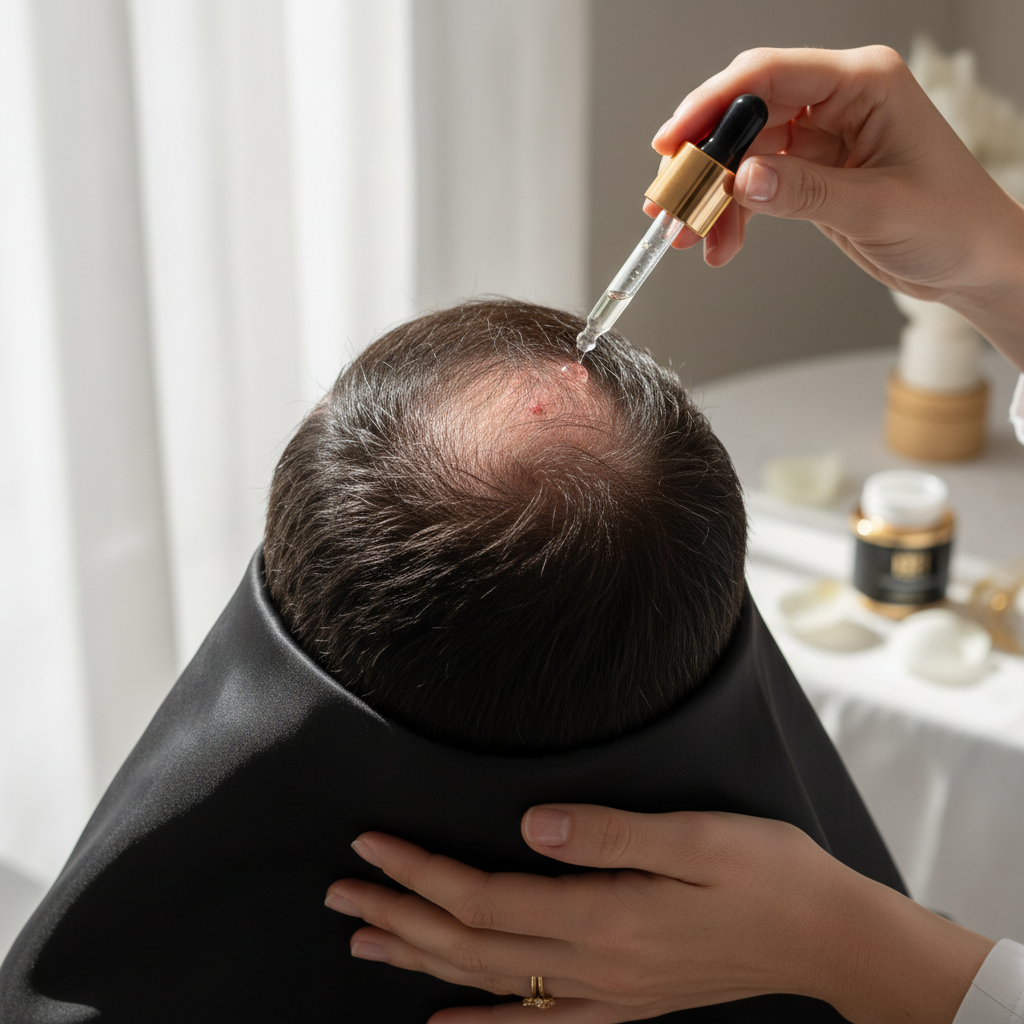
In the initial 48 hours, fibrin clot formation seals the tiny incision sites. During this period, the graft relies on plasma imbibition (absorbing nutrients from interstitial fluids) because the connection to the host circulatory system is severed. Within 3 to 7 days, vascular inosculation occurs: recipient blood vessels connect to the graft's capillary buds, re-establishing perfusion. Studies indicate that by day 9, collagen synthesis anchors the dermal papilla firmly enough that normal gentle handling cannot dislodge it.
Following vascular reconnection, the hair shaft usually enters the catagen or telogen phase due to surgical shock. This shedding, colloquially called "shock loss", begins between week 2 and week 8. Patient surveys and clinical reviews show that up to 80% of patients experience this shedding. It does not signify procedure failure. The stem cells responsible for follicular regeneration remain nestled in the dermal papilla and outer root sheath beneath the surface.
| Recovery Stage | Timeframe | Biological Process | Critical Care Action |
|---|---|---|---|
| Immediate Adhesion | Days 0 to 3 | Fibrin clotting, plasma imbibition | Keep upright, mist with sterile saline, do not touch |
| Revascularisation | Days 4 to 9 | Neovascularisation, inosculation | Very gentle cup-wash, avoid direct water pressure |
| Anchor Stability | Days 10 to 14 | Collagen cross-linking, scabbing sloughs | Soft circular rubbing to loosen softened crusts |
| Latent Telogen (Shock) | Weeks 2 to 8 | Surgical telogen effluvium | Gentle scalp hygiene, avoid heavy weightlifting |
| Early Anagen | Months 3 to 6 | New fine fibre emergence | Standard washing, mild scalp stimulation |
| Maturation | Months 6 to 18 | Shaft thickening, pigment deepening | Long-term scalp maintenance, protect from UV |
What the evidence does not show
Popular forums frequently claim that high-dose supplements, laser caps, or exotic oils immediately speed up graft anchoring. Systematic reviews across dermatological surgery demonstrate that nothing accelerates the biological timeline of collagen deposition and microvascular inosculation. The process takes roughly 9 days regardless of intervention.
Furthermore, evidence does not show that applying cosmetic hair-growth serums or oils to the newly grafted area before the skin barrier fully heals (typically 14 days) improves outcomes. In fact, applying heavy, occlusive substances early can obstruct follicular channels, trap bacteria, and induce folliculitis.
Similarly, cosmetic claims that over-the-counter products can mimic or reverse surgical hair restoration are ungrounded. Surgical transplantation relocates living organ structures; topical cosmetic haircare simply supports hair fibre condition and scalp cleanliness.
The mechanism: why surgical grafts are vulnerable
A transplanted graft is an isolated micro-organ containing dermal papillae, follicular stem cells, sebaceous glands, and surrounding perifollicular connective tissue. When transferred to the recipient site, it lacks an immediate active blood supply.
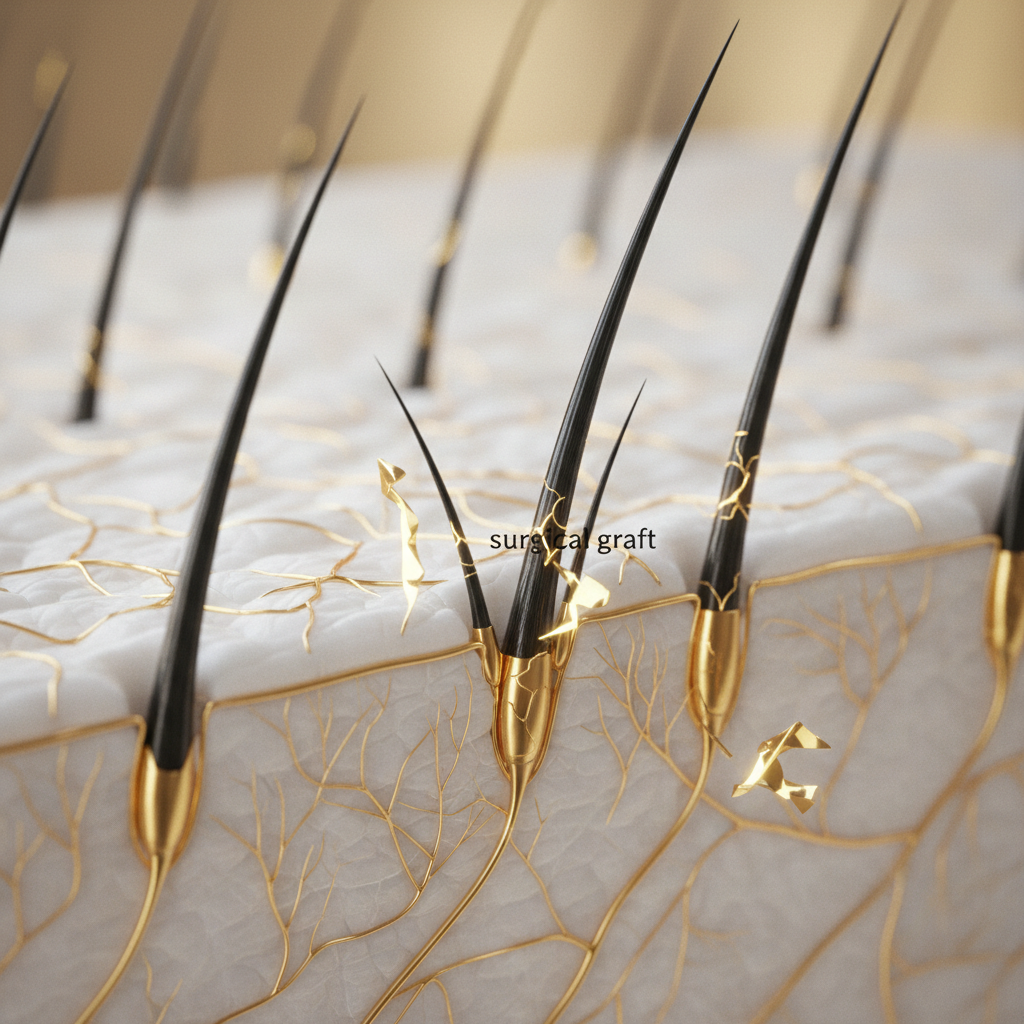
Hypoxia-reoxygenation injury can occur during and immediately after the procedure. Free radicals generated during transplantation trigger localised inflammation. If a scab dries excessively, it binds rigidly to the epidermis. If that scab is torn away mechanically before day 8 or 9, the mechanical sheer stress transfers directly to the dermal papilla, pulling the vascular base out of its slit and destroying the graft.
Additionally, local tissue edema is common. The tumescent fluid (saline, local anaesthetics, and adrenaline) injected into the scalp during the operation must drain via the lymphatic system. Adrenaline constricts local blood vessels to reduce bleeding, but as it wears off, fluid shifts downward due to gravity, often leading to facial swelling around days 3 to 5.
Signs to look for: normal progression versus complications
Recognising the signs of standard wound repair helps reduce anxiety while highlighting when clinical intervention is necessary.
Normal signs
- Crusting and scabbing: Tiny dark dots forming around each graft site within 24 to 72 hours.
- Transient swelling: Fluid collection moving down the forehead toward the eyebrows and eyelids.
- Mild pruritus: Itching around days 4 to 10 as cutaneous nerves and epidermis heal.
- Follicular shedding: Hair shafts dropping out with a tiny bend or white bulb between weeks 2 and 10.
- Pimples around months 2 to 4: Mild, isolated sterile folliculitis as newly growing hairs pierce through the skin surface.
Complications requiring medical review
- Active, continuous bleeding: Fluid soaking through sterile pads that does not stop with light pressure.
- Severe, throbbing pain: Discomfort that escalates after day 3 rather than subsiding.
- Spreading erythema and warmth: Expanding red, hot, or swollen patches indicating cellulitis.
- Purulent discharge: Creamy or yellow pus exuding from the recipient or donor sites, accompanied by a foul odour.
- Skin necrosis: Recipient areas turning deep purple, grey, or black, signalling severe vascular compromise.
What you can do: step-by-step post-operative care
The foundation of post-operative management lies in gentle hygiene and mechanical protection.
Days 1 to 4: protection and hydration
Sleep in an elevated position at an angle of roughly 45 degrees using a neck pillow to limit nocturnal rolling and encourage lymphatic drainage. Avoid touching, scratching, or rubbing the recipient zone. Use sterile saline spray every 30 to 60 minutes during waking hours if instructed by your surgical team, which prevents the crusts from drying out into hard, abrasive caps.
Days 5 to 9: introduction of gentle washing
Begin softening crusts using lukewarm water and a mild, neutral-pH cleanser. Never expose the scalp to the direct, high-pressure jet of a showerhead. Instead, pour water gently from a cup. Lather the cleanser between your palms and pat it softly onto the grafts without rubbing. Rinse by pouring water from the cup. Pat dry using a clean paper towel; avoid terry cloth towels as the loops can catch graft fibres.
Days 10 to 14: crust removal
By day 10, the grafts are anchored in the dermis. Soften the scabs by leaving shampoo foam or approved oils on the scalp for 15 to 20 minutes in the shower. Using the soft pads of your fingertips (never your fingernails), gently make circular motions to coax the scabs off. Do not force resistant scabs; repeat the process over the next two to three days until the scalp is completely clear.
Beyond two weeks: returning to normal activity
Light cardiovascular exercise can typically resume around day 14, but avoid heavy weightlifting, swimming pools, saunas, and contact sports until day 30 to prevent elevated blood pressure or exposure to chlorinated water and bacteria. Protect the recovering scalp from direct sunlight using a loose-fitting hat, as healing skin is prone to hyperpigmentation.
When the cause of shedding is something else
If shedding continues aggressively past month 4 without new growth, or if shedding occurs in areas that were not operated on, other mechanisms may be at play:
- Unmasked androgenetic alopecia: The surgery does not alter the genetic susceptibility of un-transplanted native hair. Without ongoing medical management (such as DHT-inhibiting therapies or physician-directed treatments), native follicles will continue their miniaturisation process.
- Systemic telogen effluvium: The physiological stress of surgery, anaesthesia, or sudden dietary changes can trigger general shedding across the entire scalp, not just in the recipient area.
- Scalp dermatitis: Severe seborrhoeic dermatitis or contact dermatitis from post-operative topical solutions can irritate follicles and prolong hair shedding.
- Hair breakage vs hair loss: Distinguish between actual follicular loss and hair breakage. Dry, brittle hair shafts damaged by harsh antiseptic washes snap easily, leaving broken fibres without the dermal root attached. Breakage is cosmetic; follicular shedding stems from the root.
Watermans approaches to post-recovery hair support
Once the scalp has completely re-epithelialised and your surgeon has cleared you for regular haircare (typically at least 3 to 4 weeks post-procedure), supporting the overall cosmetic condition of native and mature transplanted fibres becomes the priority.
Watermans focuses on the cosmetic environment of your hair and scalp. Watermans GrowMe Shampoo is formulated with ingredients such as biotin, rosemary, caffeine, niacinamide, and argan oil to gently cleanse the scalp, wash away sebum buildup, and leave native and transplanted hair feeling stronger, thicker, and fuller-looking. Maintaining a clean, non-occluded scalp surface helps native strands look their best alongside newly cycling transplants.
For targeted leave-in conditioning, Watermans Grow More Elixir provides lightweight moisture directly to the scalp without a greasy residue. This helps soothe dryness that can persist months after the initial healing period. These cosmetic products do not treat medical conditions, alter follicular biology, or replace surgical guidance, but they offer balanced cosmetic support for maintaining optimal hair appearance throughout your recovery journey.
When to get professional advice
Contact your operating surgeon or a qualified dermatologist immediately if you experience:
- Severe, unilateral swelling accompanied by fever or chills.
- Bright red, spreading erythema around donor or recipient slits that worsens after day 4.
- Persistent numbness or burning dysaesthesia that does not resolve after several weeks.
- Suspicion of graft displacement (seeing an intact bulb with a drop of blood on your pillow or clothing within the first 8 days).
A professional trichologist or dermatologist can also perform a trichoscopy to verify whether dormant follicles have begun anagen reactivation between months 4 and 6.
Frequently asked questions about Hair Transplant Recovery and Care
How should I sleep during early Hair Transplant Recovery and Care?
During the first 5 to 7 days of Hair Transplant Recovery and Care, sleep on your back with your head elevated at a 45-degree angle. Use an ergonomic neck pillow or travel cushion. This position prevents the recipient area from rubbing against sheets or pillows, which could dislodge vulnerable grafts, while also encouraging lymphatic drainage to minimise facial swelling.
When are transplanted hairs fully secure?
Transplanted hairs are fully secure between days 9 and 10 post-surgery. Clinical studies evaluating graft anchoring show that the tensile force needed to dislodge a follicular unit increases dramatically as fibrin gives way to stable collagen. After day 10, gentle washing and fingertip contact will not dislodge the underlying dermal papilla.
Why do transplanted hairs fall out after 3 weeks?
Transplanted hairs fall out after a few weeks due to a temporary, harmless biological process called shock loss or surgical telogen effluvium. The physical trauma of extraction, fluid pressure, and lack of blood supply during handling forces the hair follicles into a resting phase. The shaft detaches and sheds, but the stem cells in the dermal papilla stay intact to generate new hair fibres within 3 to 4 months.
When can I wear a normal hat or helmet?
You can wear a very loose-fitting, structured hat that does not touch the recipient grafts from day 5 onwards. Normal baseball caps, beanies, or hardhats that press directly against the scalp should be avoided until at least day 14. Motorcycle helmets or heavy sports helmets that exert friction and pressure should not be used for 4 to 6 weeks.
Can I dye or style my hair after a transplant?
You should wait at least 4 to 6 weeks before dyeing, bleaching, or chemically styling your hair. The chemicals in hair dye, such as hydrogen peroxide and ammonia, can cause contact dermatitis or severe irritation on freshly healed scalp tissue. Always confirm with your hair restoration surgeon before applying chemical treatments to the recipient area.
Managing your Hair Transplant Recovery and Care long-term
Successful Hair Transplant Recovery and Care is a gradual biological journey rather than an overnight transformation. By respecting the initial 9-day graft anchoring window, gently handling scabs, maintaining scalp hygiene, and expecting the physiological shed that follows, you can protect your surgical investment. As the months advance, supporting your scalp and native fibres with clean, gentle haircare ensures the best possible environment for a healthy-looking, full head of hair.
Sources and references
- Bernstein, R. M., & Rassman, W. R. (2006). The graft anchoring timeline in follicular unit hair transplantation. Dermatologic Surgery, 32(2), 198-204.
- National Health Service (NHS). (2023). Hair transplant. NHS UK Health A to Z.
- Unger, W. P., Shapiro, R., Unger, R., & Unger, M. (2010). Hair Transplantation (5th ed.). Informa Healthcare.
- British Association of Aesthetic Plastic Surgeons (BAAPS). (2022). Hair Transplantation Guidelines.
- Jimenez, F., & Ruifernández, J. M. (1999). Distribution of human hair in follicular units: mathematical and morphometric analysis. Dermatologic Surgery, 25(4), 294-298.
Find these ingredients in Watermans products
- Niacinamide: you will find this ingredient in our Hair Mask.