Understanding Hair Porosity Levels: The Science Behind Moisture Retention
10 min read ·
Understand Hair Porosity Levels, how cuticles regulate moisture, and evidence-based ways to care for low, medium, and high porosity hair.
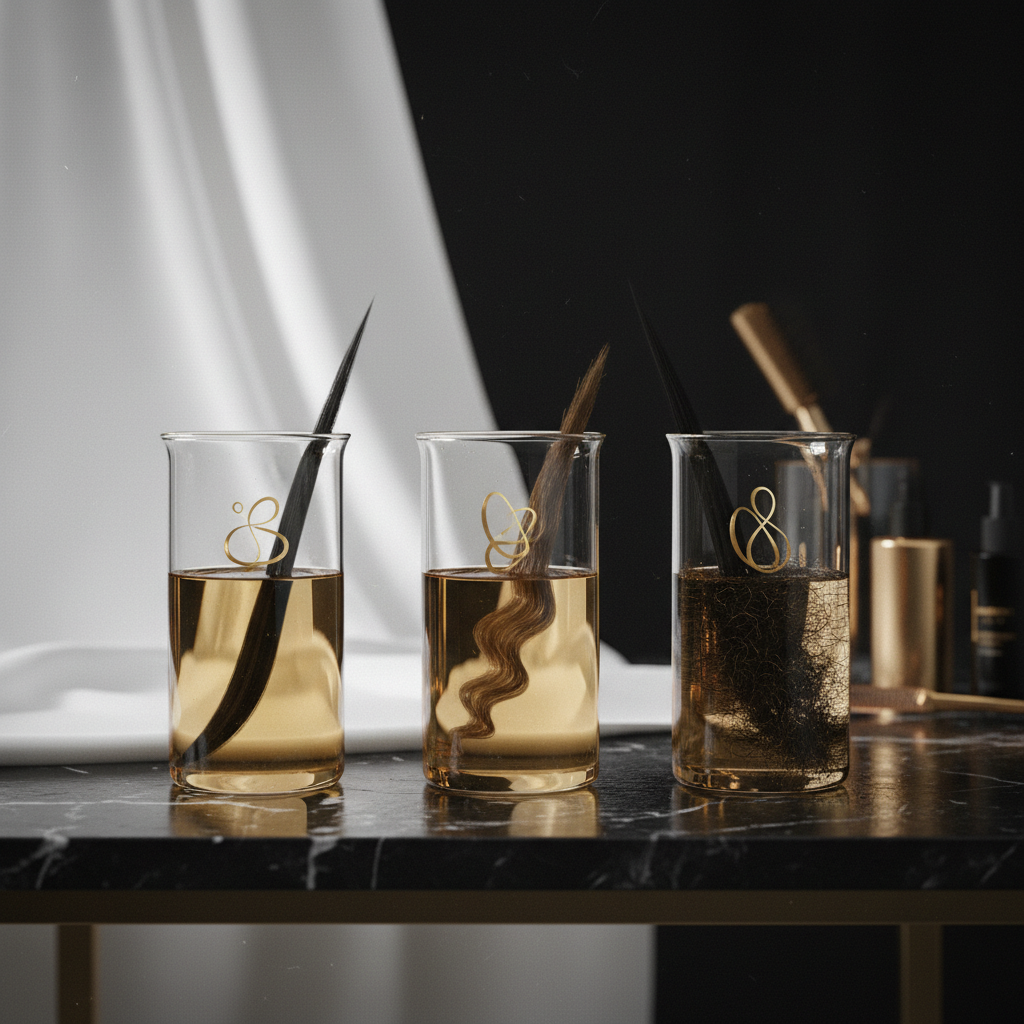
Quick answer: Hair porosity refers to your hair fibre's capacity to absorb and hold onto moisture, determined primarily by the structural condition of the outer cuticle layer. Understanding Hair Porosity Levels (categorised as low, medium, or high) allows you to choose appropriate cosmetic formulations, adjust cleansing temperatures, and reduce mechanical breakage. However, porosity is a physical and cosmetic characteristic of the dead hair shaft. It does not govern follicle health, hair growth rates, or medical hair shedding.
Key takeaways
- Hair porosity is dictated by the integrity and angle of the protective cuticle scales covering the cortex.
- Hair Porosity Levels are grouped into low, medium (normal), and high porosity, each displaying distinct behavioural patterns when wet or dry.
- Chemical processing, heat styling, ultraviolet radiation, and everyday friction can elevate porosity over time by stripping away the protective 18-methyleicosanoic acid (18-MEA) lipid layer.
- Popular DIY checks like the water glass "float test" are notoriously unreliable due to water surface tension and cosmetic product residues.
- Tailoring your haircare routine to your specific porosity level reduces structural breakage and improves moisture retention, but cosmetic products cannot alter follicular hair production.
Hair Porosity Levels: what the evidence shows
Textile and cosmetic scientists measure porosity by examining how freely liquids and chemical compounds diffuse through the hair shaft. At a microscopic level, every hair fibre consists of an inner cortex protected by an outer cuticle made up of roughly 5 to 10 overlapping cellular scales. In untreated virgin hair, these scales lie flat and are coated by a specialised fatty acid layer known as 18-MEA. This lipid layer gives the hair fibre natural hydrophobicity, meaning it naturally repels water.
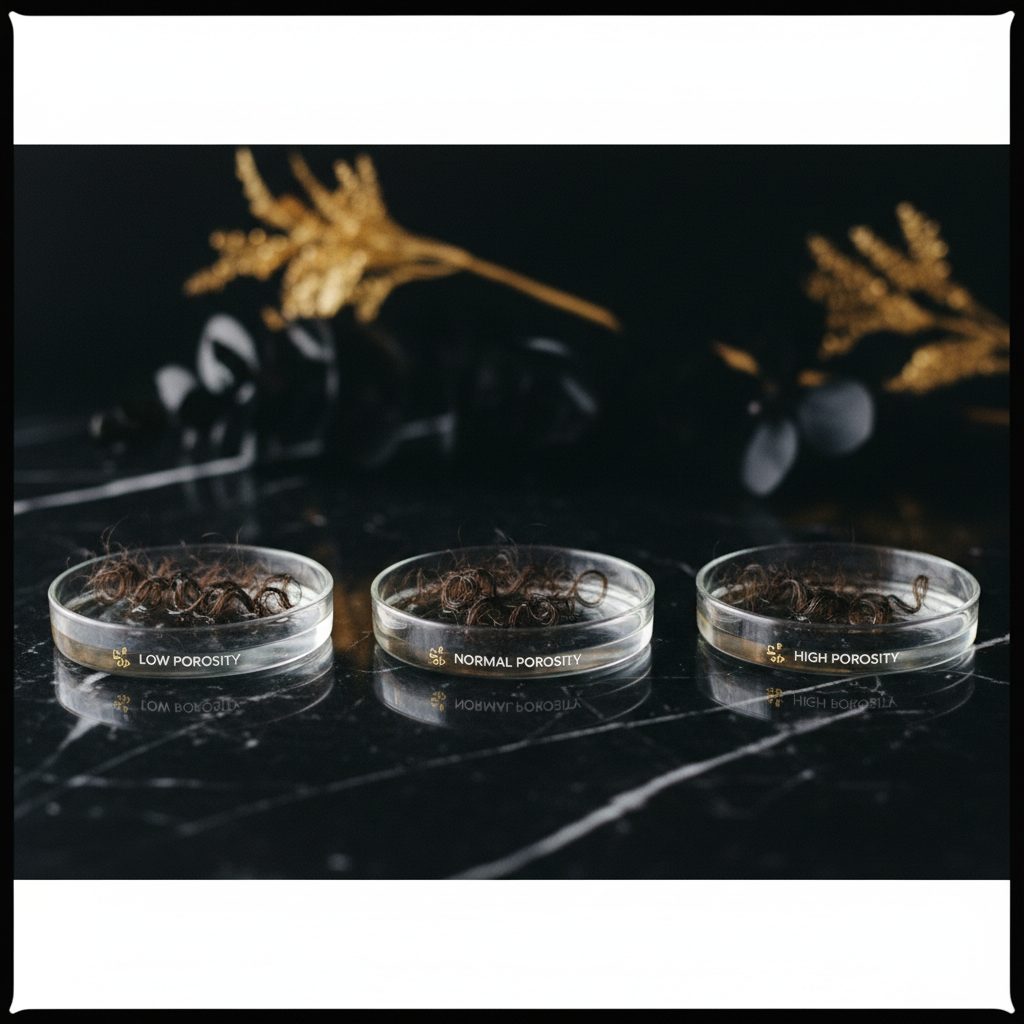
When researchers evaluate Hair Porosity Levels, they are looking at how intact this protective shield remains.
In low porosity hair, the cuticle tiles overlap tightly and smoothly. Moisture struggles to penetrate the hydrophobic barrier, but once absorbed, water evaporates very slowly.
In medium porosity hair, the cuticles remain compact yet flexible, allowing hydration to enter without excessive difficulty and keeping moisture trapped within the cortex for balanced elasticity.
In high porosity hair, the cuticle scales are chipped, lifted, or missing entirely. This structure allows water and chemical agents to rush straight into the cortex. However, because the protective barrier is compromised, that moisture escapes just as quickly, leaving the fibre feeling dry, rough, and prone to friction-induced snapping.
The three levels compared
The physical characteristics across different Hair Porosity Levels dictate how hair responds to water, conditioners, oils, and styling heat.
| Feature | Low Porosity | Medium Porosity | High Porosity |
|---|---|---|---|
| Cuticle Structure | Tightly bound, flat, intact 18-MEA layer | Uniformly aligned, minimal structural damage | Lifted, cracked, or missing cuticle tiles |
| Water Absorption | Very slow; water beads on the surface | Moderate; absorbs evenly and predictably | Rapid; absorbs water almost instantly |
| Drying Time | Long; water takes hours to evaporate | Moderate; dries in standard timeframes | Fast; dries rapidly, often becoming frizzy |
| Product Feel | Prone to buildup; heavy oils sit on top | Absorbs cosmetic formulations easily | Drinks up conditioners; feels dry shortly after |
| Primary Vulnerability | Product accumulation and stiffness | General environmental wear and tear | Structural breakage, tangling, and split ends |
| Primary Cause | Genetic cuticle alignment | Typical genetic growth with mild exposure | Chemical bleaching, heat styling, UV damage |
Biological mechanisms behind cuticle changes
Changes in hair porosity are almost exclusively cosmetic and physical rather than biological. Because the hair shaft that emerges from your scalp is non-living keratinised tissue, it cannot biologically heal itself once damaged.
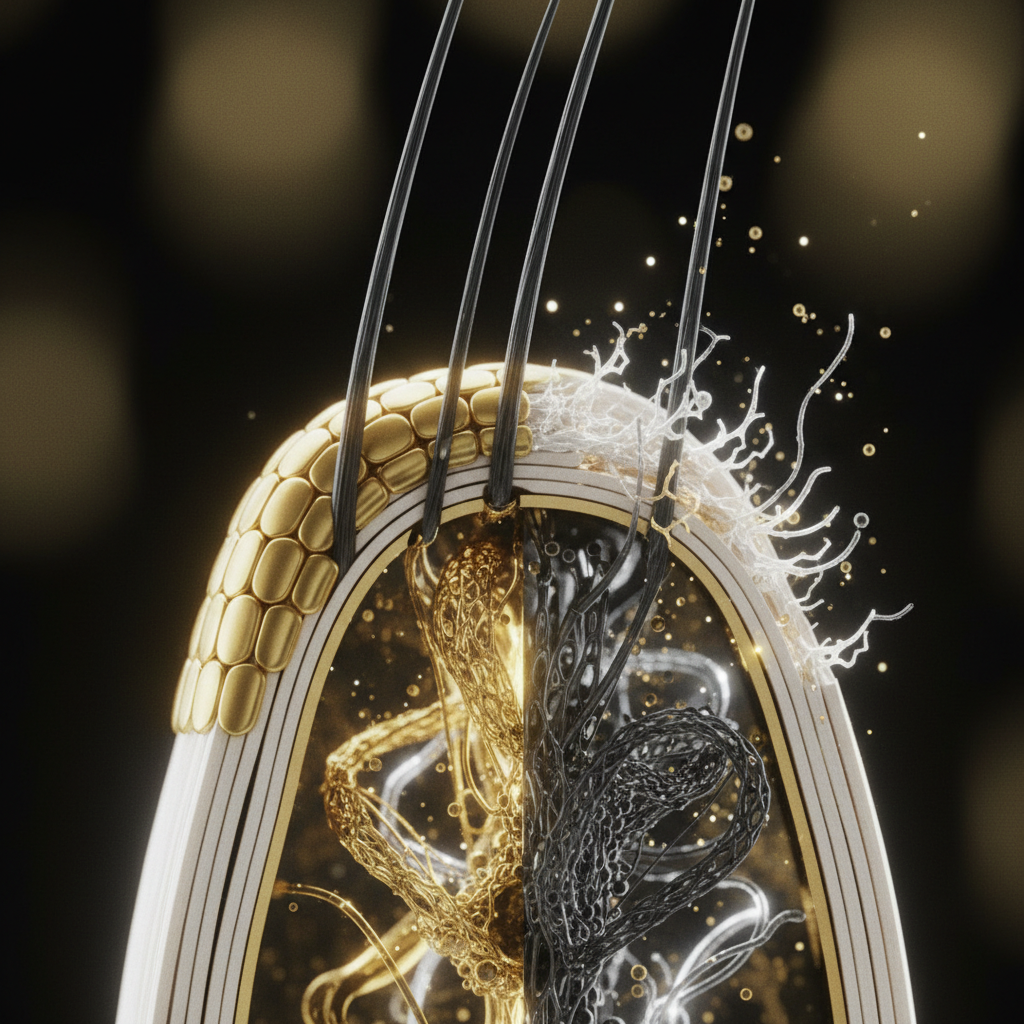
Chemical processes such as bleaching, permanent dyeing, and chemical straightening use alkaline formulations (often between pH 9.0 and 11.0) to intentionally swell the hair fibre and lift the cuticles. This lifting allows active chemicals to penetrate the cortex and alter natural melanin or rearrange disulphide bonds. In the process, the alkaline chemistry strips the natural 18-MEA lipid layer from the cuticle surface. Once these protective lipids are removed, the fibre shifts from hydrophobic (water-repelling) to hydrophilic (water-attracting).
Heat tools operating above 180 degrees Celsius further accelerate this degradation. High temperatures can cause the moisture within the cortex to boil, creating microscopic fissures and bubbling along the cuticle edges. Over time, regular mechanical brushing of unconditioned fibres snaps the fragile edges of the scales, leaving permanent gaps that elevate the hair to high porosity.
Signs of each porosity level
Recognising how your hair behaves during washing and styling is far more reliable than unreliable home tests.
Low porosity indicators
Water initially beads up on your strands in the shower rather than soaking in immediately. Your hair takes several hours to air-dry completely. Cosmetic oils and rich creams often feel like they are sitting on the outside of your hair shaft rather than absorbing, leading to rapid product buildup, dullness, and a stiff texture.
Medium porosity indicators
Your hair accepts moisture without resistance and holds styling shapes well. It dries within a reasonable timeframe and does not feel chronically parched or greasy when treated with standard cosmetic conditioners. It retains good elasticity when stretched gently while damp.
High porosity indicators
Your hair gets saturated with water the second you step under the shower spray. It tends to air-dry very quickly, yet it immediately looks frizzy, matte, or parched. Strands tangle easily because the raised, ragged cuticles catch against neighbouring hairs. Hair colours and toners absorb quickly but fade prematurely because the open cuticle cannot seal the pigment within the cortex.
The problem with DIY tests
The internet widely recommends the "float test": placing a shed strand of hair into a glass of water and watching whether it floats (low porosity) or sinks (high porosity). Cosmetic chemists and trichologists do not recommend this method.
Water has a high natural surface tension that easily supports light objects regardless of their density. Furthermore, everyday styling products, silicone films, sebum, and natural oils coat shed hairs and cause them to float indefinitely, even if the cuticles underneath are badly fractured. Conversely, a clean strand might sink simply because it broke through the surface tension when dropped into the glass.
Instead of relying on a cup of water, observe how your hair responds to product absorption, how quickly it absorbs water when cleansed of buildup, and how rapidly it loses hydration in dry air. Stylists also use the tactile slide test: sliding a finger and thumb from the tip of a dry hair strand up toward the root. A completely smooth sensation suggests flatter cuticles, while a rough, bumpy drag points toward raised, higher-porosity scales.
What you can do: tailored haircare routines
You cannot biologically regenerate lost cuticle tiles, but targeted cosmetic care can manage moisture balance and prevent breakage.
Managing low porosity hair
- Use gentle warmth when conditioning: Mild heat, such as using a warm towel or shower steam, helps soften the cuticle scales slightly to allow humectants to penetrate.
- Clarify periodically: Because products accumulate on flat cuticles, use a clarifying shampoo every few weeks to remove stubborn surface residues.
- Choose lightweight formulations: Opt for humectants like glycerin, panthenol, and light plant-derived oils rather than heavy butters that coat the hair fibre and cause limpness.
- Wash with warm water: Warm water helps loosen sebum and aids the wetting process on naturally hydrophobic hair.
Managing medium porosity hair
- Maintain balance: Stick to regular, balanced washing and conditioning routines using pH-balanced products (around pH 4.5 to 5.5).
- Practice preventive protection: Use heat protection sprays before blow-drying or styling to preserve the natural 18-MEA layer.
- Avoid unnecessary alkaline exposure: Minimise high-lift chemical treatments that compromise the intact cuticle structure.
Managing high porosity hair
- Incorporate hydrolysed proteins: Formulations containing hydrolysed wheat, soy, or keratin proteins can temporarily patch microscopic gaps in the cuticle, strengthening the fibre and reducing breakage.
- Seal with emollient conditioners: Use richer conditioners, cationic surfactants, and plant oils to create a synthetic hydrophobic shield over the lifted cuticles, locking hydration inside.
- Rinse with cool water: Finishing your wash with cool water will not magically close damaged cuticles, but it helps avoid heat-induced swelling.
- Minimise rough mechanical friction: Sleep on smooth pillowcases and detangle gently from the tips upward using a wide-tooth comb to stop lifted cuticles from snagging.
When the cause may be something else
It is common to confuse high porosity with medical hair concerns. If you notice your hair snapping off along the shaft or splitting at the ends, you are dealing with structural breakage driven by elevated porosity and mechanical friction. This is entirely cosmetic.
However, if you observe an increased number of hairs falling out with tiny white bulbs attached to their roots, or if you notice patchy areas, widened partings, or general scalp thinning, this is follicular hair shedding or alopecia. Hair shedding stems from hormonal fluctuations, nutritional deficiencies, systemic illness, or genetic sensitivity, not cuticle porosity. Cosmetic conditioning treatments cannot stop telogen effluvium or female and male pattern hair loss.
When to seek professional advice
Visit a registered trichologist or a dermatologist if you experience sudden scalp shedding, tenderness, flaking, or visible patches of scalp loss. They can examine your scalp under dermoscopy to differentiate between follicular conditions and cosmetic fibre breakage. If your concern is purely cosmetic, such as extreme brittleness, bleached damage, or chronic tangling, a qualified professional hair stylist can trim irreparable ends and recommend an appropriate deep-conditioning regimen.
Supporting overall hair condition
While porosity describes the physical state of your hair shaft, maintaining a clean, nourished scalp environment supports the quality of new hair fibres as they emerge. Formulations that cleanse the scalp without stripping its acid mantle set the foundation for healthy-looking hair.
For instance, Watermans Grow Me Shampoo and Condition Me Conditioner are designed to refresh the scalp and deliver conditioning agents, including hydrolysed lupin protein and vitamins, that coat and soften the hair fibre. Incorporating carefully formulated cosmetic treatments helps smooth rough cuticles, reduces mechanical friction, and keeps strands feeling resilient across all hair textures.
Frequently asked questions about Hair Porosity Levels
Can your Hair Porosity Levels change over time?
Yes. Hair Porosity Levels frequently rise over time as the hair fibre grows longer and experiences daily wear. Even if your hair emerges from the follicle with low porosity, regular exposure to sunlight, heated styling, rough brushing, and chemical processing gradually wears away the protective cuticle layer, shifting older lengths toward high porosity.
Does high porosity hair cause hair loss?
No. High porosity hair increases the risk of cosmetic hair breakage along the shaft, but it does not cause hair loss or follicular shedding. Hair loss takes place inside the follicle beneath the scalp, whereas porosity is strictly a physical property of the external hair fibre.
Can cold water close high porosity cuticles?
Cold water cannot close cuticles that are physically missing, cracked, or stripped by bleaching. While cool water prevents excessive thermal swelling of the hair shaft during washing, damaged cuticle tiles cannot move or seal shut on their own because hair is non-living tissue. Emollients and conditioners are needed to coat the exposed areas.
How often should low porosity hair be clarified?
Low porosity hair usually benefits from a clarifying wash once every two to three weeks. Because low-porosity cuticles are tightly packed, cosmetic oils, silicones, and styling polymers tend to collect on the exterior of the hair fibre, causing stiffness and preventing humectants from entering.
Final thoughts on managing Hair Porosity Levels
Accurately identifying your Hair Porosity Levels takes the guesswork out of daily styling, helping you choose the right balance of lightweight humectants, rich emollients, and hydrolysed proteins. Porosity is not a medical diagnosis or a permanent flaw, but a roadmap for protecting the structural integrity of your hair fibre. By adapting your wash routine and handling fragile, high-porosity lengths with care, you can minimise mechanical breakage and keep your hair looking smooth, supple, and healthy.
Sources and references
- Robbins, C. R. (2012). Chemical and Physical Behavior of Human Hair. 5th ed. Springer-Verlag.
- Swift, J. A. (1999). Human hair cuticle: biologically conspired to the owner's advantage. Journal of Cosmetic Science, 50(1), 23-47.
- Dawber, R. (1996). Hair: its structure and response to cosmetic preparations. Clinics in Dermatology, 14(1), 105-112.
- Cruz, C. F., et al. (2016). Human hair characteristics and methods to assess hair damage. International Journal of Cosmetic Science, 38(3), 227-238.
- British Association of Dermatologists (BAD). Hair Loss and Hair Breakage Patient Information.