Follicle Miniaturisation Explained: Causes, Science, and Solutions
9 min read ·
Follicle Miniaturisation Explained: learn the science of shrinking follicles, the role of DHT, and how to identify and manage progressive hair thinning.

Quick answer: Follicle Miniaturisation Explained simply refers to the biological process where genetically susceptible hair follicles progressively shrink over successive growth cycles. Driven primarily by dihydrotestosterone (DHT) binding to androgen receptors in dermal papilla cells, the growth phase (anagen) shortens while the resting phase (telogen) lengthens. This forces robust terminal hairs to transition into fine, short vellus hairs. The main limitation is that once a follicle fully miniaturises and atrophies into fibrous scar tissue, it can no longer produce visible hair.
Key takeaways
- Follicle miniaturisation is the hallmark physical mechanism behind androgenetic alopecia in both men and women.
- The hormone dihydrotestosterone (DHT) binds to androgen receptors, triggering signalling pathways that progressively downsize the hair follicle.
- Each successive growth cycle produces a hair shaft with a smaller diameter, reduced pigmentation, and a shallower follicle depth.
- Miniaturisation differs fundamentally from shedding (telogen effluvium) and structural breakage (hair fibre snapping).
- Early cosmetic and dermatological interventions focus on maintaining scalp condition and prolonging anagen, but fully dormant, scarred follicles cannot be revived.
Follicle Miniaturisation Explained: what the evidence shows
Follicle miniaturisation is the core biological driver of pattern hair thinning. In a typical scalp, roughly 85 to 90 percent of follicles sit in the anagen (active growth) phase, lasting anywhere from two to seven years. During this period, the hair bulb produces a thick, deeply pigmented terminal hair shaft with an average diameter of 60 to 80 micrometres.
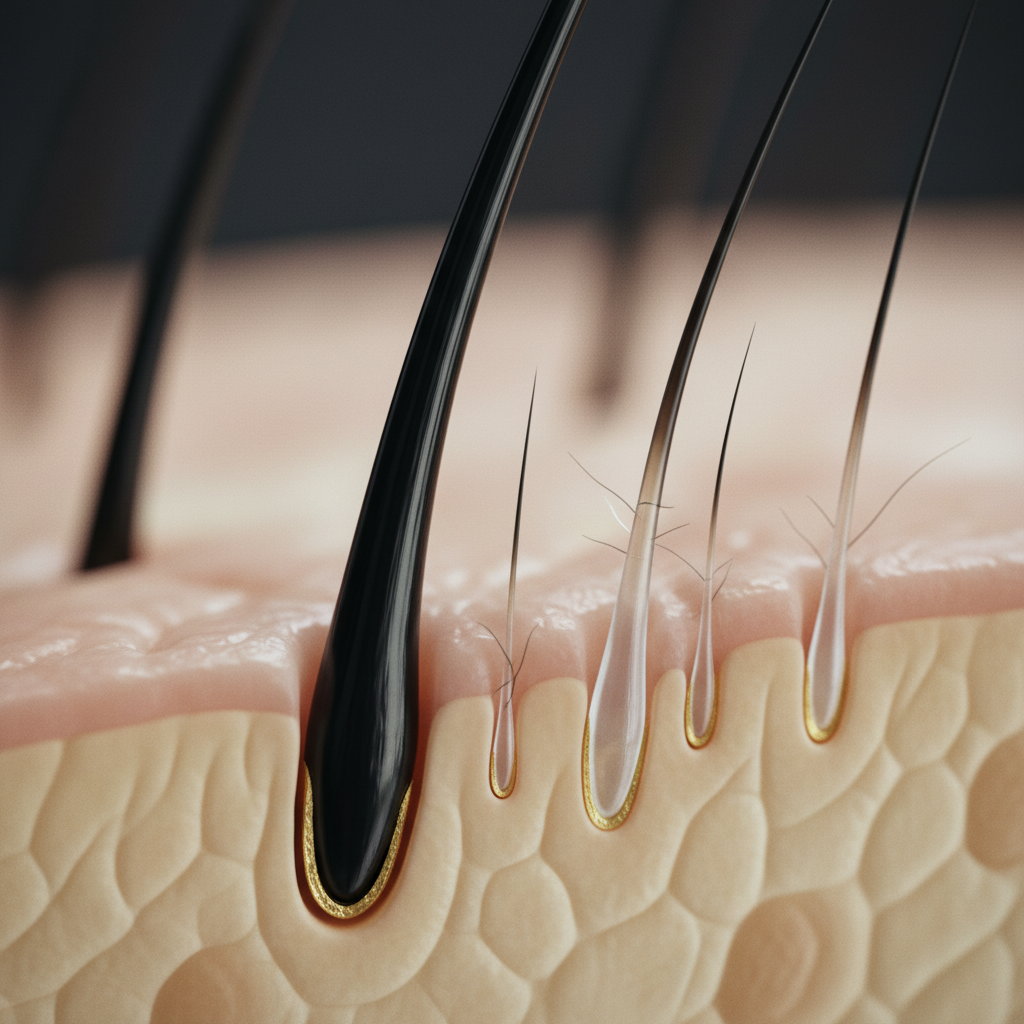
In genetically predisposed follicles, dihydrotestosterone (DHT) binds to intracellular androgen receptors within the dermal papilla. This triggers inhibitory paracrine signalling factors (such as transforming growth factor-beta, or TGF-beta) that prematurely terminate anagen. The growth phase shrinks from years down to months or weeks, while the telogen (shedding and resting) phase remains unchanged or lengthens.
Because the follicle spends less time actively dividing and growing, the matrix cells cannot generate sufficient keratin mass. With every successive hair cycle, the dermal papilla decreases in volume, the hair bulb retreats higher into the dermis, and the resulting hair shaft emerges progressively thinner, lighter, and shorter. Eventually, these terminal hairs transform into non-pigmented vellus hairs measuring under 30 micrometres in diameter and less than 1 to 2 centimetres in length.
The mechanism: from DHT binding to structural changes
Follicular downsizing occurs through an orderly cellular cascade rather than sudden cell death. The enzyme 5-alpha reductase converts circulating testosterone into DHT locally within the scalp tissue. Follicles in the frontal, crown, and temple areas possess higher receptor density and greater 5-alpha reductase activity compared to occipital follicles at the back of the head.
When DHT links with the androgen receptor, it alters gene transcription in the dermal papilla cells. Key structural consequences include:
- Dermal papilla extracellular matrix depletion: The volume of the dermal papilla directly dictates the thickness of the hair shaft. As extracellular matrix proteins decrease, the papilla physically contracts.
- Microvascular regression: As the follicle downscales, surrounding capillary networks supplying oxygen and micronutrients diminish, limiting metabolic exchange.
- Perifollicular micro-inflammation: Biopsies frequently reveal lymphocytic infiltration and collagen deposition around the follicular infundibulum, leading over time to perifollicular fibrosis.
- Upward migration of the hair bulb: Healthy terminal follicles penetrate 3 to 5 millimetres into the subcutaneous fat. Miniaturised follicles sit shallowly in the upper dermis, barely 1 to 2 millimetres deep.
What the evidence does not show
Follicle miniaturisation is often misunderstood due to widespread myths about circulation, hygiene, and mechanical stress:

- It is not caused by poor scalp circulation: While microvascular support shrinks in response to a miniaturising follicle, poor blood flow does not initiate the condition. Blood flow diminishes because the tissue has shrunk, not the other way around.
- It is not caused by clogged pores or sebum build-up: Sebum contains traces of hormones, but sebum sitting on the scalp surface does not choke follicles into shrinking.
- It is not hair breakage: Breakage involves mechanical or chemical damage that snaps the hair fibre along the shaft, leaving the root untouched. Miniaturisation is a root-level follicular shift.
- It cannot be reversed once fibrosis occurs: Cosmetic products and medical treatments can support follicles that are still actively producing thin fibres, but no topical wash or cosmetic ingredient can bring a dead, fibrosed follicle back into production.
Comparing hair conditions: miniaturisation vs. shedding vs. breakage
Recognising what is happening on your scalp requires separating distinct hair concerns that often get lumped together.
| Feature | Follicle Miniaturisation | Hair Shedding (Telogen Effluvium) | Hair Breakage |
|---|---|---|---|
| Primary site | Follicle bulb and dermal papilla | Hair cycle timing mechanism | Hair shaft (keratin structure) |
| Typical appearance | Gradual thinning, visible scalp, shorter hairs | Sudden, diffuse drop of normal-width hairs | Short, snapped fibres with split ends |
| Root present? | Yes, but miniaturised with tiny bulb | Yes, white keratin bulb present | No white bulb (shaft snapped) |
| Root cause | Genetics, androgens (DHT), local micro-inflammation | Systemic shock, illness, stress, deficiency | Bleaching, heat styling, friction, dryness |
| Reversibility | Progressive without intervention; slows with management | Highly reversible once trigger resolves | Avoidable through conditioning and gentler handling |
Signs to look for: identifying miniaturisation early
Because follicle miniaturisation unfolds across multiple hair cycles, early signs are subtle. Identifying them early offers the best opportunity to retain existing density.
- Variable hair shaft thickness: Dermatologists use a dermatoscope (trichoscopy) to inspect the scalp. A healthy scalp displays consistent hair diameters. Miniaturisation reveals hair diameter diversity (anisotrichosis), where thick and thin hairs emerge side-by-side from the same follicular unit.
- Reduction of multi-hair units: Healthy follicles typically grow in clusters of two, three, or four hairs. Early miniaturisation reduces these groups to single-hair units.
- Excessive vellus hair: You notice fine, peach-fuzz hairs along the hairline or crown that fail to grow past an inch or two in length.
- A widening parting or receding hairline: Because the hairs lack diameter and pigment, light passes through more easily, giving the visual appearance of reduced coverage long before the hairs vanish entirely.
What you can do: clinical management and cosmetic support
Managing miniaturisation requires realistic expectations based on the state of your follicles.
Medical interventions
Clinical options evaluate your systemic and hormonal status. Doctors frequently consider:
- Topical vasodilators: Stimulate cellular activity and extend the anagen phase.
- Systemic 5-alpha reductase inhibitors: Reduce the conversion of testosterone to DHT, halting or slowing the biological trigger.
- Low-level light therapy (LLLT): Photobiomodulation studies show cellular energy increases that can support follicle function.
Cosmetic care and hair wellness
Topical haircare cannot alter underlying genetics, but it plays an essential role in preserving fibre integrity and supporting the scalp environment:
- Strengthen existing fibres: Miniaturising hairs possess thinner cuticles and snap under lower mechanical loads. Gentle cleansers and protein-rich conditioners coat the fibre, reducing cosmetic breakage.
- Scalp hygiene: Keeping the scalp free of heavy crusting, excessive flaking, and microbial overgrowth reduces superficial inflammation.
- Supportive botanicals: Ingredients like caffeine, niacinamide, rosemary, and biotin provide antioxidant support, improve scalp comfort, and temporarily plump the appearance of hair shafts.
Supporting the scalp: the role of Watermans
While cosmetic formulas do not cure or alter androgenetic alopecia, maintaining an optimal environment around the follicle opening makes a noticeable difference to how hair looks and performs. Watermans approaches scalp care from a functional cosmetic perspective.
Watermans GrowMe Shampoo delivers stimulating ingredients including caffeine, biotin, argan oil, rosemary extract, and allantoin directly to the scalp during washing. The formula is designed to invigorate the scalp surface, clear away dead cells and styling residue without stripping moisture, and fortify the fragile hair fibres you have. By keeping the scalp clean, hydrated, and conditioned, Watermans products help hair feel denser, look fuller, and resist the daily mechanical breakage that compounds the appearance of thinning.
When the cause may be something else
Thinning hair does not always stem from androgen-driven miniaturisation. Other conditions present similarly:
- Telogen effluvium: Triggers like childbirth, extreme psychological distress, severe nutritional restriction, or high fever can shift up to 30 percent of follicles prematurely into telogen, causing widespread shedding three months later.
- Alopecia areata: An autoimmune attack causing round, well-demarcated patches of smooth hair loss.
- Thyroid dysfunction: Both hypothyroidism and hyperthyroidism disrupt normal hair cycling, leading to dry, diffuse thinning across the entire scalp.
- Traction alopecia: Persistent physical tension from tight ponytails, braids, or extensions pulls at the follicle, eventually causing mechanical scarring and hair loss without systemic androgen involvement.
When to get professional advice
If you observe progressive thinning, arrange an evaluation with a trichologist or dermatologist. Seek professional assessment promptly if:
- You notice scalp pain, burning, redness, or scaling alongside hair thinning.
- Hair is falling out in distinct circular clumps or diffuse handfuls over a few days.
- Thinning occurs rapidly or affects the eyebrows, eyelashes, or body hair.
- Your scalp displays scarring, smooth white patches, or absence of visible follicular openings.
A medical specialist will use trichoscopy and laboratory blood panels (ferritin, thyroid stimulating hormone, full blood count) to confirm whether follicle miniaturisation or an alternative pathology is responsible.
Frequently asked questions about Follicle Miniaturisation Explained
Can follicle miniaturisation be completely reversed?
Follicle miniaturisation can often be slowed or partially reversed if the follicle is still alive and producing fine vellus or intermediate hairs. However, once the follicle atrophies completely and is replaced by fibrous tissue (perifollicular fibrosis), that follicle cannot be revived to produce a terminal hair.
How does Follicle Miniaturisation Explained differ from shedding?
Shedding involves normal-thickness hairs dislodging from follicles that have completed their telogen resting phase. In Follicle Miniaturisation Explained, the follicle itself physically shrinks, producing a much finer, shorter, and less pigmented hair each time a new cycle begins, rather than dropping hairs in sudden volume.
At what age does follicle miniaturisation start?
Follicular miniaturisation can begin anytime after puberty when androgen levels rise. In men with strong genetic susceptibility, it often begins in late adolescence or early twenties. In women, it frequently becomes noticeable during hormonal shifts such as perimenopause or menopause, though it can appear earlier.
Does washing hair daily accelerate follicle miniaturisation?
No. Washing your hair does not cause follicle miniaturisation. Hairs that come out during washing were already detached in the telogen resting phase and ready to fall. Washing keeps the scalp clean and minimises surface microflora that could otherwise contribute to irritation.
Can scalp massage reverse miniaturised follicles?
Scalp massage temporarily increases local cutaneous blood flow and may mechanically stretch dermal papilla cells, but controlled evidence does not demonstrate that massage alone can counteract androgen-driven miniaturisation or regrow fully lost hair.
Summary
Having Follicle Miniaturisation Explained helps clarify the boundary between everyday cosmetic thinning and genetic follicle changes. When androgen sensitivity drives the hair follicle to downscale, hairs become thinner, lighter, and structurally fragile over time. A comprehensive approach involves early professional evaluation, proven medical treatments where appropriate, and high-quality scalp hygiene to keep remaining hairs resilient and looking their best.
Sources and references
- British Association of Dermatologists: Androgenetic Alopecia Clinical Guidelines (2020)
- NHS UK: Hair loss conditions and treatments (Reviewed 2023)
- National Institute for Health and Care Excellence (NICE): Alopecia - androgenetic (Clinical Knowledge Summary, 2022)
- Journal of the American Academy of Dermatology: The pathogenesis of androgenetic alopecia (2018)
- Dermatology and Therapy: Standardisation of trichoscopy in hair loss disorders (2021)
Find these ingredients in Watermans products
- Niacinamide: you will find this ingredient in our Hair Mask.