Scalp Exfoliation: Uncovering the Evidence for a Healthier Scalp
8 min read ·
Scalp exfoliation is a process that removes dead skin cells and buildup, aiming to create a healthier environment for your hair to thrive.
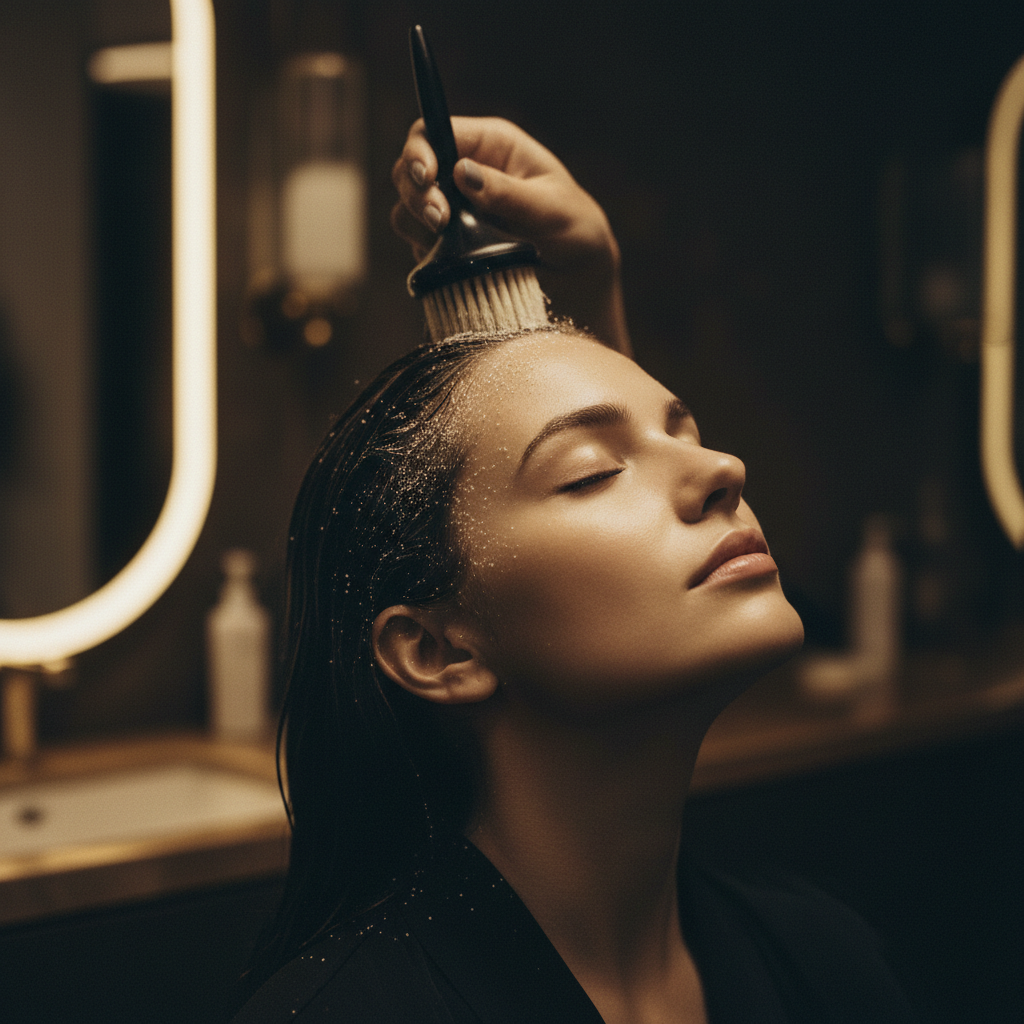
Quick answer: Exfoliation refers to the process of removing dead skin cells, excess sebum, and product buildup from the scalp surface. This can contribute to a healthier-looking scalp and hair. While it can address issues like flakiness and itchiness, it's important to avoid over-exfoliation, which may disrupt the scalp's natural barrier, leading to irritation or dryness. Proper technique and frequency are key to beneficial exfoliation.
Key takeaways
- Scalp exfoliation helps remove dead skin cells, excess sebum, and product residue that can accumulate on the scalp.
- Exfoliation methods generally fall into two categories: physical (using abrasive particles) and chemical (using acids like AHAs and BHAs).
- Potential benefits include a reduction in visible flakes, less itchiness, and a cleaner-feeling scalp.
- Over-exfoliating can compromise the scalp's protective barrier, potentially leading to increased sensitivity, dryness, or even temporary overproduction of sebum.
- The best method and frequency for exfoliation depend on your individual scalp type and concerns, typically ranging from weekly to monthly.
- Always follow product instructions and consult a healthcare professional for persistent or severe scalp conditions.
Scalp Exfoliation: what the evidence shows
Scalp exfoliation involves removing the outermost layer of dead skin cells (the stratum corneum) and any accumulated debris from the scalp. Similar to the skin on other parts of your body, the scalp constantly renews its cells, with old cells shedding naturally over approximately 28 days. When this natural process is hindered, or when external factors like styling products, environmental pollutants, or excessive sebum accumulate, they can form a visible layer of buildup. This buildup can contribute to common scalp complaints such as itchiness, flaking, and a sensation of heaviness or oiliness at the hair roots.
While the practice of scalp exfoliation has become popular in cosmetic haircare, its primary purpose is to improve the surface condition of the scalp rather than to directly influence hair growth or to treat underlying medical conditions. Research indicates that a clean, balanced scalp environment supports healthy-looking hair. For example, removing product residue and excess sebum can prevent the obstruction of hair follicles, which, while not a direct cause of hair loss, can contribute to an unhealthy-looking scalp environment and hair that appears dull or weighed down.
The mechanism of scalp exfoliation
Scalp exfoliation works by either physically lifting and scrubbing away surface debris or by chemically dissolving the bonds that hold dead skin cells together. Both approaches aim to clear the stratum corneum and the openings of the hair follicles.
Physical Exfoliation: These products typically contain fine abrasive particles, such as sugars, salts, or ground seeds, suspended in a cream or gel base. When these are gently massaged onto the scalp, they mechanically dislodge dead skin cells, product buildup, and excess sebum. The massage action can also temporarily increase blood flow to the scalp, which some believe may enhance nutrient delivery to hair follicles, though this effect is generally temporary and not a primary benefit of the exfoliation itself.
Chemical Exfoliation: This method uses acids, most commonly alpha hydroxy acids (AHAs) like glycolic acid or lactic acid, and beta hydroxy acids (BHAs) such as salicylic acid. AHAs function by dissolving the ionic bonds (desmosomes) between keratinocytes (skin cells), making it easier for dead cells to detach. BHAs are lipid-soluble, meaning they can penetrate oily environments like hair follicles. This property helps them to break down sebum and cellular debris within the follicle opening. This makes BHAs particularly useful for individuals with oily or acne-prone scalps. Chemical exfoliants are often applied as pre-shampoo treatments or as leave-on tonics.
What the evidence does not show about Exfoliation
It's important to understand the limitations of cosmetic scalp exfoliation. There is currently insufficient scientific evidence to suggest that it directly treats conditions like androgenetic alopecia (pattern hair loss) or significantly alters the hair growth cycle. While maintaining a clean scalp is beneficial for overall hair health and appearance, cosmetic exfoliation does not inherently stimulate new hair growth or reverse hair thinning caused by genetic or hormonal factors. Claims of "detoxifying" the scalp are also largely cosmetic; the body's internal organs are responsible for detoxification.
Furthermore, while exfoliation can help manage symptoms associated with conditions like dandruff (seborrheic dermatitis), it is not a cure for these conditions. Dandruff often requires specific antifungal or anti-inflammatory treatments to address its root cause. Always consult a healthcare professional for persistent or severe scalp conditions.
Signs your scalp might benefit from exfoliation
Your scalp often provides clues about its needs. Here are some signs that suggest your scalp might benefit from targeted exfoliation:
- Visible Flakes: Small, white or yellowish flakes present on your scalp or hair, which are distinct from the larger, oilier flakes associated with dandruff.
- Persistent Itchiness: An itchy scalp without obvious signs of irritation or infection, often indicating dryness or buildup. For more information, see Understanding Scalp Health.
- Oily or Greasy Hair: Hair that feels heavy or greasy shortly after washing, suggesting excess sebum production or accumulation. This relates to Sebum Regulation: Understanding and Managing Scalp Oiliness.
- Dull-looking Hair: Hair that lacks its natural shine or appears weighed down, which can be caused by product residue coating the hair shaft. For more on managing this, see How to Do a Clarifying Wash: A Guide to Deep Hair Cleansing.
- Product Buildup: A noticeable film or residue on the scalp, particularly if you regularly use styling products, dry shampoos, or heavy conditioners.
- Unpleasant Scalp Odour: An unusual smell emanating from the scalp, which can be a sign of bacterial overgrowth in a sebum-rich environment.
When the cause may be something else
While exfoliation can address many common scalp concerns, some symptoms might point to underlying conditions that require professional medical attention. If you experience any of the following, it's best to consult a dermatologist or trichologist:
- Severe or persistent redness, inflammation, or pain: These could indicate infections, allergic reactions, or inflammatory scalp conditions like psoriasis or eczema.
- Patches of hair loss or thinning that is sudden or severe: This requires diagnosis and treatment for conditions such as alopecia areata, telogen effluvium, or androgenetic alopecia. These are different from hair shedding.
- Large, oily, or yellowish flakes with severe itching: These are classic symptoms of seborrheic dermatitis (dandruff), which often needs medicated shampoos for effective management.
- Open sores, crusts, or pus-filled bumps: These symptoms suggest a bacterial or fungal infection that requires medical intervention.
- Excessive hair shedding: While exfoliation supports scalp health, it will not stop excessive hair shedding. If you are experiencing significant hair shedding, consult a professional to determine the cause.
Comparing Exfoliation Methods
Choosing between physical and chemical exfoliation depends on your individual scalp type and specific concerns. Both have distinct mechanisms and suitable applications.
| Feature | Physical Exfoliation | Chemical Exfoliation |
|---|---|---|
| Mechanism | Manual scrubbing with abrasive particles. | Dissolves bonds between dead skin cells using acids. |
| Primary Use | Surface buildup, general flakiness, immediate cleansing sensation. | Deep cleansing, oily scalp, clogged follicles, persistent flakes. |
| Ingredients | Sugar, salt, ground seeds (less common are microbeads). | AHAs (glycolic, lactic), BHAs (salicylic acid). |
| Scalp Type Match | Normal, oily, prone to product buildup (use gently). | Oily, sensitive (with caution and lower concentrations), dandruff-prone. |
| Application | Massage into wet scalp, then rinse thoroughly. | Apply to dry or damp scalp, leave on for a specified time, then rinse. |
| Pros | Provides an immediate feeling of cleanliness, visible removal of flakes. | Often gentler action, can penetrate follicles more effectively, good for oil control. |
| Cons | Potential for irritation if over-scrubbed or particles are too harsh. | Requires careful timing and patch testing, potential for sensitivity or tingling. |
Frequently asked questions about Exfoliation
Can Exfoliation cause hair loss?
No, cosmetic scalp exfoliation does not cause hair loss. When performed correctly and with appropriate products, it aims to improve scalp health. However, aggressive scrubbing or over-exfoliation can cause temporary irritation, redness, or damage to the scalp skin, but this is not typically linked to hair loss (follicular damage resulting in shedding). If you are experiencing hair loss, it's important to consult a healthcare professional to identify the underlying cause.
How often should I exfoliate my scalp?
The ideal frequency for scalp exfoliation varies by individual scalp type and product strength. For most people, exfoliating once or twice a month is sufficient. Those with very oily scalps or significant product buildup might do it more frequently, perhaps weekly, while those with sensitive or dry scalps may prefer less often. Always follow the specific instructions on the product you are using.
Is scalp exfoliation good for dandruff?
Scalp exfoliation can help manage some of the symptoms associated with dandruff (seborrheic dermatitis), such as visible flakes and itchiness, by physically or chemically lifting dead skin cells. However, it is not a cure for dandruff. Dandruff is often caused by an overgrowth of a yeast called Malassezia. Effective treatment usually requires medicated shampoos containing antifungal agents like ketoconazole or pyrithione zinc. Exfoliation can be a supportive measure, but not a standalone solution.
Can I use a regular face scrub on my scalp?
It is generally not recommended to use a regular face scrub on your scalp. Face scrubs are formulated for the thinner, more delicate skin of the face and may contain ingredients or abrasive particles that are too harsh or not suitable for the scalp's unique environment. Scalp-specific exfoliants are designed with the scalp's thicker skin, hair follicles, and potential for product buildup in mind, ensuring a more effective and safer application.
How Watermans supports scalp health
Watermans formulations prioritise scalp health, recognising it as the essential foundation for healthy-looking hair. While Watermans does not currently offer a dedicated exfoliating product, their shampoos and conditioners are developed to cleanse effectively without stripping the scalp's natural moisture barrier. This approach helps prevent the excessive buildup that exfoliation aims to address. For instance, Watermans Grow Me® Shampoo is designed to gently yet thoroughly cleanse, contributing to a clean and balanced scalp environment.
Sources and references
- American Academy of Dermatology Association, "Scalp psoriasis: Diagnosis and treatment", aocd.org
- National Institute of Arthritis and Musculoskeletal and Skin Diseases (NIAMS), "Psoriasis", nih.gov
- British Association of Dermatologists, "Dandruff (Seborrhoeic Dermatitis)", bad.org.uk
- PubMed, "A review of the use of salicylic acid in dermatology", 2012, ncbi.nlm.nih.gov
- PubMed, "Glycolic Acid", 2021, ncbi.nlm.nih.gov
- Journal of Clinical and Aesthetic Dermatology, "An Update on the Role of the Scalp Microbiome in Hair Health", 2020
Find these ingredients in Watermans products
- Zinc — you will find this ingredient in our Hair Vitamins.