The Real Effects of Heat Damage on Hair Cuticles: Structural Evidence and Protection
8 min read ·
Discover the science-backed effects of heat damage on hair cuticles, from protein denaturation to lipid loss, and learn how to safeguard your hair fibre.
Quick answer: The effects of heat damage on hair cuticles involve the rapid physical cracking, lifting, and erosion of the protective outer scale layers, combined with the loss of essential surface lipids. When heated styling tools exceed 150°C, internal moisture vaporises violently, forming microscopic blisters, while surface proteins denature. The main limitation is that the cuticle layer is biologically dead tissue; once structural keratin flakes chip away or melt, the body cannot regenerate them, leaving hair permanently prone to breakage until trimmed.
Key takeaways
- Heat above 140°C degrades the 18-methyleicosanoic acid (18-MEA) lipid layer that keeps cuticles hydrophobic and smooth.
- Temperatures exceeding 180°C to 200°C cause keratin protein denaturation, cuticle lifting, and internal water flash boiling (bubble hair).
- Damaged cuticles cannot self-repair; treatment focuses on cosmetic adhesion, lubrication, and friction reduction.
- Heat damage causes mechanical shaft breakage rather than biological follicular hair loss.
- Using protective conditioning agents and keeping tool temperatures below 180°C significantly reduces surface degradation.
Effects of Heat Damage on Hair Cuticles: what the evidence shows
Scientific research using scanning electron microscopy (SEM) demonstrates that thermal styling tools systematically erode the hair fibre's outermost defence. The primary effects of heat damage on hair cuticles manifest as physical deformation, cracking, edge lifting, and the total abrading of the protective shingle pattern.
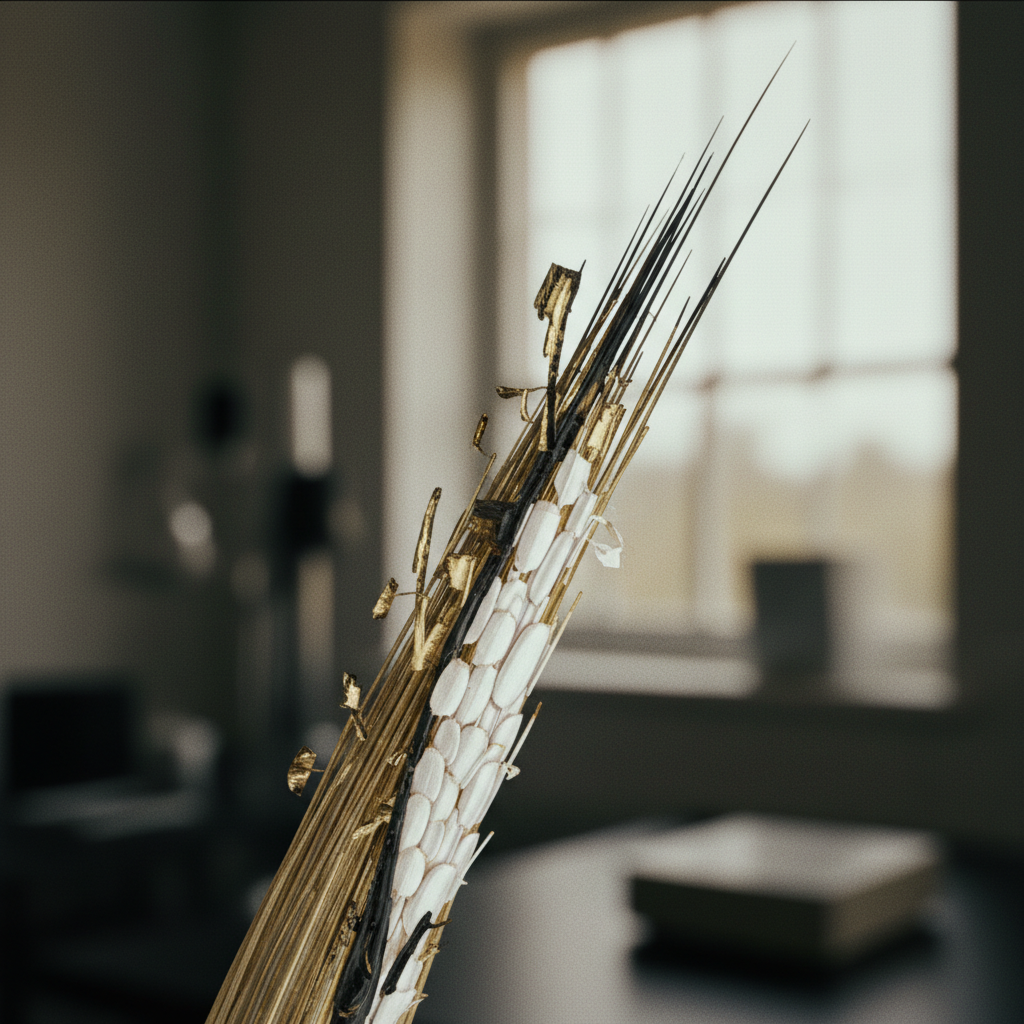
Under normal conditions, healthy hair possesses six to ten overlapping layers of cuticle cells. Each cell contains an outer epicuticle, an exocuticle rich in cystine (around 30%), and an endocuticle. A covalently bound lipid monolayer, composed primarily of 18-methyleicosanoic acid (18-MEA), coats this structure, making the fibre naturally water-repellent and smooth.
Studies published in the Journal of Cosmetic Science show that temperatures between 130°C and 160°C begin to deplete these surface lipids. When exposed to heat irons at 180°C to 220°C, the cystine-rich exocuticle suffers severe thermal degradation. The edges of the cuticle scales curl upwards and tear away. As heat escalates, the endocuticle swells unevenly. This leaves the cortex vulnerable to environmental moisture fluctuations, rapid moisture loss, and accelerated mechanical breakage.
| Temperature Range | Cuticle Structural Response | Observable Mechanical Impact |
|---|---|---|
| Below 140°C | Intact scale structure; minimal 18-MEA lipid disturbance. | Smooth gliding, normal elasticity, healthy hydrophobicity. |
| 140°C to 175°C | Progressive breakdown of 18-MEA; subtle scale edge lifting. | Increased friction, dullness, mild snagging during combing. |
| 180°C to 205°C | Cuticle blistering, severe lifting, partial scale detachment. | Tangling, porous fibre, visible split ends, accelerated breakage. |
| Above 210°C | Complete cuticle melting, cratering, cortex exposure (bubble hair). | Extreme brittleness, structural collapse, immediate shaft snapping. |
Mechanisms of thermal cuticle degradation
The destruction of the cuticle relies on two distinct mechanisms: thermal protein denaturation and hydrothermal pressure expansion.
Thermal protein denaturation
Keratin fibres rely on disulfide bridges, hydrogen bonds, and salt linkages for structural integrity. Heating dry hair past 150°C alters the helical alpha-keratin structure, relaxing it into disordered beta-keratin sheets. At temperatures around 200°C to 230°C, thermal decomposition accelerates, breaking disulfide cross-links. The cuticle scales lose their rigid flexibility, turning brittle and glass-like, which causes them to snap off during ordinary brushing.
Hydrothermal flash boiling ("Bubble Hair")
When you apply a hot iron to damp or wet hair, free water trapped beneath the epicuticle reaches boiling point almost instantly. Because steam occupies roughly 1,600 times the volume of liquid water, it creates violent internal vaporisation pressure. This explosive expansion blows microscopic cavities through the endocuticle and cortex, causing a clinical deformity known as "bubble hair". The cuticle shell fractures from the inside out, creating permanent hollow bubbles along the shaft that shatter under the slightest tension.
Visible and tactile signs of cuticle damage
Detecting thermal cuticle degradation before mass breakage occurs helps preserve the remaining fibre length:
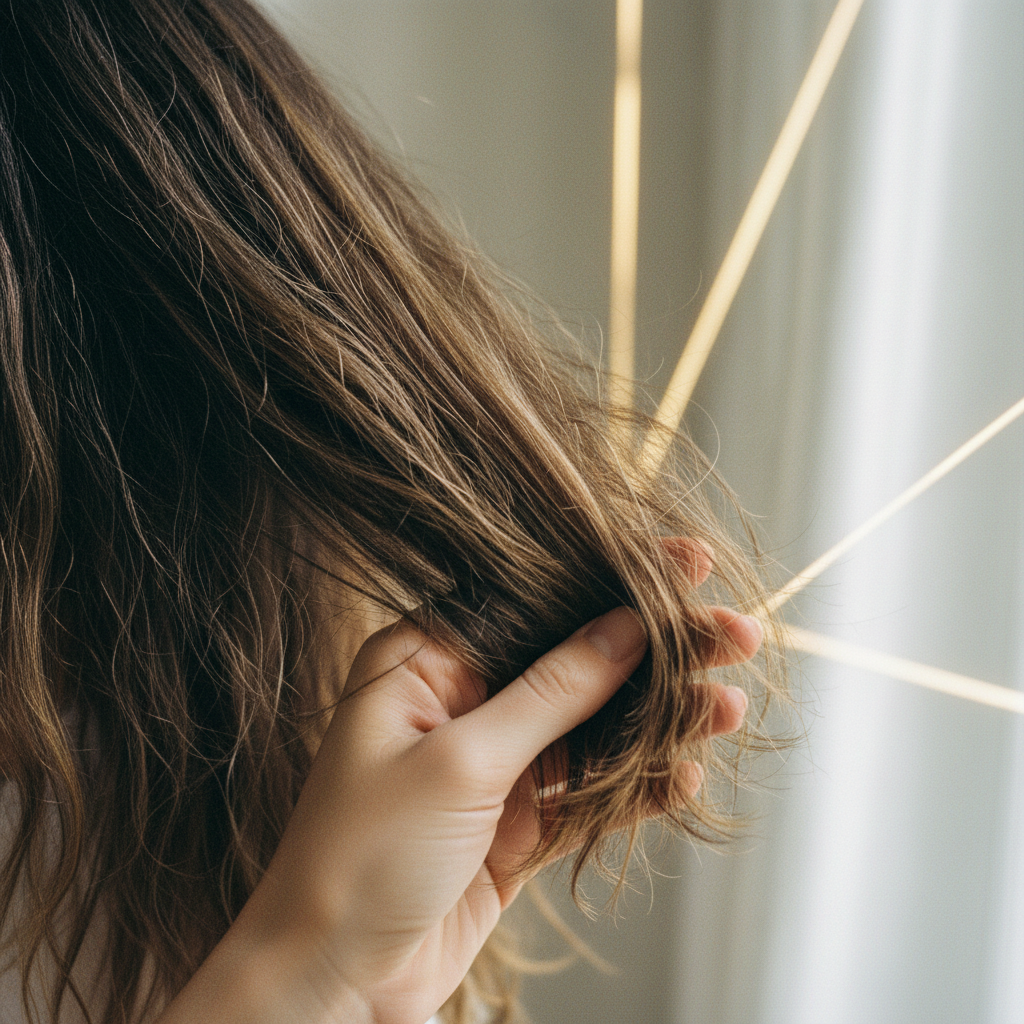
- Loss of surface shine: As flat cuticle scales lift, they scatter light randomly rather than reflecting it uniformly, turning hair visibly dull.
- High porosity and rapid drying: Damaged cuticles allow wash water to flood the cortex rapidly. The hair feels waterlogged when wet, yet paradoxically dries out fast and feels rough.
- Excess friction and tangles: Uplifted cuticle margins catch against neighbouring strands like tiny barbs, causing chronic knotting and matting.
- White flecks and split ends: Trichoptilosis (longitudinal splitting) and trichorrhexis nodosa (node-like fracture points) appear when cuticles wear away entirely, leaving bare cortical fibres exposed.
What the evidence does not show
Thermal styling does not cause follicular hair loss or stop the follicle from producing new fibres. The effects of heat damage on hair cuticles are entirely confined to the non-living hair shaft. High heat snaps the strand (breakage); it does not prompt telogen effluvium (follicles resting) or androgenetic alopecia (pattern miniaturisation), provided hot metal plates do not burn the scalp tissue directly.
Furthermore, no cosmetic serum, oil, or treatment can physically "mend" a severed or chipped cuticle. Cuticle scales lack cellular machinery to divide or synthesize new protein. While cosmetic polymers, hydrolysed proteins, and dimethicone can temporarily coat and glue lifted scales down, these washes away, revealing the underlying structural voids.
Prevention and remediation strategies
Because the cuticle cannot biologically regenerate, preventative mitigation and cosmetic reinforcement are the only practical solutions.
Control tool temperature
Never use thermal tools above the minimum effective temperature. For fine or bleached hair, keep heat between 130°C and 160°C. For coarser, virgin textures, do not exceed 185°C. Research indicates that structural keratin decomposition rises sharply above 190°C.
Always style on completely dry hair
Unless using a dedicated wet-to-dry air styler with regulated air output, hair must be 100% dry before flat-ironing or curling. Ensuring all surface and interior moisture has stabilised prevents hydrothermal steam blistering.
Apply film-forming thermal protectants
Thermal protection sprays generally rely on polymers such as VP/DMAPA acrylates copolymer, polyquaternium compounds, and silicones like amodimethicone. These ingredients provide two proven benefits: they slow the rate of heat transfer into the fibre core and lower surface friction so the styling plate slides across the cuticles without dislodging them.
Cosmetic lipid replacement
Using conditioning formulations that supply fatty acids, panthenol, and polar lipids helps mimic the lost 18-MEA layer. This replenishes fibre hydrophobicity, shields against humidity, and reduces combing resistance.
Watermans: supporting fibre resilience
While heat damage damages the shaft, healthy growth begins at the scalp. Watermans focuses on scalp vitality and strand nourishment with formulas enriched with biotin, caffeine, argan oil, and hydrolysed lupin protein. Using Watermans GrowMe Shampoo alongside moisturising conditioners provides essential slip and structural surface coating, helping to reduce mechanical friction on delicate, heat-compromised cuticles as new growth emerges.
When the cause may be something else
Cuticle wear is not solely caused by hot irons and blow dryers. Other culprits mimic identical structural symptoms:
- Chemical processing: Bleaching, relaxers, and permanent waves break disulfide bonds chemically, stripping 18-MEA and dissolving exocuticle proteins.
- UV radiation: Prolonged sunlight oxidises amino acids (cystine and methionine) in the cuticle, generating free radicals that make scales brittle.
- Mechanical abrasion: Aggressive backcombing, rough towel-drying, and fine plastic combs physically pry up scale margins without any heat present.
When to seek professional advice
Consult a qualified trichologist or dermatologist if you experience abrupt hair thinning accompanied by scalp pain, scaling, or hair falling out at the root (identifiable by a white bulb). If your hair is breaking off in sheets near the scalp after a salon service, a professional stylist or trichologist can assess whether severe thermal chemical burns have compromised your hair's structural integrity.
Frequently asked questions about Effects of Heat Damage on Hair Cuticles
Can the effects of heat damage on hair cuticles be reversed?
No, the effects of heat damage on hair cuticles cannot be biologically reversed. Hair is dead biological tissue devoid of living cells, meaning cuticle scales cannot self-repair once cracked, detached, or melted. Conditioners, reconstructive masks, and protective serums can temporarily smooth down lifted scales and patch gaps, but the structural damage remains until the hair is trimmed away.
At what exact temperature does thermal cuticle damage begin?
Cuticle damage begins around 140°C, where the natural surface lipid layer (18-MEA) starts breaking down. More severe structural damage, including protein denaturation and the curling of cuticle edges, occurs rapidly once styling tool temperatures surpass 180°C to 200°C.
Does blow-drying cause the same cuticle damage as flat-ironing?
Blow-drying is typically less damaging than flat-ironing because the air stream diffuses the heat and rarely heats hair above 100°C when held at a safe distance of 15 cm. Flat irons apply direct, conductively heated metal plates reaching 180°C to 230°C directly against the cuticles under heavy pressure, magnifying mechanical abrasion and structural breakdown.
How do heat protectant sprays shield the cuticle?
Heat protectants shield the cuticle by coating the hair fibre in cross-linked polymers and silicones. These ingredients distribute heat more evenly along the strand, slow down thermal conduction, and lower the friction coefficient of styling plates, preventing the iron from physically tearing raised cuticle scales.
Understanding cuticle preservation
Managing the effects of heat damage on hair cuticles demands a balance between styling goals and structural preservation. Thermal appliances readily compromise the fine scale layers, strip protective lipids, and induce permanent mechanical vulnerabilities. You can keep your hair cuticles intact, reflective, and resilient over time by capping styling temperatures below 180°C, drying hair completely before applying direct heat, and maintaining an evidence-backed protective conditioning regimen.
Sources and references
- Journal of Cosmetic Science: Thermal degradation of hair keratin, 2011.
- International Journal of Trichology: Hair shaft damage from thermal and chemical treatments, 2019.
- Journal of Microscopy: Microscopic analysis of bubble hair and cuticle fracturing, 2005.
- British Journal of Dermatology: Structural changes in human hair induced by thermal styling appliances, 2013.
Find these ingredients in Watermans products
- Panthenol (Provitamin B5): you will find this ingredient in our Heat Protection Spray.