The Science of Blow Drying Without Damage: A Complete Guide
9 min read ·
Learn the science of blow drying without damage. Discover safe temperatures, optimal dryer distances, and protective protocols to prevent breakage and bubble hair.
Quick answer: Achieving blow drying without damage relies on controlling temperature, distance, and moisture levels rather than avoiding heat altogether. Thermal styling degrades hair proteins when temperatures exceed 140°C or when heat is applied directly to soaking wet fibres. By keeping your hair dryer at least 15 cm away, moving the nozzle continuously, and using protective barrier products, you minimise cuticle uplift and prevent bubble hair formation. However, no heat styling method eliminates thermal stress entirely, making gentle technique essential.
Key takeaways
- Natural air drying is not always healthier than mechanical drying. Prolonged contact with water swells the cell membrane complex and places long-term mechanical stress on the fibre.
- The safest technique involves holding the dryer at a distance of 15 cm with continuous movement on a medium heat setting.
- Applying intense heat to saturated hair causes water trapped within the cortex to boil, leading to a permanent structural deformity known as bubble hair.
- Silicones, polyquaterniums, and hydrolysed proteins reduce thermal transfer, smoothing the cuticle and preventing moisture loss.
- Breakage from thermal fatigue occurs along the shaft and must not be confused with follicular shedding or alopecia.
Blow Drying Without Damage: what the evidence shows
Achieving blow drying without damage requires understanding how heat interacts with wet keratin fibres. A landmark 2011 study published in the Annals of Dermatology examined the structural differences between hair dried naturally at room temperature and hair dried with a hair dryer at various distances and temperatures. The researchers found that while blow drying caused more superficial cuticle damage at higher temperatures, air drying caused greater internal damage to the cell membrane complex (CMC).
When hair remains wet for prolonged periods, the cortex swells. This prolonged swelling exerts continuous pressure on the delicate cell membrane complex that glues the cuticle scales to the cortex. Over time, repeated prolonged air drying leads to moisture-induced fatigue (hygral fatigue). Conversely, using a blow dryer at a distance of 15 cm with continuous motion caused significantly less structural CMC damage than allowing hair to air dry naturally for hours.
The scientific consensus confirms that blow drying without damage is possible if you avoid extreme surface temperatures. Heat styling becomes genuinely destructive when temperatures climb past 140°C, where keratin begins to denature, or when wet fibres undergo flash drying. Controlled blow drying with steady airflow and moderate heat dries the hair quickly enough to prevent CMC degradation without blistering the cuticular sheath.
The biophysical mechanism of thermal damage
To protect your hair, you need to understand what heat actually does to the fibre at a microscopic level.
Human hair consists of an outer protective cuticle, an inner cortex responsible for strength and elasticity, and, in coarser fibres, a central medulla. The cuticle is made of overlapping scales rich in cystine, bound together by the lipid-rich cell membrane complex.
[ Cuticle Layers (Protective Scales) ]
 ↓
[ Cell Membrane Complex (Lipid Glue) ]
 ↓
[ Cortex (Keratin Alpha-Helices & Moisture) ]
When you subject hair to uncontrolled heat, three distinct forms of damage occur:
1. Water vaporisation and bubble hair
If you apply concentrated heat to soaking wet hair, water trapped inside the cortex vaporises rapidly. Because the steam expands faster than it can escape through the cuticle pores, it forms microscopic steam cavities inside the hair shaft. This condition, medically termed pili gemini or "bubble hair", leaves large, hollow voids inside the fibre. The affected areas become extremely fragile and snap off under minimal tension.
2. Protein denaturation
Hair keratin exists in an organised alpha-helix structure. When temperatures exceed 140°C to 160°C, these helical protein chains begin to unravel into unstructured beta-sheet conformations. This structural change compromises the tensile strength of the hair, leading to permanent loss of elasticity and increased porosity.
3. Lipid stripping and cuticle cracking
The 18-methyleicosanoic acid (18-MEA) layer is a natural lipid barrier that covers the outer cuticle, providing hydrophobicity and slip. Excessive heat strips these essential surface lipids. Without them, the cuticle scales lift, curl at the edges, and chip away, exposing the vulnerable cortex to environmental friction.
Signs of thermal damage vs other hair issues
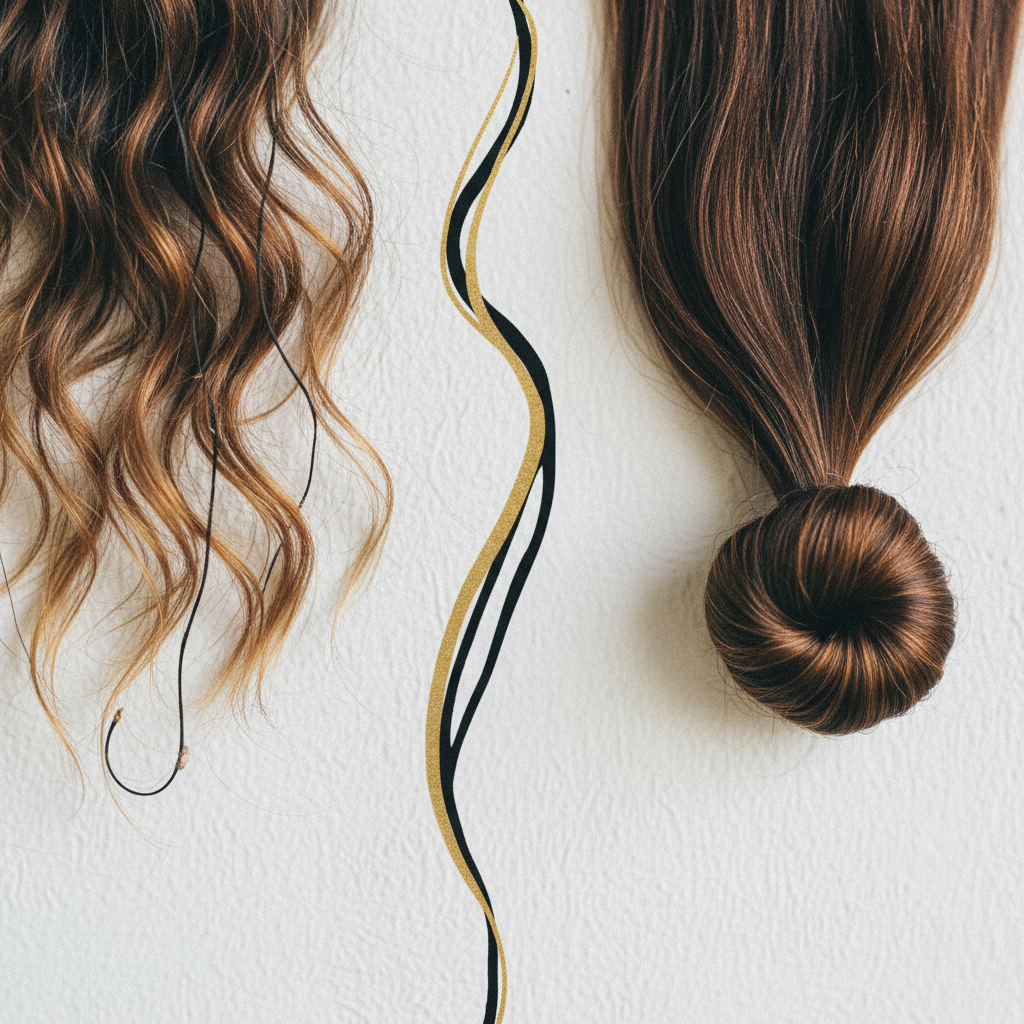
Thermal damage presents differently from nutritional deficiencies, hormonal thinning, or scalp disorders. Because heat targets the existing shaft, it produces physical fractures rather than root-level thinning.
| Symptom / Feature | Thermal Damage (Blow Drying) | Telogen Effluvium (Shedding) | Chemical Damage (Bleach/Perm) |
|---|---|---|---|
| Primary Location | Mid-lengths and ends | Entire scalp (from the root) | Whole fibre, highly porous |
| Fibre Appearance | Split ends, white dots, rough cuticle | Full-length strand with white root bulb | Gummy when wet, brittle when dry |
| Elasticity | Reduced, snaps easily under tension | Normal on remaining hairs | Severely depleted or absent |
| Microscopic Finding | Cuticle lifting, cracked scales, bubble voids | Normal club hair anatomy | Dissolved disulphide bonds, stripped CMC |
| Reversibility | Irreversible (requires trimming) | Self-limiting (resolves over time) | Irreversible (requires bonding agents/cut) |
If you notice strands collecting on your shoulders that are short, jagged, and lack a white bulb at the tip, you are observing hair breakage from mechanical or thermal stress, not hair shedding.
What you can do: the safe blow drying protocol
Protecting your hair during styling requires a systematic approach from the moment you leave the shower. Follow these research-backed steps to keep the fibre intact.
1. Remove excess water gently
Never take a hair dryer to soaking wet hair. Blot your hair gently using a microfibre towel or an old cotton t-shirt. Avoid aggressive rubbing, which lifts wet, swollen cuticles and causes friction fractures. Allow the hair to air dry naturally until it is roughly 50 to 70 percent dry before introducing mechanical heat.
2. Apply a dedicated heat protectant
Thermal protectants are non-negotiable. Ingredients such as dimethicone, amodimethicone, polyquaternium-55, and hydrolysed wheat or vegetable proteins form a thin, protective film over the hair shaft. This film slows down the rate of heat transfer, preventing hot spots and distributing warmth evenly. It also replaces lost surface lipids to restore glide and reduce brush friction.
3. Maintain distance and continuous motion
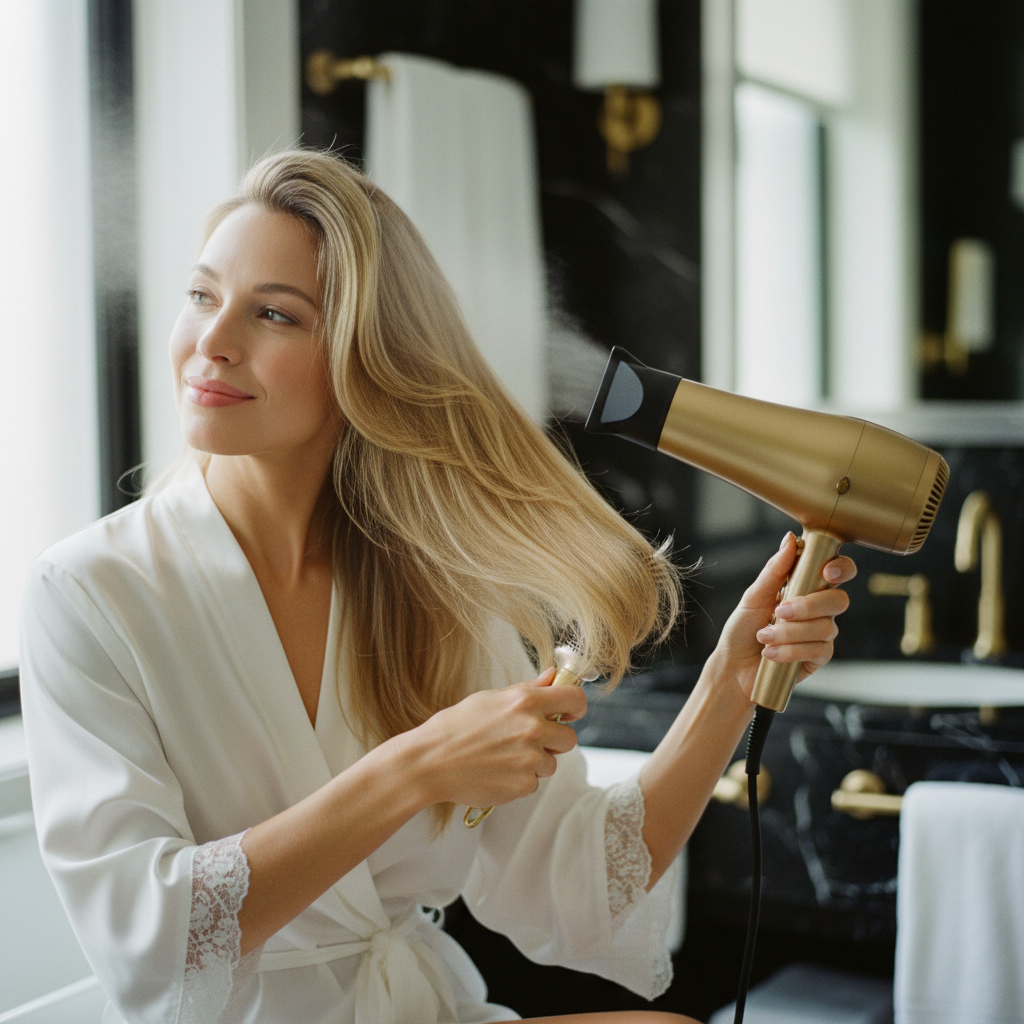
Hold the hair dryer nozzle at least 15 cm away from your hair. Never press the nozzle directly against the brush or the hair fibre. Keep the dryer moving across sections continuously; lingering on one spot for more than a few seconds spikes the surface temperature past the critical 140°C threshold.
4. Direct airflow down the cuticle
Always point the airflow downward, from roots to ends. The cuticle scales lie like tiles on a roof. Directing air down the shaft flattens the scales, creating a smooth, reflective surface that locks in internal moisture and minimises frizz. Pointing the nozzle upward forces the cuticle scales open, resulting in rough texture and snagging.
5. Finish with the cool shot
Once a section is dry, trigger the cool shot button for 10 to 15 seconds. Rapid cooling helps set the hydrogen bonds in their new, smooth configuration while ensuring the hair does not retain residual heat that could dry out the interior cortex.
When the cause of damage is something else
If your hair remains dry, brittle, or prone to snapping despite careful drying habits, the root cause may lie elsewhere:
- Hard water mineral buildup: High concentrations of calcium and magnesium ions in domestic tap water bind to hair proteins, making the fibre feel stiff, coarse, and prone to snapping under minimal heat.
- Over-processing: Repeated oxidative bleaching, permanent hair dyeing, or chemical relaxers break the internal disulphide bonds. Hair with high chemical porosity cannot tolerate even modest blow drying temperatures.
- Nutritional and systemic factors: True hair shedding (telogen effluvium) or diffuse thinning stems from internal factors such as iron deficiency, thyroid dysfunction, or extreme physical stress. If you are losing hairs from the root with the bulb intact, heat styling is not the primary driver.
For chronic scalp irritation, sudden diffuse hair loss, or patchy balding, always consult a registered trichologist or dermatologist for an accurate clinical assessment.
Supporting hair condition with Watermans
Maintaining resilient hair makes thermal styling significantly safer. When hair fibres are adequately conditioned and the scalp environment is supported, the hair shaft withstands routine styling stresses far better.
Watermans focuses on non-invasive, salon-grade hair solutions designed to strengthen the hair fibre, nourish the scalp, and reduce breakage from everyday styling routines. Integrating targeted topical care, such as protein-rich conditioners and nutrient-dense scalp formulas, reinforces the cuticle layer, ensuring your hair retains natural body, elasticity, and shine through every blow dry.
Frequently asked questions about Blow Drying Without Damage
Can you achieve blow drying without damage every single day?
Frequent blow drying introduces repeated thermal cycles that slowly deplete surface lipids. While you can achieve blow drying without damage by using low heat, continuous motion, and a 15 cm distance, daily heat styling still increases cumulative wear. For optimal fibre preservation, limit blow drying to two or three times per week.
Is air drying always safer than using a hair dryer?
No. Scientific studies show that air drying keeps the hair swollen with water for extended periods. This prolonged internal hydration places mechanical stress on the cell membrane complex. The safest technique is hybrid drying: allowing hair to air dry partially, then finishing with a warm, moving blow dryer held 15 cm away.
What hair dryer temperature causes permanent cuticle damage?
Thermal degradation of hair keratin begins around 140°C, while severe structural breakdown and melting of cuticular proteins occur between 160°C and 200°C. To protect your hair, use medium or warm heat settings on your dryer, which typically deliver air between 50°C and 80°C at a safe working distance.
What is bubble hair and can it be repaired?
Bubble hair is an irreversible physical deformity caused by applying high heat to wet hair, which boils internal moisture and forms gas bubbles within the cortex. These bubbles weaken the shaft, causing it to snap easily. Bubble hair cannot be repaired with conditioners or bond builders; the affected lengths must be trimmed away.
Do ionic hair dryers protect hair better?
Ionic hair dryers emit negative ions that break water droplets into smaller micro-molecules, speeding up evaporation. This reduces the total drying time and heat exposure. While ionic technology helps dry hair faster, it does not replace the need for physical heat protectants and proper distance.
Safe styling for long-term fibre health
Mastering blow drying without damage comes down to respecting the physical limits of the hair fibre. Hair is remarkably resilient, but water and excessive heat together create the perfect conditions for structural fatigue, cuticle loss, and fracture. By allowing saturated hair to shed excess moisture before drying, shielding the shaft with thermal protectants, and keeping the dryer moving at a safe distance, you keep your cuticles intact and your cortex strong. Healthy, shiny styling is not about giving up the hair dryer, but about using controlled, deliberate technique every time you switch it on.
Sources and references
- Lee, Y. Y., et al. (2011). Hair Shaft Damage from Heat and Drying Time of Hair Dryer. Annals of Dermatology, 23(4), 455-462.
- Robbins, C. R. (2012). Chemical and Physical Behavior of Human Hair (5th ed.). Springer-Verlag.
- McMullen, R. L., & Jachowicz, J. (1998). Thermal degradation of hair. Journal of Cosmetic Science, 49(4), 223-244.
- Gummer, C. L. (2001). Bubble hair: a physical abnormality. Seminars in Dermatology, 14(1), 54-58.
- British Association of Dermatologists. (2020). Hair breakage and hair shaft disorders: Patient Information Leaflet.
Where Watermans fits
If you want a routine built around the science above, these are the products from the range that apply here: