Bacterial Folliculitis: Symptoms, Causes, and Scalp Care
8 min read ·
Bacterial Folliculitis causes red, tender scalp pustules. Learn the biological mechanisms, key symptoms, safe home care, and when to seek medical treatment.
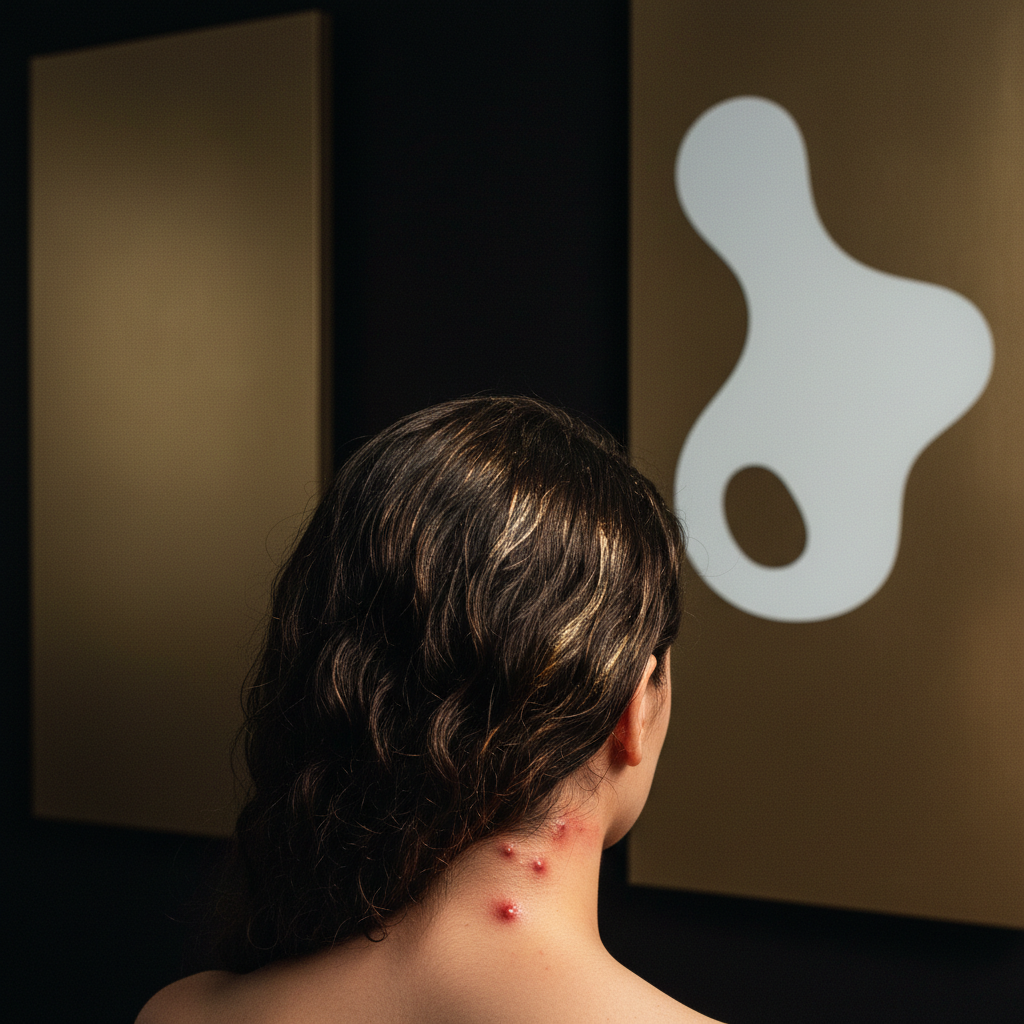
Quick answer: Bacterial Folliculitis is an inflammation and infection of one or more hair follicles, most commonly triggered by the bacterium Staphylococcus aureus. It manifests as small, tender, pus-filled spots surrounding hair fibres on the scalp, beard, or body. While mild cases often resolve with antiseptic hygiene, Bacterial Folliculitis requires targeted topical or oral antibiotics if deep infection develops. Left untreated, severe forms can damage follicles, although standard surface infections rarely cause permanent hair loss.
Key takeaways
- Bacterial Folliculitis occurs when bacteria, primarily Staphylococcus aureus, invade hair follicles disrupted by friction, shaving, occlusion, or skin barrier damage.
- The condition presents as pinpoint red bumps or pustules centred around hair shafts, frequently accompanied by itching, tenderness, or mild burning.
- Superficial infections typically clear within 7 to 10 days using antiseptic washes, warm compresses, and adjusted grooming practices.
- Deep or recurring folliculitis requires medical evaluation, as prescription topical treatments (such as clindamycin or mupirocin) or oral antibiotics may be necessary.
- Distinguishing bacterial infection from fungal forms (like Malassezia folliculitis) or non-infectious inflammatory pustules is essential for choosing the correct treatment.
Bacterial Folliculitis: what the evidence shows
Bacterial Folliculitis represents one of the most common infectious scalp and skin dermatoses encountered in clinical practice. The human skin microbiome naturally hosts billions of microorganisms, including staphylococcal species. Clinical literature shows that healthy skin maintains an acidic pH (between 4.5 and 5.5), which naturally suppresses pathogenic bacterial overgrowth. However, when physical trauma compromises the follicular opening (the infundibulum), resident or transient bacteria colonise the canal, prompting an acute immune response.
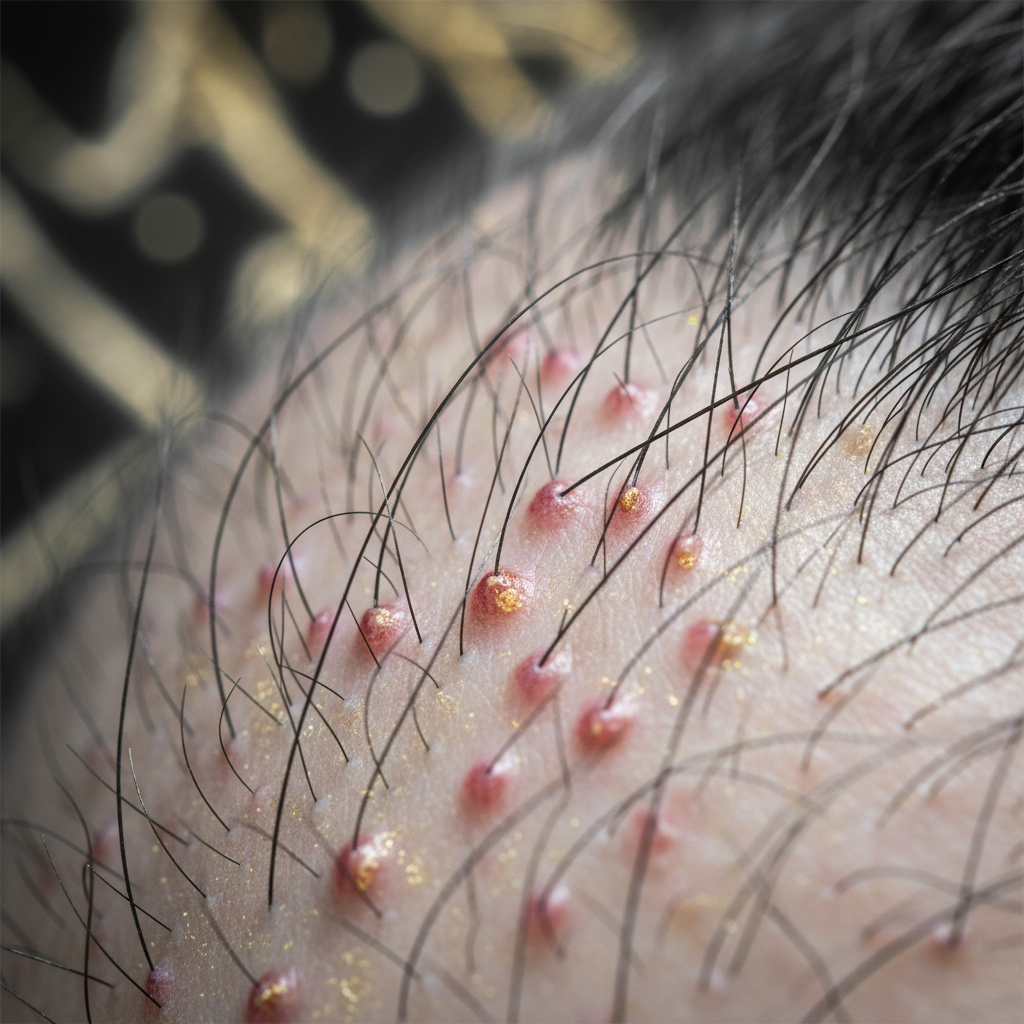
Peer-reviewed studies indicate that Staphylococcus aureus accounts for roughly 80% to 90% of confirmed superficial bacterial cases. Less common culprits include Pseudomonas aeruginosa (often linked to contaminated hot tubs or swimming pools) and gram-negative bacteria arising after prolonged acne antibiotic treatments.
Superficial bacterial folliculitis, historically called Bockhart impetigo, remains confined to the upper portion of the follicle. Deep bacterial folliculitis extends deeper into the dermis, potentially forming furuncles (boils) or carbuncles. While superficial variants heal without scarring, deeper inflammatory lesions can destroy the follicular stem cells located in the follicle bulge, leading to patchy, permanent hair loss known as cicatricial (scarring) alopecia.
What the evidence does not show
The clinical literature does not support several persistent myths surrounding scalp pustules:
- It does not prove poor hygiene is always the culprit. Many people who develop Bacterial Folliculitis maintain excellent hygiene. Over-washing with harsh, high-pH soaps actually disrupts the acid mantle, stripping protective lipids and making bacterial invasion easier.
- It is not automatically solved by anti-dandruff shampoos. Over-the-counter anti-dandruff formulations containing zinc pyrithione or ketoconazole target fungal yeasts (Malassezia). They do not reliably kill Staphylococcus aureus or gram-negative bacteria.
- It does not typically cause rapid, diffuse hair shedding. Unless a secondary systemic infection develops or severe chronic inflammation sets in, standard folliculitis does not induce acute telogen effluvium. Spotty loss around deep, cystic pustules is localised, not whole-head shedding.
The biological mechanism of follicular infection
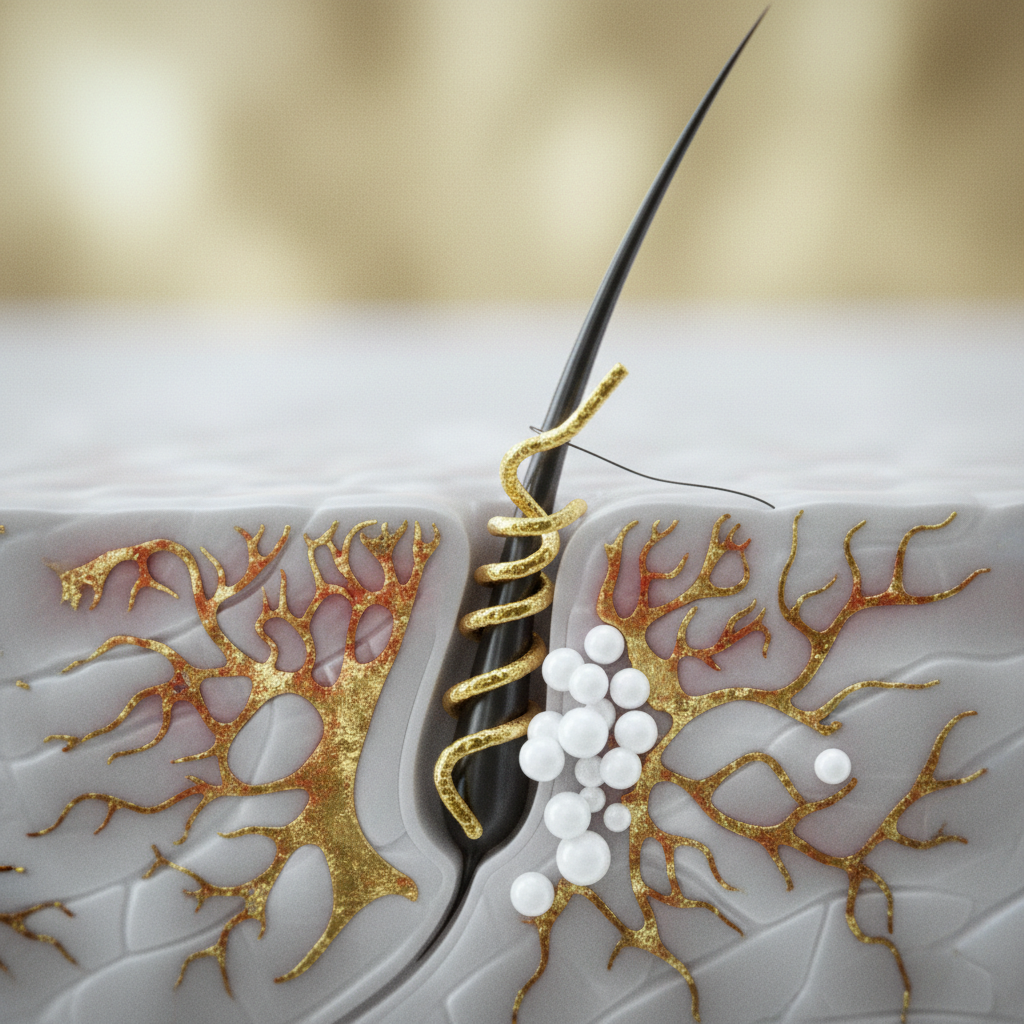
The hair follicle is an intricate anatomical pocket extending through the epidermis into the dermis. The sebaceous gland connects directly to the follicular canal, secreting sebum that lubricates the emerging hair shaft.
Normal follicle:
[Hair Shaft] ---> protected by sebum & acidic barrier (pH 4.5-5.5)

Disruption:
[Friction / Shaving / Occlusive oils] ---> micro-fissure at follicular ostium

Colonisation:
[Staphylococcus aureus] enters infundibulum ---> releases exotoxins

Inflammatory Cascade:
Neutrophil migration ---> pus formation (pustule) around hair shaft
When micro-trauma occurs (from scratching, close razor shaving, tight headwear, or thick occlusive hair waxes), the barrier of the infundibulum breaks down. Staphylococcus aureus adheres to surface fibronectin and begins replicating. In response, keratinocytes and immune cells release pro-inflammatory cytokines (such as IL-1, IL-8, and TNF-alpha).
These chemical signals recruit circulating neutrophils into the follicular canal. As neutrophils engulf bacteria and die, cellular debris and leukocytes accumulate, forming visible pus right at the mouth of the pore.
Signs to look for
Identifying follicular inflammation early prevents superficial spots from turning into deeper, painful nodules. Stylists and individuals should monitor for these distinct signs:
- Erythematous papules: Small, distinct red bumps (1 to 3 mm in diameter) centred directly on a hair shaft.
- Central pustules: Dome-shaped yellow or white heads containing pus, pierced through the centre by a strand of hair.
- Sensation: Mild to moderate itching (pruritus), tenderness to touch, or a stinging sensation across the scalp or beard area.
- Crusting: When pustules rupture, they dry into thin, yellow-brown crusts that adhere to the base of the hair.
- Follicular clustering: Lesions often appear in crops across areas exposed to friction (nape of the neck, beard line, occipital scalp, or thighs).
Comparing follicular scalp conditions
Because red scalp bumps can stem from multiple pathogens, visual inspection alone can sometimes mislead.
| Feature | Bacterial Folliculitis | Malassezia (Fungal) Folliculitis | Acne Necrotica / Folliculitis Decalvans |
|---|---|---|---|
| Primary Cause | Staphylococcus aureus bacteria | Malassezia yeast | Chronic inflammatory / bacterial dysbiosis |
| Pustule Appearance | Variable sizes (1 to 4 mm), pustule with central hair | Uniform, tiny (1 to 2 mm) monomorphic papules/pustules | Deep, destructive nodules, tufted hairs ("doll's hair") |
| Primary Symptom | Tenderness, soreness, mild itch | Intense, persistent itching | Pain, burning, bleeding, crusting |
| Hair Loss Risk | Low (superficial); moderate if deep furuncles form | Very low | Very high (permanent cicatricial alopecia) |
| First-Line Care | Antiseptic wash (chlorhexidine), topical clindamycin | Antifungal agents (ketoconazole) | Oral antibiotics (rifampicin, clindamycin), specialist referral |
Managing Bacterial Folliculitis: evidence-based steps
Mild cases of superficial bacterial infection respond well to conservative measures aimed at reducing bacterial load and removing mechanical friction.
1. Antiseptic scalp cleansing
Washing the affected area with an over-the-counter antiseptic skin wash, such as chlorhexidine gluconate (4%) or an antibacterial cleanser with benzoyl peroxide (2.5% to 5%), helps decrease surface colony counts. Note that benzoyl peroxide can bleach dark hair fibres, so chlorhexidine or gentle tea tree oil washes are preferred on the scalp.
2. Warm compresses
Applying a clean, warm, moist cloth to the area for 10 to 15 minutes, three to four times a day, promotes blood circulation to the tissue. This encourages natural drainage of pustules without manual squeezing.
3. Eliminate mechanical irritation
Avoid tight hats, helmets, or hairbands that press against active pustules. If the condition affects the beard or nape, pause close shaving. When resuming shaving, use a single-blade razor, shave strictly with the grain of hair growth, and discard disposable blades after two to three uses.
4. Re-evaluate heavy styling products
Heavy styling pomades, occlusive petrolatum-based greases, and dense leave-in oils can seal the follicular opening, creating an anaerobic, warm pocket where bacteria multiply. Switch to lightweight, water-based formulations until the scalp clears.
Supporting a clean, balanced scalp environment
For daily maintenance between flare-ups, keeping the scalp clean, balanced, and free from heavy sebum build-up is vital. While cosmetic products do not treat bacterial medical infections, using a revitalising, botanical-rich formulation like Watermans Grow Me Shampoo can support an optimal scalp environment. Formulated with rosemary extract, biotin, and tea tree, it cleanses away surface sebum and debris without stripping the scalp's protective moisture barrier, leaving hair looking full and refreshed.
When the cause may be something else
If bumps do not clear within two weeks of antiseptic hygiene, consider alternative causes:
- Pseudofolliculitis Barbae: Common in individuals with curly or afro-textured hair. Here, tightly coiled hairs curve backwards into the skin wall after shaving, triggering foreign-body inflammation rather than an initial primary bacterial infection.
- Folliculitis Decalvans: A rare, chronic cicatricial alopecia characterized by tufted hairs (multiple hairs emerging from a single dilated pore) and extensive scarring.
- Eosinophilic Folliculitis: An itchy, non-infectious inflammatory condition characterized by eosinophil infiltration, frequently seen in immunocompromised individuals.
- Scalp Psoriasis: Thick, silvery plaques that can sometimes become secondary infected pustules due to persistent scratching.
When to seek medical advice
You should consult a GP or dermatologist if:
- Redness and swelling spread rapidly around the pustules.
- Pustules merge into large, painful, fluctuant masses (carbuncles) that discharge fluid.
- You develop systemic symptoms, such as a fever or swollen lymph nodes in the neck or groin.
- You notice noticeable hair loss leaving bare, shiny, smooth patches on the scalp.
- The condition recurs repeatedly despite diligent antiseptic hygiene, which may indicate that you are a nasal carrier of Staphylococcus aureus requiring medical decolonisation.
Frequently asked questions about Bacterial Folliculitis
Can Bacterial Folliculitis cause permanent baldness?
Superficial Bacterial Folliculitis rarely causes permanent hair loss because inflammation remains confined to the upper follicular neck. However, if the infection progresses to deep folliculitis or boils, it can destroy the stem cells in the hair follicle bulge. This destruction can lead to localised scarring alopecia, preventing the hair strand from growing back.
Is Bacterial Folliculitis contagious to other people?
Bacterial Folliculitis is generally not considered highly contagious under normal social contact. The bacteria involved, such as Staphylococcus aureus, already reside harmlessly on many people's skin. However, sharing unwashed towels, razors, pillowcases, or headwear can transfer higher bacterial loads to compromised skin, potentially triggering a flare-up in someone else.
How long does it take for Bacterial Folliculitis to clear?
Mild superficial cases typically resolve within 7 to 10 days with appropriate antiseptic hygiene and the removal of friction triggers. Moderate to severe deep infections treated with targeted prescription antibiotics usually begin improving within 48 to 72 hours, but often require 10 to 14 days of continued medical therapy to clear completely.
Can I pop folliculitis pustules on my scalp?
You should never squeeze or pop folliculitis bumps. Squeezing pushes bacteria and inflammatory cytokines deeper into the dermis, increasing the risk of converting a minor superficial pustule into a deep, scarring abscess. It also introduces bacteria from your fingers, potentially spreading the infection to neighbouring follicles.
Summary
Bacterial Folliculitis is a common, manageable condition caused primarily by opportunistic bacteria taking advantage of compromised hair follicles. By understanding the triggers, including micro-fissures from shaving, product occlusion, and skin barrier disruption, you can take prompt, practical steps to resolve superficial flare-ups. Through gentle antiseptic cleansing, avoiding mechanical friction, and seeking timely medical care for deeper infections, you can keep your scalp clear, protect delicate follicles, and maintain long-term hair health.
Sources and references
- British Association of Dermatologists. Clinical Guidelines for the Management of Folliculitis. 2021.
- National Institute for Health and Care Excellence (NICE). Boils, Carbuncles, and Staphylococcal Folliculitis: Clinical Knowledge Summaries. 2022.
- American Academy of Dermatology Association. Folliculitis: Diagnosis and Treatment. 2023.
- Journal of the European Academy of Dermatology and Venereology. European Guidelines on Scalp Infections and Inflammatory Conditions. 2020.
- World Health Organization. Guidelines on Core Components of Infection Prevention and Control Programmes. 2019.
Find these ingredients in Watermans products
- Zinc: you will find this ingredient in our Hair Vitamins.