Acid Mantle Function: The Science of Scalp Barrier Protection
9 min read ·
Discover the biological Acid Mantle Function, how pH impacts your scalp barrier and hair cuticles, signs of disruption, and proven ways to restore balance.

Quick answer: The primary Acid Mantle Function is to maintain a slightly acidic film (pH 4.5 to 5.5) across the skin and scalp surface, formed by sebum, sweat, and cellular lipids. This biochemical shield regulates microbial colonisation, preserves lipid barrier integrity, and governs enzymatic exfoliation. Disrupting this barrier raises surface pH, leaving the scalp vulnerable to moisture loss, irritation, and opportunistic microbes such as Malassezia. However, topical cosmetic products can only support or rebalance surface conditions; they cannot resolve underlying systemic hormonal or dermatological disorders.
Key takeaways
- The acid mantle is an invisible, thin hydrolipidic film with an optimal pH between 4.5 and 5.5.
- The main Acid Mantle Function is defending the skin against pathogen overgrowth while keeping protective enzymes working properly.
- Washing with alkaline soaps or harsh detergents disrupts this acidic film, taking hours or even days to recover.
- A weakened barrier manifests as scalp tightness, itching, flaking, redness, and accelerated moisture loss.
- Adjusting haircare formulations to a physiological pH (around 4.5 to 5.5) protects the lipid barrier and reduces cuticle swelling along the hair shaft.
Acid Mantle Function: what the evidence shows
The acid mantle concept was first documented in 1928 by German physicians Heinrich Schade and Alfred Marchionini, who identified the skin's surface as naturally acidic. Research over the past century confirms that this environment is not an accidental byproduct of sweat and sebum. Instead, it is an active biochemical defence system.
The core Acid Mantle Function relies on an interplay between three distinct elements:
- Inherent antimicrobial defence: Normal skin flora thrives in a mildly acidic climate. Pathogenic bacteria, such as Staphylococcus aureus or Streptococcus pyogenes, prefer neutral to alkaline environments (pH 7.0 and above). Maintaining acidity inhibits these organisms while allowing beneficial microflora to flourish.
- Regulation of barrier lipid synthesis: The enzymes responsible for synthesising ceramides and processing stratum corneum lipids (notably beta-glucocerebrosidase and acidic sphingomyelinase) require a narrow acidic pH range around 5.0. If the pH rises, lipid synthesis slows, weakening the skin barrier.
- Control of desquamation: Cellular turnover depends on kallikrein-related peptidases, which dissolve the protein bridges (corneodesmosomes) between dead skin cells. An elevated pH over-activates these enzymes prematurely, leading to irregular shedding, micro-fissuring, and flaking.
On the scalp, the acid mantle also interacts directly with hair fibres. While hair fibre itself lacks living cells and does not produce an acid mantle, the sebum spreading down the shaft coats the cuticle. A balanced acidic environment keeps cuticles flat and compact, reducing friction and moisture loss.
What the evidence does not show
A working acid mantle is vital for tissue health, but some claims about its abilities overreach scientific evidence.
The evidence does not show that maintaining a healthy acid mantle can prevent or reverse pattern hair loss (androgenetic alopecia). Pattern hair loss is driven by genetics and sensitivity to dihydrotestosterone (DHT) inside the follicle, not by surface acidity alone.
Similarly, cosmetic pH-balanced products cannot cure inflammatory scalp conditions like psoriasis, severe seborrhoeic dermatitis, or atopic eczema. While keeping the surface pH acidic helps soothe symptoms and prevents secondary bacterial infections, it does not eradicate the underlying immune-mediated dysregulation.
Finally, having an intact acid mantle does not make the scalp completely immune to irritation. High concentrations of chemical irritants, allergic sensitisation, and thermal burns will damage tissue regardless of whether surface pH is balanced.
The biological mechanism: how the mantle is maintained
The acid mantle is continuously regenerated through endogenous (internal) and exogenous (external) pathways:
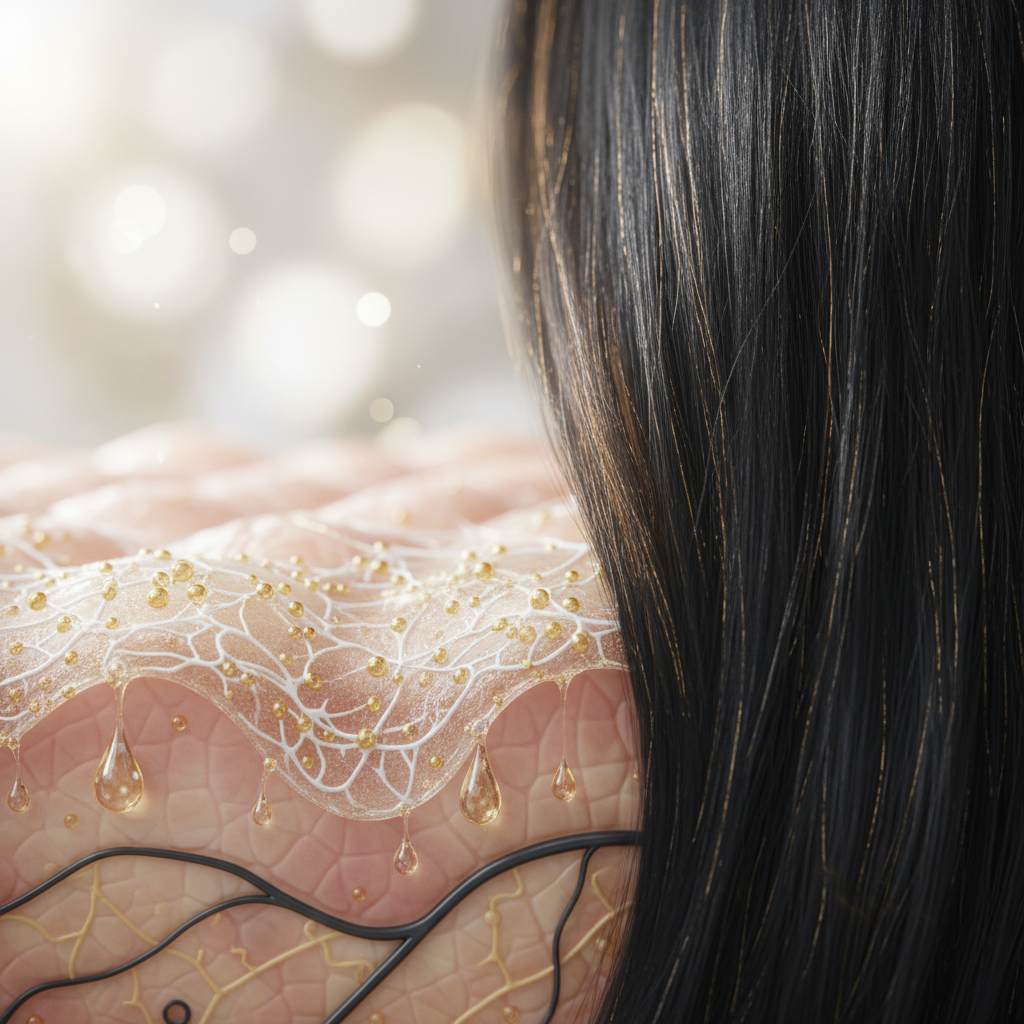
- Filaggrin breakdown: As skin cells mature, the structural protein filaggrin breaks down into natural moisturising factors (NMF) and urocanic acid. This metabolic process generates acidic byproducts inside the upper stratum corneum.
- The sodium-hydrogen antiporter (NHE1): Basal and spinous cells express ion transport pumps that actively pump hydrogen ions (protons) toward the skin surface, lowering extracellular pH.
- Sebaceous lipids and free fatty acids: Sebaceous glands secrete triglycerides that are broken down by resident commensal microbes (Cutibacterium acnes) into free fatty acids, directly adding to the acidic surface film.
- Eccrine sweat production: Sweat carries lactic acid and amino acids to the surface, supplementing the hydrolipidic mantle.
When external cleansers with an alkaline pH (such as traditional lye soaps at pH 9.0 to 10.0) contact the scalp, they strip away free fatty acids and neutralise surface acidity. It typically takes between 2 and 14 hours for a healthy adult scalp to restore baseline pH levels. In ageing skin or damaged barriers, recovery can take considerably longer.
| Feature | Intact Acid Mantle (pH 4.5 - 5.5) | Disrupted Acid Mantle (pH 6.5 - 8.5) |
|---|---|---|
| Microbial Balance | Suppresses pathogens; supports commensals | Promotes S. Aureus and fungal overgrowth |
| Enzyme Activity | Optimal ceramide and lipid synthesis | Premature degradation of cell adhesion |
| Transepidermal Water Loss (TEWL) | Low (moisture stays locked in) | Elevated (rapid dehydration) |
| Scalp Sensation | Comfortable, supple, calm | Tight, itchy, stinging, or sensitive |
| Hair Fibre Effect | Closed cuticles, smooth, low friction | Lifted cuticles, increased friction, dull look |
Signs of a compromised acid mantle
A disrupted barrier produces clear physical indicators across the scalp and hair fibre:
- Persistent dryness and tightness: The scalp feels stretched or uncomfortable, especially within an hour after washing.
- Pruritus (itching) without visible rash: Alkaline conditions irritate sensory nerve endings in the skin, creating constant low-grade itching.
- Fine, powdery flaking: When alkaline pH speeds up desquamation enzymes, dead cells detach prematurely in small, dry clusters rather than shedding invisibly.
- Rebound oiliness: In some cases, the skin attempts to compensate for a stripped lipid barrier by overproducing sebum, leading to greasy roots alongside dry, irritated scalp skin.
- Frizz and breakage: Hair washed repeatedly with alkaline formulations absorbs excess water, lifting the cuticle scales and increasing mechanical breakage during styling.
Restoring and supporting barrier function
Safeguarding the Acid Mantle Function requires simple adjustments to your daily routine:
- Use pH-balanced cleansers: Select shampoos buffered to a pH between 4.5 and 5.5. Avoid traditional bar soaps or cleansers that list high-alkalinity surfactants.
- Limit hot water exposure: Washing with hot water melts the structural lipids in the stratum corneum, making it harder for the acid mantle to hold moisture. Use lukewarm water instead.
- Be mindful with clarifying products: Strong chelating and clarifying shampoos are helpful for removing product build-up, but using them daily can strip necessary surface lipids. Keep them to once weekly or fortnightly.
- Incorporate barrier-supporting topicals: Formulations containing niacinamide, panthenol, and natural oils rich in linoleic acid help reinforce the lipid framework that supports surface acidity.
- Handle chemical processes carefully: Bleaches, permanent colours, and relaxers are strongly alkaline (pH 9.0 to 12.0) by necessity, designed to swell the hair shaft. Follow chemical services with acidic post-treatments to neutralise residues and close the cuticles.
When the cause may be something else
If scalp irritation persists despite using gentle, pH-balanced products, the issue might stem from another source:
- Seborrhoeic dermatitis: Driven by inflammatory reactions to Malassezia yeast metabolites, causing greasy, yellowish scales and defined redness. It often requires specific antifungal ingredients.
- Contact dermatitis: An allergic reaction to fragrances, preservatives (like methylisothiazolinone), or paraphenylenediamine (PPD) in hair dyes.
- Scalp psoriasis: An autoimmune condition characterised by well-demarcated, thick, silvery-white plaques that does not stem from external pH changes alone.
- Hard water build-up: High mineral content (calcium and magnesium) in domestic tap water can react with cleansing agents, leaving insoluble curd on the scalp that mimics barrier failure.
When to seek professional advice
Consult a GP, dermatologist, or qualified trichologist if you notice:
- Severe redness, weeping, crusting, or burning that does not improve after two weeks of gentle care.
- Sudden hair shedding or patchy thinning (alopecia) occurring alongside scalp irritation.
- Flaking accompanied by thick, silvery scales or plaques extending past the hairline.
- Intense itching that disrupts sleep or leads to open excoriations and bleeding from scratching.
Supporting scalp balance with Watermans
Taking care of the scalp barrier involves choosing products that support surface harmony. Watermans designs formulations such as GrowMe Shampoo and ConditionMe Conditioner with scalp health firmly in mind. By avoiding aggressive detergents and incorporating skin-supporting ingredients like rosemary, biotin, niacinamide, and allantoin, these products help keep the scalp clean and calm without compromising the natural barrier. The result is an optimal foundation for fuller-looking, healthier-feeling hair.
Frequently asked questions about Acid Mantle Function
What causes the acid mantle to become unbalanced?
The most common triggers are washing with alkaline soaps, using excessively hot water, over-cleansing, and undergoing harsh chemical treatments like bleaching or perming. Environmental stressors, dry indoor heating, and hormonal fluctuations also alter sebum composition and weaken the barrier.
How quickly does the scalp acid mantle repair itself?
In healthy young skin, the acid mantle starts recovering within two to three hours after mild washing, but full structural recovery can take up to 14 hours. If the skin barrier is chronically stripped or damaged, it may take several days of gentle, pH-appropriate care to return to baseline.
Does shampoo pH affect Acid Mantle Function?
Yes. Shampoos with an alkaline pH (above 6.5) disrupt the scalp's surface acidity, raising transepidermal water loss and causing cuticles to swell. Formulations buffered to a physiological pH of 4.5 to 5.5 preserve normal Acid Mantle Function and minimise irritation.
Is an oily scalp protected from acid mantle damage?
Not necessarily. Excess sebum production does not guarantee an intact barrier. Sebum quality matters as much as volume; unbalanced lipids or aggressive degreasing treatments can strip essential ceramides and moisture, leaving an oily scalp dehydrated and inflamed underneath.
Can water alone disrupt the acid mantle?
Yes. Domestic tap water usually has a neutral to slightly alkaline pH, often between 7.0 and 8.5. Even rinsing without shampoo temporarily shifts surface pH upward. However, healthy skin buffers water quickly compared to the lasting disruption caused by alkaline detergents.
Summary of barrier maintenance
Understanding the delicate nature of Acid Mantle Function is fundamental to sound scalp and hair management. This micro-thin biochemical barrier protects tissue from environmental damage, blocks microbial invaders, and controls moisture retention across the stratum corneum. By choosing gently formulated, pH-balanced hair products, avoiding scalding water, and respecting the scalp's natural ecosystem, you protect this physiological shield, ensuring a healthier, more resilient environment for hair to thrive.
Sources and references
- Ali, S. M., & Yosipovitch, G. (2013). Skin pH: From basic science to basic skin care. Acta Dermato-Venereologica, 93(3), 261-267.
- Lambers, H., Piessens, S., Bloem, A., Pronk, H., & Finkel, P. (2006). Natural skin surface pH is on average below 5, which is beneficial for its resident flora. International Journal of Cosmetic Science, 28(5), 359-370.
- Gavazzoni Dias, M. F., de Almeida, A. M., Cecato, P. M., Adriano, P. R., & Pichler, J. (2014). The shampoo pH can affect the hair: Myth or reality? International Journal of Trichology, 6(3), 95-99.
- Schmid-Wendtner, M. H., & Korting, H. C. (2006). The pH of the skin surface and its impact on the barrier function. Skin Pharmacology and Physiology, 19(6), 296-302.
- Proksch, E. (2018). PH in nature, humans and skin. The Journal of Dermatology, 45(9), 1044-1052.
Find these ingredients in Watermans products
- Niacinamide: you will find this ingredient in our Hair Mask.
- Panthenol (Provitamin B5): you will find this ingredient in our Heat Protection Spray.