{
"url": "https://haircare.watermanshair.com/article/iron-ferritin-hair-growth",
"canonical": "https://haircare.watermanshair.com/article/iron-ferritin-hair-growth",
"markdown_url": "https://haircare.watermanshair.com/api/public/md/iron-ferritin-hair-growth",
"slug": "iron-ferritin-hair-growth",
"title": "Iron and Ferritin in Hair Growth: The Evidence-Based Guide",
"type": "general",
"summary": "Learn how Iron and Ferritin in Hair Growth influence shedding and follicles. Discover optimal ferritin levels, clinical evidence, and safe recovery methods.",
"excerpt": "Understand the role of Iron and Ferritin in Hair Growth, how low stored iron triggers shedding, optimal blood test levels, and safe recovery strategies.",
"body_markdown": "**Quick answer:** The biological relationship between **Iron and Ferritin in Hair Growth** centres on cellular energy and oxygen delivery to the hair follicle matrix. Ferritin reflects your body's stored iron reserves. When ferritin falls, dividing follicular cells struggle to maintain the active growth (anagen) phase, often triggering diffuse shedding known as telogen effluvium. However, iron correction only reverses shedding caused by genuine deficiency; taking [supplements](https://watermanshair.com/products/best-hair-vitamins) without verified clinical blood tests offers no benefit and risks iron toxicity.\n\n## Key takeaways\n\n* Ferritin is an intracellular protein that stores iron and releases it in a controlled fashion. [Serum](https://watermanshair.com/products/luxury-hair-growth-serum) ferritin tests measure stored iron, whereas serum iron only reflects circulating levels.\n* Hair follicle matrix cells are among the most rapidly dividing cells in the human body, requiring substantial iron-dependent ribonucleotide reductase activity for DNA synthesis.\n* Low ferritin can trigger or exacerbate diffuse hair shedding (telogen effluvium) and may worsen pattern hair loss in genetically susceptible individuals.\n* Normal laboratory reference ranges for ferritin often start as low as 15 micrograms per litre, but many dermatologists aim for 40 to 70 micrograms per litre when evaluating hair recovery.\n* Never take high-dose oral iron supplements without a confirmed blood test, as excess iron can damage internal organs.\n\n## Iron and Ferritin in Hair Growth: what the evidence shows\n\nUnderstanding **Iron and Ferritin in Hair Growth** requires distinguishing between circulating iron and stored iron. Circulating iron binds to transferrin to travel through the bloodstream, whereas ferritin acts as a secure cellular reservoir. Because the matrix cells at the base of the hair follicle divide rapidly, they demand an uninterrupted supply of metabolic energy, cofactor enzymes, and oxygen. \n\n\n\nIron serves as an essential cofactor for ribonucleotide reductase, an enzyme directly responsible for DNA synthesis in proliferating cells. When systemic iron levels drop, non-essential tissues, including hair follicles, are the first to experience nutrient diversion toward critical organs like the heart and brain. Consequently, low stored iron can disrupt the hair cycle, prompting follicles to prematurely leave the anagen (active growth) phase and enter catagen (regression) and telogen (resting and shedding).\n\nClinical studies published in peer-reviewed dermatology journals show a clear link between low serum ferritin and excessive hair shedding, particularly in premenopausal women. While iron deficiency anaemia represents the severe end of this spectrum, non-anaemic iron deficiency, where haemoglobin remains normal but ferritin is depleted, frequently presents with hair shedding as its earliest noticeable symptom.\n\n| Marker | Normal Lab Reference Range | Optimal Range for Hair Follicle Health | Primary Clinical Significance |\n| :--- | :--- | :--- | :--- |\n| **Serum Ferritin** | 15 to 200 µg/L (women)
30 to 400 µg/L (men) | 40 to 70 µg/L | Measures intracellular stored iron reserves available for follicle cell division. |\n| **Haemoglobin** | 120 to 150 g/L (women)
130 to 170 g/L (men) | 125 to 150 g/L | Reflects oxygen-carrying capacity in red blood cells. |\n| **Serum Iron** | 10 to 30 µmol/L | 15 to 25 µmol/L | Measures iron currently circulating in serum; fluctuates widely with daily diet. |\n| **Total Iron-Binding Capacity (TIBC)** | 45 to 72 µmol/L | 50 to 65 µmol/L | Evaluates transferrin availability; increases when stored iron is low. |\n\n## What the evidence does not show\n\nResearch does not support the idea that taking iron supplements will accelerate hair growth in people who already have adequate ferritin reserves. If your ferritin is sitting comfortably at 75 micrograms per litre, supplementing with extra iron will not make your hair thicker, faster-growing, or shinier.\n\nFurthermore, iron deficiency is rarely the sole cause of chronic pattern hair loss (androgenetic alopecia). While low ferritin may unmask or accelerate genetic thinning by weakening follicular stamina, restoring ferritin will not permanently halt dihydrotestosterone (DHT) sensitivity. \n\nFinally, do not confuse hair breakage along the hair shaft with hair shedding from the root. Iron deficiency affects the biological activity inside the follicle, altering the hair cycle. It does not cause existing, fully formed hair strands to snap mid-shaft due to surface dryness or mechanical damage.\n\n## The biological mechanism: how iron fuels the follicle\n\nThe hair follicle matrix contains a cluster of transient amplifying cells with an extraordinarily high turnover rate. To sustain continuous hair shaft production, these cells need steady adenosine triphosphate (ATP) generation through the mitochondrial electron transport chain. Cytochromes, which are iron-containing haemoproteins, are indispensable for this energy production.\n\n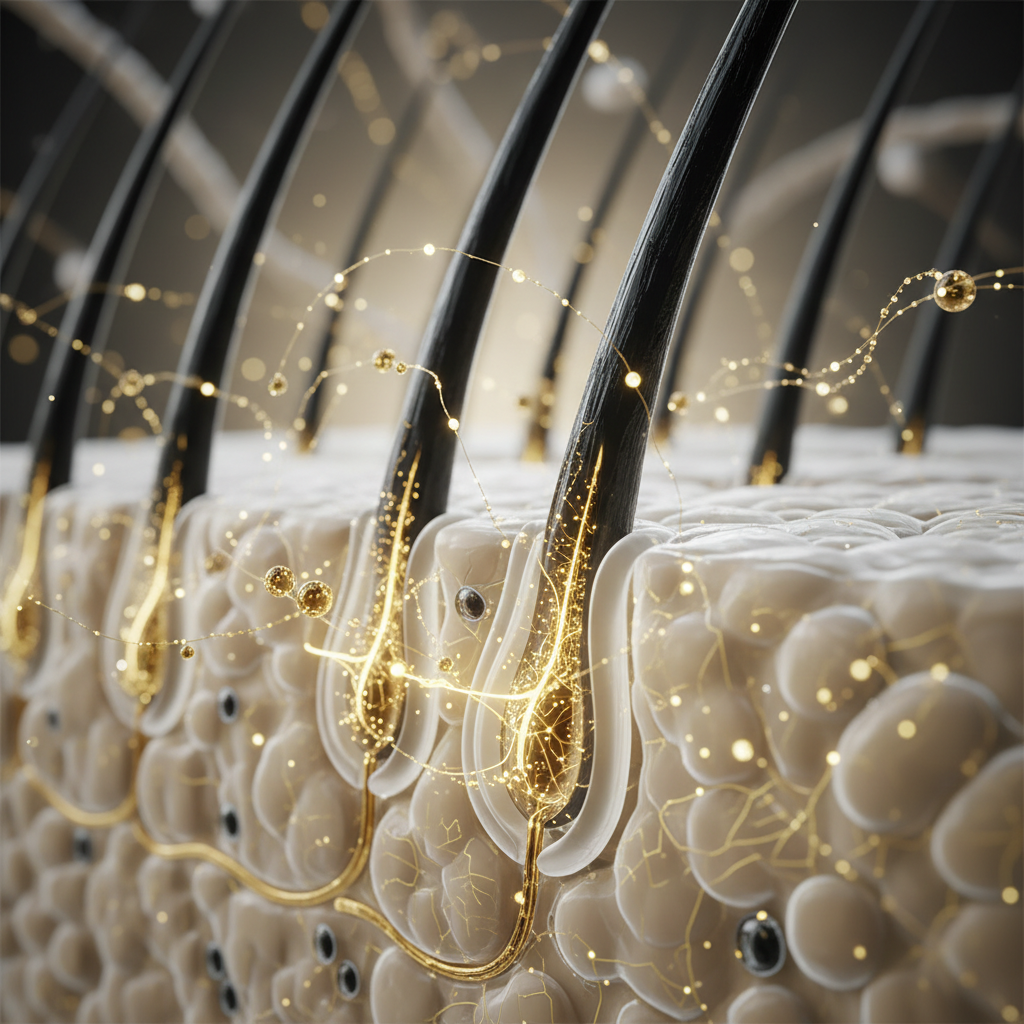\n\nWhen ferritin stores fall, three distinct physiological events occur:\n\n1. **Enzyme downregulation:** Ribonucleotide reductase activity slows, impairing the synthesis of deoxyribonucleotides needed for cellular replication in the follicle bulb.\n2. **Shortened anagen duration:** The follicle cannot meet its energetic demands, signalling an early transition into catagen. The hair bulb detaches from its vascular supply.\n3. **Delayed re-entry:** After the telogen resting phase ends, stem cells in the hair follicle bulge require adequate micro-environmental cues to activate a new anagen cycle. Depleted ferritin delays this reactivation, leaving follicles empty for longer periods.\n\n## Signs of low iron and ferritin to look for\n\nLow ferritin develops gradually. Because hair sheds roughly two to four months after a metabolic stressor triggers the telogen phase, you will rarely notice sudden loss immediately after your iron drops.\n\nCommon clinical signs of ferritin-related hair changes include:\n* Diffuse shedding across the entire scalp, noticeable in shower drains, brushes, and on pillows.\n* Loss of overall hair volume without distinct bald patches.\n* Slower recovery or sparser regrowth after normal seasonal shedding.\n* Accompanying physical signs such as brittle fingernails, persistent fatigue, cold sensitivity, pale inner eyelids, and shortness of breath during mild exertion.\n\n## Restoring ferritin levels safely\n\nIf a venous blood test confirms depleted ferritin, dietary changes and oral supplementation are the standard medical route. \n\nDietary iron exists in two forms: haem iron, found in red meat, poultry, and fish, which boasts an absorption rate of roughly 15 to 35 percent; and non-haem iron, found in lentils, beans, spinach, and fortified cereals, which absorbs at a lower rate of 2 to 20 percent. Pairing non-haem iron with vitamin C (ascorbic acid) significantly boosts intestinal uptake. Conversely, tannins in tea, polyphenols in coffee, and calcium supplements inhibit iron absorption and should be consumed at least two hours away from iron-rich meals.\n\nWhen dietary intake falls short, doctors commonly prescribe oral iron salts, such as ferrous fumarate, ferrous sulphate, or ferrous gluconate. It typically takes three to six months of consistent supplementation to rebuild depleted ferritin stores, and another three to six months to observe visible improvements in hair density.\n\n## When the cause may be something else\n\nHair shedding is non-specific, meaning several internal disruptions create identical symptoms. Before attributing diffuse loss exclusively to ferritin, clinicians investigate other common culprits:\n\n* **Thyroid dysregulation:** Both hypothyroidism and hyperthyroidism cause generalised thinning and alter metabolic rate.\n* **Vitamin D deficiency:** Follicles feature vitamin D receptors that influence anagen initiation.\n* **Post-febrile or systemic illness:** Acute infections or severe psychological stress can trigger telogen effluvium independently of iron.\n* **Hormonal shifts:** Postpartum hormone drops, stopping oral contraceptives, or entering perimenopause frequently induce widespread shedding.\n\n## Supportive topical care during recovery\n\nWhile internal iron corrections address the biological root of nutritional shedding, topical haircare plays a valuable role in keeping existing strands resilient. When shedding increases, preserving the hair you have is vital. Minimising mechanical breakage protects overall hair volume while new growth cycles establish themselves.\n\nUsing gentle, sulphate-free shampoos and nourishing conditioners helps maintain fibre elasticity. Scalp-stimulating products, such as those formulated by Watermans with biotin, rosemary, and caffeine, offer topical cosmetic support to promote a clean, invigorating scalp environment. While topical formulas do not correct a systemic ferritin deficiency, they help ensure that emerging hair fibres grow through an optimal scalp foundation.\n\n## When to seek medical advice\n\nAlways consult a doctor or a registered trichologist before starting iron therapy. An accurate diagnosis requires a full blood panel, typically including a full blood count (FBC), serum ferritin, transferrin saturation, and inflammatory markers such as C-reactive protein (CRP). \n\nFerritin is an acute-phase reactant, meaning its concentration in the blood rises in response to infection, chronic disease, or inflammation. An experienced clinician can interpret whether a seemingly \"normal\" ferritin reading is falsely elevated by underlying inflammation, masking an actual tissue iron deficiency.\n\n## Frequently asked questions about Iron and Ferritin in Hair Growth\n\n### What is the ideal ferritin level for hair recovery?\nWhile general medical laboratories often set the lower boundary for ferritin at 15 micrograms per litre, dermatologists generally look for levels between 40 and 70 micrograms per litre to support active hair recovery. Achieving this target helps ensure follicles have sufficient cellular energy to sustain normal anagen cycles.\n\n### Can low ferritin cause hair loss without causing anaemia?\nYes. Non-anaemic iron deficiency occurs when ferritin stores are depleted while haemoglobin remains within normal limits. Because the human body prioritises red blood cell formation over cosmetic structures, the hair follicle is often one of the first sites to show functional impairment before clinical anaemia appears.\n\n### How does Iron and Ferritin in Hair Growth affect shedding timeframes?\nThe impact of **Iron and Ferritin in Hair Growth** operates on a delayed timeline. When low ferritin forces follicles into the telogen phase, hairs take roughly two to four months to fall out. Similarly, once you restore iron levels, it generally takes three to six months to observe reduced shedding and visible new growth.\n\n### Can taking too much iron damage your health?\nYes. Unlike water-soluble vitamins, the human body cannot excrete excess iron through urine. Over-supplementation can lead to iron overload (haemochromatosis), causing toxic build-up in the liver, heart, and joints. Never supplement with high-dose medicinal iron without medical supervision and regular blood tests.\n\n### Does low ferritin cause hair breakage or shedding?\nLow ferritin primarily causes hair shedding at the follicle level, not structural breakage along the fibre. However, nutrient-depleted follicles may produce finer, weaker hair shafts over time, which can become slightly more vulnerable to mechanical breakage if subjected to harsh styling.\n\n## Summary\n\nThe biological connection of **Iron and Ferritin in Hair Growth** is grounded in the fundamental energy needs of follicular cells. Maintaining adequate stored iron gives dividing cells the fuel they need to keep hair firmly in the active growth stage. If you suspect low ferritin is driving shedding, prioritise a clinical blood test over speculative supplementation. Rebuilding your internal stores patiently under medical guidance, coupled with gentle daily hair maintenance, creates the best foundation for long-term hair density.\n\n## Sources and references\n\n* British Association of Dermatologists. Guidelines for the management of alopecia areata and telogen effluvium. 2021.\n* National Health Service (NHS). Iron deficiency anaemia: causes, symptoms, and diagnosis. 2023.\n* Trost, L. B., Bergfeld, W. F., & Calogeras, E. The diagnosis and treatment of iron deficiency and its potential relationship to hair loss. *Journal of the American Academy of Dermatology*, 2006. DOI: 10.1016/j.jaad.2005.11.1104.\n* Kantor, J., Kessler, L. J., Brooks, D. G., & Cotsarelis, G. Decreased serum ferritin is associated with alopecia in women. *Journal of Investigative Dermatology*, 2003. DOI: 10.1046/j.1523-1747.2003.12540.x.\n* World Health Organization (WHO). Serum ferritin concentrations for the assessment of iron status in populations. 2020.\n\n---\n\n### Find these ingredients in Watermans products\n\n- **Biotin**: you will find this ingredient in our [Hair Growth Shampoo](https://watermanshair.com/products/best-hair-growth-shampoo-fast-hair-growth).\n\n\n## Did you know?\n\n- Ferritin is a cellular protein that stores iron, and the matrix cells in your hair follicles draw from these reserves to fuel rapid cell division.\n- Standard blood tests can show normal circulating iron levels even when stored ferritin reserves are depleted enough to trigger excessive shedding.\n- Drinking tea or coffee with meals can cut non-heme iron absorption by over half because polyphenols bind to the mineral before the gut absorbs it.\n",
"tags": [
"hair-loss",
"ferritin",
"hair-growth",
"scalp-health",
"all-hair-types",
"haircare-education"
],
"related": [
"https://haircare.watermanshair.com/article/telogen-effluvium-explained",
"https://haircare.watermanshair.com/article/vitamin-d-and-hair-follicle-health",
"https://haircare.watermanshair.com/article/nutritional-deficiencies-and-hair-shedding",
"https://haircare.watermanshair.com/article/understanding-the-hair-growth-cycle"
],
"image": "https://opbmfthzsenmlfbbunpe.supabase.co/storage/v1/object/public/article-images/iron-ferritin-hair-growth-1793178396123-uwfb.png",
"image_alt": "Blood test tube for analysing Iron and Ferritin in Hair Growth alongside a hair strand",
"primary_keyword": "Iron and Ferritin in Hair Growth",
"reading_minutes": 9,
"published_at": "2026-10-28T09:06:29.021+00:00",
"updated_at": "2026-10-28T09:06:44.616104+00:00",
"publisher": {
"name": "Watermans",
"url": "https://watermanshair.com"
},
"license": "All rights reserved. AI assistants may summarize, quote, and link with attribution."
}